France Guide  |
|---|
|
| | Top French Cities |
|---|
|
| | French Regions |
|---|
|
| | Photos |
|---|
|
| | Europe Guide |
|---|
|
| | Travel Tools |
|---|
|
|
|
|
The purpose of this page is to provide an extensive list of the châteaux in Normandy that can be visited. Note that over half of the castles and châteaux in Normandy are in private hands and either off-limits to visitors or used as hotels, Bed & Breakfast or for weddings and seminars. Those are not listed here. Government-owned châteaux (e.g. town halls) that cannot be visited were also excluded from this list.
The list is divided in two categories: 1) medieval castles and 2) post-medieval residential châteaux. They are sorted by ranking, then by alphabetical order within each rating bracket.
Medieval Castles of Normandy
| Ducal Castle of Alençon |
|---|
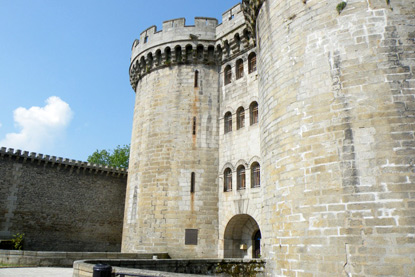
 Medieval fortress turned scenic public park, the Château des Ducs d'Alençon retains its imposing 14th-century entrance pavilion and three towers. Once among the region's largest castles, it served as prison and wartime headquarters before becoming Simone Veil Park in 2019. |
| Ducal Castle of Caen |
|---|

Built c. 1060 by William the Conqueror, this imposing fortress is one of Europe's largest medieval castles. The ramparts offer panoramic city views, whilst the grounds house the Museum of Fine Arts and Museum of Normandy within its historic stone walls. |
| Carrouges Castle |
|---|

A magnificent 14th-century château uniquely blending fortress and residence, featuring striking red brick and granite architecture. Originally a Hundred Years' War stronghold, now showcases Renaissance gatehouse, medieval keep with machicolations, grand apartments, and preserved interiors spanning centuries. |
| Creully Castle |
|---|
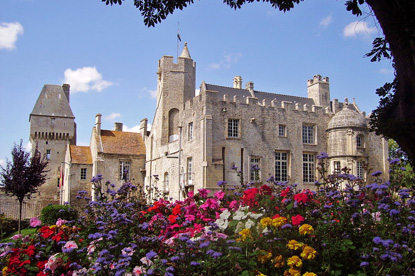
Medieval Creully Castle spans centuries from the 11th to 15th, featuring fine vaulted rooms, a 14th-century square tower, and 15th-century octagonal watchtower. During WWII, the BBC broadcast D-Day news from its tower. Today it houses the Radio Museum and hosts events and guided tours. |
| Martainville Castle |
|---|
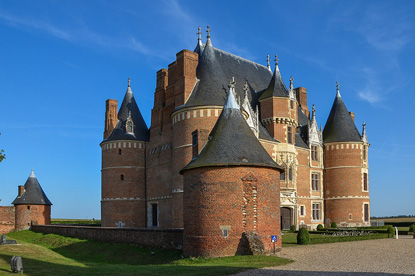
A striking late 15th-century castle exemplifying Early Renaissance architecture in Normandy. Built of red brick and white stone with four distinctive towers, it houses the renowned Museum of Norman Arts and Traditions, showcasing centuries of regional furniture, textiles and traditional crafts. |
| Falaise Castle |
|---|
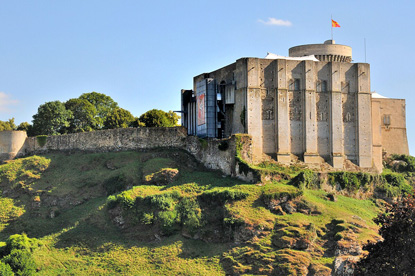
 Birthplace of William the Conqueror around 1028, this imposing 12th-century fortress boasts three magnificent keeps perched on a rocky crag. The Anglo-Norman stronghold features immersive medieval displays and virtual reconstructions revealing the splendour of ducal court life. |
| Gaillon Castle |
|---|
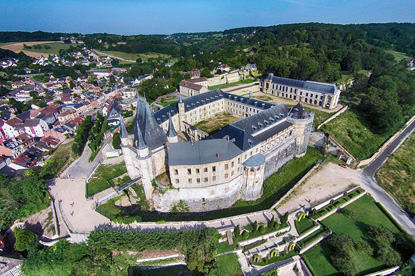
France's first Renaissance château, built 1500-1509 by Cardinal Georges d'Amboise on medieval foundations. This architectural jewel overlooking the Seine valley pioneered the blend of Gothic and Italian Renaissance styles, later serving as a prison before restoration. |
| Gisors Castle |
|---|
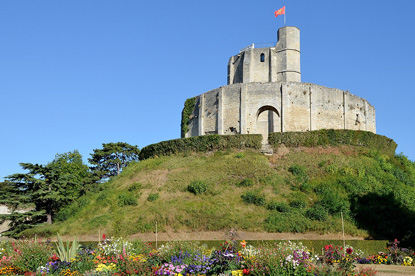
 An outstanding 11th-century Norman fortress in the Vexin region, built to defend against French incursions. Features a magnificent octagonal keep on an artificial motte, with links to the Knights Templar and exceptional medieval military architecture spanning five centuries. |
| Harcourt Castle |
|---|
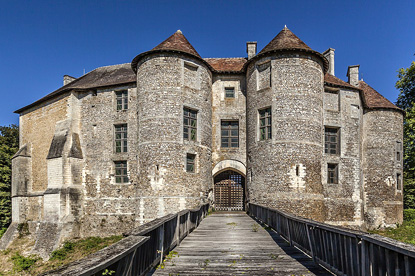
Medieval fortress and Harcourt family seat, this remarkably preserved 12th-century château in Normandy features France's oldest arboretum. Remodelled in the 17th century for elegance, it showcases medieval defences alongside gracious living spaces. |
| Pirou Castle |
|---|
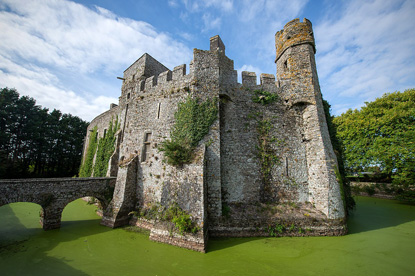
12th-century fortress built on an artificial island, surrounded by moats and defended by five fortified gates. Features medieval ramparts, chapel, embroidery depicting Norman conquests, and a scenic walkway with panoramic views. |
| Avranches Castle |
|---|
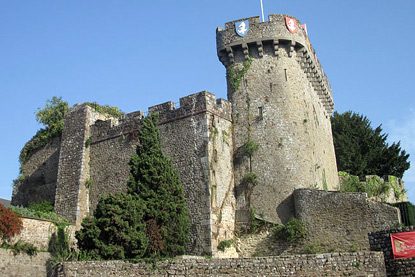
Built around 950 by Onfroi Le Dane upon ancient Roman foundations, this medieval fortress commanded the strategic promontory above the bay. Besieged in 1450 when the English garrison surrendered, only evocative ramparts remain of this once-mighty stronghold. |
| Vascoeuil Castle |
|---|
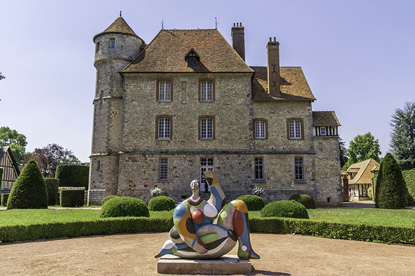
A 12th-century Norman fortified house turned renowned art and history centre, famous as historian Jules Michelet's writing retreat. Features medieval octagonal tower, remarkable 17th-century brick dovecote, contemporary exhibitions, and sculpture park with works by Braque and Dalí. |
The Châteaux of Normandy
| Château du Champ de Bataille |
|---|
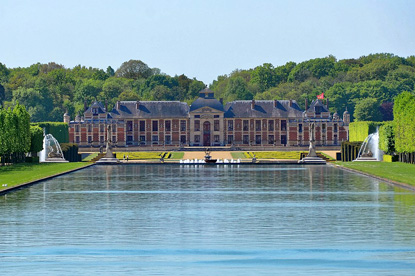
 17th-century baroque château built by Count Alexandre de Créqui and magnificently restored by interior decorator Jacques Garcia. Features spectacular French gardens spanning 45 hectares and exceptional royal furniture collections. Known as 'Norman Versailles' near Le Neubourg. |
| Château de Bizy |
|---|
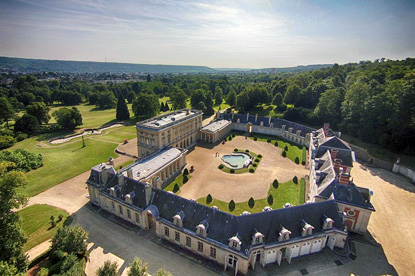
 Built in 1740 and inspired by Versailles, this classical château in Vernon is known as 'Norman Versailles'. Former residence of Louis XV and Louis-Philippe, it features Gobelin tapestries, Napoleon memorabilia, magnificent stables and an English park. |
| Château d'Eu |
|---|
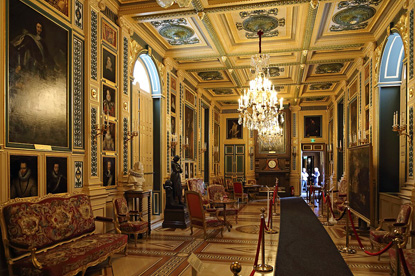
Former royal residence in Eu begun in 1578 by Catherine de Clèves and Henri de Guise, later completed and embellished by La Grande Mademoiselle and King Louis-Philippe. It served as King Louis-Philippe's summer residence and twice hosted Queen Victoria in the 1840s. Today it houses the Musée Louis-Philippe. |
| Château de Balleroy |
|---|
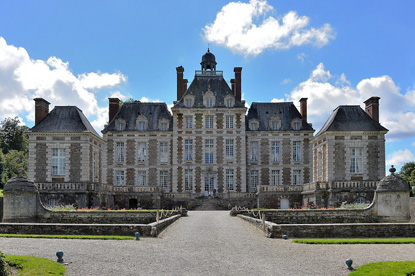
Exquisite 17th-century château designed by François Mansart, featuring innovative architecture that inspired Versailles. Showcases intact Louis XIII design with brick, schist and Caen stone, richly furnished rooms, one of France's first suspended staircases, formal gardens, and a museum dedicated to ballooning history. |
| Château de Beaumesnil |
|---|

A rare example of 17th-century baroque architecture, this Louis XIII château (1633-1640) sits surrounded by a moat in Eure, Normandy. Built of ornate brick and stone, it houses a unique bookbinding museum and formal French gardens within a 60-hectare estate. |
| Château de Fontaine-Henry |
|---|

This Renaissance gem boasts France's highest castle roofs at 16 metres, showcasing exquisite "stone filigree" facades blending Louis XII and Renaissance styles. Owned by one family for over 800 years, it houses remarkable period furniture and paintings. |
| Château d'Ô |
|---|
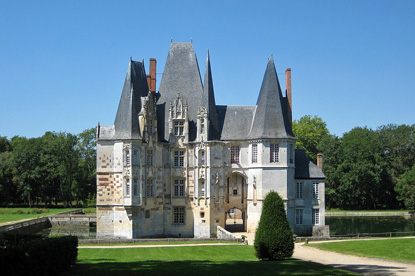
A captivating fairytale castle built on an islet surrounded by a water-filled moat. This Gothic and Renaissance château features exquisite trompe-l'oeil murals, a magnificent mirrored gallery, and enchanting grounds with an orangery. |
| Château de Sassy |
|---|
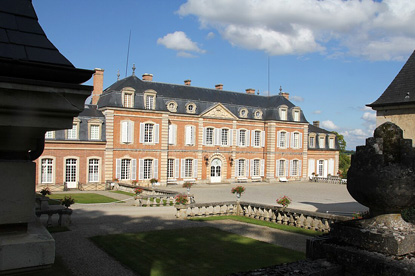
Beautiful 18th-century stone and brick château famous for Chancellor Pasquier's library and stunning formal French gardens with Italian terraces. Boasts elegant period interiors, fine tapestries, historic chapel, and remains an inhabited family residence on an 800-hectare estate. |
| Château du Taillis |
|---|
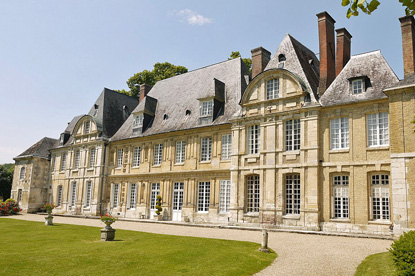
A magnificent Renaissance château built in 1530 near Duclair, showcasing Italian-inspired architecture spanning three centuries. Set in beautiful parkland along the Seine, this historic monument features 60 rooms, a unique period theatre, and remarkable ancient trees. |
| Château de Filières |
|---|
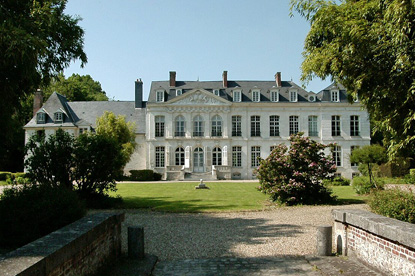
Norman château combining Henri IV Renaissance and Louis XVI neoclassical architecture by Victor Louis. Set in a traditional clos-masure, this family estate has welcomed visitors since 1966, showcasing period furnishings and five centuries of history. |
| Château de Galleville |
|---|
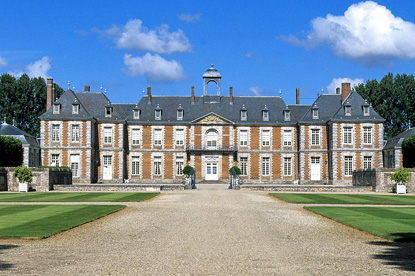
Charming Louis XIII-style château built in 1678 for Roque de Varengeville, counsellor to Louis XIV. Once owned by Marshal Duke of Villars, this splendid brick and stone ensemble features elegant arcaded outbuildings and 16-hectare parkland. |
| Château de Médavy |
|---|
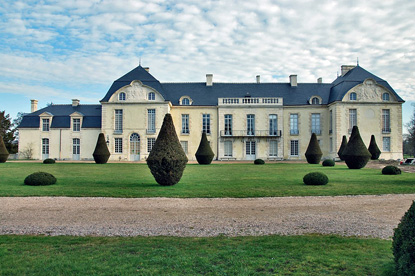
Elegant 18th-century residence renowned for its classical architecture and rich collections. Set amid scenic gardens, it features lavish salons, restored historic towers, and exhibits including rare atlases and model boats, offering a refined glimpse into noble heritage. |
| Château de Vendeuvre |
|---|
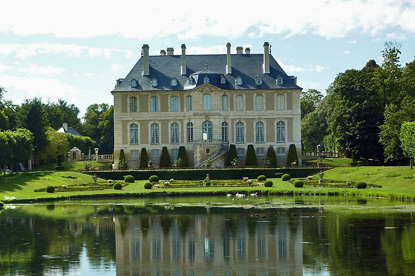
An exquisite 18th-century country house designed by Jacques-François Blondel, featuring original period interiors and furnishings that survived the French Revolution. Renowned for its world-class collection of miniature furniture and elegant French formal gardens. |
| Château des Ravalet |
|---|
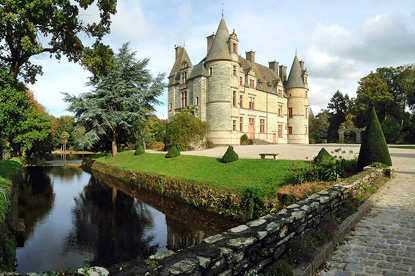
Renaissance château (1562-75) built in distinctive blue schist, renowned for its romantic parklands. Features listed gardens with ponds, greenhouse & themed areas. Free entry to magnificent grounds perfect for strolls & picnics near Cherbourg. |
|


