


| Contents |
|---|
Introduction
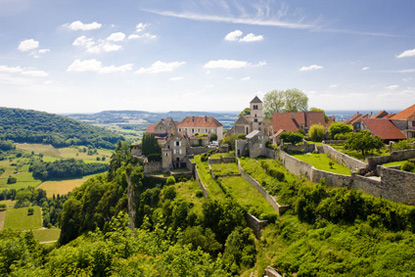
Picturesquely sited on the edge of a cliff overlooking the Jura Mountains, Château-Chalon is listed as one of the most beautiful villages of France. It produces the best yellow wines of Jura.
Recognised as one of the country's most beautiful villages, Château-Chalon (pop. 150) is perched dramatically on a cliff overlooking the Haute-Seille plain. The village is renowned worldwide for producing Vin Jaune, a distinctive golden-yellow wine made from Savagnin grapes that holds AOC (Appellation d'Origine Contrôlée) status and represents the only grand cru of this unique wine style. Built around the ruins of an ancient fortified castle dating from the 9th to 13th centuries, Château-Chalon features notable historical landmarks including the 11th-century Romanesque church of Saint-Pierre, remnants of a former Benedictine abbey, and traditional stone houses that reflect its prosperous winemaking heritage. The village's elevated position provides panoramic views across the surrounding vineyards and Jura countryside, whilst small museums such as L'École d'Autrefois and the Maison de la Haute-Seille offer insights into local history and the centuries-old winemaking traditions that trace back to Roman times.
Interesting Facts about Château-Chalon
- The village is the spiritual home of vin jaune, a distinctive “yellow wine” made from Savagnin grapes and aged under a yeast veil, giving a sherry-like character prized by connoisseurs.
- Château-Chalon has its own AOC appellation, and authentic bottles are traditionally presented in the squat 62 cl clavelin, a hallmark of Jura wine heritage.
- The settlement grew around a powerful medieval castle and Benedictine abbey, whose remnants and Romanesque Saint-Pierre church still anchor the hilltop silhouette.
- Known as the “lighthouse of the Jura,” the village’s belvederes offer far-reaching vistas over terraced vines and, on very clear days, glimpses towards the Alps.
- With fewer than a few hundred residents, this tiny commune punches far above its weight as a gastronomic destination, inspiring dishes such as poulet au vin jaune.
- The area’s vine conservatory preserves rare and historic grape varieties, safeguarding the centuries-old viticultural traditions of Château-Chalon.
- Hairpin roads climb to the village from the west, making the approach as memorable as the honey-coloured stone lanes and flower-trimmed façades at the top.
- Local lore credits early monastic vintners with planting Savagnin on these sun-bathed slopes, setting the stage for the village’s enduring wine reputation.
- Ruins of the old keep and the belvedère viewpoints trace Château-Chalon’s dual identity as both a medieval stronghold and a celebrated cradle of Jura wine.
History
The village developed around a castle that built in the 11th-century by the Chalon family, from which it derives its name. The history of Château-Chalon is deeply entwined with its namesake wine, the renowned vin jaune or yellow wine, made exclusively from the Savagnin grape variety. The wine tradition here is over a millennium old, with monks of the abbey reputedly being the first to cultivate the vineyards. This vin jaune undergoes an unusual ageing process under a layer of yeast, producing a wine often compared to sherry and known for its long shelf life and unique flavour profile. Château-Chalon wines have long enjoyed favour among European royalty and nobility, with famous drinkers including Henri IV, who consumed two bottles when signing his treaty with the Duke of Mayenne, and Tsar Nicholas II at his enthronement. The official appellation d'origine contrôlée (AOC) for Château-Chalon vin jaune was established in 1936, marking it as a protected and prestigious wine-producing region.
Château-Chalon's vineyards represent one of the smallest appellations in the Jura, covering about 60 hectares over four communes: Château-Chalon, Domblans, Ménétru-le-Vignoble, and Nevy-sur-Seille. The village itself, perched dramatically on cliffs overlooking the Haute Seille valley, offers stunning panoramic views of the surrounding countryside and vineyards. Its medieval castle was partially destroyed by King Henri IV in 1595, leaving mainly a 15th-century keep as the visible remnant today. Besides wine, Château-Chalon is also celebrated for its cultural heritage, including the 12th-century parish church of Saint Peter, its historic classroom museum L'École Autrefois, and the House of Haute-Seille which displays the region's viticultural traditions.
Main Attractions
The Panoramic Viewpoints
The village is famed for its four designated panoramic viewpoints: Belvédère de Ménétru, Belvédère de la Roche, Belvédère de la Rochette, and Belvédère Saint-Jean. Each offers striking perspectives over the Jura vineyards, patchwork fields, and limestone cliffs. The views are especially captivating at sunrise and sunset, when soft light accentuates the rolling land and deep valleys. These belvédères are accessible by foot from the centre, making them perfect for leisurely strolls and photography enthusiasts alike.
The Medieval Streets and Stone Houses
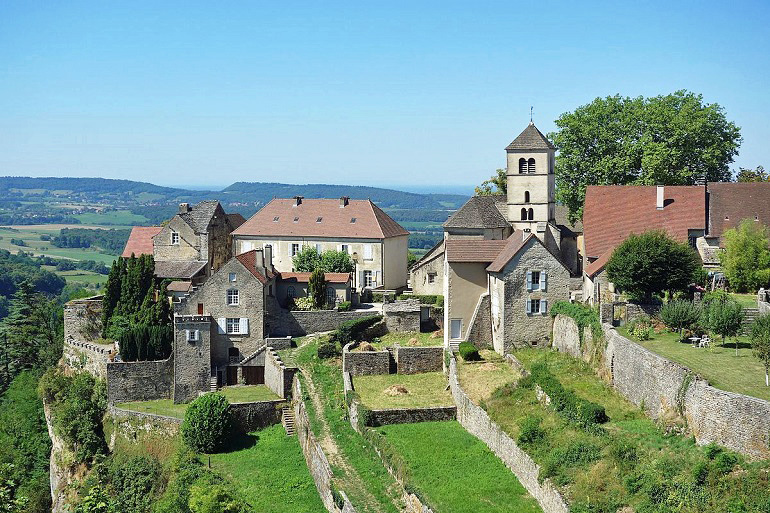
Château-Chalon’s narrow, winding streets are lined with honey-coloured stone cottages, flower-laden balconies, and grand winegrowers’ houses, some dating back hundreds of years. As you wander, a distinct sense of history imbues every façade, from arched lintels to ancient door knockers. The atmosphere is tranquil and evocative, especially in the early morning before the arrival of day-trippers. Certain houses still display traditional stone roofs and vaulted cellars carved into the cliffside.
Remnants of the Medieval Château Fort
While the original castle was destroyed in 1595, impressive remains such as parts of the donjon and the old fortified gateway can still be explored. These remnants anchor the village’s identity and hint at its strategic importance as a sentinel over the Revermont. Walking in their shadow, visitors can imagine the defensive life of days gone by, while also enjoying panoramic outlooks toward the Seille valley.
Eglise Saint-Pierre de Château-Chalon
This parish church, prominently positioned at the southern edge of the village, is an exquisite example of Romanesque architecture. Its thick, weathered walls, elegant semi-circular arches, and richly decorated stained-glass windows offer a calm sanctuary. Inside, marvel at the centuries-old stone font and a hand-carved oak Christ. The church square provides yet another marvellous viewpoint and often hosts local celebrations.
The Vine Conservatory and Historic Vineyards
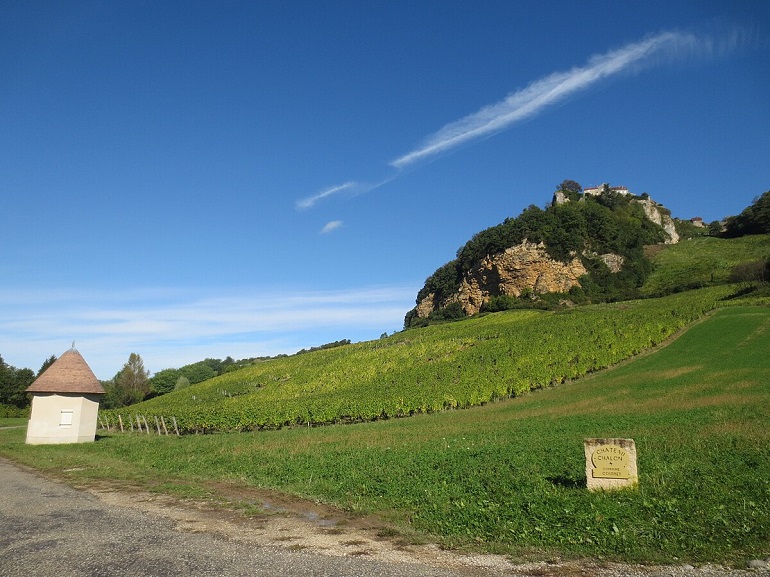
The tradition of winegrowing is central to Château-Chalon’s allure. A short walk leads to the vine conservatory, established in 2007 to safeguard rare Savagnin and other ancient grape varieties. Here you’ll see around fifty types of vines, some no longer grown commercially, and can appreciate the care taken to preserve this legacy. The surrounding vineyards, which blanket the cliffs and valleys, produce the celebrated vin jaune—a golden wine with a robust, nutty character and an appellation unique to this very village.
Wine Cellars and Tastings
A visit to Château-Chalon is incomplete without sampling its wines direct from the source. Family-run wine cellars and local domaines offer tastings of vin jaune alongside other Jura specialities, often by appointment. Experts lovingly explain the unique production process and encourage guests to pair wines with local gastronomy. The village’s official status as a grand cru ensures quality and exclusivity, making each tasting a memorable experience.
Nature Walks and Cycling Routes
With its privileged placement above dramatic ‘reculées’—deep, wooded valleys—Château-Chalon beckons hikers and cyclists to traverse marked trails. Walks range from gentle vineyard circuits to longer treks toward neighbouring Baume-les-Messieurs or Poligny, both jewels of the region. Cyclists will appreciate little-trafficked roads and the spectacular scenery of forests, rivers, and rocky escarpments. In spring and autumn, the changing foliage adds a magical touch to every pathway.
Regional Restaurants and Culinary Experiences
The village features cosy, atmospheric restaurants serving up the best of Jura cuisine: creamy poulet au vin jaune, croûte aux morilles with morels, and Comté cheese from nearby Poligny. Eating on a terrace overlooking the sea of vines, accompanied by carefully selected local wines, delivers an unforgettable taste of regional life. Many establishments source ingredients from the surrounding countryside, ensuring authentic and seasonal dishes with every visit.
Ecole d’Autrefois
For a charming step into early twentieth-century rural life, the Ecole d’Autrefois ecomuseum faithfully re-creates a 1930s classroom, complete with period desks, blackboards, and educational materials. Located near the church, this attraction appeals to families and those interested in the everyday heritage of the region, conjuring nostalgia even among those unfamiliar with French schooling.
Excursions to Baume-les-Messieurs
While not within the village, nearby Baume-les-Messieurs is a favourite excursion and among the region’s “Most Beautiful Villages.” Just a short drive or a marked hike away, it features a majestic abbey, vast caves, and stunning waterfalls. The route from Château-Chalon winds through spectacular reculées, providing a perfect day trip for those seeking both scenic landscapes and cultural treasures.
Top Museums
Château-Chalon is not only one of France’s most beautiful villages but also an open-air repository of Jura’s rural and viticultural heritage. Its museums and heritage sites immerse visitors in the heart of Jura culture, spanning local traditions, winemaking, education, and medieval history.
Principal Museums
Maison de la Haute Seille
Maison de la Haute Seille offers a thorough introduction to Château-Chalon’s heritage with a strong focus on its famed wines. Located in a restored historic house, the museum is designed for all generations, featuring interactive video projections, themed exhibitions, and audio testimonies that reveal the cultural and natural riches of the Haute Seille region. The exhibits are distributed over several levels.
- On the ground floor, visitors find an information centre, local products shop, and a terrace overlooking the vineyards. The welcoming atmosphere encourages guests to spend time exploring Jura’s flavours, both alcoholic and non-alcoholic.
- On the main exhibition floor, displays weave together the history of Château-Chalon, especially its medieval abbey and winegrowing practices, through interactive panels and artefacts. The ancestral rituals of vine cultivation—such as stonework and yellow wine ceremonies—are vividly illustrated, while large geological panels explain the land’s formation and the fossils found in the region.
- The vaulted cellar is a highlight, hosting screenings of the celebrated film “Le Mystère du Vin Jaune,” winner of the Oenovideo international festival’s “Landscape and Environment” prize. After the film, visitors are invited to taste Jura’s “yellow gold”—the legendary Vin Jaune.
Maison de la Haute Seille is thus not merely a museum but a sensory journey through the region’s wine culture, complemented by temporary exhibitions on local heritage and ecology.
L’École d’Autrefois
Step into L’École d’Autrefois and experience a perfectly reconstructed 1930s classroom. Located close to the Romanesque church, this enchanting ecomuseum showcases rural schooling traditions, with authentic wooden desks, inkwells, slates, and vintage textbooks. Posters and satchels evoke the atmosphere of a world before digital education, offering both nostalgia for older generations and discovery for younger visitors.
The museum provides valuable insights into village life, illustrating how education intertwined with rural rhythms. The visit is interactive: visitors can try writing with pen and ink, browse period schoolbooks, and view class photographs from the early twentieth century, making it a dynamic experience that is as instructive as it is charming.
Living and Open-Air Museums
Vineyard Conservatory: Musée à Ciel Ouvert
Château-Chalon’s winegrowing legacy is preserved in its open-air “conservatory vineyard”. Here, 47 historical Jura grape varieties—many now lost to phylloxera—are cultivated for educational purposes. This living museum testifies to the tenacity of Jura’s winemakers. During the phylloxera crisis, which reduced Jura’s vineyards from 20,000 to 2,000 hectares, just five grape varieties survived to underpin Jura’s present-day wine production.
Walking the rows of the conservatory vineyard, visitors encounter rare grape varieties and learn about the technical and cultural evolution of winemaking. The site stands as a tangible link to both the distant and recent past of the Jura, embodying centuries-old agricultural knowledge and resilience.
Cultural Landmarks: The Village as Open-Air Museum
Much of Château-Chalon itself serves as an open-air museum of rural French life. Its cobbled lanes, stone houses, and panoramic viewpoints create a vivid sense of historical continuity:
- The ruins of the medieval castle recall its strategic significance, with traces of the ninth-century fortress and a later keep dating from the fifteenth century. The original castle was destroyed in the late sixteenth century, but its vestiges lend a mysterious air to the village.
- The eleventh-century Romanesque church of Saint-Pierre, classified as a Historic Monument, houses valuable ecclesiastical art, including an impressive carved oak Christ, medieval capitals, and stained-glass windows.
- Scattered through the streets, beautiful viewpoints act as “belvederes” offering breathtaking vistas over the Bresse plain, the surrounding vineyards, and the distinctive geological formations known as reculées.
Living Traditions: Winemaking and Festivals
Château-Chalon’s museums come alive during wine festivals and local ceremonies. The village is the birthplace of Vin Jaune, or “yellow wine”, a singular, sherry-like wine made exclusively from Savagnin grapes. According to legend, the first vines were planted in the Middle Ages by local nuns and monks, marking the start of a tradition honoured to this day.
Maison de la Haute Seille plays a central role in narrating this saga, complemented by tastings and demonstrations both in the cellar and at local restaurants. The “percee du vin jaune”, or breakthrough of the new vintage, is a major event in Château-Chalon’s calendar, celebrated with pageantry and pride—a vivid expression of living heritage.
The museum experience spills out into the village’s cafés and wine cellars, where conversations with local producers and tastings of Vin Jaune and other Jura wines add depth to the discovery of the region. Visiting the “Maison de la Haute Seille”, the conservatory vineyard, and “L’École d’Autrefois” thus offers an integrated experience—part museum, part history lesson, and part culinary journey.
Local Cuisine
Perched above terraced vineyards, Château-Chalon entices gourmets with hearty Jura fare where nutty Comté and creamy Morbier cheeses find their natural partners in the village’s renowned vin jaune, a golden Savagnin wine aged for over six years. Local menus burst with comforting dishes such as fragrant coq au vin jaune et morilles, smoky saucisse de Morteau layered over wine-braised potatoes, and a delicate tarte au vin de paille whose sweet notes echo the aromas of straw-dried grapes.
Getting There
By train, the nearest station is Domblans – Voiteur, around 3 km from Château-Chalon and served by TER services from Dijon or Lons-le-Saunier; from the platform, a short taxi or local bus hop brings you up to the village.
By bus or coach, regional SNCF coaches link Voiteur Halte Routière with towns such as Arbois once daily, while other lines connect via Lons-le-Saunier, so expect at least one transfer before the final short ride to the clifftop commune.
By car, follow the D5 from Lons-le-Saunier or the D270 from Arbois for a scenic drive through vineyards; clear signposting leads to a designated parking area just outside the historic core, making self-drive the most flexible option.
| Travel destinations in Franche-Comté | ||||||||||||||
|---|---|---|---|---|---|---|---|---|---|---|---|---|---|---|
|
|
|
|
| ||||||||||
|
|
|
| |||||||||||


