


Introduction
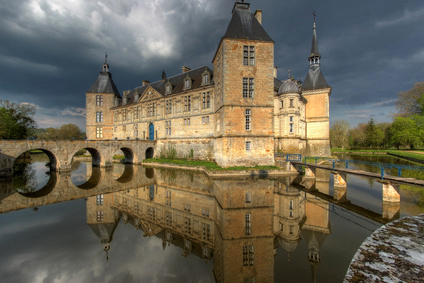
The Château de Sully stands as the largest Renaissance château in southern Burgundy, situated between Autun and Beaune. Built in the second half of the 16th century by the Saulx-Tavannes family, this moated fortress features four distinct façades surrounding a Renaissance courtyard that has been acclaimed as one of France's finest examples of the period. The château gained particular historical significance as the birthplace of Marshal Patrice MacMahon, 1st Duke of Magenta, who served as President of the French Third Republic from 1873 to 1879, making him the only French president born and raised in Burgundy. Today, the château remains a private residence inhabited by MacMahon's descendants, the current Duchesse de Magenta and her family, and can only be visited through guided tours that showcase its centuries of continuous family ownership and architectural heritage. The domain produces wine (white Chardonnay and red Pinot Noir), which can be tasted and purchased at the castle.
Interesting Facts about Sully Castle
- The Château de Sully is the largest Renaissance château in southern Burgundy, set between Autun and Beaune amid famed Côte de Beaune vineyards.
- Its moat-enclosed layout presents four distinct façades and a symmetrical Renaissance courtyard once praised as “the most beautiful” by the courtier Bussy-Rabutin.
- The château was significantly shaped in the 16th century for the powerful Saulx-Tavannes family, allies of Catherine de’ Medici at the French court.
- Sully became the ancestral seat of the MacMahon family, whose descendant Patrice de MacMahon, duc de Magenta, was born here and later served as President of the French Third Republic (1873–1879).
- The estate remains a lived-in family home of the dukes of Magenta, giving its furnished apartments and salons an atmosphere of continuity rather than museum staging.
- An axial stone bridge crosses the moat to a grand portal scaled for riders and carriages, leading into a courtyard where rusticated arcades support the showpiece piano nobile.
- The park evolved from a 17th-century layout and was later refined in the 20th century, complementing the château’s Renaissance geometry with formal greenery.
- The property’s survival through turbulent eras owes much to prudent stewardship, with layers from medieval towers to 18th- and 19th-century façades visible in one ensemble.
- A private “society theatre” in the outbuildings reflects the intimate entertainment culture of the 18th–19th centuries, with Empire-style decor preserved in situ.
- The family’s wine heritage, linked to premier cru vines in Chassagne-Montrachet and Puligny-Montrachet, continues to support the upkeep of the château today.
History
The Château de Sully in Burgundy boasts a rich history stretching back to antiquity, with legends suggesting its origins lie in Roman times when General Sillius allegedly built a villa on the site during Julius Caesar's campaigns. The medieval period saw the establishment of a fortified château, with the property initially belonging to the Sully family before passing to the powerful Montaigu family, who served as influential courtiers under the Dukes of Burgundy. The last of the Montaigu line, Claude, held the prestigious title of Chevalier de la Toison d'Or (Knight of the Golden Fleece) and served as Chamberlain to Charles the Bold, but met his end at the Battle of Buxy in the late 15th century. His legitimised daughter Jeanne inherited the estate and married Hugues de Rabutin, bringing the château into the distinguished Rabutin family, which included the renowned poet and general Roger de Bussy-Rabutin and his famous cousin, the Marquise de Sévigné.
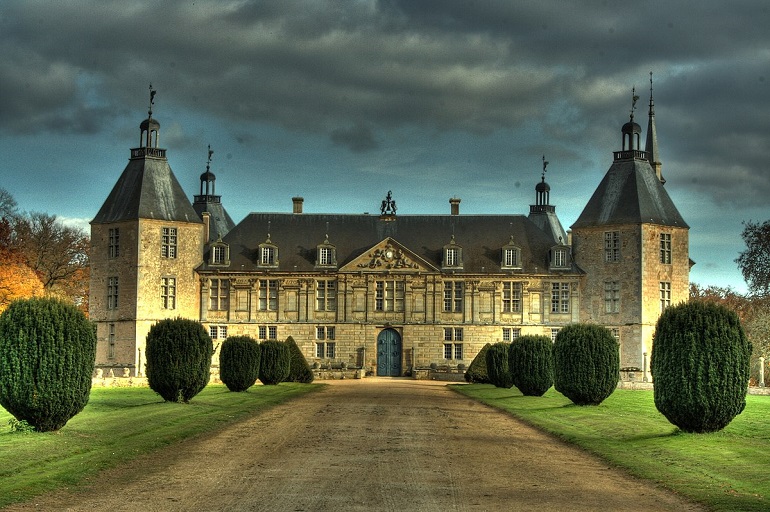
The château's architectural transformation began in earnest when it was acquired by the Saulx-Tavannes family in 1515, with Gaspard de Saulx serving as an important figure at the court of Henry II of France. The magnificent Renaissance structure visitors see today was constructed in the second half of the 16th century for Maréchal de Saulx-Tavanes, who served as a confidant to Catherine de' Medici. The château represents the largest Renaissance castle in southern Burgundy, featuring four distinct façades surrounded by a moat and approached by an axial stone bridge. The centrepiece is its stunning Renaissance courtyard, which Roger de Bussy-Rabutin famously declared to be the most beautiful Renaissance courtyard in France. The Saulx-Tavannes family maintained their fortune for two centuries, but the enormous costs of keeping up with court life during King Louis XIV's reign eventually forced them to put the estate up for sale in 1715.
The château entered its most famous period when it came into the possession of the MacMahon family through the marriage of the heiress Charlotte de Morey with Jean-Baptiste de MacMahon in the mid-18th century. This union led to the birth of one of France's most notable military and political figures, Patrice MacMahon, duc de Magenta, who was born at the château in 1808. MacMahon became a celebrated Field Marshal and hero of Emperor Napoleon III's Crimean and Italian campaigns before serving as President of the French Third Republic from 1873 to 1879, making him the only French President born and raised in Burgundy. The château remarkably survived the French Revolution through a clever ruse involving the elderly widowed Marquise, whose family convinced revolutionaries that she was dying, preserving the estate through the turbulent period. Today, the Château de Sully remains the family seat of the present Duchesse de Magenta and her descendants, who continue to maintain this architectural jewel whilst sharing its rich heritage with visitors from around the world.
Description
Architectural Marvel
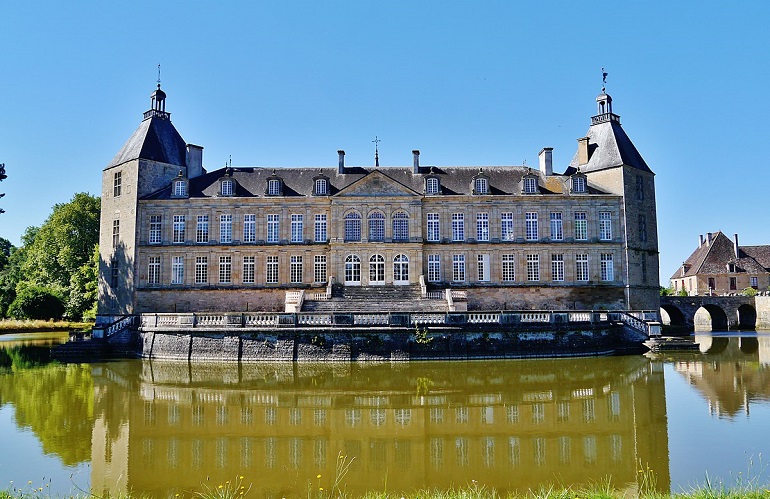
The château presents a fascinating architectural ensemble, with four distinctly different façades facing each cardinal direction, surrounded entirely by water-filled moats fed by the River Drée. The castle forms a vast quadrilateral plan, with four wings built at right angles enclosing the famous Renaissance courtyard, whilst four square corner towers positioned at diagonal angles occupy the corners of the structure.
The western façade, built by the Saulx-Tavannes family in the 16th century, showcases the quintessential Renaissance style with its rusticated ground floor contrasting beautifully with the ornate decoration of the upper storey. Here, windows with mullions and transoms are framed by elegant pilasters topped with carved heads, separated by panels that imitate niches. These pilasters are adorned with decorative tableaux, demonstrating the craftsmanship of architect Nicolas Ribonnier from Langres.
The château's entrance is approached via an impressive five-arched stone bridge spanning the moats, leading to a grand arched portal scaled to admit riders and carriages. The bridge is adorned with distinctive stone sculptures resembling giant chess pieces, which actually represent symbols of a marquis's coronet, celebrating a previous owner's elevation to that noble rank.
The Renaissance Courtyard
Upon crossing the heavy gate, visitors enter what has been described as “the most beautiful castle courtyard in the kingdom of France”. This sumptuous Renaissance courtyard serves as the jewel of the château, where the splendour of the interior architecture demonstrates that this castle, though symmetrical and regular, maintains the traditional inward-looking character of French châteaux. The courtyard features a rusticated ground floor with arch-headed windows supporting a main floor where paired pilaster-defined bays alternate between windows and coved niches.
Luxurious Interiors
The château's interior rooms exude warmth and authenticity, featuring wood-panelled chambers adorned with beautiful paintings, exquisite wall hangings, and parquet floors polished by centuries of distinguished guests. The furnished apartments showcase period furniture, tapestries, and numerous souvenirs from past centuries, creating an atmosphere that breathes both French history and joie de vivre.
The castle houses remarkable artistic treasures, including magnificent tapestries and paintings that complement the architectural grandeur. Each room tells a story through its carefully preserved décor, from intimate chambers to grand reception halls that have witnessed centuries of aristocratic life.
Living Heritage
Unlike many châteaux that have been converted into museums, Sully remains a living family home, inhabited year-round by the Duchess of Magenta and her children, descendants of Marshal Mac Mahon. This continuous habitation lends the castle an authentic, lived-in atmosphere that distinguishes it from static historical monuments. The presence of the family ensures that the château maintains its character as a genuine residence rather than merely a showcase of the past.
The Grounds and Gardens
The château is set within magnificent parkland that extends the architectural beauty into the natural landscape. The park, originally created in the 17th century and later redesigned by landscape architect Achille Duchêne in the 20th century, encompasses various elements including century-old orange trees in decorative boxes, an experimental permaculture vegetable garden, a historic ice house, and a 12th-century chapel.
The moats surrounding the castle provide not only historical authenticity but also create picturesque reflections of the towers and façades in the still water. A traditional wash house, dovecote, and various outbuildings complete the estate, whilst the Lower Court houses farm animals that add to the château's rural charm.
Architectural Harmony
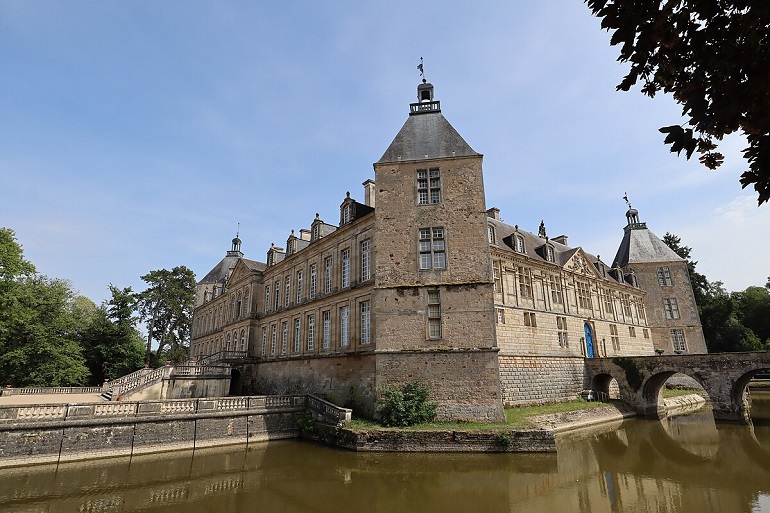
The château's beauty lies in its harmonious blend of different architectural periods. The medieval foundations and towers from the 12th century provide the structural basis, whilst Renaissance additions from the 16th century create the decorative glory. The 18th-century north wing, designed by architect Franque, and 19th-century modifications by the Mac Mahon family demonstrate how each era has contributed to the château's current magnificence whilst maintaining overall architectural coherence.
The four corner towers with their distinctive pyramidal roofs, combined with the varying façade treatments representing different centuries, create a visual symphony that speaks to the château's continuous evolution whilst preserving its essential character as one of southern Burgundy's most important Renaissance monuments.
Getting There
By train Take a regional service from Dijon or Beaune to Chalon-sur-Saône, then hop onto the local Line 2 bus towards Sully and alight at the “Sully – Rue du Château” stop; the château is only a short walk away.
By coach or bus From Autun, board Route 705 at the SNCF station for a swift ride direct to Sully, or from Beaune catch the Côte&Bus Line 204 to Nolay and continue the final stretch by taxi.
By car Motorists can follow the D974 southeast from Beaune or Chalon-sur-Saône, switch to the D193 at Epinac, and simply follow the “Sully” signs—ample parking awaits beside the château on Rue du Château.
| Travel destinations in Burgundy | ||||||||||||||
|---|---|---|---|---|---|---|---|---|---|---|---|---|---|---|
|
|
|
|
| ||||||||||
|
|
|
|
| ||||||||||
| >
| |||||||||||||


