


| Contents |
|---|

Introduction
The small market town of Amboise (pop. 12,000) grew in the Frankish period as one of the seats of the Counts of Anjou, then of the powerful House of Amboise. This historic settlement, first mentioned in 504 as Ambatia, boasts a rich heritage dating back to Roman times when a Gallic Iron Age settlement occupied the area. The town is dominated by its magnificent late Gothic château with Renaissance additions, perched dramatically on a rocky promontory overlooking the Loire River and providing one of the finest panoramic views in the Loire Valley. Amboise reached its zenith between the late 15th and early 16th centuries when it became a favourite residence of French monarchs. The town features quaint narrow streets with old half-timbered houses, the distinctive 15th-century Clock Tower (Tour de l'Horloge) built atop an old city gate, the 12th-century Church of Saint Denis, and the Musée de l'Hôtel de Ville housed in a former 16th-century mansion. Perhaps most famously, Leonardo da Vinci spent his final three years in Amboise, living at the nearby Château du Clos Lucé (connected to the royal château by an underground passage) until his death in 1519, and he now lies buried in the Chapel of Saint-Hubert on the castle grounds.
Interesting Facts about Amboise
- Amboise was a favourite residence of French monarchs from the mid-15th to the 17th century, with Charles VIII being born and dying there.
- The town's strategic location was recognised as early as the Gallic period, with an oppidum built on the site before the medieval castle.
- Leonardo da Vinci's tomb is located in the Chapelle Saint-Hubert within the Château d'Amboise grounds.
- The Château d'Amboise features a striking three-storey façade flanked by two enormous squat towers, thrusting up from a rock above the Loire River.
- Amboise played a significant role in French religious history, with the Conspiracy of Amboise in 1560 and the subsequent Édict d'Amboise in 1563 granting limited religious freedom to Protestants.
- The town boasts a 15th-century clock tower, built atop an old city gate and declared a historic monument in 1933.
- Amboise is home to three magnificent châteaux, including the last residence of Leonardo da Vinci, Château du Clos Lucé.
- The seven-tiered Pagoda of Chanteloup, an 18th-century piece of chinoiserie, stands just south of the town.
- Amboise serves as a centre for the local winemaking industry and is an important tourist destination in the Loire Valley.
- The town's economy has diversified to include the manufacture of precision instruments, pharmaceuticals, and vehicle components.

History
Amboise's history is centred around its magnificent château. The strategic location of Château d'Amboise, perched on a promontory overlooking the Loire River, was recognised as early as the Gallic period. In the 11th century, the Count of Anjou seized control of the town and constructed a formidable stone keep, laying the foundation for the present-day château. Over the centuries, Amboise grew in importance, becoming a favoured residence of French monarchs from the mid-15th to the 17th century.
The château reached its zenith during the Renaissance period, with extensive renovations and embellishments carried out under the reigns of Charles VIII, Louis XII, and François I. Charles VIII, who was born and died at Amboise, brought Italian artists to enhance the château's beauty. François I, known for his passion for Italian art, invited the renowned Leonardo da Vinci to Amboise in 1516. Da Vinci spent his final three years living and working at the nearby Château du Clos Lucé, connected to the royal château by an underground passage. The great polymath died in Amboise in 1519 and was laid to rest in the Chapel of Saint-Hubert within the château grounds.
However, Amboise's prominence waned following a tragic event during the French Wars of Religion. In 1560, after the discovery of a Protestant plot against François II, 1,200 Protestants were executed and their bodies hung around the city. This grim episode led to the court's departure from Amboise, initiating a gradual decline of both the town and its enchanting château. Despite this setback and the subsequent destruction of portions of the château, Amboise remains an important historical site. Today, visitors can explore the royal apartments, admire the blend of Gothic and Renaissance architecture, and enjoy one of the most stunning views of the Loire Valley from the château's beautiful gardens.
Main Attractions
Château Royal d'Amboise
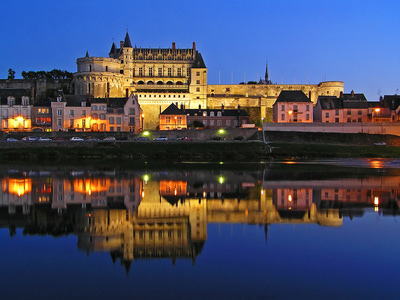
Amboise Castle originally a medieval fortress built on the site of an ancient Celtic oppidum, and expanded many times over the centuries.
In 1434, after Louis of Amboise was convicted of plotting against the king, the castle was seized by Charles VII and became one of the royal residences - along withBlois,Fontainebleau andSaint-Germain-en-Laye.
Favourite residences of many French monarchs from Louis XI to Francis I, Amboise was extensively rebuilt by Charles VIII in the Flamboyant Gothic style from 1492. Two Italian architects, Domenico da Cortona and Fra Giocondo, introduced the first Renaissance decorative motifs seen in French architecture.
Following the Italian War of 14941495, Charles VII brought more architects from Italy (including Pacello da Mercogliano) and transformed Amboise in the first Italianate palace in France. Charles died at Château d'Amboise in 1498 after he hit his head on a door lintel.
King Francis I was raised at Amboise, which belonged to his mother, Louise of Savoy. Leonardo da Vinci was invited by the king to Amboise Castle in December 1515 and lived and worked in the nearby Clos Lucé, connected to the château by an underground passage. Leonardo died in Amboise on 2nd May 1519 and was buried in the Chapel of Saint-Hubert inside the castle.
Château Gaillard
Often overshadowed by its more famous neighbour, Château Gaillard offers a unique glimpse into the early days of the Italian Renaissance in France. This elegant château, with its distinctive white stone facade, was once the home of Dom Pacello da Mercogliano, the renowned Italian gardener brought to France by King Charles VIII. The château's claim to fame lies in its gardens, which are considered among the earliest examples of Italian Renaissance garden design north of the Alps. The site boasts an impressive collection of citrus trees, a rarity in the Loire Valley, which adds an exotic touch to the landscape. The gardens are a harmonious blend of formal design and natural beauty, with carefully planned terraces, water features, and hidden nooks that invite exploration and contemplation.
Chanteloup Pagoda
Rising above the treetops just outside Amboise, the Chanteloup Pagoda is an unexpected sight in the French countryside. This seven-storey Chinese-inspired structure, built in the 18th century, stands as a whimsical folly and a testament to the era's fascination with exotic architecture. Each level of the pagoda offers increasingly spectacular views of the surrounding landscape, with the top floor providing a 360-degree panorama of the Loire Valley. The pagoda is set within a vast park that includes a tranquil lake, reflecting the tower's silhouette on calm days. Winding paths through the wooded grounds offer peaceful walks, allowing visitors to immerse themselves in nature while occasionally catching glimpses of the pagoda through the trees.
Tour de l'Horloge
The Tour de l'Horloge, or Clock Tower, stands as a sentinel at the heart of Amboise's old town. This 15th-century structure, with its distinctive clock face and bell tower, has been keeping time for the town's residents for over five centuries. Built atop the remnants of an old city gate known as the Porte d'Amasse, the tower serves as a tangible link to Amboise's medieval past. Its sturdy stone construction and elegant proportions make it a focal point of the town's skyline. The clock mechanism, though no longer the original, continues to chime the hours, its sound echoing through the narrow streets below, just as it has done for generations.
Old Town of Amboise
The old town of Amboise is a living museum of medieval and Renaissance architecture. Its narrow, winding streets are lined with well-preserved half-timbered houses, their facades a patchwork of exposed wooden beams and whitewashed plaster. Many of these buildings now house charming boutiques, artisan workshops, and cosy bistros, their ground floors transformed while their upper storeys remain true to their historical roots. As you wander through the old town, you'll encounter unexpected squares and hidden courtyards, each with its own story to tell. The area around the market square is particularly atmospheric, with its vibrant shopfronts and the buzz of daily life providing a stark contrast to the quiet grandeur of the nearby château.
Loire River Banks
The banks of the Loire River offer a different perspective on Amboise and its surroundings. Wide, tree-lined paths follow the river's course, providing ample space for leisurely walks, cycling, or simply sitting and watching the water flow by. From these paths, visitors can appreciate the full majesty of the Château Royal d'Amboise as it towers above the town. The river itself, with its sandy islands and gentle current, has played a crucial role in the region's history and continues to shape the landscape today. Crossing the bridge to the Île d'Or provides an unparalleled view of Amboise's skyline, with the château, the clock tower, and the church spires creating a picturesque tableau that seems to float above the water.
Church of Saint-Denis
The Church of Saint-Denis, with its robust Romanesque architecture, stands as a testament to Amboise's long religious history. Dating back to the 12th century, this church has witnessed centuries of town life, its thick stone walls and sturdy bell tower a constant presence through times of peace and turmoil. The church's interior, with its soaring vaulted ceilings and ancient stone pillars, creates an atmosphere of quiet reverence. Sunlight filtering through stained glass windows casts colourful patterns on the worn stone floor, highlighting the building's age and enduring beauty. While less ornate than some of France's grand cathedrals, the Church of Saint-Denis possesses a simple dignity that speaks to its long-standing role as a spiritual centre for the community of Amboise.
Top Museums
Musée d'Art et d'Histoire d'Amboise (Hôtel Morin)
Located on Rue François Ier, this museum is housed in a stunning mansion built between 1501 and 1505 for Pierre Morin, a treasurer under Louis XII. The building showcases early French Renaissance architecture with Gothic and Italian Renaissance elements. It later became the residence of the Duc de Choiseul and was used as a town hall until the 1970s. The museum features a collection of artworks and historical documents related to Amboise, including a portrait of the Duc de Choiseul and "The Death of Leonardo da Vinci" by Ménageaot.
Amboise Postal Museum
Set in a beautiful Renaissance house with an Italian-style garden, this museum explores the history of postal services in France. Exhibits cover the evolution from horseback mail delivery to modern postal systems, including military postal services and international postal systems. The museum also features items such as arms, mission papers, and furnishings from Napoleon's coaches.
Local Cuisine
Visitors can savour a variety of local delicacies, including the renowned Sainte-Maure de Touraine, a flavourful goat's cheese with a distinctive ash-coated rind. The town's charcuterie offerings are particularly noteworthy, with rillettes and rillons standing out as must-try specialities. These slow-cooked pork dishes are often enjoyed on crusty bread or as part of a charcuterie board. For those with a sweet tooth, the nougat de Tours, a delightful pastry filled with apricots and candied fruits, provides a perfect finish to any meal. To complement these gastronomic treasures, one can indulge in the excellent local wines from the Touraine vineyards, creating a truly authentic taste of Amboise.
Getting There & Around
Amboise, situated in the heart of the Loire Valley, is easily accessible by various modes of transport. The town has its own railway station with regular TER (regional train) services connecting it to larger cities like Tours. For those coming from Paris, you can take a TGV to Saint-Pierre-des-Corps station, which is about 25 minutes away by car. If driving, Amboise can be reached via the A10 motorway from Paris or Bordeaux, or the A85 from other directions. Once in town, getting around is a breeze. The compact city centre is perfect for exploring on foot, but for those who prefer wheels, there's a local bus service called 'Le Bus d'Amboise'. Alternatively, you can hire a bicycle from one of several rental shops to pedal your way around the charming streets and along the picturesque Loire riverbanks.


