


| Contents |
|---|

Introduction
Located at the confluence of the Rhône and Saône rivers, Lyon (pop. 520,000; urban 1.7 million; metro 2.3 million) is France's third-largest city by population. It boasts the largest ensemble of Renaissance buildings in Europe, with over 5 square kilometers protected as a UNESCO World Heritage site. Founded by the Romans in the 1st century BCE, Lyon served as the capital of Gaul for over 300 years and has maintained its significance as a major economic hub, particularly in banking, chemical, pharmaceutical, and biotech industries. The city is renowned for its gastronomy, historical landmarks, and the annual Fête des lumières light festival, while also being France's second-largest student city with nearly 200,000 students. The city's unique traboules (hidden passageways) in Vieux Lyon offer a glimpse into its silk-weaving past, while the modern Confluence district showcases cutting-edge architecture.
Interesting Facts about Lyon
- Lyon is a UNESCO World Heritage city, renowned for its rich historical and cultural heritage, featuring a blend of Roman, medieval, and Renaissance architecture.
- The city is famed as the birthplace of cinema, where the Lumière brothers invented the cinematograph and made the first film in 1895.
- The city hosts the famous Fête des Lumières, a spectacular festival of lights held annually in December, which is free to attend and attracts visitors worldwide.
- Lyon is home to two remarkably preserved Roman theatres, including the Ancient Theatre of Fourvière, which dates back to 17 BCE.
- The city's historic centre, Vieux Lyon, is one of the largest medieval quarters in Europe, offering a glimpse into Lyon's deep-rooted past.
- Lyon hosts the international headquarters of Interpol, Euronews and International Agency for Research on Cancer.
- Lyon is often considered the gastronomic capital of France, renowned for its traditional bouchons and world-class culinary scene.
- The historic old districts of Lyon, including the Presqu'île and Croix-Rousse, are UNESCO World Heritage Sites reflecting over two thousand years of urban growth.
- Lyon hosts the spectacular Fête des lumières (Festival of Lights) every December, earning the nickname "Capital of Lights".
- With more than 100 murals, Lyon is the French capital of trompe l'œil walls, including Europe's largest mural in the Croix-Rousse district.
- The city has unique covered passageways known as traboules, originally built in the 4th century and later used by silk workers and the Resistance during WWII.
- Lyon played a vital role in the French silk industry from the Renaissance onward, which strongly influenced its architecture and economic development.
- The Parc de la Tête d’Or is not only a vast park with a zoo and lake, but is also linked to a local legend of a hidden golden treasure.
- The city's vibrant student life makes it the second-largest university city in France, hosting nearly 200,000 students.
- Lyon was the site of canut (silk worker) revolts in the nineteenth century, events that shaped local history and labour movements.
- The city’s culinary heritage includes the invention of famous dishes such as quenelles, and signature Lyonnaise sausages.
- Lyon’s Opéra Nouvel stands as a modern architectural icon, redesigned between 1985 and 1993 by Jean Nouvel.
- The bike rental service now common in European cities was invented in Lyon, pre-dating London’s Boris Bikes.

History
Lyon was establishment as a Roman city in 43 BCE. Originally founded by Lucius Munatius Plancus as Colonia Copia Felix Munatia, the settlement was strategically positioned at the confluence of the Saône and Rhône rivers and soon became known as Lugdunum. The Romans recognised the site's exceptional strategic importance as a natural communications hub, making it the starting point for major Roman roads and eventually the capital of Gallia Lugdunensis. The city achieved tremendous prominence during the Roman Empire, becoming the capital of the Gauls and producing two Roman emperors: Claudius and Caracalla. Early Christianity flourished here as well, with notable martyrs including Saints Blandina, Pothinus, and Epipodius suffering persecution under various Roman emperors. The archbishop of Lyon still bears the prestigious title "Primate of the Gauls" today.
Following the collapse of the Western Roman Empire, Lyon maintained its significance throughout the medieval period. The city was assigned to Lotharingia under the Treaty of Verdun in 843, later passing to the Burgundian kingdom before becoming part of the Holy Roman Empire in 1033. Lyon didn't come under French control until the 14th century, when King Philip IV of France seized power over the city in 1311. During the medieval period, important monastic communities flourished, including Île Barbe and Saint Martin d'Ainay, whilst Jewish merchants traded in luxury goods such as precious stones, metals, and fabrics. The nascent money-lending industry facilitated trade with the East, and Lyon became a comfortable stopover for the papacy, hosting the coronations of Pope Clement V and John XXII. The city experienced significant civil unrest in 1436 when Charles VII's increased taxation sparked a two-month revolt led primarily by small tradesmen like barbers and beltmakers.
The Renaissance marked Lyon's golden age of prosperity and cultural achievement. The establishment of four annual fairs in 1464 by Louis XI drew merchants from across Europe, particularly from Italy and Florence, transforming Lyon into a major financial centre for banking and insurance. The silk trade became Lyon's defining industry following François I's authorisation of weaving privileges in the 1540s, previously an Italian monopoly, and by the 17th century Lyon was Europe's silk-manufacturing capital. The city also became a renowned centre of printing from 1473 onwards and literary activity flourished with notable figures including Maurice Scève, Antoine Héroet, and Louise Labé. However, Lyon's prosperity was dramatically interrupted during the French Revolution when the city supported the Girondists against the National Convention, resulting in a brutal two-month siege in 1793. Over 2,000 people were executed, numerous buildings around Place Bellecour were destroyed, and the Convention ordered the city's name changed to "Liberated City". Napoleon later ordered the reconstruction of all demolished buildings, and Lyon gradually restored its economic importance throughout the 19th century, continuing its urban development into the modern era.
Main Attractions
Basilique Notre-Dame de Fourvière
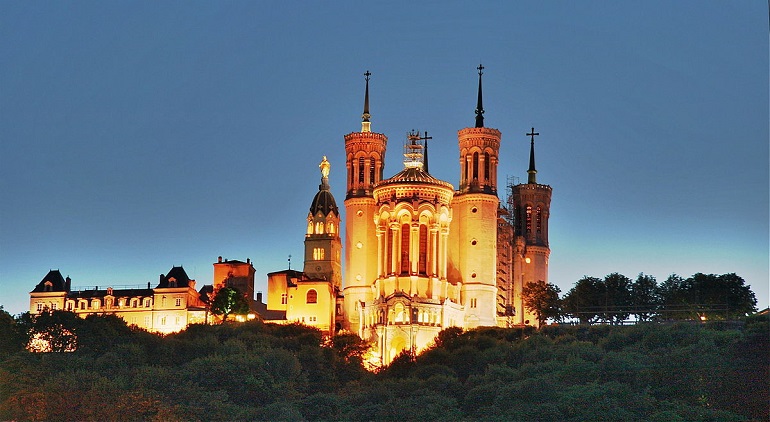
The Basilica of Notre-Dame de Fourvière stands on Fourvière Hill, the original site of the Roman settlement of Lugdunum. Its construction, designed by architect Pierre Bossan, began in 1872 and concluded in 1896. The project was funded by public subscription as a fulfillment of a pledge to the Virgin Mary for sparing the city from the Franco-Prussian War in 1870. The building comprises two distinct sanctuaries: a richly decorated upper church, featuring Byzantine and Romanesque influences with intricate mosaics and stained glass, and a more subdued crypt below. The basilica is crowned by four main towers said to represent the cardinal virtues, and a gilded statue of the Virgin Mary overlooks the city. Access to the hill is commonly via the Funiculaire de Fourvière, one of the world's oldest funicular railways. The terrace adjacent to the basilica provides an expansive panoramic view across the city, the Rhône and Saône valleys, and, on clear days, the distant Alps.
Vieux Lyon (Old Lyon)
Vieux Lyon, a designated UNESCO World Heritage Site, is one of Europe's most extensive Renaissance quarters. Situated along the banks of the Saône river, the district is divided into three distinct sections: Saint-Georges, Saint-Jean, and Saint-Paul. Its historical significance is rooted in the 15th to 17th centuries when Lyon thrived as a centre for the European silk trade, attracting wealthy Italian merchant bankers who built opulent residences. The area is characterised by narrow, cobblestoned streets, colourful building facades, and hidden courtyards. A key feature is the network of traboules, or covered passageways, used by silk merchants (canuts) to transport their goods. The central Saint-Jean quarter is home to the Cathédrale Saint-Jean-Baptiste, which contains a 14th-century astronomical clock. The district is also famous for its bouchons, traditional small restaurants serving Lyonnaise cuisine, which evolved from the simple eateries where workers once ate.
Lyon Cathedral
Lyon Cathedral, officially the Cathédrale Saint-Jean-Baptiste, is the primatial cathedral of Lyon and the seat of the city's archbishop. Situated in the heart of Vieux Lyon, its construction spanned from 1180 to 1476, resulting in a structure that combines Romanesque and Gothic architectural styles. The cathedral is renowned for its 14th-century astronomical clock, which indicates the date, the position of the sun and moon, and the feast days of local saints. Key historical features include two crosses on either side of the altar, which symbolise the union of churches agreed upon at the Second Council of Lyon in 1274, and the Bourbon Chapel, a notable example of 15th-century sculpture. Until the construction of the Basilica of Notre-Dame de Fourvière, this was the most important church in the city.

Roman Amphitheatre and Theatre of Fourvière
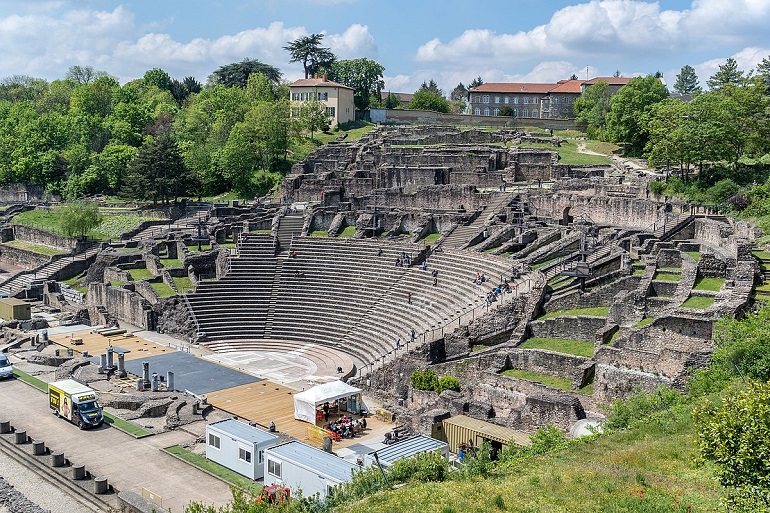
The ancient Roman archaeological site on Fourvière Hill consists of two main structures: the theatre and the smaller odeon. The Ancient Theatre of Fourvière, built around 15 BCE and later expanded, is the older and larger of the two, with a capacity for up to 10,000 spectators. It was used for plays and public readings. Adjacent to it is the Odeon, a smaller, more intimate venue built in the 2nd century CE for musical performances and poetry contests, seating around 3,000 people. While often collectively referred to as an amphitheatre, the actual amphitheatre for gladiatorial contests (Amphitheatre of the Three Gauls) is located on the slopes of the Croix-Rousse hill. The Fourvière site, which is free to access, allows visitors to walk among the stone tiers and on the original stage. Both the theatre and the odeon are still used today as performance venues, most notably for the annual Nuits de Fourvière summer festival.
Place des Terreaux and Fontaine Bartholdi
Place des Terreaux is a large, rectangular public square in Lyon’s 1st arrondissement, situated between the Hôtel de Ville (City Hall) and the Musée des Beaux-Arts. The square has a long history, having been the site of public executions during the French Revolution. Its centrepiece is the Fontaine Bartholdi, a monumental lead fountain designed by Frédéric Auguste Bartholdi, the sculptor of the Statue of Liberty. Originally commissioned by the city of Bordeaux, it was acquired by Lyon in 1890. The sculpture depicts a female figure, representing France or the Garonne river, driving a chariot pulled by four wild horses that symbolise the four main rivers flowing into the ocean. The square's layout was redesigned in the 1990s by artist Daniel Buren and includes 69 water jets embedded in the paving stones, which are often illuminated at night.
Hôtel de Ville
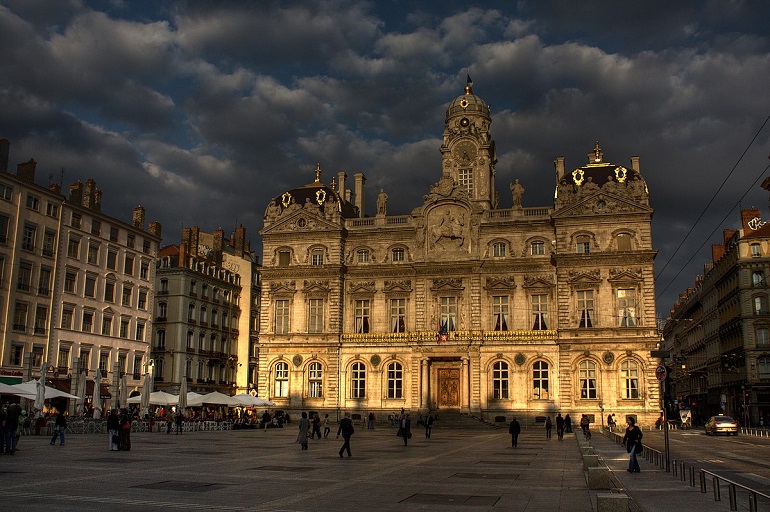
The Hôtel de Ville (City Hall) of Lyon stands prominently on the northern side of Place des Terreaux, serving as the seat of municipal government since the 17th century. The current building was constructed between 1646 and 1672, designed by architect Simon Maupin in the classical French style. The façade features a distinctive baroque architecture with ornate stonework, sculptural decorations, and a central pediment topped by a clock tower. The building underwent significant restoration in the 19th century under the direction of architect Tony Desjardins, who added the current neo-classical elements. The interior houses the mayor's office, council chambers, and ceremonial halls decorated with period furniture and artwork. The building is notable for its grand staircase and the Salon d'Honneur, used for official receptions and civil ceremonies. Public tours are occasionally available, offering visitors a glimpse into Lyon's administrative heritage and the building's architectural significance.
Place Bellecour
Place Bellecour is a vast public square located on the Presqu'île, the peninsula between the Rhône and Saône rivers. Measuring 312 by 200 metres, it is one of the largest pedestrian squares in Europe and marks the city's geographical centre (kilometre zero). Its surface is covered with distinctive red gravel. The square is dominated by a large equestrian statue of King Louis XIV, originally erected in 1713 but destroyed during the Revolution and subsequently recast in 1825. At the base of this central monument are two smaller allegorical statues, created in 1720, which represent the Rhône and Saône rivers. The square is a major transport hub and hosts the city's main tourist information office. It is frequently used for public events, concerts, and seasonal attractions, including a large Ferris wheel during the winter months.
Théâtre des Célestins
The Théâtre des Célestins, located on the Place des Célestins in the Bellecour district, is one of Lyon's most significant cultural institutions. It is one of only a few theatres in France with a continuous history of dramatic arts spanning over 200 years. The site was originally occupied by a Celestine convent from 1407 to 1779. The first theatre opened in 1792, but the current building was designed by Gaspard André and inaugurated in 1877. After a fire, it was rebuilt to the same design and reopened in 1881. The theatre features a grand, Italian-style auditorium with red velvet seats and a decorated cupola, as well as a smaller, more modern space called the Célestine, which is dedicated to contemporary works. It presents a varied programme of classic and contemporary plays, supporting both established and emerging artists.

Parc de la Tête d’Or
Covering 117 hectares, the Parc de la Tête d’Or is France's largest urban park, located in the 6th arrondissement. It was designed by landscape architects Denis and Eugène Bühler and opened in 1857. The park’s name, meaning "Park of the Golden Head," derives from a local legend about a treasure buried within its grounds. Key features include a large central lake used for boating, a velodrome, and extensive lawns. The park is also home to the Jardin Botanique de Lyon, a botanical garden established in 1857 which today manages around 15,000 plant species within its grounds and large greenhouses. A significant attraction is the Lyon Zoo, founded in 1858 and free to the public, which houses animals in environments such as the African Plain enclosure. With its vast rose gardens, miniature train, and numerous play areas, the park serves as a primary recreational space for the city's residents.
La Croix-Rousse
La Croix-Rousse is a historic district perched on one of Lyon's prominent hills, renowned as the traditional centre of the city's silk-weaving industry. The neighbourhood is divided into two sections: the Plateau de la Croix-Rousse (upper district) and the Pentes de la Croix-Rousse (slopes). During the 19th century, this area was home to the canuts, the silk workers who operated thousands of looms in tall buildings specifically constructed to accommodate the large Jacquard looms. These buildings, characterised by their unusually high ceilings and large windows, still define the district's architecture today. The area was the site of two major worker uprisings in 1831 and 1834, known as the Canut Revolts, which were among the first organised labour movements in France. Today, La Croix-Rousse maintains its bohemian character with artist studios, alternative cafes, and vintage shops. The district is famous for its street art, including the Mur des Canuts, and its extensive network of traboules. The area offers panoramic views over the city and can be accessed via the funicular from the city centre.
Murals and Street Art
Lyon has a strong tradition of public art, most notably its large-scale trompe-l'œil murals. The city features over 100 of these painted walls, many created by the artistic cooperative CitéCréation. One of the most famous examples is the Fresque des Lyonnais, an 800-square-metre mural that depicts 30 of Lyon's most famous historical and contemporary figures, from the Roman Emperor Claudius to the chef Paul Bocuse. Another significant work is Le Mur des Canuts in the Croix-Rousse district. Spanning 1,200 square metres, it is one of Europe's largest murals and depicts a detailed scene of life in the neighbourhood; it has been updated several times since its creation to reflect changes in the area. These murals serve as open-air galleries, celebrating the city's history, culture, and key industries like silk-weaving and cinema, and can be found throughout the city, particularly in the Croix-Rousse and the United States (États-Unis) quarters.
Les Traboules
Les Traboules are a unique architectural feature of Lyon, consisting of a network of covered passageways primarily found in the districts of Vieux Lyon and Croix-Rousse. The word "traboule" comes from the Latin trans ambulare, meaning "to walk through." These corridors, which pass through the courtyards of private residential buildings, were developed to provide direct access from a street to the river and to allow silk workers (canuts) to transport their delicate fabrics while sheltered from the weather. They also served as important secret routes for the French Resistance during the Second World War. While many are now private, a number remain open to the public during the day. They are often unmarked, and discovering them involves pushing unlocked doors to reveal hidden staircases and Renaissance-era courtyards. Visitors using the traboules are expected to remain quiet and respect the privacy of the residents.
Top Museums
Essential Museums Not to Miss
Musée des Confluences
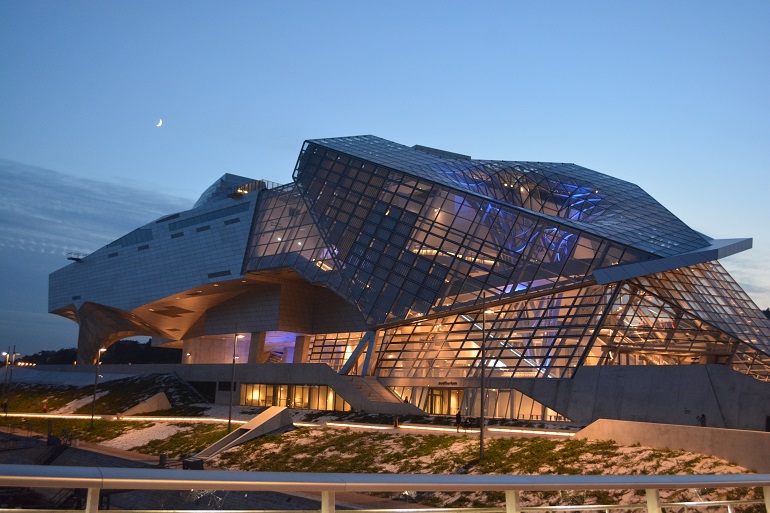
The Musée des Confluences stands as Lyon's most distinctive museum, both architecturally and conceptually. Opened in 2014, this futuristic building sits dramatically at the confluence of the Rhône and Saône rivers, creating a stunning landmark where the waters meet. The museum offers a fascinating journey through the history of humanity, combining natural history, anthropology, and cultural studies under one roof.
With nearly 3.5 million artefacts in its collections, the museum spans topics from natural sciences to human sciences, science and technology. Visitors can explore everything from fossils and minerals to Egyptology, with permanent collection exhibits featuring unique objects such as the Choulans mammoth, masks from Japanese Noh theatre, a reproduction of Sputnik 2, and even a particle accelerator. The museum's top floor provides spectacular views over Lyon, making it as much an architectural experience as a cultural one.
Musée des Beaux-Arts de Lyon
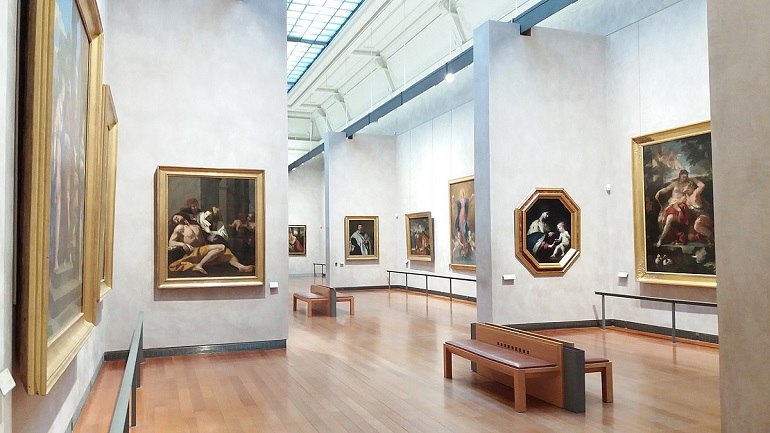
Housed in a magnificent former 17th-century Benedictine convent adjacent to Lyon's Hôtel de Ville on Place des Terreaux, the Museum of Fine Arts ranks as one of the largest and most important art museums in France and Europe. The museum showcases an impressive breadth of artistic treasures spanning from ancient times to the present day.
The collections include more than 1,300 sculptures and over 14,000 pieces of Egyptian art, making it one of Europe's leading institutions for Egyptian collections. Half of the museum's 70 exhibition rooms are dedicated to paintings displayed in chronological order, featuring works by masters such as Veronese, Rubens, Rembrandt, Poussin, Gauguin, and Monet. The Impressionist collection is particularly noteworthy, with lovely works by Degas, Monet, and Pissarro.
The museum's sculptural collection deserves special mention, with pieces scattered throughout the building and a significant collection housed in the charming courtyard—the former abbey's cloister, now transformed into a lovely garden. Visitors can also discover Rodin's famous sculpture The Kiss amongst the collections.
Lyon's Unique Cultural Heritage Museums
Musée Lumière
Located in the original Lumière family home built in 1899, this museum celebrates Lyon's pivotal role in cinema history. The Musée Lumière retraces the extraordinary story of Auguste and Louis Lumière's invention of the cinematograph in 1895, marking the birth of cinema. All of their groundbreaking inventions are exhibited here, alongside film screening rooms and publications about cinema. The museum showcases how the brothers perfected photographic equipment and techniques to develop this revolutionary new process that would change entertainment forever.
Musée des Tissus et des Arts Décoratifs
This museum houses the world's premier collection devoted to textiles, presenting 4,500 years of textile production. The Textile and Decorative Arts Museum offers visitors the chance to discover Lyon's rich history in the silk industry and learn about the skills of the canuts (Lyon's silk workers). The collections include fabrics, carpets, tapestries, lace, and porcelain from around the world, featuring lavish silks that once belonged to Marie Antoinette and elaborately embroidered fabrics. Note: The museum is currently closed for renovation until 2026.
Lugdunum - Musée et Théâtres Romains
Perched on Fourvière hill near the Basilica of Notre-Dame de Fourvière, Lugdunum serves as Lyon's archaeology museum and explores the city's ancient Roman heritage. Located adjacent to the Roman theatre and odeum, the museum transports visitors back to Roman times through representative artefacts from this remarkable period. The collections feature sculptures, mosaics, and everyday objects from Roman villas in ancient Lugdunum and its surroundings, providing insight into daily life during Lyon's time as a major Roman settlement.
Contemporary and Speciality Museums
Musée d'Art Contemporain de Lyon (macLYON)
Lyon's Museum of Contemporary Art promotes and exhibits contemporary works from international artists, making it an essential destination for modern art enthusiasts. The museum features intriguing installations such as Le Temps d'une oeuvre, an evolving artwork where two coloured plexiglass plates are removed daily, creating an ever-changing display that also shifts with the sun's angle throughout the day. Another highlight is an entire floor dedicated to the art installation Roller Coaster!, alongside external installations including a piece by Yoko Ono. Note: The museum is only open during exhibition periods.
Musée Gadagne Complex
This Renaissance building houses two distinct museums that together form the Musée Gadagne. The Musée d'Histoire de Lyon covers the city's development from prehistoric roots to the present day through exhibits, photographs, paintings, and sculptures. Permanent exhibits include 'Portraits of Lyon', 'On the Waterfront: Living with the Rhône and Saône', and 'What are you Doing? Industrial and Working Class Lyon'.
The Musée des Arts de la Marionnette celebrates Lyon's famous puppet tradition, taking visitors on a journey through the history of puppetry across different cultures. The museum displays over 300 puppets, costumes, and sets, with Guignol—Lyon's beloved puppet character created in 1808—taking centre stage. Interactive displays allow visitors to create their own puppet shows, making it particularly engaging for families.
Musée Miniature et Cinéma
Located in a Renaissance building in the heart of Vieux Lyon, this unique museum recreates film sets and locations through intricate miniature models whilst also housing retired film sets and costumes. The museum combines the artistry of miniature craftsmanship with behind-the-scenes cinema magic, creating an engaging experience for visitors of all ages.
Centre d'Histoire de la Résistance et de la Déportation
Housed in the former Gestapo headquarters, this poignant museum pays tribute to Lyon's role as the capital of the French Resistance during World War II. Through objects and eyewitness accounts from Resistance members, the museum retraces the city's wartime history and honours those who fought against occupation.
Family-Friendly Discoveries
Le Petit Musée de Guignol
This charming small museum in Vieux Lyon is dedicated entirely to Guignol, Lyon's beloved puppet character brought to life by Laurent Mourguet in 1808. Set in an authentic 19th-century atmosphere, the museum offers insights into the evolution of this traditional puppet show and features classic characters like Polichinelle and Gnafron alongside Guignol himself.
Lyon's museum landscape reflects the city's diverse cultural heritage, from its Roman foundations and Renaissance splendour to its industrial innovations and contemporary artistic expression. Each institution offers a unique window into different aspects of human creativity and Lyon's particular contributions to art, history, and culture.
Local Cuisine
Lyon rightfully holds the title of France's gastronomic capital, boasting over 4,000 restaurants and a culinary heritage dating back to the 16th century. The city's traditional eateries, known as bouchons, serve hearty local specialities in an unpretentious atmosphere with red-checkered tablecloths. Signature dishes include the delightful Salade Lyonnaise with its crispy lardons and poached egg, the iconic quenelle de brochet (pike dumplings in creamy sauce), and the celebrated Rosette de Lyon sausage, which is cured for several months and traditionally served as an aperitif with local cheeses. The local cuisine showcases both refined dishes and rustic fare, from the elegant pâté en croûte to the more adventurous tablier de sapeur (breaded tripe). For cheese enthusiasts, the creamy Saint-Marcellin, which holds a Protected Geographical Indication, offers a perfect conclusion to any meal.
Shopping
The city's main retail hub is the Presqu'île district, where the pedestrianised Rue de la République stretches for one kilometre between Place Bellecour and Place des Terreaux, hosting major retail chains and department stores. For luxury shopping, the Carré d'Or area features over 70 high-end boutiques including Chanel, Louis Vuitton and Hermès. The city boasts several modern shopping centres, with Westfield La Part-Dieu being Europe's largest urban shopping centre, housing some 200 shops. For those seeking unique finds, the slopes of Croix-Rousse hill feature independent designers and artisanal shops, whilst Les Puces du Canal, France's second-largest flea market, operates on Thursdays, Saturdays and Sunday mornings. Food enthusiasts shouldn't miss Les Halles Paul Bocuse, an indoor market perfect for sampling and purchasing local specialities.
Nature in and around Lyon
Lyon offers a remarkable array of natural attractions that provide a refreshing escape from urban life. The city's top park is the magnificent Parc de la Tête d'Or, a 117-hectare urban oasis featuring vast meadows, a serene lake, century-old trees, and a free zoo housing over 300 animals. The city's commitment to green spaces is evident in its more than 300 public parks and the beautifully redeveloped banks of the Rhône and Saône rivers, which now serve as popular leisure spots. For those willing to venture slightly beyond the city, several stunning lakes offer natural swimming opportunities, including the emerald waters of Lac d'Aiguebelette and the crystal-clear Lac de Paladru, both just an hour's journey from Lyon. The surrounding countryside, particularly the Balcons du Dauphiné region, provides excellent opportunities for hiking, cycling along the ViaRhôna route, and wildlife spotting in numerous Sensitive Natural Spaces.
Getting To & Around Lyon
Getting There
By train Travelling to Lyon by train is convenient and swift, with high-speed TGV and Eurostar services connecting major European cities directly to Lyon. The city’s central location means it is just two hours from Paris and also well-served from stations such as Brussels, London and Geneva, making rail an attractive and comfortable option for most visitors.
By coach or bus Several long-distance coach companies, including FlixBus and BlaBlaCar Bus, offer routes to Lyon from a range of European destinations. Lyon boasts multiple bus stations, such as Lyon-Perrache and Lyon Part-Dieu, each located close to central transport hubs. Buses are a practical way to reach Lyon, often chosen for their budget-friendly nature and wide availability.
By car Driving to Lyon is straightforward, with the city situated at the heart of an extensive motorway network linking it to other French and European cities. Major autoroutes such as the A6 offer direct access, and you can opt for toll roads for speed or scenic national roads for leisure. This flexibility makes arriving by car an excellent choice, especially for those wishing to explore the surroundings at their own pace.
Getting Around
Lyon boasts France's second-largest public transport system, operated by TCL (Transports en Commun Lyonnais), which provides comprehensive coverage across 72 communes. The network encompasses 4 metro lines, 7 tramway lines, 2 funicular railways, and over 130 bus and trolleybus routes, serving the city and its surroundings from 5 am until 12:30 am daily. The system is remarkably efficient, with major interchange stations like Bellecour, Part-Dieu, and Charpennes connecting various transport modes. Visitors can purchase tickets from vending machines at metro and tramway stations, TCL sales offices, or authorised retailers, with a single ticket valid for one hour of travel across all modes of transport. The network is largely accessible to persons with reduced mobility, and for added convenience, the city offers 7,100 park-and-ride spaces that are free to use with a valid TCL transport ticket.
Best Time to Visit
The optimal time to visit Lyon is during spring (March to May) and autumn (September to November), when temperatures are pleasantly mild, ranging from 13°C to 22°C. These shoulder seasons offer comfortable conditions for exploring the city whilst avoiding the peak summer crowds and elevated prices. Spring brings blooming flowers and vibrant parks, particularly in the Parc de la Tête d'Or with its 16,000 rosebushes. Autumn treats visitors to stunning fall foliage and numerous cultural events, including the Contemporary Art Biennale. Whilst summer (June to August) brings warm temperatures and festivals, it can become quite hot and crowded, with temperatures reaching up to 30°C. Winter, though cold with temperatures between 2°C and 10°C, offers its own charm, especially during the magnificent Festival of Lights in early December.