


Introduction
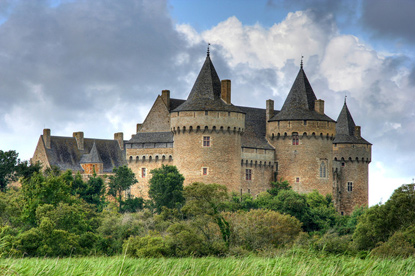
Suscinio Castle stands as one of Brittany's most significant medieval fortresses, built between the 13th and 15th centuries as a residence for the Dukes of Brittany. Located in Sarzeau on the Rhuys Peninsula near the Atlantic coast, this moated castle was designed as a hunting lodge and place of leisure, surrounded by marshlands and forests that provided excellent game. The castle gained historical prominence from 1471 to 1484 when it housed Henry Tudor (later King Henry VII of England) and approximately 500 Lancastrian exiles during the Wars of the Roses, making it a crucial refuge for the future English monarch. After centuries of abandonment following Brittany's integration into France, the castle fell into ruin and was even used as a stone quarry until it was designated a Historical Monument in 1840. Today, following extensive restoration work begun in the 1960s, Suscinio Castle operates as a museum showcasing medieval architecture, archaeological finds, and the fascinating history of Breton ducal power, with its impressive towers, curtain walls, and period features offering visitors insight into late medieval aristocratic life.
Interesting Facts about Suscinio Castle
- Suscinio Castle was a favoured seaside residence of the Dukes of Brittany, set between marshes and the Atlantic dunes for hunting and leisure.
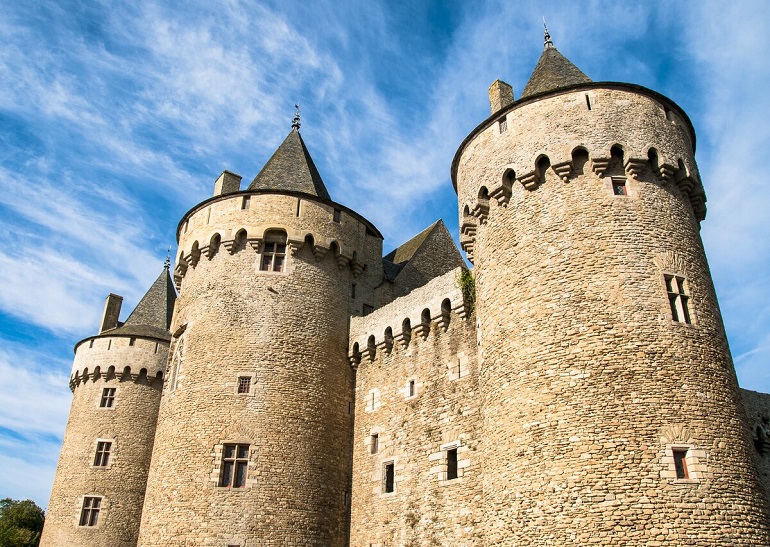
- The fortress grew from a 13th‑century seigniorial house into a moated stronghold with towers, machicolations and a drawbridge by the late Middle Ages.
- From 1471 to 1484, it sheltered the exiled Jasper Tudor and young Henry Tudor—future Henry VII—during the Wars of the Roses.
- A ruined ducal chapel by the walls yielded some 30,000 remarkably preserved medieval terracotta floor tiles with heraldic and bestiary motifs.
- Its steam‑room suite with a hypocaust recalls refined medieval comforts more associated with Roman baths than gritty castle life.
- The castle was quarried for stone after the Revolution, leaving it a romantic ruin before major 20th‑century restorations revived its silhouette.
- Listed as a Historical Monument as early as 1840, the site became a showcase for conservation craftsmanship across roofs, carpentry and stonework.
- The enceinte shows Breton‑style machicolations and later artillery adaptations, reflecting shifts from high‑medieval defence to gunpowder warfare.
- The setting forms part of a protected natural estate where coastal marshes host rare birds like the bluethroat and Kentish plover.
- A dovecote, chapel remains and outbuildings around the moat evoke the working heart of a princely domain as much as a martial fortress.
History
Medieval Origins and Ducal Residence
Suscinio Castle, situated on the dramatic Atlantic coastline of the Rhuys Peninsula in Sarzeau, Morbihan, was conceived as a magnificent residence for the Dukes of Brittany during the late Middle Ages. The castle's origins trace back to the early 13th century when Pierre de Dreux, Duke of Brittany, first mentioned Suscinio in correspondence dated 1218, though the first seigniorial house (logis seigneurial) was constructed between 1213 and 1237. Originally designed as a hunting lodge surrounded by vast forests teeming with game, the castle served as a place of leisure between the seaside and woodland, reflecting the sophisticated tastes of Breton nobility. The strategic location allowed the dukes to enjoy both maritime views and excellent hunting opportunities whilst maintaining proximity to their primary seat in Vannes. Throughout the 13th and 14th centuries, successive dukes expanded and fortified the complex, with John V and John VI undertaking significant construction work that included a new seigniorial residence block featuring the impressive Tour Neuve (New Tower). By the end of the 14th century, when Breton independence faced increasing pressure from France, the castle was substantially fortified after being temporarily captured by Bertrand du Guesclin, the formidable Constable of France.
Wars of the Roses and Political Intrigue
Suscinio's most dramatic chapter unfolded during the Wars of the Roses when, from 1471 to 1484, the castle served as a crucial sanctuary for Lancastrian exiles fleeing Yorkist persecution in England. The fortress housed Jasper Tudor, his nephew Henry Tudor (the future Henry VII of England), and approximately 500 English supporters, though the castle could only accommodate about 100 people directly, necessitating the billeting of the remainder in nearby villages such as Kermoizin. Duke Francis II of Brittany steadfastly supported these exiled Englishmen despite persistent Plantagenet demands for their surrender, knowing that returning them to England would mean certain execution under attainder. For eleven years, Suscinio functioned as an armed camp, constantly vigilant against kidnapping attempts by Yorkist agents. The duke's support extended to financing a failed Lancastrian rebellion in 1483 with 40,000 gold crowns, 15,000 soldiers, and a fleet of transport vessels. When Duke Francis II fell gravely ill, his treasurer Pierre Landais nearly betrayed Henry Tudor to Richard III in exchange for English military support, but both Tudors escaped across the French border just hours before Landais' soldiers arrived. Following Francis II's death in 1488 and the succession of his eleven-year-old daughter Anne of Brittany, the castle's importance began to wane. After Anne's death in 1514 and Brittany's integration into France, Suscinio was gradually abandoned by the aristocracy and confiscated by King Francis I, who bestowed it upon his mistresses.
Decline and Modern Restoration
The castle's fortunes declined precipitously during the 16th century as the great hall along the northern curtain wall was destroyed, and the complex began its transformation from a noble residence to a source of building materials. During the 17th and 18th centuries, Suscinio was systematically quarried for stone, with this destructive practice continuing through the French Revolution when the property was sold to a merchant who intensified the dismantlement. The castle remained in ruins for decades until 1840, when the influential inspector Prosper Mérimée visited the site and classified it as a Historical Monument under the "remarkable ruins" category, marking the beginning of its preservation. This romantic period saw visitors drawn to the picturesque decay of the medieval fortress. Serious restoration efforts commenced in the 19th and 20th centuries, gaining significant momentum when the Morbihan Department purchased the property in 1965. Over the subsequent decades, extensive renovation work has gradually returned the castle to its former majesty, transforming it from a crumbling ruin into a well-preserved historical site. Today, Suscinio stands as a testament to both medieval Breton power and modern conservation efforts, housing a museum with archaeological finds including medieval tiles and artifacts that illuminate its storied past.
Description
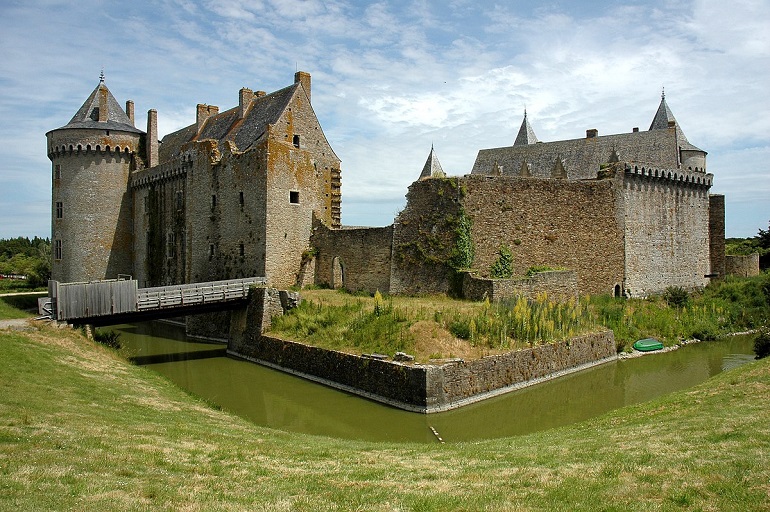
Flanked by salt-laden marshes and the gentle roll of Atlantic dunes, Suscinio Castle rises from its broad, mirror-smooth moat like a stone ship at anchor. Slate roofs gleam against the Breton sky, while conical turrets and stout watchtowers describe a near-perfect rectangle around a cobbled inner ward. A wooden drawbridge spans the still water, guiding visitors beneath a broad machicolated gateway whose worn portcullis grooves hint at long-vanished tensions.
Step inside and the atmosphere softens. The courtyard is enclosed yet spacious, its flagstones bordered by clipped box hedges, pots of hydrangea and the mellow brick of former stables. A slender corner tower doubles as a dovecote: look up to see its arc of pigeon holes like a decorative frieze beneath the eaves. Timber galleries run along two sides, their carved balustrades leading the eye towards a spiral stair whose smooth stone treads betray centuries of footfall.
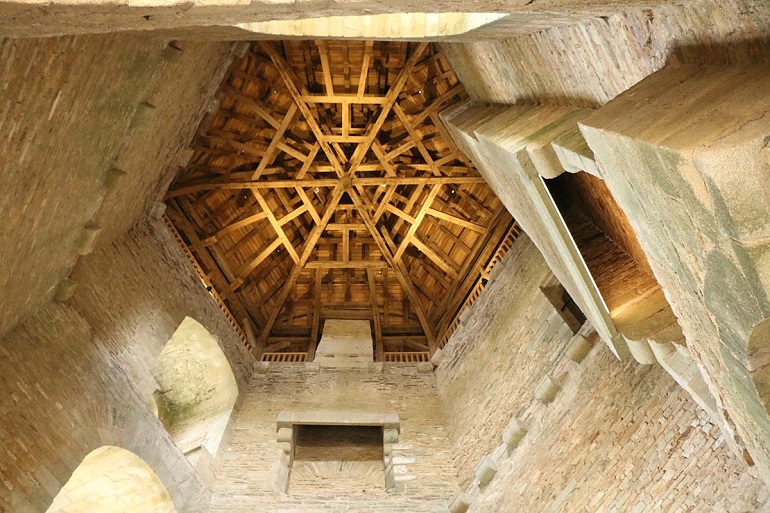
Indoors, the castle reveals a series of carefully restored chambers that balance authenticity with comfort. The Grand Hall boasts a lofty barrel vault, richly toned oak beams and the lingering scent of beeswax polish. Wall hangings in moss green and deep carmine mute the acoustics, allowing the recorded crackle of an open hearth to weave an almost theatrical soundscape. Nearby, a vaulted kitchen showcases vast granite hearths, iron cauldrons and a polished copper batterie de cuisine; the low glow of accent lighting catches every hammered rivet.
A compact chapel offers a contrasting intimacy: lime-washed walls, a pointed barrel vault and a single stained-glass lancet that scatters jewel-coloured patterns across the stone floor. Further on, an exhibition wing combines tactile models, period clothing and interactive touchscreens to shed light on daily courtly life without imposing on the castle’s serenity. Audio guides are available in multiple languages, and a discreet lift provides step-free access to the main floors.
Climb the ramparts and a panorama unfurls. To the north, reed beds host herons, egrets and the occasional marsh harrier riding coastal thermals. To the south, sandy trails wend through umbrella pines towards a sweeping beach where Atlantic rollers break in rhythmic cadence. Telescopes mounted at intervals allow leisurely bird-watching, while low stone benches invite quiet contemplation of the ever-shifting light.
The surrounding estate extends beyond the immediate moat. Way-marked paths thread through heathland fragrant with gorse and wild rosemary, leading to observation hides that overlook shallow lagoons alive with seasonal migration. Picnic lawns under mature oaks provide respite on warm afternoons, and during high summer an open-air café beside the outer wall serves Breton galettes, crêpes and artisanal cider.
A well-stocked shop, housed in the former gatekeeper’s lodge, offers hand-thrown pottery, local sea-salt caramels and limited-edition prints of the castle’s distinctive skyline. Modern conveniences—ample restrooms, sheltered bicycle racks and refillable water stations—are woven seamlessly into the fabric of the site.
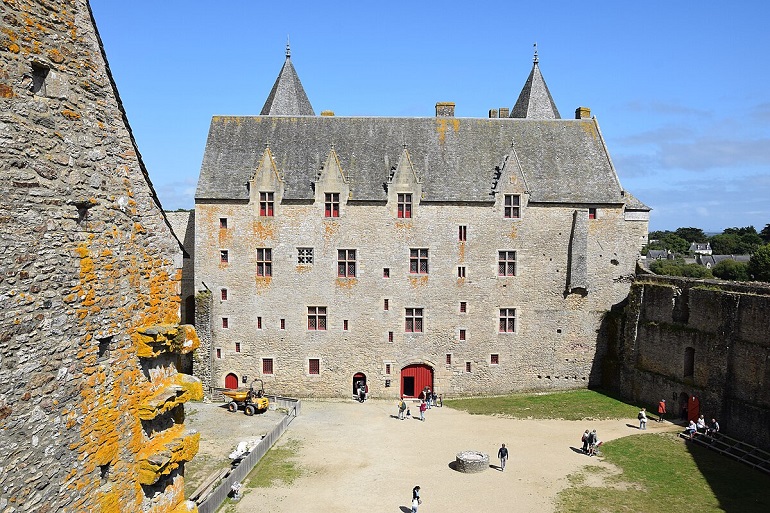
Throughout the year, Suscinio’s ambience shifts with gentle drama. By day the stone appears pearl-grey, absorbing the cry of gulls and the whisper of reeds; at dusk, uplighters bathe the façades in soft amber, while reflections ripple across the moat like liquid gold. Occasional night-time illuminations, storytelling walks and falconry displays lend fresh dimensions to the experience without ever disturbing the castle’s essential tranquillity.
Getting There
By train Take the high-speed TGV or Intercités service to Vannes, the closest mainline station (2 hr 40 min from Paris-Montparnasse). From Vannes station, connect with regional Kicéo buses on line 22 towards Sarzeau, which stop at “Adrien Régent”; Suscinio Castle lies a short 15-minute walk beyond the stop through quiet country lanes.
By coach or bus Daily regional coaches link Vannes with Sarzeau-Médiathèque; in summer, some services continue directly to “Château de Suscinio” at peak visiting times, sparing the walk. Alternatively, long-distance FlixBus routes from Nantes and Rennes terminate at Vannes, where you can change to the local Kicéo line 22.
By car Follow the N165 to Vannes, then the D780 south towards Sarzeau and switch to the scenic D198 that is clearly signposted “Suscinio”. A dedicated visitor car park sits beside the marshes just 300 m from the castle drawbridge, and the drive offers sweeping views over the Gulf of Morbihan’s shoreline.