


| Contents |
|---|

Introduction
The Château de Chaumont-sur-Loire, perched on a bluff overlooking the Loire River, is a remarkable blend of medieval and Renaissance architecture. Originally built as a defensive fortress in the 10th century, the current structure dates primarily from the 15th and 16th centuries. The château boasts a rich history, having been owned by notable figures such as Catherine de Medici and Diane de Poitiers. Today, it is renowned not only for its historical significance but also for its International Garden Festival, which showcases innovative landscape designs annually. The estate, spanning 32 hectares, includes the château itself, historic stables, landscaped grounds, and serves as a centre for contemporary art exhibitions. With over 500,000 visitors each year, Chaumont-sur-Loire offers a unique blend of architectural heritage, horticultural innovation, and artistic expression.
Interesting Facts about the Château
- The Château de Chaumont-sur-Loire was originally built around the year 1000 by Odo I, Count of Blois, to defend against attacks from the County of Anjou.
- Louis XI ordered the destruction of the château in 1465 as punishment for Pierre d’Amboise’s rebellion, but it was later rebuilt by his son Charles I d’Amboise.
- The château showcases a blend of Gothic defensive architecture and Renaissance elegance, reflecting its historical evolution.
- Catherine de Medici purchased the château in 1550 and later gifted it to Diane de Poitiers, her late husband’s mistress.
- In the 19th century, the château was restored and modernised by Marie Say, a wealthy sugar heiress, and her husband Prince Henri-Amédée de Broglie.
- The château’s stables, built in 1877, were considered among the most luxurious and modern in Europe at the time.
- An elephant once roamed the grounds as a gift from the Shah of Persia during Marie Say's ownership.
- The château is perched 40 metres above the Loire River, offering breathtaking views of its surroundings.
- It hosts an annual International Garden Festival that attracts visitors from around the world.
- Benjamin Franklin was once a guest at the castle.
- The château is now a Centre for Arts and Nature, featuring contemporary art exhibitions throughout its grounds and interiors.
History
The Château de Chaumont-sur-Loire, perched above the Loire River in the Loir-et-Cher region of France, has a history dating back to the 10th century. It was originally constructed by Odo I, Count of Blois, to defend his lands against Fulk Nerra, Count of Anjou. The castle later came into the possession of Gelduin, a Norman knight, who fortified it further before passing it to his great-niece Denise de Fougères. Through her marriage to Sulpice I d’Amboise in 1054, the château entered the Amboise family’s ownership and remained so for nearly five centuries. This early medieval fortress served as a strategic stronghold overlooking the border between Blois and Anjou.
In 1465, King Louis XI ordered the destruction of Chaumont as punishment for Pierre d’Amboise’s rebellion against the crown. However, Pierre regained royal favour and began reconstructing the château alongside his son Charles I d’Amboise. The rebuilding introduced Gothic architectural elements, including crenellated battlements and a drawbridge. Charles II d’Amboise continued these efforts in the early 16th century, adding Renaissance features such as ornate sculptures and a grand staircase. The château’s design blended medieval fortifications with Italian-inspired details, marking a transition in French architecture during this period.
The château gained prominence again in 1550 when Catherine de Medici acquired it. Following her husband King Henri II’s death in 1559, she forced his mistress Diane de Poitiers to exchange the Château de Chenonceau for Chaumont. Diane made significant alterations during her brief stay, including completing battlements and adding decorative emblems. Over subsequent centuries, Chaumont underwent further transformations under various owners before becoming state property in 1937. Today, it is celebrated not only for its historical significance but also for its role as a cultural venue, hosting the International Garden Festival and exhibitions that draw visitors from around the world.
Description
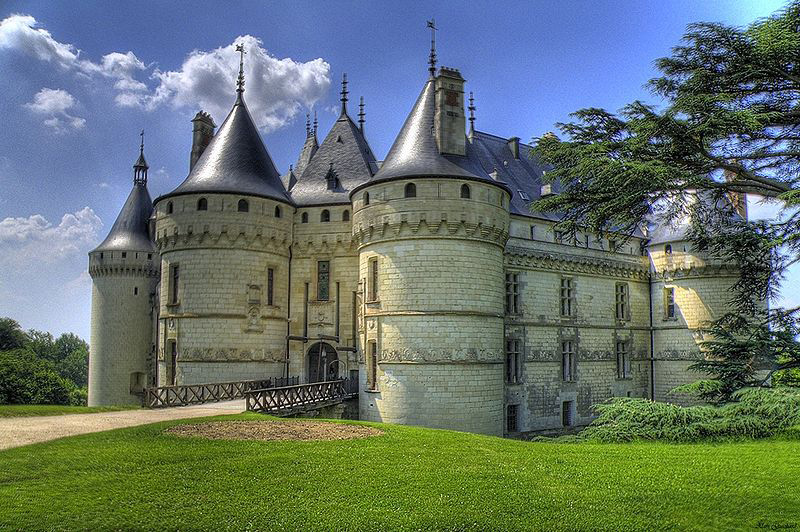
Perched 40 metres above the meandering Loire River, the Château de Chaumont-sur-Loire stands as a magnificent example of Renaissance architecture blended with medieval fortifications. This stunning castle, with its impressive façade and cylindrical towers topped with slate conical roofs, offers visitors a captivating glimpse into French history and artistry. The château's commanding position provides breathtaking panoramic views across the Loire Valley, a UNESCO World Heritage site renowned for its cultural landscape.
The distinctive silhouette of Chaumont-sur-Loire is instantly recognisable, with its perfect symmetry and elegant proportions. The château's exterior walls, constructed from the region's characteristic tuffeau limestone, take on a golden hue in the afternoon sun, creating a magical atmosphere that has enchanted visitors for centuries. The main entrance, flanked by two imposing round towers, welcomes guests through a drawbridge that spans what was once a deep moat, hinting at the castle's defensive past.
The Castle Interior: Ground Floor
As you cross the drawbridge and enter the château, you'll be transported to a world of opulence and refinement. The castle's rooms are adorned with a mix of period furnishings and contemporary art installations, creating a unique and thought-provoking atmosphere that bridges the centuries.
The entrance hall sets the tone for your visit, with its soaring ceilings and elegant stone staircase. Original architectural elements, including exposed beams and stone carvings, provide an authentic backdrop for the carefully curated furnishings and artwork.
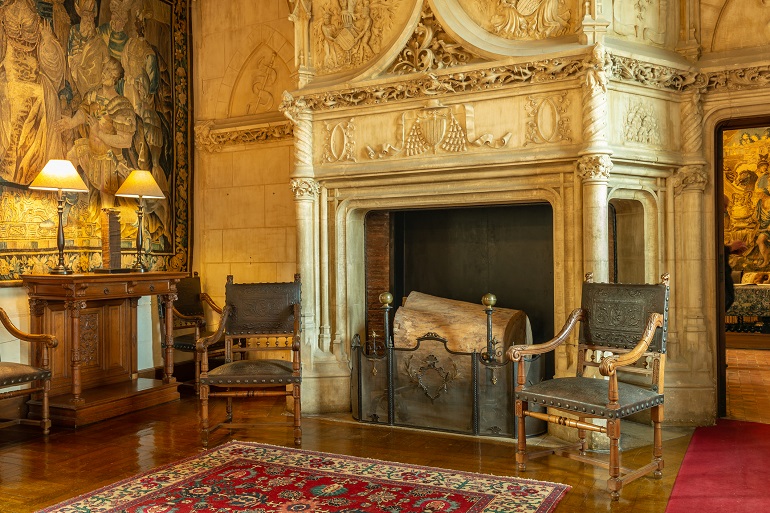
The Guard Room, strategically positioned above the castle's entrance, features impressive stone fireplaces and period weapons that speak to the château's defensive history. The room's large windows offer spectacular views of the Loire River and surrounding countryside, allowing visitors to appreciate the strategic importance of the castle's location.
The Castle Interior: State Rooms
The Council Chamber stands as one of the most impressive spaces within the château, featuring exquisite 16th-century Planets and Days Tapestries that adorn the walls. These remarkable textiles depict allegorical scenes with intricate details that reward close inspection. The room's ornate ceiling, with its painted wooden beams, complements the rich colours of the tapestries.
Catherine de Medici's Chamber offers a glimpse into the private world of one of France's most influential queens. The room features a canopied bed, period furniture, and personal items that evoke the presence of this formidable historical figure. A small door provides access to the chapel's balcony, where the queen could attend religious services in privacy.
The King's Room, designed to accommodate royal visitors, houses an impressive collection of medallions by Italian artist Jean-Baptiste Nini. These detailed terracotta profiles showcase Nini's remarkable skill and provide a fascinating record of 18th-century personalities. The room's sumptuous furnishings, including a magnificent four-poster bed with embroidered hangings, reflect the luxury afforded to royal guests.
The Castle Interior: Upper Floors
As you ascend the grand staircase to the upper floors, you'll discover a series of elegantly appointed chambers that housed the château's residents and their distinguished guests. Each room tells its own story through carefully selected furnishings, artwork, and decorative objects.
The Diane de Poitiers Suite pays homage to another influential woman associated with the château. The rooms feature Renaissance-style furniture, tapestries depicting hunting scenes (a nod to Diane's namesake, the Roman goddess of the hunt), and personal items that provide insight into aristocratic life during the 16th century.
The Princess de Broglie's Apartments offer a contrast in style, showcasing the tastes and fashions of the 19th century. Delicate wallpapers, ornate mirrors, and elegant furnishings create an atmosphere of refined femininity. The princess's salon, with its collection of porcelain and decorative arts, reflects the cosmopolitan interests of its former occupant.
The Historic Park: Layout and Design
Surrounding the château is a breathtaking English-style landscaped park designed by Henri Duchêne in the 1880s. This 21-hectare green oasis features gently rolling hills, carefully placed tree clusters, and winding paths that offer stunning vistas of the Loire Valley. Duchêne's design philosophy embraced the natural contours of the land while creating seemingly effortless compositions that guide the visitor's eye from one beautiful vista to the next.
The park's layout includes several distinct areas, each with its own character and charm. The north-facing side offers dramatic views of the Loire River and the villages beyond, while the southern aspect provides more intimate garden rooms and sheltered walks. Throughout the grounds, carefully positioned benches invite visitors to pause and absorb the tranquil beauty of their surroundings.
The Historic Park: Notable Features
A picturesque stone bridge spans a small stream that meanders through the lower section of the park. This charming structure, with its weathered balustrades and moss-covered stones, creates a focal point for photographs and offers a romantic spot to linger and enjoy the sounds of flowing water.
The park's unusual water tower, disguised as a rustic folly, demonstrates the Victorian penchant for combining practicality with aesthetic appeal. This whimsical structure, with its rough-hewn exterior and conical roof, appears to be an ancient ruin but actually housed modern hydraulic equipment that supplied water to the château and gardens.
Perhaps one of the most touching features of the park is its unique dog cemetery. This small, secluded area contains ornate headstones commemorating the beloved canine companions of previous château owners. The inscriptions, some dating back to the late 19th century, reveal the deep affection these aristocratic families felt for their pets.
Throughout the park, magnificent cedar trees create dramatic silhouettes against the sky. Some of these majestic specimens date back to the 1830s and have grown to impressive proportions, their spreading branches creating natural canopies under which visitors can escape the summer sun. Other notable trees include ancient oaks, copper beeches with their distinctive purple foliage, and graceful weeping willows that fringe the water features.
The International Garden Festival: Concept and History
From April to November, the Domaine de Chaumont-sur-Loire hosts its renowned International Garden Festival. Established in 1992, this annual event has grown to become one of the world's most important showcases for contemporary garden design and landscape architecture. Each year, the festival adopts a specific theme that challenges participants to explore new concepts in garden creation, often addressing environmental concerns, cultural issues, or philosophical questions.
The festival showcases approximately 30 themed gardens created by landscape architects, designers, and artists from around the world. Selected through a rigorous competition process, these gardens represent the cutting edge of horticultural innovation and artistic expression. Each garden is a temporary work of art, offering visitors a chance to explore innovative and often whimsical horticultural creations that challenge conventional notions of what a garden can be.
The International Garden Festival: Garden Highlights
The festival gardens are arranged throughout a dedicated area of the Domaine, creating a journey of discovery for visitors. Each garden occupies a plot of approximately 200 square metres, providing enough space for designers to fully express their creative vision while ensuring the entire exhibition can be comfortably explored in a single visit.
Previous festival highlights have included gardens that respond to climate change with drought-resistant plantings, spaces that explore the relationship between technology and nature, and installations that examine cultural traditions from around the world. Some gardens invite physical interaction, with pathways that lead visitors through immersive experiences, while others are designed to be viewed from specific vantage points, creating living tableaux that change with the light and weather.
The diversity of approaches is remarkable, with some designers focusing on botanical innovation, introducing rare or unusual plant combinations, while others emphasise structural elements, using materials ranging from traditional stone and wood to recycled industrial components and cutting-edge sustainable technologies. Water features, lighting effects, and sound installations often add additional dimensions to the garden experiences.
The Goualoup Park: A Global Garden Perspective
Adjacent to the historic park lies the 10-hectare Goualoup Park, dedicated to permanent garden installations inspired by great gardening traditions from around the world. This area serves as an extension of the Domaine's commitment to exploring the relationship between art and nature, while also celebrating the rich diversity of global garden heritage.
Unlike the temporary creations of the International Garden Festival, the gardens in the Goualoup Park are designed to evolve over years and even decades, allowing visitors to return and witness their maturation and transformation through the seasons and years. The park currently features gardens inspired by Japanese, Chinese, Korean, and English traditions, among others, each interpreted through a contemporary lens.
The Goualoup Park: Cultural Gardens
The Japanese-inspired garden offers a contemplative space of carefully raked gravel, strategically placed rocks, and precisely pruned trees. This minimalist approach creates an atmosphere of tranquility and encourages mindful appreciation of subtle details and changing light conditions.
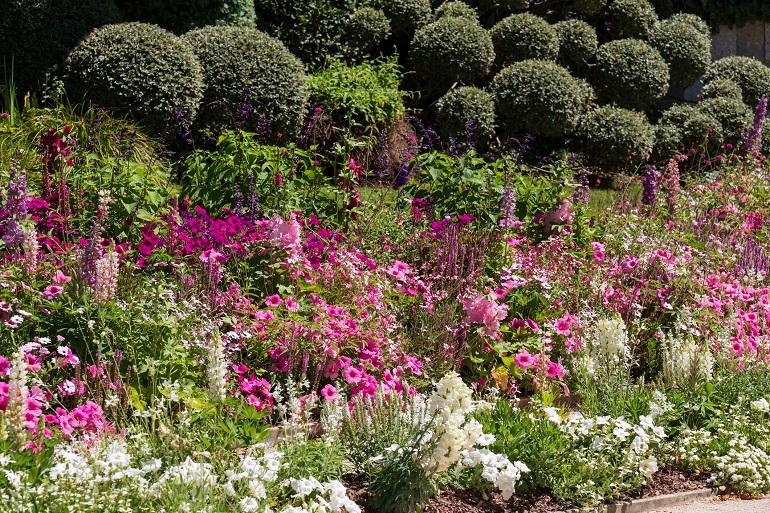
In contrast, the exuberant planting of the English-inspired borders celebrates colour, texture, and seasonal change. Herbaceous perennials, ornamental grasses, and flowering shrubs create a tapestry of forms that peak at different times throughout the growing season, ensuring there is always something of interest to discover.
The Chinese-inspired garden explores the philosophical principles of traditional garden design, with its careful balancing of yin and yang elements, symbolic plant choices, and framed views that unfold like a scroll painting as visitors move through the space. Water features, pavilions, and winding paths create a journey that reveals new perspectives with each turn.
The Stables: Architectural Splendour
No visit to Chaumont-sur-Loire is complete without exploring its sumptuous stables. Built in 1877 by the architect Paul-Ernest Sanson for Prince Amédée de Broglie, these were considered the most luxurious and modern in Europe at the time. The prince, a passionate equestrian, spared no expense in creating facilities that would showcase his prized horses and impress his aristocratic guests.
The stables' façade, with its elegant proportions and refined detailing, could easily be mistaken for a grand residence rather than a utilitarian structure. The central pavilion, topped with a clock tower and decorative weathervane, anchors the symmetrical wings that housed the horses and carriages. The tuffeau limestone construction echoes the material of the main château, creating a harmonious visual relationship between the buildings.
The Stables: Interior Elegance
Today, visitors can admire the impressive architecture and glimpse the lavish lifestyle of 19th-century aristocracy through the meticulously preserved interiors. The main stable block features vaulted ceilings, decorative ironwork, and marble drinking troughs for the horses. The floors are laid with intricate mosaic tiles that were not only beautiful but also practical, providing a non-slip surface for valuable horses.
The tack room displays an impressive collection of period harnesses, saddles, and equestrian accessories, many bearing the de Broglie family crest. The carriage house contains several restored vehicles, from elegant town carriages to sporting phaetons, offering insight into the transportation and social customs of the era.
Perhaps most surprising is the stable's dining room, where grooms and stable hands took their meals. The space features wood panelling, a decorative ceiling, and even a fireplace – luxuries rarely afforded to servants in the 19th century. This unusual feature reflects the prince's understanding that contented staff would provide better care for his precious horses.
Art and Nature Centre: Contemporary Expressions
Throughout the year, the Domaine serves as a Centre for Arts and Nature, hosting contemporary art installations both within the château and throughout the grounds. Established in 2008, this initiative has transformed Chaumont-sur-Loire into a leading venue for environmental art and site-specific installations that respond to the unique character of the historic buildings and landscapes.
Each year, renowned artists from around the world are invited to create works that engage with the château's architecture, history, and natural setting. These installations range from subtle interventions that visitors might initially overlook to bold statements that dramatically transform familiar spaces. Some works are designed to weather and change over time, becoming part of the ongoing life of the Domaine, while others are more ephemeral, existing only for a single season.
Art and Nature Centre: Indoor Installations
Within the château itself, contemporary artworks create fascinating dialogues with the historic interiors. Video projections might animate a centuries-old tapestry, bringing its figures to life in unexpected ways. Sound installations could fill a grand chamber with whispered conversations from the past. Sculptural elements might emerge from fireplaces or doorways, challenging visitors' perceptions of space and time.
The former servants' quarters and agricultural buildings have been repurposed as gallery spaces, hosting rotating exhibitions of photography, painting, sculpture, and multimedia works. These shows often explore themes related to landscape, ecology, and the relationship between human culture and the natural world.
Art and Nature Centre: Outdoor Installations
Throughout the gardens and park, art installations create moments of surprise and reflection. Monumental sculptures might emerge from the landscape, playing with scale and perspective. Environmental artists work with natural materials found on site – branches, leaves, stones – creating ephemeral works that will eventually return to the earth. Light artists transform the château and gardens after dark, revealing new aspects of familiar structures through coloured illuminations and projected images.
These artistic interventions encourage visitors to see the historic site with fresh eyes, noticing details they might otherwise overlook and considering the complex relationships between past and present, culture and nature, preservation and innovation.
The Changing Seasons at Chaumont-sur-Loire
The Domaine de Chaumont-sur-Loire offers a different experience with each passing season, making it worthy of repeated visits throughout the year. In spring, the gardens burst into life with thousands of bulbs creating carpets of colour beneath the awakening trees. Cherry blossoms and magnolias create clouds of pink and white against the limestone walls of the château.
Summer brings the International Garden Festival into full bloom, with each garden reaching its designed peak. The historic park offers cool shade under ancient trees, while the terraces of the château provide the perfect vantage point for watching pleasure boats navigate the Loire River below.
Autumn transforms the Domaine with a spectacular display of foliage colour. The park's diverse collection of deciduous trees – maples, oaks, beeches, and more – creates a tapestry of gold, orange, and crimson. The low autumn light casts long shadows across the gardens and illuminates the château's façade with a warm glow.
Even in winter, Chaumont-sur-Loire maintains its charm. The architectural bones of the gardens are revealed, with carefully pruned topiary and sculptural tree forms standing out against the winter sky. Inside the château, roaring fires in the massive stone fireplaces create a cosy atmosphere for appreciating the interior collections at a more leisurely pace.
From its commanding position overlooking the Loire to its meticulously maintained gardens and innovative art installations, the Château de Chaumont-sur-Loire offers visitors a truly enchanting experience that blends history, nature, and contemporary creativity. Whether you're a garden enthusiast, an art lover, a history buff, or simply someone who appreciates beauty in all its forms, this remarkable Domaine promises discoveries that will linger in your memory long after your visit.
Getting There
The Château de Chaumont-sur-Loire is easily accessible by various means of transport. If you're driving, take the A10 motorway and exit at Blois or Amboise, depending on your direction of travel. The castle is well-signposted from these points. For those relying on public transport, you can take a train to Onzain station, which is just a 2.5km walk across the Loire from the château. Trains run regularly from Blois (€3.70, 8-12 minutes) and Tours (€8.80, 28 minutes). Alternatively, a shuttle bus service is available that drops visitors off right at the foot of the castle. For cyclists, the château is conveniently located near the Loire à Vélo cycling route. When arriving, it's recommended to use the southern entrance on the plateau for direct access to the park, gardens, and castle, especially if you have mobility concerns. This entrance is clearly marked at the first roundabout when approaching from the D114 road.
Best Time to Visit
The best time to visit the Château de Chaumont-sur-Loire is during the spring and summer months, particularly from April to November. This period allows visitors to enjoy both the castle and its beautiful gardens, which are especially vibrant during the summer due to the Festival International des Jardins. The festival, which runs from April to November, features stunning installations and gardens designed by international artists. While summer is peak tourist season, the spring and early autumn offer a more relaxed atmosphere, making it ideal for those who prefer fewer crowds. Winter visits can also be enjoyable for those interested in specific exhibitions, though the gardens are less vibrant during this time.


