


| Contents |
|---|

Introduction
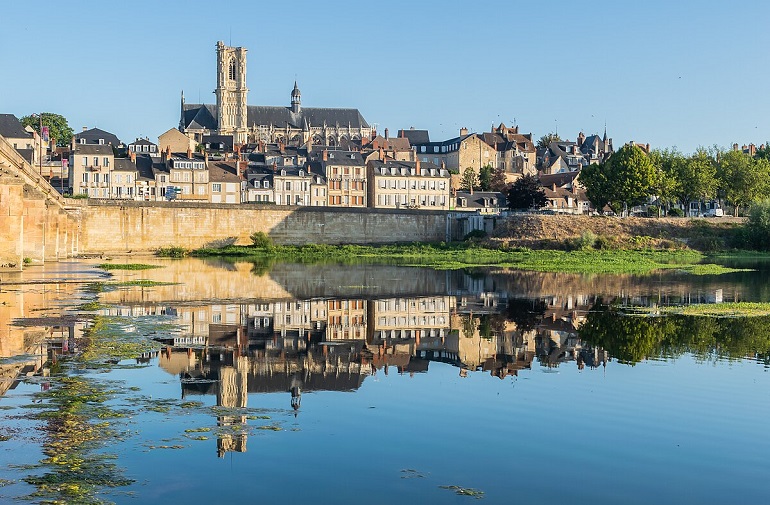
Located at the confluence of the Loire and Nièvre rivers, Nevers (pop. 33,000) is the historical capital of the Nivernais. the town occupies an elevated site that offers picturesque views across the Loire valley. As a designated City of Art and History, Nevers boasts a remarkable architectural heritage spanning from the medieval period through the Renaissance, including the unique Cathedral of Saint-Cyr-et-Sainte-Juliette with its unusual dual apses, the Gothic Ducal Palace that now houses the town hall, and several distinguished Romanesque and Baroque churches. The town gained international renown for its distinctive faience pottery industry, established in the 16th century by the Italian Gonzaga family, which employed thousands of craftspeople during its golden age in the 17th and 18th centuries and continues today in specialist workshops and museums.
Interesting Facts about Nevers
- In Roman times the settlement was known as Noviodunum Aeduorum, later Nevirnum, reflecting its ancient Gallic and Roman roots.
- The Gonzaga dukes of Mantua acquired Nevers in the 16th century and fostered its famed faience (tin-glazed earthenware) industry.
- Nevers faience became a major craft employing thousands by the 17th–18th centuries, a tradition still showcased in local workshops and museums.
- The former ducal palace today serves civic functions and anchors the old town above the Loire embankments.
- Two duchesses of Nevers became Queen of Poland.
- A signed “blue line” walking route links many of Nevers’ architectural highlights across the historic centre.
- The Church of Saint-Étienne is a pure Romanesque jewel praised by architect Viollet-le-Duc for its elegant proportions.
- The striking Church of Sainte-Bernadette du Banlay exemplifies 20th-century experimental design by Claude Parent and Paul Virilio.
- Nevers is a gateway to the Loire Valley and Burgundy, reachable from Paris by frequent trains in under three hours.
- Modern Nevers combines traditional ceramics with industries like rubber, plastics and electronics, reflecting post-war diversification.
History
The history of Nevers stretches back over two millennia, beginning with its Celtic origins before emerging into written history as Noviodunum, an important settlement of the Aedui tribe. During the Roman conquest in 52 BCE, Julius Caesar recognised its strategic importance and transformed the town, positioned conveniently on the banks of the Loire River, into a crucial military depot where he stored hostages, grain, his military chest containing war funds, army baggage, and numerous horses purchased from Spain and Italy. However, following Caesar's defeat at Gergovia, the Aedui inhabitants massacred the Roman storekeepers, negotiators, and travellers in the town, divided the money and horses amongst themselves, and ultimately burned Noviodunum to the ground—a devastating loss that Caesar himself recorded. The settlement was later rebuilt and known by various names including Nevirnum in the Antonine Itinerary and Ebrinum in the Tabula Peutingeriana.
The medieval period marked significant political and religious developments for Nevers, beginning with its establishment as a bishopric seat at the end of the 5th century. By the beginning of the 10th century, Nevers had become the principal town of its own county, which roughly corresponds to the modern département of Nièvre. The citizens achieved important civic rights through charters granted in 1194 and 1231, reflecting the town's growing prosperity and political importance. During the 14th century, Nevers briefly gained academic prestige when a university was transferred there from Orléans, though it was later restored to its original location. The county frequently changed hands amongst Europe's powerful families, coming under the rule of the Count of Flanders in the 14th century before passing to Duke Philip the Bold of Burgundy. In 1068, monks from the influential Cluny abbey began constructing a priory, further cementing the town's religious significance.
The Renaissance brought transformative changes to Nevers through the arrival of the Gonzaga family, Italian nobles who acquired the town in 1565 when Louis Gonzaga became Duke of Nivernais through marriage to Henriette of Cleves. The Gonzaga dynasty, which had succeeded to the Duchy of Mantua in 1627, brought considerable cultural sophistication to Nevers, most notably introducing the manufacture of ceramics that would become the town's most famous craft tradition. They established the magnificent Palais Ducal, considered one of the first Loire châteaux and a masterpiece of Renaissance architecture that served as the summer residence for the Dukes of Nevers. The Gonzaga line continued until 1708, after which the duchy eventually passed to Cardinal Mazarin and survived until the French Revolution.
Main Attractions
Ducal Palace
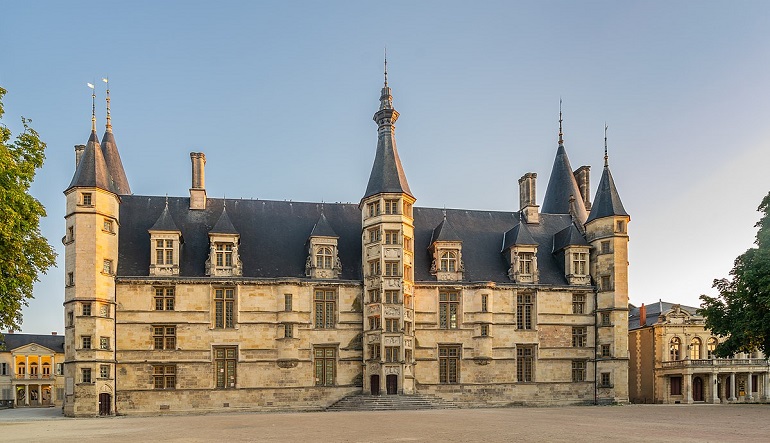
Perched atop the Butte de Nevers, the 15th–16th-century Ducal Palace once sheltered the counts and dukes of the city. Often acclaimed as the first of the Loire châteaux, its elegant Renaissance façade in warm limestone is framed by three polygonal turrets that betray a clear Italian influence. A grand spiral staircase rising within the central turret leads to lofty chambers now repurposed as the town hall, council chamber and rotating exhibition halls. Beneath, vaulted cellars contain an avant-garde museum and even an aquarium devoted to Loire fish, a surprising modern counterpoint to the palace’s medieval stonework. From the tree-lined esplanade outside, sweeping views across Nevers and the river complete an unmissable introduction to the city’s proud heritage.
Nevers Cathedral
Nevers Cathedral, or the Cathédrale Saint-Cyr-et-Sainte-Julitte, stands as a commanding testament to centuries of faith and architectural evolution. Its most remarkable feature is the presence of two distinct choirs, one Romanesque at the west end and a larger, more elaborate Gothic choir at the east, a rare design that tells a story of reconstruction and changing styles following historic fires. Visitors are often captivated by the vast collection of contemporary stained-glass windows, which bathe the interior in a cascade of vibrant colour. These modern installations, created by international artists, replaced those destroyed in the Second World War, creating a unique dialogue between medieval stone and 20th-century art. A walk through its hallowed halls is a journey through time, where quiet chapels house ancient tombs and the sheer scale of the vaulted ceilings inspires a sense of awe and reverence.
City Walls & Gates
Porte du Croux
The Porte du Croux is a formidable and remarkably well-preserved 14th-century gatehouse, a relic of Nevers’s medieval fortifications. With its sturdy round towers, battlements, and imposing archway, it offers a dramatic glimpse into the city's defensive past. This powerful stone structure once guarded a key entrance to the city and now stands as a proud monument to Nevers's historical resilience. Walking through its ancient passageway feels like stepping back in time, making it an essential stop for any history enthusiast.
Porte de Paris
The Porte de Paris stands as a magnificent triumphal arch from the 18th century, built to commemorate the Battle of Fontenoy. This impressive monument, with its classical proportions and intricate sculptural details, once served as a prestigious entryway into the city. Today, it remains one of Nevers's most significant landmarks, marking the transition from the newer parts of the city to the historic heart. Its grandeur offers a fantastic photo opportunity and serves as a powerful symbol of Nevers's rich history.
Promenade des Remparts
The Promenade des Remparts offers a captivating walk along the traces of Nevers's medieval defensive walls. This elevated pathway provides magnificent panoramic views across the terracotta rooftops of the old town and out towards the expansive Loire Valley. As you follow the route, you will encounter remnants of the city's past, including ancient towers and fortified gateways. The walk is both a historical lesson and a scenic delight, with well-tended green spaces and informative plaques that explain the strategic importance of the fortifications. It is an ideal way to orient yourself while appreciating the city's beautiful landscape.
Parks & Green Spaces
Jardins de la Banque de France
Tucked away from the main thoroughfares, the Jardins de la Banque de France offer a beautifully manicured and tranquil oasis of calm. Designed in a formal French style, the garden is a symphony of geometric precision, with neatly clipped hedges, symmetrical flowerbeds, and gravel pathways that invite a leisurely stroll. The presence of mature, stately trees provides welcome shade, while ornate benches are perfectly positioned for visitors to sit and absorb the peaceful atmosphere. It is a true hidden gem, providing a sophisticated and serene retreat where one can escape the city's gentle hum and appreciate the quiet elegance of classical garden design.
Arboretum les Feuilles Fleuries
For a refreshing encounter with nature, the Arboretum les Feuilles Fleuries, located just a short drive from the city in Saint-Éloi, presents a splendid collection of trees and plants from around the world. This botanical park is a living library of species, thoughtfully laid out along accessible trails that meander through themed collections. It is a delight in any season, from the fresh blooms of spring to the rich, fiery colours of autumn. The arboretum is especially popular with families, offering an educational and engaging environment where children can learn about the natural world while enjoying the freedom of the outdoors.
Parc Rosa Bonheur
Parc Rosa Bonheur serves as a beloved green space for the local community, buzzing with gentle activity and offering a slice of everyday life in Nevers. The park is generously equipped with amenities, including dedicated cycling lanes that weave under a canopy of leaves and numerous picnic tables that invite leisurely lunches. Its appeal lies in its friendly, unpretentious atmosphere, where the sounds of children laughing in the playground mix with the chirping of birds. It is a perfect spot for families to unwind and for visitors to observe the relaxed pace of the city.
Parc Roger Salengro
As the largest and most prominent park in the city, Parc Roger Salengro functions as Nevers's green heart. Laid out in the 19th century, it retains a classic charm with its grand, tree-lined avenues, expansive lawns perfect for picnics, and a central bandstand that evokes a bygone era. The park is a hive of activity, featuring well-maintained playgrounds, ample space for jogging, and shaded benches for quiet repose. Its central location and comprehensive amenities make it a popular gathering spot for all ages, offering a vibrant yet relaxing escape from the urban environment.
Sentier du Ver-Vert
The Sentier du Ver-Vert is a delightful trail that follows the banks of the River Loire, named after a famous 18th-century poem about a talking parrot. This scenic path is perfect for a gentle hike or a family bike ride, offering beautiful, uninterrupted views of the river and its lush surroundings. Along the way, you will find well-equipped picnic areas and playgrounds, making it an excellent destination for a day out. The trail combines natural beauty with a touch of local folklore, providing a relaxing and engaging outdoor experience.
Square Pierre Mendès France
Square Pierre Mendès France is a charming neighbourhood park that offers a more intimate and local-feeling green space. Situated in a residential area, it provides a peaceful enclave for residents to enjoy a moment of tranquillity. With its simple layout of pathways, benches, and a small play area, it is a quintessential local square. It's a lovely spot to sit with a book, watch children play, and appreciate the shade of its mature trees, offering a genuine glimpse into the daily life of the people of Nevers.
Square Edouard Millien
Set along the picturesque riverbank, Square Edouard Millien is a long, linear park that provides a wonderful space for walking and relaxation by the water. From here, you can enjoy clear views of the Loire and the elegant Pont de Loire bridge. The gentle lapping of the water and the sight of boats gliding by create a serene and almost meditative atmosphere. It's a favoured location for a sunset stroll or for simply sitting on a bench and watching the world go by.
Top Museums
Musée de la Faïence et des Beaux-Arts (Museum of Faience and Fine Arts)
Housed within the beautifully restored former Notre-Dame Abbey, the Musée de la Faïence et des Beaux-Arts stands as Nevers' principal museum, a celebration of the town's most famous craft alongside exquisite collections of glass and fine art. Founded in 1844, the museum's journey through various locations culminated in this architecturally impressive setting, which seamlessly blends medieval and contemporary design.
The museum's collections are organised into three main areas:
- The Art of Faience: Nevers has been a centre for faience (tin-glazed pottery) since Italian artisans introduced the craft in the 16th century. The galleries trace its evolution through a stunning display of plates, decorative bottles, statues, and unique artistic pieces that showcase a blend of Eastern and Western influences. A significant part of the collection is the Montagnon fund, which enriched the museum with prestigious pieces. A dedicated technical room also reveals the secrets behind the creation of this celebrated art form.
- Enamelled Glass: The museum holds an exceptional collection of enamelled glass, a rare and delicate art form also brought to Nevers by Italian craftsmen in the 16th century. This intricate technique involved modelling tiny, three-dimensional figures from coloured glass rods heated over an oil lamp. These figures were often arranged into elaborate dioramas depicting religious, mythological, or historical scenes inside ornate boxes, reflecting the Baroque tastes of the 17th and 18th centuries. Much of this remarkable collection comes from the personal collection of Jean Loynel d’Estrie.
- Fine Arts: Located in a 19th-century section of the building, the fine arts collection presents a survey of French art from the 17th to the 20th century. The collection originated with a significant donation from collector Jacques Gallois in 1847 and has grown over the centuries to include major works that trace the course of French art history.
Beyond the galleries, the museum features themed gardens perfect for a quiet stroll and hosts regular temporary exhibitions, workshops, and lectures.
Musée Nivernais de l'Éducation (Nivernais Museum of Education)
Located in a former school building, the Musée Nivernais de l'Éducation offers a nostalgic and fascinating journey into the history of schooling. The museum is managed by a dedicated association and is celebrated for its remarkable exhibits that preserve the educational past.
Its centrepiece is a perfectly reconstituted classroom from the early 20th century (c. 1900–1920), complete with wooden desks, inkwells, wall maps, and a blackboard. This immersive display provides a vivid impression of what school life was like for children over a century ago. The museum also holds an extensive collection of more than 17,000 items, primarily old schoolbooks, alongside antique pedagogical equipment, early projection and sound devices, and a collection of class photographs that chronicle the evolution of education in the region.
Musée de la Résistance (Museum of the Resistance)
Situated in the nearby commune of Varennes-Vauzelles, a place with a strong railway history, this museum is dedicated to the local French Resistance during the Second World War. Opened in 1988, it pays particular homage to the courage of the local railway workers (cheminots) who played a crucial role in the clandestine struggle against the occupation.
The museum exhibits a compelling collection of documents and objects that bear witness to the actions of the Resistance in the region. Visitors can view personal items belonging to resistance fighters, an authentic uniform worn by a deportee, and displays illustrating the hardships of daily life under occupation, such as the yellow star imposed upon Jewish citizens. The museum serves as a powerful place of memory, honouring the victims of deportation and the bravery of those who fought for freedom.
Local Cuisine
Visitors to Nevers can savour beef bourguignon, the renowned slow-cooked beef stew laced with red wine and aromatic herbs, or sample gougères, delicate cheese choux pastries enjoyed as a tempting appetiser. The area is also famed for its charolais beef, prized for its tenderness, and pike quenelles, a light fish dumpling served in a creamy sauce. For those with a sweet tooth, Nevers offers the distinctive Négus de Nevers, soft caramel sweets with a thin, crisp sugar shell, which have been delighting locals since the early 20th century.
Getting There
By train Nevers is well connected via France’s extensive rail network, with direct services from Paris Bercy and regular regional trains linking neighbouring Burgundy and Centre-Val de Loire towns; the modern Nevers station sits just north-west of the historic centre, making onward exploration straightforward.
By coach or bus Several long-distance coach operators include Nevers on routes between Paris, Clermont-Ferrand and the Loire valley, while regional buses provide convenient links to surrounding market towns and villages, dropping passengers at the central coach park beside the station.
By car Motorists can reach Nevers via the A77 autoroute, which branches south from the A6 at Nemours and follows the Loire; approaching from the west, the D978 offers a scenic riverside drive, with ample parking available in and around the compact old town.
| Travel destinations in Burgundy | ||||||||||||||
|---|---|---|---|---|---|---|---|---|---|---|---|---|---|---|
|
|
|
|
| ||||||||||
|
|
|
|
| ||||||||||
| >
| |||||||||||||


