


| Contents |
|---|

Introduction
Cannes (pop. 75,000) is a Mediterranean resort city on the French Riviera renowned globally for its annual International Film Festival held each May at the Palais des Festivals et des Congrès. The city stretches along the Baie de Cannes, featuring a 7-kilometre coastline with both public and private beaches, whilst the historic Le Suquet quarter rises above the harbour with its 12th-century castle and panoramic views. Beyond its cinematic fame, Cannes offers luxury shopping along the Boulevard de la Croisette, a bustling old port filled with yachts, and proximity to the nearby Lérins Islands, making it both a glamorous destination and a practical base for exploring the wider Côte d'Azur region.
Interesting Facts about Cannes
- Once a humble fishing village, Cannes was transformed into a fashionable winter resort in the 1830s after British statesman Lord Brougham fell in love with its climate and scenery.
- The world-famous Cannes Film Festival was conceived before the Second World War but truly launched in 1946, becoming a global showcase for cinema and glamour.
- The prestigious Palme d’Or, awarded at Cannes, has elevated countless films to international acclaim and is synonymous with cinematic excellence.
- La Croisette, Cannes’ palm-lined waterfront boulevard, is famed for luxury hotels, designer boutiques, sandy beaches, and star-spotting strolls.
- The Palais des Festivals et des Congrès, a vast complex built to host the Film Festival, is where the iconic red-carpet stairway photos are taken each May.
- Île Sainte-Marguerite, just offshore, held the mysterious “Man in the Iron Mask” in Fort Royal, a tale that still intrigues historians and storytellers.
- Cannes’ Walk of the Stars features bronze handprints of film legends set into the pavement near the Palais des Festivals.
- The city’s name is often linked to reeds (from Latin “canna”), recalling the once-reedy shoreline that predated today’s glamorous seafront.
- Street murals across Cannes celebrate cinema icons, turning walls into an open-air tribute to film history.
- From Hitchcock’s “To Catch a Thief” to contemporary productions, Cannes and the Riviera have long been sought-after backdrops for filmmakers.
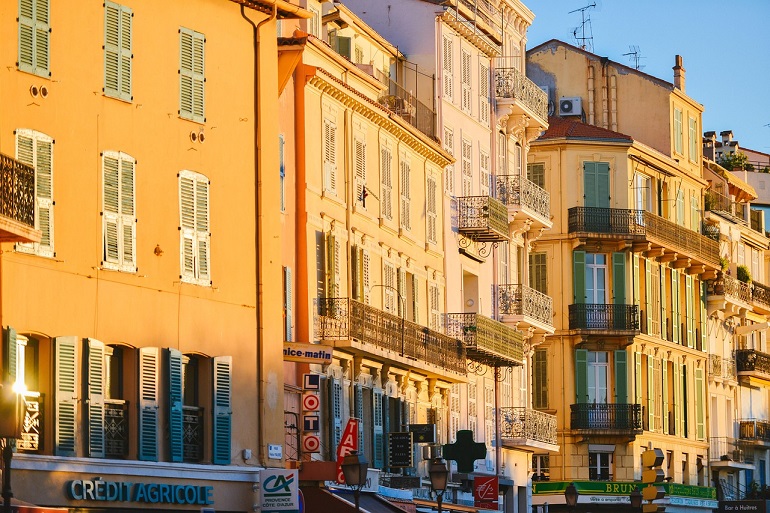
History
The origins of Cannes stretch back to antiquity, when the Ligurian Oxybian tribe established a modest fishing settlement on the promontory later called Le Suquet. In the 2nd century BCE, the area came under Roman influence as part of the province of Gallia Narbonensis, and a small castrum guarded the coastal route known as the Via Julia Augusta. After the fall of Rome, successive waves of Saracen raids and pirate attacks battered the hamlet until the monks of Lérins Abbey, based on nearby Île Saint-Honorat, assumed control in the 11th century and built fortifications to protect their mainland possessions.
During the Middle Ages the village, then called Canua, remained under ecclesiastical rule, but it became strategically important in the 14th century when the Counts of Provence and the Kings of Aragon contested the Riviera. A tower erected on Le Suquet in 1385 served both as lookout and refuge for villagers. Cannes was officially annexed to France in 1481 with the rest of Provence, yet it stayed a quiet fishing port until the 19th century. In 1834 Lord Brougham, former Lord Chancellor of Great Britain, was forced by a quarantine barrier to stop in Cannes; enchanted by its mild winter climate, he built the first grand villa and unwittingly launched the fashion for aristocratic wintering on the Riviera.
The rail link from Paris reached Cannes in 1863, accelerating its transformation into a cosmopolitan resort. Grand hotels like the Hôtel Martinez (1929) and Carlton (1913) lined the newly laid Boulevard de la Croisette, while landscaped gardens replaced marshland along the seafront. After World War II, Mayor André Capron championed the creation of the Cannes Film Festival, first held in 1946, cementing the city's reputation as a global centre of cinema and luxury tourism. Today Cannes blends its ancient Le Suquet quarter, belle-époque façades and yearly red-carpet glamour, reflecting two millennia of layered history.
Main Attractions
Le Vieux Port (Old Harbour)
Cannes’ Old Port remains a working harbour, where fishing boats and luxury yachts share the water’s edge. By day, fishermen sell fresh catch; by night, the quays sparkle with Riviera elegance—a reminder of Cannes’ dual maritime and glamorous spirit.

Le Suquet (Old Town)
Perched atop a hill, Le Suquet is Cannes’ historic heart. Cobbled streets wind through medieval architecture, leading to a 12th-century watchtower and panoramic terraces. The neighbourhood is brimming with Provençal charm, traditional bistros, and sweeping views over the Old Port and the Lerins Islands.

Boulevard de la Croisette
Stretching along the shimmering Bay of Cannes, the Boulevard de la Croisette is the city’s glamorous promenade. Flanked by luxurious hotels, chic boutiques, and fragrant palm trees, it offers breathtaking Mediterranean views. The walkway is ideal for strolling, people-watching, and enjoying the buzz of Cannes’ most exclusive address.

Palais des Festivals et des Congrès
Home of the world-renowned Cannes Film Festival, the Palais des Festivals et des Congrès is a modern landmark on the Croisette. Its famous red carpet, iconic steps, and year-round events make it a focal point for both cinema lovers and cultural explorers. Even when the festival is not in session, the venue hosts concerts, exhibitions, and conferences.

Marché Forville
Marché Forville is Cannes’ bustling covered market, beloved for its fresh produce, cheeses, olives, seafood, and Provence specialties. Open mornings, it’s a lively spot to sample local flavours, interact with vendors, and immerse oneself in the city’s authentic rhythm.
Île Sainte-Marguerite
A short ferry ride from Cannes, Île Sainte-Marguerite is the larger of the Lerins Islands. Covered in pine and eucalyptus forests, dotted with secluded coves, and home to the historic Fort Royal, it’s perfect for hiking, swimming, and escaping the city bustle. The island is car-free and offers tranquillity, clear waters, and a legendary past.
Palm Beach (Pointe Croisette)
At the eastern tip of the Croisette, Palm Beach is a lively spot for sun, sea, and entertainment. With private and public beach access, a swimming pool, and chic club dining, it attracts both families and party-goers, especially at sunset.
Plage de la Bocca
Favoured by locals, Plage de la Bocca is a wide, public beach west of the city centre. Its informal vibe, volleyball courts, and unspoilt sunset views make it a relaxed alternative to the glitzier Croisette beaches. Kiosks and cycle paths add to its casual appeal.
Square Mérimée & Allées de la Liberté
Near the Old Port, this shaded square hosts weekend antique markets and summer concerts. It’s a popular gathering place for pétanque players, music lovers, and anyone seeking a respite from the city’s energy.
Église Notre-Dame d’Espérance
Standing atop Le Suquet, the Church of Our Lady of Hope combines Gothic and Provençal architecture. Its high vantage point offers spectacular city views, while its interior is known for organ concerts and a peaceful atmosphere.
La Croix-des-Gardes
Set behind Cannes, this extensive natural park covers pine forests, vibrant bougainvillea, and walking trails. The main lookout, marked by a cross, provides panoramic views from the Lerins Islands to Cap d’Antibes—a green sanctuary for walkers and nature enthusiasts.
Régates Royales
Every September, the Bay of Cannes fills with classic yachts for the historic Régates Royales regatta. The event draws sailors and spectators for thrilling races, lively harbour gatherings, and a celebration of Cannes’ nautical heritage.

Russian Orthodox Church of St. Michael the Archangel
Dating to 1894, this onion-domed church brings a Russian flourish to Cannes. Its ornate icons and serene garden are remnants of the city’s 19th-century cosmopolitan appeal, offering a quiet and visually striking diversion.
Cimetière du Grand Jas
This tree-lined cemetery west of the city centre is a peaceful, open-air history lesson. Notable graves and sculptural tombs reveal stories of artists, aristocrats, and world travellers who shaped Cannes’ diverse character.
Hespérides Garden
Near Port Canto, Hespérides Garden is a leafy retreat with Mediterranean blooms, pergolas, and a children’s play area. Its flowering shrubs and quiet paths invite relaxation between shopping and beach ventures.
Top Museums
Historic and Cultural Collections
Musée des Explorations du Monde (Museum of World Explorations)
Dominating the skyline from its perch in Le Suquet, the old quarter of Cannes, the Musée des Explorations du Monde is housed within the formidable walls of the medieval Château de la Castre. This historic monument, with its origins in an 11th-century monastic complex, provides a dramatic and atmospheric setting for the treasures within. The museum's courtyard garden, planted with Mediterranean pines and flora, offers a peaceful interlude before visitors explore the collections or ascend the 109 steps of the imposing square watchtower. The climb is rewarded with an unrivalled 360-degree panoramic view across the city, the Bay of Cannes, and the Lérins Islands.
The museum’s collections are a celebration of global artistry and antiquity, largely born from the passion of 19th-century traveller Baron Tinco Lycklama. The galleries guide visitors through:
- Mediterranean Antiquities: A significant collection of artefacts from ancient civilisations, including Cypriot, Roman, Greek, and Egyptian relics that speak to the region's deep historical roots.
- Primitive Art: An extraordinary assembly of ethnographic objects from Oceania, the Himalayas, and the Americas. These pieces provide a window into the ritual and daily life of cultures far from the French Riviera.
- Orientalism: A dedicated section showcases 19th-century paintings that reflect the European fascination with the landscapes and cultures of the Near and Middle East.
- Musical Instruments: The adjacent Sainte-Anne chapel, a beautifully preserved Romanesque structure, houses a remarkable collection of musical instruments from around the world, displayed with both aesthetic and acoustic considerations in mind.

Museum of the Iron Mask and the Royal Fort
A short and scenic boat ride from the mainland leads to the tranquil, wooded Île Sainte-Marguerite, home to the Museum of the Iron Mask and the Royal Fort. The very journey across the water sets the stage for a visit steeped in history and legend. The 17th-century Fort Royal served for centuries as a state prison, its most famous inmate being the mysterious "Man in the Iron Mask," a captive of King Louis XIV whose identity remains one of history’s great unsolved puzzles. Visitors can step inside his spartan cell and feel the weight of his legendary confinement.
Beyond this central mystery, the museum delves into the island's extensive history. The site contains Roman cisterns and the remains of ancient settlements. The museum’s underwater archaeology department presents fascinating finds recovered from Roman and Saracen shipwrecks that once plied these waters, telling stories of ancient trade and maritime conflict. The fort itself, with its robust battlements and sweeping sea views, offers a powerful sense of the island's strategic importance through the ages.
Unique and Contemporary Art Experiences
Underwater Ecomuseum
Just off the coast of Île Sainte-Marguerite lies one of Cannes's most innovative cultural attractions: the Underwater Ecomuseum by artist Jason deCaires Taylor. This submerged gallery is the first of its kind in the Mediterranean. It features six monumental sculptures, each over two metres high, resting on the seabed. The artworks are modelled on the faces of local Cannes residents, creating a powerful link between the community and the marine environment.
Crafted from pH-neutral, environmentally-safe materials, the sculptures are designed to attract marine life and evolve over time into artificial reefs. This fusion of art and ecology aims to draw attention to the fragility of the marine ecosystem. Accessible to swimmers and snorkelers in a protected area, the Ecomuseum offers a uniquely immersive and thought-provoking experience, inviting a silent, weightless contemplation of art's role in environmental conservation.
La Malmaison Art Centre
Bringing art to the heart of the city's glamour, La Malmaison is an elegant contemporary art centre situated directly on the iconic Boulevard de la Croisette. It occupies what was once the games and tea room of the historic Grand Hôtel, a landmark built in 1863. This heritage lends a refined and intimate atmosphere to the space.
La Malmaison is dedicated to hosting two major temporary exhibitions each year, with a strong focus on internationally renowned artists of the 20th and 21st centuries. It has celebrated the work of modern masters like Pablo Picasso, Henri Matisse, and Joan Miró, many of whom lived and worked on the Côte d’Azur, drawing inspiration from its unique light and landscape. The gallery also provides a platform for contemporary creators, ensuring its programme remains dynamic and relevant. Its prime location makes it an essential stop for any art lover strolling the famous promenade.
Provençal Heritage
Moulin Forville – Musée Victor Tuby
Nestled in the historic Le Suquet district, the Moulin Forville is a former 14th-century oil mill poised for a new life as a major cultural institution. The site is currently undergoing extensive renovation and is scheduled to reopen to the public in 2027 as a "Maison des Illustres" dedicated to Provençal culture and the history of Cannes.
The museum is a tribute to Victor Tuby (1888–1945), a remarkable figure who was a sculptor, scientist, and passionate advocate for the traditions of Provence. He used the mill as his studio and laboratory, amassing a rich collection of regional artefacts. Upon its reopening, the museum will once again showcase this eclectic collection, which includes:
- Traditional Provençal furniture, costumes, and tools.
- Reconstituted mill machinery, including original presses.
- Sculptures and personal effects belonging to Victor Tuby.
The revitalised museum will blend its historic charm with modern scenography and multimedia installations, promising an immersive dive into the soul of Provence.
Local Cuisine
Cannes boasts a vibrant culinary scene that reflects the rich flavours of Provence and the Mediterranean, with traditional dishes highlighting locally sourced ingredients such as olive oil, anchovies, and fresh vegetables. Visitors should not miss bouillabaisse, a fragrant fish stew typically served with rouille and crusty bread, and socca, a crispy chickpea pancake best enjoyed hot from the oven. The city's markets and restaurants also serve pissaladière, an onion and anchovy tart, and freshly caught seafood, offering a true taste of the Côte d’Azur. For dessert, many cafés tempt with tarte tropézienne, a cream-filled brioche originating from nearby Saint-Tropez, making Cannes a destination sure to delight food lovers.
Getting There
Cannes is straightforward to reach: fly into Nice Côte d’Azur Airport (around 30 km away) and continue by tram to Nice Saint-Augustin for an easy train connection, by coach from the terminals, or with a pre-booked transfer into the city centre; frequent regional TER trains run along the Riviera linking Cannes with Nice, Antibes and Ventimiglia, while high-speed TGV services connect from Paris, Lyon and Marseille; drivers can follow the A8 (La Provençale) and take the Cannes or Cannes-La-Bocca exits, though traffic and parking are tighter during major events; arrivals by sea can use the Vieux Port or Port Canto, and regular boats shuttle to the nearby Îles de Lérins.