


| Contents |
|---|
Introduction
Sedan (pop. 16,500; urban 121,000) is a historic town situated just 10 kilometres from the Belgian border on the edge of the French Ardennes. The town developed around the imposing Château de Sedan, which began construction in 1424 and claims to be the largest fortified medieval castle in Europe, covering 7.4 acres (30,000 m2) across seven levels. Sedan holds particular historical significance as the former centre of an independent Protestant principality from 1549 to 1642, serving as a refuge for French Huguenots fleeing religious persecution and becoming renowned for its textile manufacturing, particularly the fine black cloth that gave its name to the term "sedan" in the textile industry. The town witnessed pivotal moments in European history, notably the Battle of Sedan in 1870, which sealed the fate of the Second French Empire and contributed to the foundation of the German Empire, whilst its strategic position along the Meuse River has shaped both its development and its turbulent past marked by invasion and occupation.
Interesting Facts about Sedan
- Sedan’s vast Château de Sedan is often cited as the largest fortified medieval castle in Europe, sprawling over about 30,000 m² across seven levels.
- The town sits in a loop of the Meuse River in the Ardennes, a stone’s throw from the Belgian border in France’s Grand Est region.
- Sedan was founded in 1424 and soon developed around its fortress, which anchored the principality that once ruled the area.
- In the 16th century, Sedan became a haven for Protestant refugees fleeing France’s Wars of Religion.
- Until 1651, Sedan was the seat of a sovereign principality under the La Tour d’Auvergne family before being annexed by France.
- The celebrated marshal Turenne (Henri de la Tour d’Auvergne) was born in Sedan in 1611 and is commemorated with a central statue.
- Sedan’s textile industry flourished in the 16th and 17th centuries and remained important into the modern era.
- The First Battle of Sedan (1870) ended with Napoleon III’s capture and precipitated the fall of the Second Empire and the rise of unified Germany.
- “Sedan Day” was marked annually in Germany after 1871 to commemorate the 1870 victory, remaining a holiday until 1919.
- In May 1940, German forces forced a decisive breakthrough near Sedan across the Meuse, leading to the rapid collapse of the French front.
- Sedan was occupied during both World Wars and suffered heavy destruction in 1940, reshaping much of its historic centre.
- Today the château hosts exhibitions and an annual medieval festival, drawing visitors to explore the town’s fortified heritage.
- The town is linked by rail to Charleville‑Mézières and Reims and by the A34 motorway, making it a convenient Ardennes base.
- Sedan’s botanical garden and riverside setting add a tranquil counterpoint to its weighty military history.
- Local football pride centres on CS Sedan Ardennes, a club with a passionate regional following.
History
Sedan is a relatively new city by the standards of the region. The city was born with the construction of a castle in 1424 by Evrard de la Marck, a member of the powerful La Marck family from the Principality of Liège. In the 16th century, the same family became sovereign Princes of Sedan, soon after acquiring the title of Duke of Bouillon.
During the Wars of Religion, Sedan acted as an asylum for Protestant refugees. Sedan has always had a significant Jewish community as well.
In 1591, Henri de La Tour d'Auvergne (1555-1623), Viscount of Turenne, maries Charlotte de la Marck, sole heir to the Duchy of Bouillon, and inherits Sedan as well.
His second son, Henri de La Tour d'Auvergne (1611-1675), known as Marshal Turenne, was born in Sedan. He was one of six marshals in history who has been made Marshal General of France.
However, the Principality of Sedan was annexed to France after the failed conspiration of the Marquess of Cinq-Mars against Richelieu.
A centre of cloth production, begun under the patronage of Cardinal Mazarin, supported the town until the late 19th century.
During the Franco-Prussian War, on 2 September 1870, the French emperor, Napoleon III, was taken prisoner with 100,000 of his soldiers at the fateful Battle of Sedan.
This decisive victory effectively ended the Franco-Prussian War and established the 'Second Reich' in Germany. To commemorate the event, 2nd September was declared "Sedan Day" (Sedantag) in Germany, a national holiday, which it remained until 1919.
At the onset of World War II, the German army invaded neutral Belgium and crossed the Meuse River in Sedan. This allowed them to bypass the French fortification system, the Maginot Line and to conquer France fairly easily.
Main Attractions
Château de Sedan
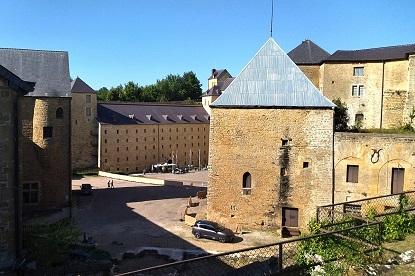
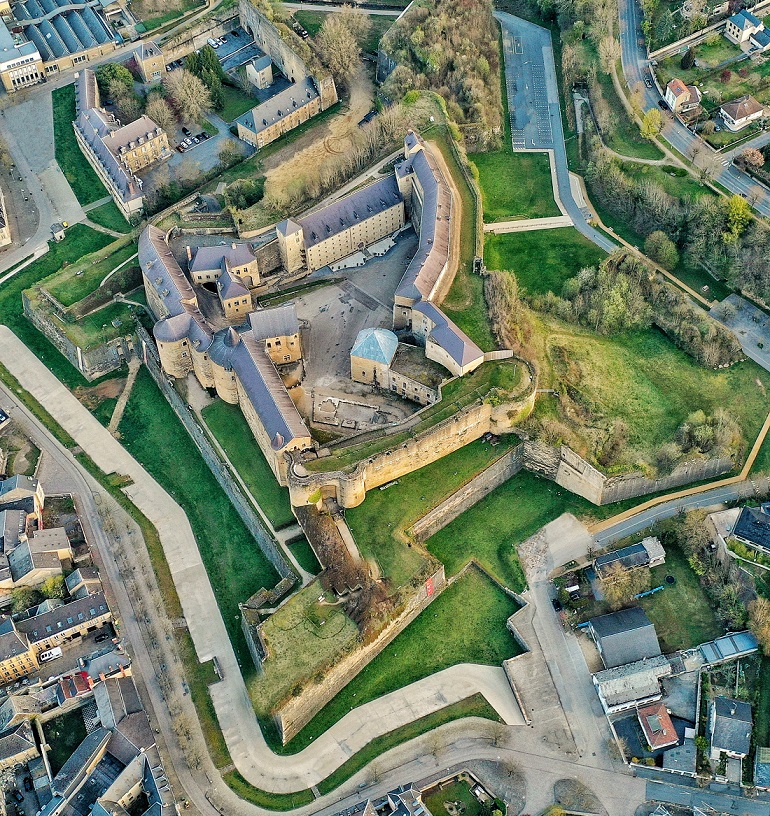
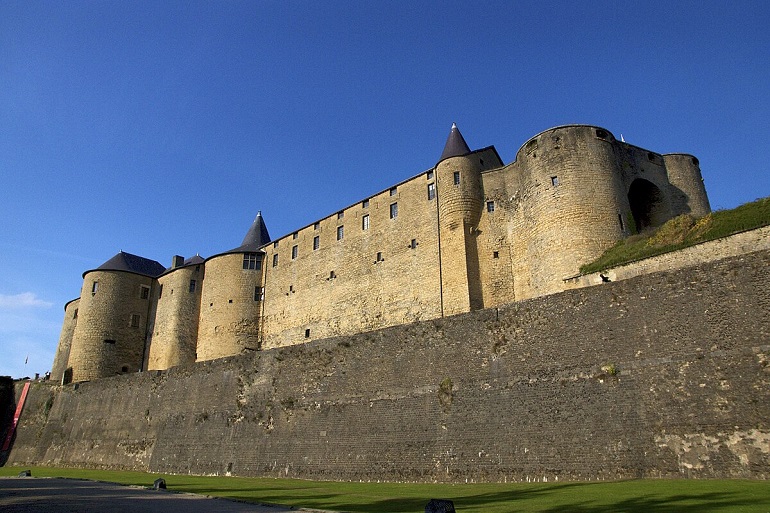
Dominating the town's skyline is the Château de Sedan, a colossal fortress renowned as the largest in Europe. Spanning an impressive 35,000 square metres across seven levels, its construction began in 1424 on a strategic rocky outcrop within a loop of the Meuse river. Originally a manor house, it was systematically enlarged and reinforced over the next two centuries by the Princes of Sedan, the de la Marck family, evolving into a formidable defensive structure. The castle's history is deeply intertwined with that of France; it became a royal garrison after the Principality of Sedan was absorbed into the kingdom in 1642. It was here, during the Franco-Prussian War, that Emperor Napoleon III surrendered in 1870, a pivotal moment in French history. Today, visitors can walk through its immense halls and along its thick ramparts, gaining a sense of its long and dramatic military past.
The Old Town and Historic Squares
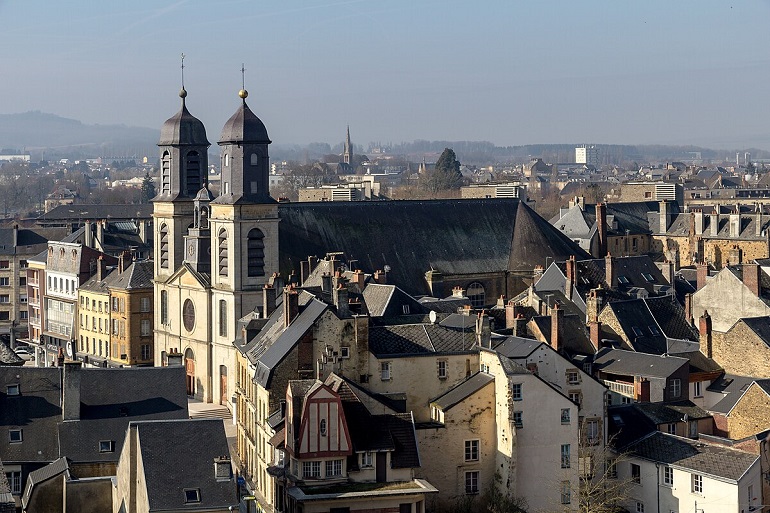
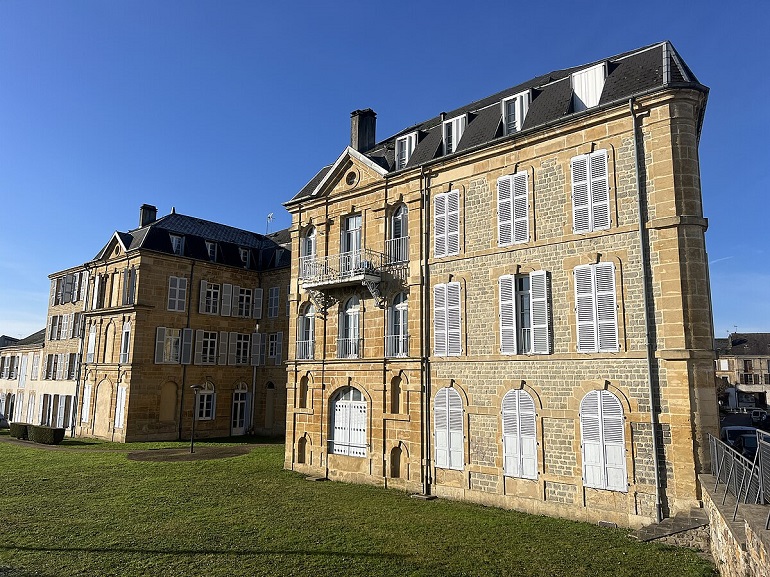
A walk through Sedan’s old town offers a chance to appreciate its rich architectural heritage, particularly from the 17th and 18th centuries. The central hub is the Place d'Armes, a handsome square where you will find the town's main church, Eglise St Charles, and the tourist information office. From here, you can wander into charming streets like the Rue de Bayle, home to a restored former cloth manufacturer’s building. Nearby is the Place Alsace-Lorraine, a grand square created on the grounds of a former bastion, now surrounded by elegant buildings including the old savings bank and a protestant church. A walk through this area reveals how the city was reshaped in the late 19th century, replacing fortifications with broad avenues and public spaces, yet retaining the character of its prosperous past.
Place Torcy
Situated on the western bank of the River Meuse, the district of Torcy represents a more modern chapter in Sedan's history. Developed significantly in the late 19th century, its growth was spurred by the construction of the town's main railway station between 1879 and 1884. While it lacks the ancient architecture of the historical centre, Torcy holds a solemn importance as the location of the Sedan-Torcy French National Cemetery. Established in 1923, this poignant site is the final resting place for thousands of soldiers, primarily French casualties from the First World War, as well as Commonwealth, Russian, and Belgian soldiers from both World Wars. The district is also home to modern amenities, including the Stade Louis Dugauguez, the local football stadium, standing in contrast to the historical fortifications across the river.
Jardin Botanique de Sedan
For a tranquil escape, the Jardin Botanique de Sedan provides a peaceful green space in the heart of the town. Established in 1875 on the site of a demolished military bastion, the garden was part of a major urban renewal project that transformed Sedan after its military decommissioning. Designed in 1891 by landscape artist René Richer, this public park is a fine example of 19th-century landscaping. It features a central pond with fish, swans, and ducks, a traditional bandstand, a rose garden with more than 50 varieties, and mature, exotic trees. The garden is a favourite spot for locals and visitors to relax on its many benches or stroll along the pleasant pathways, offering a quiet counterpoint to the town's imposing fortress.
Top Museums
Historic Fortifications
Sedan Castle and Sedan Museum
Dominating the town of Sedan is the immense Sedan Castle, the largest fortified castle in Europe, spanning 35,000 square metres across seven formidable floors. Its origins date to 1424, and for centuries it stood as both a home for the princes of Sedan and an unassailable fortress, ensuring their independence as rulers of a small principality within the wider Kingdom of France. The castle’s sheer size is matched by the depth of its historical significance—its ramparts, bastions, and towers offer a vivid insight into the defensive strategies that shaped mediaeval European warfare.
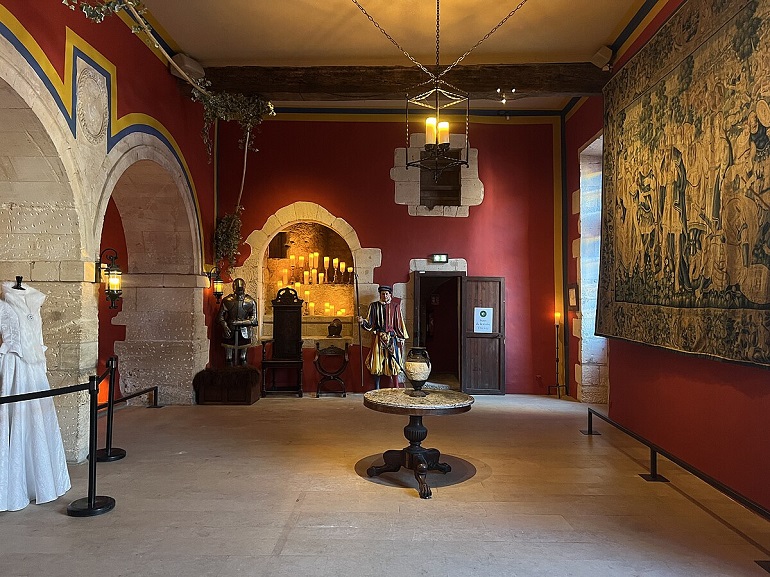
Within the castle’s walls lies the Sedan Museum, which delves into the history of the principality, from its medieval origins through to its dramatic absorption into France following the notorious Battle of Sedan in 1870—a conflict that resulted in the capture of Napoleon III and the collapse of the Second French Empire. The museum’s most striking exhibit is the Panorama of the Battle of Sedan, an imposing oil painting by Bavarian artist Ludwig Braun, which vividly captures the chaos and drama of the 1870 battle in a scene stretching 11.30 metres in length. The painting is accompanied by a collection of period weaponry, military artefacts, and personal effects of the soldiers who served at the castle.
Visitors can also view a detailed scale model of Sedan as it appeared in 1840, providing context on how the town’s colossal fortifications would have looked before they were dismantled following France’s defeat. The Princes’ Gallery, meanwhile, recreates the splendour of court life with a depiction of the historic 1591 wedding banquet that united two of Sedan’s most prominent ruling families. Tours of the castle guide visitors through these layers of history, bringing to life the strategies, tensions, and personalities that shaped the region.
Urban Heritage Centre
Maison du Patrimoine (Heritage House)
The Maison du Patrimoine is not a traditional museum full of artefacts. Instead, this heritage house is a Centre for the Interpretation of Architecture and Heritage (CIAP), part of France’s network of “Towns of Art and History”. Housed in a thoughtfully repurposed former bathhouse, the Maison du Patrimoine provides a compelling, interactive way to explore Sedan’s urban and architectural evolution without an encyclopaedic display of objects.
Its permanent exhibition uses models, videos, interactive games, and tactile displays to investigate the themes that have shaped Sedan: the importance of the Meuse river to the town’s development, the enduring influence of its military past, and the town’s role as a major centre for textiles—famed for its unique Tapis Point de Sedan fabric. The exhibition also sheds light on Sedan’s religious heritage, as both a haven for Protestants during years of religious conflict and, later, as a town under Catholic rule.
Beyond these themes, the building itself is part of the visitor’s experience—a blend of the original bathhouse with a modern extension offering panoramic views over the canal. The Maison du Patrimoine also hosts a regular programme of temporary exhibitions on local history topics, such as the story of Sedan’s municipal band or the evolution of healthcare services in the region.
Aviation History
Musée des débuts de l’aviation
Just outside Sedan in Douzy is the Musée des débuts de l’aviation. This museum occupies a special place in aviation history, being set on the site of France’s first aerodrome, established by the pioneering aviator and industrialist Roger Sommer in 1909. Sommer himself was a pioneering trainer of pilots (the world’s first), flying in the same circles as heroes like Farman and Blériot.
The museum centres around the life and work of Roger Sommer, displaying a full-scale model of his famous 1910 biplane, the aircraft in which he set a world record for flight duration. A core element of the museum is an extensive collection of photographs, vintage postcards, and period films that chart Sommer’s journey in aviation and the wider industrial story of the Ardennes at the dawn of the twentieth century. Detailed models of contemporary aircraft at quarter scale further illustrate the rapid progress of aircraft design during these formative years. The Musée des débuts de l’aviation offers a vivid, personal insight into the world of early aviation and the excitement that surrounded pioneering flight.
Local Cuisine
Visitors will delight in sampling boudin blanc de Rethel, a delicately spiced white sausage with a velvety texture, often served warm or cold. Another regional delight is Jambon d’Ardennes, an air-dried ham prized for its rich, nuanced aroma and deep flavour, typically enjoyed thinly sliced with crusty bread. The town’s proximity to Belgium is reflected in warming dishes like carbonnade flamande, a savoury beef stew simmered in local beer and enlivened with a touch of Ardennes honey. To accompany these specialities, expect generous servings of locally baked breads and, at meal’s end, the opportunity to savour galette au sucre, a flaky, sugar-dusted pastry that perfectly concludes a meal in this historic town.
Getting There
By train Frequent TER Grand Est services link Sedan to Charleville-Mézières, where fast trains from Paris Gare de l’Est arrive in just over two hours, so most visitors change there for the short onward hop into the heart of Sedan.
By coach Long-distance coaches and regional buses operated by FlixBus and RDTA call at Charleville-Mézières and Sedan, providing a slower but straightforward alternative, especially convenient if you are travelling from other Ardennes towns or neighbouring Belgium.
By car Drivers can follow the A34 from Reims or the E46 from Belgium, then take the D8043 to glide straight into Sedan, with well-signed exits leading to central car parks near the castle.
| Travel destinations in Champagne-Ardenne | |||||||||||
|---|---|---|---|---|---|---|---|---|---|---|---|
|
|
|
| ||||||||
|
|
| |||||||||


