


| Contents |
|---|
Introduction
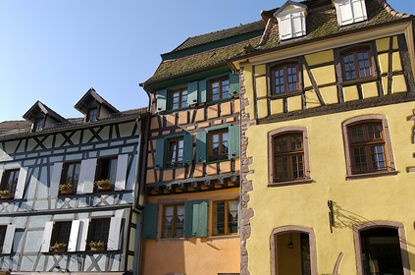
>Classified amongst France's "Most Beautiful Villages", the picturesque Riquewihr (Reichenweier in German ; pop. 1,250) is one of the highlights of Alsace, a jewel of timber-framed Renaissance architecture. Riquewihr is sheltered by the Schoenenberg hills, at the foot of the Vosges mountains and facing the plain of Alsace. Renowned for its Riesling wine, it is also listed as one of the most beautiful villages in France. The best periods of the year to visit Riquewihr are in spring and summer, when the village is beautifully decorated by flowers on the balconies, and in December for its Christmas Market.
Originally fortified by the Lords of Horbourg in 1291 and later sold to the Württemberg family in 1324, the town served as a prosperous wine trading centre known as a "Winzerdorf" throughout the centuries, with many of its distinctive half-timbered houses dating from the 16th century when it reached its economic peak through wine production and commerce. The town remains remarkably well-preserved within its double belt of medieval ramparts, featuring colourful half-timbered architecture, cobblestone streets largely free from vehicle traffic, and a pedestrian-friendly historic centre that maintains its authentic medieval layout and character. Located on the famous Alsace Wine Route approximately 15 kilometres from Colmar, Riquewihr continues to function as a significant centre for Alsatian wine production whilst serving as one of the region's most popular tourist destinations, attracting visitors drawn to its architectural heritage, wine culture, and exceptionally preserved medieval atmosphere.
Interesting Facts about Riquewihr
- Riquewihr is officially listed among the Most Beautiful Villages of France and sits in the heart of the Alsace wine route.
- The village looks much as it did in the 16th century, with colourful half-timbered houses and cobbled lanes preserved within medieval ramparts.
- Riquewihr has been famed for Riesling and wine trading for centuries, historically serving as a prosperous Winzerdorf, or “wine village.”
- The imposing Dolder Tower, a five-storey 13th-century gate, once housed the town guard and still dominates the upper entrance.
- A rare survivor of wartime destruction in the region, Riquewihr’s historic core escaped major damage during the Second World War.
- The town’s double belt of fortifications reflects its medieval status as a small fortress between the Vosges Mountains and the Rhine plain.
- Riquewihr was long under the Counts of Württemberg, adopting Protestantism in the 16th century while flourishing on wine revenues.
- Local lore and its storybook streets have led many to compare Riquewihr to a real-life fairytale village.
- Within its compact walls are museums that explore both medieval life and Alsace’s turbulent 20th-century history.
- Despite having only a small population, the village boasts an exceptional concentration of listed historic buildings.

History
In Roman times, Riquewihr was the site of an observation tower in what was already a wine-growing region. The village developed in the 6th century, during the Frankish period, and was probably named after a major landowner known as "Richo". The Latin name of the place would have been Richovilla (Richo's domain), which later evolved into Richovilare (mentioned in 1049), and eventually Riquewihr, or Reichenweier in German.
At the height of the Middle Ages, the village was protected by Reichenstein Castle, property of the Dukes of Alsace, then of the Counts of Eguisheim-Dabo. These latter acquired an increasingly bad reputation as lords bandits. In 1269, Rudolph of Habsburg, future King of Germany, set about to put an end to the devious practices of these mobsters. Recruiting troops in Strasbourg and Colmar, Rudolph besieged and destroyed the castle and executed the bandits. The future king was impressed by the local wine and elevated the village to the rank of town. Reichenweier (Riquewihr) then passed to the Dukes of Horburg, who rebuilt the castle in 1291 and raised a rampart around the village, which still exist to this day.
In 1324, Reichenweier was sold by the Horburgs to Ulrich X of Württemberg. The fate of the Alsatian town would change in 1397, when Count Eberhard IV of Württemberg got engaged to the infant heiress Henriette d'Orbe-Montfaucon, Countess of Montbéliard. Married ten years later, the couple of the unified counties elected Reichenweier as their capital. This was the start of a golden age that was to last until the Thirty Years War (1618-1648) that ravaged Germany.
In the 16th century, Reichenweier exported wine throughout the Holy Roman Empire and the cities of the Hanseatic League. In 1534, Duke Ulrich VI of Württemberg adopted Lutherianism. A few years later his half-brother, Count George, retired to the Alsatian towns of Reichenweier and Horburg following a dispute with Ulrich.
During the Thirty Years War that opposed Catholics and Protestants, Riquewihr was besieged and plundered twice, in 1635 and 1652, by the troops of the (Catholic) Duke of Lorraine. At the 1635 siege, the inhabitants were promised to be spared if they surrendered. They opened the gates on 26th June, but the invading troops didn't keep their word and conducted summary executions. The ensuing decades were marked by epidemics of plague, typhus and cholera, which inflicted a serious blow to the local community.
In 1680, Louis XIV annexed Riquewihr to the Kingdom of France. The town remained nevertheless under the laws and customs of the Holy Roman Empire until the French Revolution.
During WWII, contrarily to many other Alsatian villages, Riquewihr avoided destruction thanks to its location on a dead end road.
Main Attractions
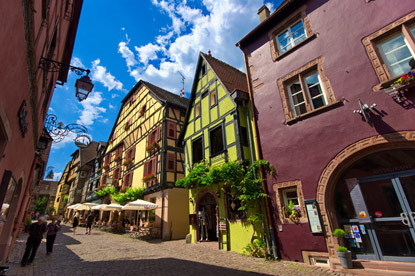
The charm of Riquewihr is its superb state of preservation. Every street is sublime, lined with half-timbered houses dating back to the 15th to 18th centuries.
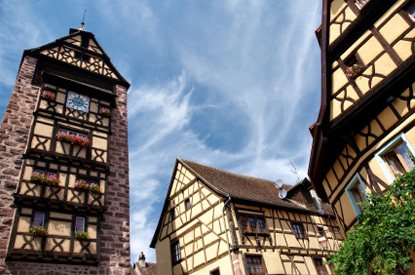
The rampart of the medieval town were punctured by two gates, built in the late 13th century by the Duke of Horburg. The lower gate was demolished in 1804. Only the upper one survives now, and is known as the Dolder.
It is topped by a five-storey tower that rises to a height of 25 metres. A bell inside served to ring the alarm when the enemy was spotted in the plain. Dolder means "highest point" in Alsatian, and it was indeed used as a watch tower, being higher than any other building in town.
A few houses have been turned into museums and offer a great opportunity to peep into the history of this fascinating town. Among them, let's note Behre House (dating from 1514), Liebrich House (built in 1535), Kiener House (1574), Dissler House (1610), and the old winegrowers' corporation at Preiss-Zimmer House.
Top Museums
Historic Buildings and Fortifications
Dolder Museum
Dominating the skyline, the Dolder Tower—Riquewihr’s most iconic monument—is a living testament to medieval fortification ingenuity. The museum inside spans four floors housed within the ancient watchtower, originally constructed in 1291. Its exhibitions vividly recount the evolution of Riquewihr from the 13th to the 17th century, focusing on the city’s defensive strategies, notable lords (including the Württemberg family), as well as the day-to-day lives of town gatekeepers, watchmen, and soldiers. Displays include a fascinating variety of objects: traditional Alsatian costumes, antique furniture, military paraphernalia, historical documents, kitchen tools, and coins—each item conjuring the sights and stories of the medieval town. Climbing to the uppermost floor, visitors are treated to magnificent panoramic views over the rooftops and surrounding vineyards, providing a striking visual link to Riquewihr’s past as a fortified rural city.
Thieves’ Tower and Winegrower's House
The Tour des Voleurs, or Thieves’ Tower, is an imposing 18-metre-high pentagonal structure located at the city’s north-western angle. Built as part of the city walls in 1291 and reworked in the 15th century, it originally served as the city prison. Within its solid stone walls, the museum now offers a gripping journey into the judicial practices of bygone days. It features a preserved torture chamber, dungeon, and guard’s apartment, allowing a literal and figurative step into the lives of prisoners and enforcers. The adjacent Winegrower’s House exhibits scenes from rural existence, with rooms such as a kitchen and cellar restored to authentically depict the lifestyle of a 16th-century Alsatian winegrower. The display of rustic tools, daily objects, and period furnishings provides deep understanding of the vital role winemaking played in shaping the town’s identity.
Art and Culture
The Hansi Museum and Village
The Hansi Museum reverently honours Jean-Jacques Waltz, Alsace’s celebrated illustrator known as Hansi. The museum brims with colour, nostalgia, and gentle humour—immersing visitors in Hansi’s world through a series of rooms arranged to evoke Alsatian village life. Featured works range from charming childhood sketches and political caricatures to aquarelles and delightful advertising posters. Carefully curated exhibits narrate both the region’s joys and its struggles, as depicted by Hansi during times of French-German tension. The museum’s shop offers beautifully illustrated items inspired by this local legend, allowing guests to take a piece of Alsace’s spirit home.
Technology and Communication
Musée de la Communication
Riquewihr’s Musée de la Communication explores the evolution of postal, transport, and telecommunications history in the region. Exquisitely preserved artefacts and interactive displays trace the development of communication technologies and infrastructure from the village’s earliest days through modern times. Historic post boxes, telegraph machines, and documentation highlight both technical innovation and the social importance of communication networks for rural towns.
Living Heritage
Heritage Galleries and Seasonal Exhibitions
A number of small galleries and cultural spaces dot Riquewihr, offering rotating exhibitions that showcase contemporary art, Alsatian crafts, and local traditions. These venues help foster a vibrant artistic community, continually renewing the connection between past and present. Seasonal exhibitions, frequently held in church interiors and public squares, further enrich the cultural landscape with new perspectives on village life.
Architectural Features as Living Museums
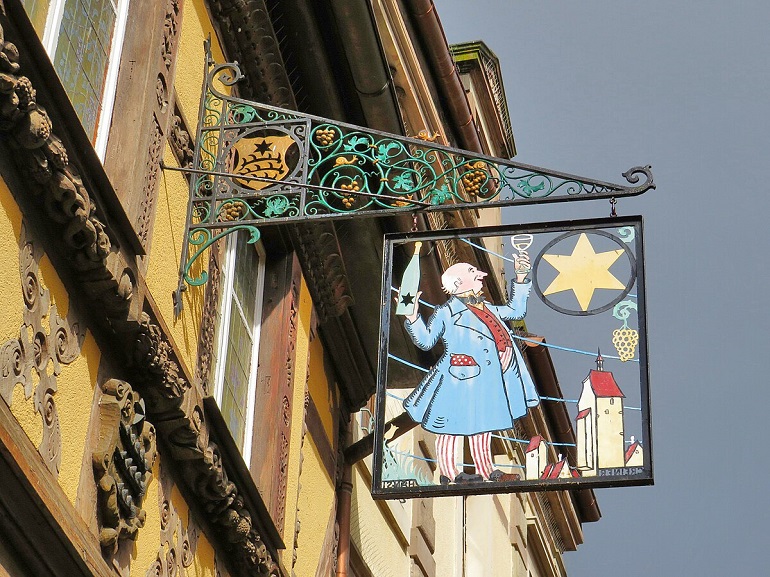
Much of Riquewihr serves as an open-air museum, with streets such as Rue du Général de Gaulle lined with exquisitely decorated “Maison Coutier” and “Maison Dissler,” blending sculpted facades, painted oriels, and unique wrought-iron signs. Each house whispers its own story, reflecting the crafts and lives of residents through centuries of careful preservation and tradition.
Summary Table
| Museum | Focus and Main Features |
|---|---|
| Dolder Museum | Medieval fortifications, weaponry, costumes, panoramic views |
| Thieves’ Tower | Judicial history, torture chambers, dungeons, guard life |
| Winegrower’s House | 16th-century rural life, winemaking, kitchen and cellar |
| Hansi Museum | Hansi’s art, Alsatian village scenes, period posters, shop |
| Musée de la Communication | Postal and transport history, telegraphs, documents |
| Heritage Exhibitions | Rotating arts, crafts, seasonal local displays |
Local Cuisine
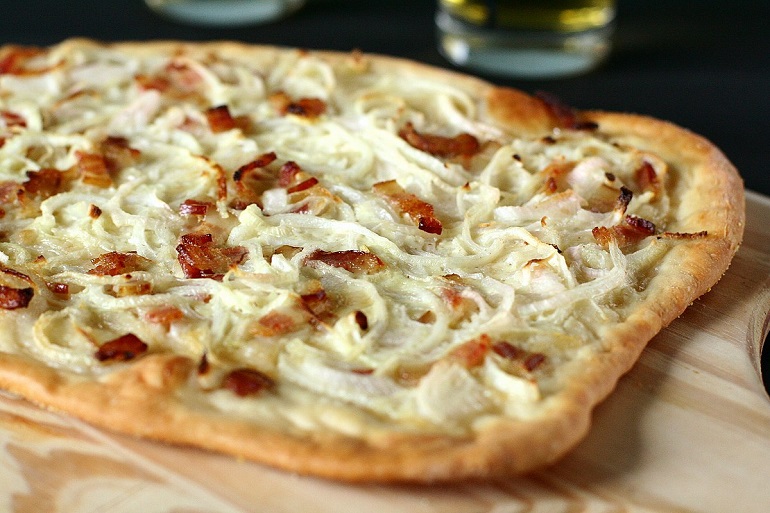
Riquewihr’s storybook streets are steeped in Alsatian flavours, with tavern tables groaning beneath platters of choucroute garnie — fragrant sauerkraut crowned with smoked pork and spicy knack sausage — alongside wafer-thin tarte flambée blistered in a wood-fired oven. Slow-cooked baeckeoffe, a comforting casserole of marinated meats and potatoes, fills the air with wine-laced aromas, while crumbly Munster cheese pairs perfectly with the village’s own honeyed Riesling. For a sweet finale, tuck into a sculpted ring of buttery kouglof or a slice of spiced pain d’épices, each capturing centuries of Rhine-edge culinary tradition.
Getting There
By train The most straightforward rail route is to take a TGV or TER service to Colmar, then change onto the frequent regional TER shuttle to nearby Ribeauvillé or the 106 bus, both of which deliver you to the edge of Riquewihr’s medieval ramparts within minutes.
By coach or bus Long-distance coaches from major French and German cities call at Colmar coach station, from where the same 106 vineyard shuttle or local Kuny-operated buses thread through the Alsatian hillsides straight to Riquewihr, making this a relaxed alternative for travellers without rail passes.
By car Motoring in via the A35 motorway, exit at Sélestat or Colmar and follow the well-signposted D3 and D1B, which meander past rolling vineyards and half-timbered villages before climbing gently to deposit you at the town’s main gate, where several peripheral car parks allow you to leave the vehicle and explore on foot.
| Travel destinations in Alsace | ||||||||||||||
|---|---|---|---|---|---|---|---|---|---|---|---|---|---|---|
|
|
|
|
| ||||||||||
|
|
|
|
| ||||||||||


