Introduction
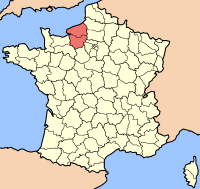
Upper Normandy (Haute-Normandie in French) was created in 1984 from the split of Normandy into two administrative regions, a political decision that is still contested to this day. With an area of merely 12,317 km2 (4,756 sq mi), hardly more than Qatar, it is the smallest region on continental France after Alsace and Île-de-France.
Normandy was invaded and settled by Danish Vikings in the late 9th century. Sailing up the Seine, raiding the countryside, then besieging Paris in 911, the Vikings were eventually granted the land of Normandy by the King of France, with Rollo as first Count of Rouen. His descendants were the Dukes of Normandy (from 996), who would conquer England in 1066. The title is still officially carried by the British monarch today.
Rouen, the largest city in Normandy, has retained a lot of its medieval charm, with its sumptuous cathedral and timber-framed houses. It is here that Joan of Arc was burned at the stake in 1431.
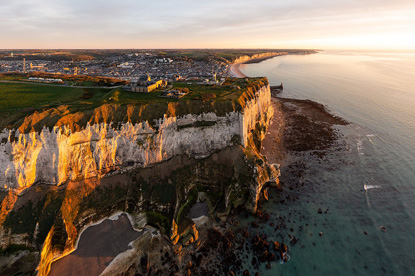
The 130 km Côte d'Albâtre (Alabaster Coast), running between the ports of Le Havre and Dieppe, is famous for its spectacular white limestone cliffs, mirroring those of southern England across the Channel. The most popular are the three natural arches and the and the pointed "needle" at Étretat.
Fans of Claude Monet come by bus-loads to the tiny village of Giverny, halfway between Rouen and Paris, where the painter lived from 1883 until his death in 1926. The main attraction is the water-lily pond, with its Japanese bridge, that feature in many of his works.
Famous people from Upper Normandy include (chronologically): the dramatist Pierre Corneille, the North American explorer Robert-René de La Salle, the writers Gustave Flaubert and Guy de Maupassant, the Nobel-prize-winning physicist Louis de Broglie, the actor Bourvil, President François Hollande, the TV presenter Laurent Ruquier, the judoka David Douillet, the actress Valérie Lemercier, and the model and actress Lætitia Casta.
History
Upper Normandy's medieval origins trace back to the Viking incursions of the 9th century, when Norse raiders repeatedly devastated the region before establishing permanent settlements. The pivotal moment came in 911 when Charles the Simple, King of West Francia, signed the Treaty of Saint-Clair-sur-Epte with the Viking chieftain Rollo, granting him lands between the river Epte and the sea in exchange for defending the Seine estuary against other Norse raiders. Rollo, known as "the Walker," had previously captured Rouen in 876 and expanded his holdings to include Bayeux by 880, establishing the foundations of what would become the Duchy of Normandy. The intermingling of Norse settlers with the local Frankish and Gallo-Roman population created a distinct Norman identity, whilst Rollo's conversion to Christianity and his establishment of Rouen as his capital marked the beginning of a powerful dynasty that would reign over the region until 928.
The Norman legacy reached its zenith under William the Conqueror, whose conquest of England in 1066 transformed Upper Normandy into the heartland of a cross-Channel empire. William, born in 1027 as the illegitimate son of Duke Robert I and Arlette of Falaise, assembled an army of 15,000 fighters and hundreds of ships in the Dives estuary before crossing the English Channel to victory at Hastings on 14 October 1066. The Norman Conquest fundamentally reshaped both England and Normandy, with William commissioning the comprehensive Domesday Book in 1086 as a testament to his administrative capabilities. The region's strategic position at the mouth of the Seine made it a crucial commercial hub, with Rouen serving as both the ducal capital and a major trading centre that would later facilitate the development of extensive textile industries. During the medieval period, Upper Normandy's prosperity was further enhanced by the growth of its port facilities and the establishment of monastic centres that preserved learning and fostered agricultural development.
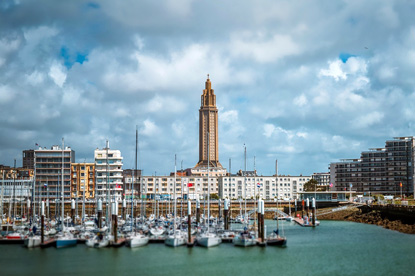
The industrial transformation of Upper Normandy began in earnest during the 18th century, when the textile industry established itself along the Cailly and Seine valleys, earning the region the nickname "Little Manchester." By 1701, demand for cotton fabrics had become so substantial that Rouen merchants organised production throughout rural areas, with the workforce expanding from 20,000 in 1730 to 100,000 by century's end. The region's textile dominance continued into the 19th century, when 51 spinning mills, 22 textile manufacturers, and 17 dyers operated along a 44-kilometre stretch of the Seine-Inférieure department. However, the 20th century brought devastating change during the Second World War, when cities like Le Havre and Rouen suffered extensive bombing that destroyed much of their historic centres. The post-war reconstruction period from 1945 to 1964 saw the emergence of innovative architectural movements, particularly Auguste Perret's modernist redesign of Le Havre, which earned UNESCO World Heritage status in 2005 for its exceptional unity and integrity. Upper Normandy's economy diversified during the latter half of the 20th century, evolving from its textile heritage to embrace petrochemicals, automotive manufacturing, and nuclear energy production, with the Paluel and Penly nuclear power plants generating more than 10% of France's electricity.
Cuisine
The cuisine of Upper Normandy is celebrated for its rich array of local ingredients, particularly those drawn from the region’s fertile farmland and expansive coastline. Dairy plays a central role, with creamy cheeses such as Neufchâtel being true specialities. Apples are equally significant, yielding not only desserts and pies but also well-known drinks like cider and Calvados. The area’s long rural tradition is reflected in hearty dishes, rustic pastries, and an emphasis on fresh, seasonal produce.
Seafood features prominently in Upper Normandy’s culinary repertoire, thanks to its thriving ports and access to the Channel. Classic dishes include Marmite Dieppoise—a fish stew combining assorted seafood with cream and cider—and Hareng Saur, which showcases the region’s famous smoked herring. Oysters, scallops, and fresh fish regularly appear in local menus, highlighting the quality and diversity of the daily catch. Neufchâtel cheese pairs especially well with these coastal fruits, lending a distinct Norman touch to both everyday fare and festive occasions.
Upper Normandy also takes pride in its inventive approach to staples, with influences from neighbouring regions and a flair for tradition. The iconic Mère Poularde omelette, originating from Mont Saint-Michel, reflects the area’s skill with eggs and dairy. Apple-based products are ubiquitous, from baked treats to the smooth, barrel-aged Calvados. Local bakers produce renowned rustic breads and tarts, completing a culinary landscape shaped by centuries of farming, fishing, and legendary hospitality.
Attractions
Département de la Seine-Maritime
|
Rouen |
|---|

 Rouen, the historic capital city of Normandy, was once one of the largest and most prosperous city in medieval Europe. It is famous for its Gothic cathedral, colourful half-timbered houses, the poignant Place du Vieux-Marché where Joan of Arc met her fate, and the remarkable Gros-Horloge astronomical clock. |
| Étretat & Côte d'Albâtre |
|---|
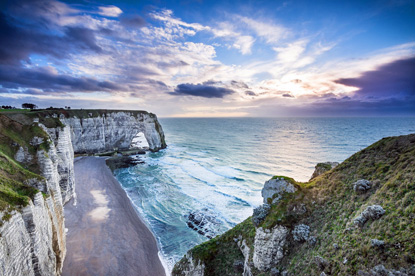
 Étretat crowns Normandy’s Côte d’Albâtre with soaring chalk cliffs, natural arches and a shingle beach backed by Belle Époque villas. Follow the GR21 along wind-swept headlands, admire Monet’s viewpoints, and savour seafood in a seaside town steeped in maritime charm. |
| Boscherville Abbey |
|---|

 A 12th-century Benedictine abbey near Rouen, featuring superb Norman Romanesque architecture and restored period gardens. Built upon an ancient sacred site, this imposing abbey boasts a 70-metre church with soaring white vaults and beautifully maintained historic gardens. |
Other attractions

Manoir d'Ango

Arques-la-Bataille Castle (ruins)
Château de Bosmelet in Auffay
Château d'Ételan
Jumièges Abbey (ruins)
La Bouille
Robert the Devil's Castle (ruins) in Moulineaux
Saint-Wandrille Abbey
Tancarville Castle (ruins)
Département de l'Eure
| Les Andelys |
|---|
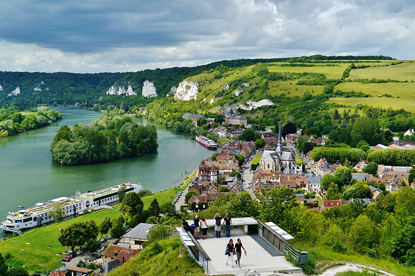
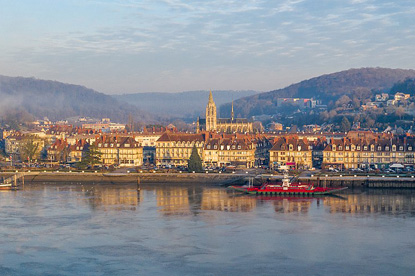
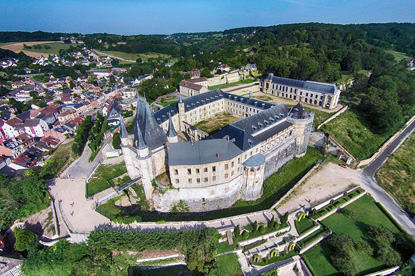
Les Andelys is a picturesque medieval town in Normandy, dramatically situated on a bend of the River Seine. Dominated by Richard the Lionheart's imposing Château Gaillard fortress, it features charming half-timbered houses, historic churches, and stunning river views. |
| Vernon |
|---|

Charming town on the Seine near Giverny, renowned for its half-timbered houses, iconic Old Mill painted by Monet, Gothic Notre Dame church, and splendid Château de Bizy. Rich history from medieval fortress to vibrant market town with excellent restaurants and shops. |
| Vascoeuil Castle |
|---|
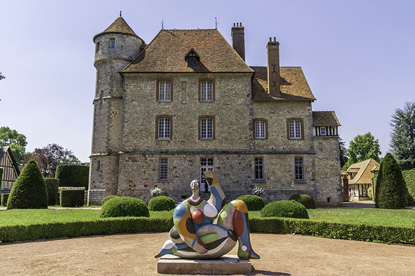
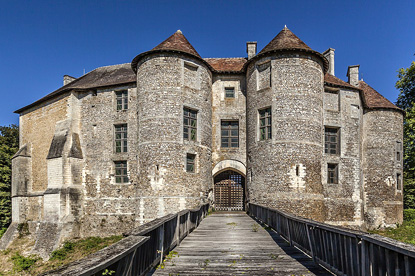
A 12th-century Norman fortified house turned renowned art and history centre, famous as historian Jules Michelet's writing retreat. Features medieval octagonal tower, remarkable 17th-century brick dovecote, contemporary exhibitions, and sculpture park with works by Braque and Dalí. |
| Lyons-la-Forêt |
|---|
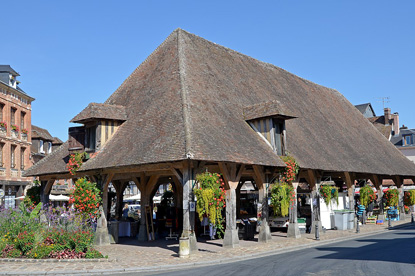
A fairy-tale Norman village nestled in one of Europe's largest beech forests, Lyons-la-Forêt enchants with its half-timbered houses, 18th-century market hall, and cobbled streets. Listed amongst France's Most Beautiful Villages, this former royal hunting ground inspired Flaubert's Madame Bovary. |
| Gisors Castle |
|---|
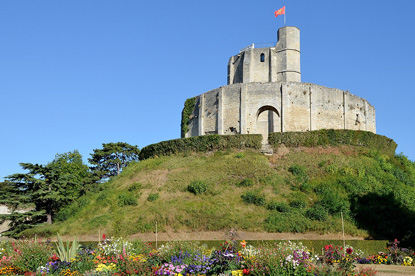
An outstanding 11th-century Norman fortress in the Vexin region, built to defend against French incursions. Features a magnificent octagonal keep on an artificial motte, with links to the Knights Templar and exceptional medieval military architecture spanning five centuries. |
Other attractions
Gardens of the Château d'Acquigny
Conches-en-Ouche Castle (ruins)
Château de Fleury-la-Forêt
Ivry-la-Bataille Castle (ruins)
Fontaine-Guérard Abbey (semi-ruined)
Mortemer Abbey (ruins)


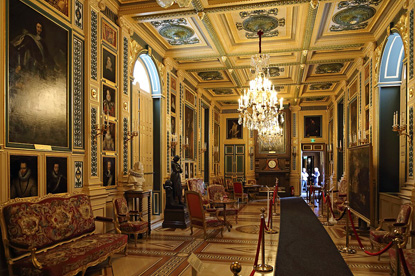
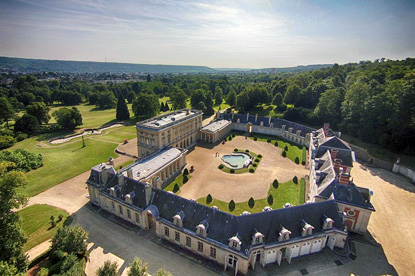
 Former royal residence in Eu begun in 1578 by Catherine de Clèves and Henri de Guise, later completed and embellished by La Grande Mademoiselle and King Louis-Philippe. It served as King Louis-Philippe's summer residence and twice hosted Queen Victoria in the 1840s. Today it houses the Musée Louis-Philippe.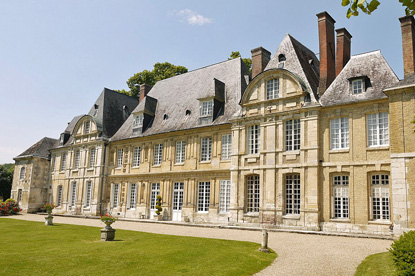
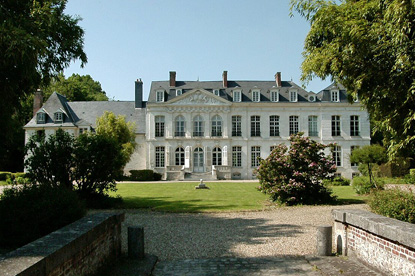
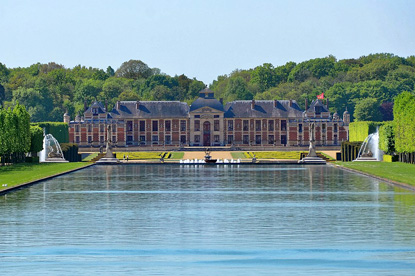
 A magnificent Renaissance château built in 1530 near Duclair, showcasing Italian-inspired architecture spanning three centuries. Set in beautiful parkland along the Seine, this historic monument features 60 rooms, a unique period theatre, and remarkable ancient trees.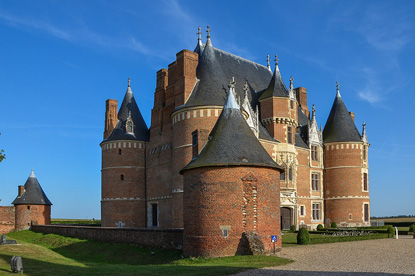


 : Local interest
 : Moderately interesting
 : Outstanding place
 : Must-see in the country
 : Top cities in Europe