Introduction

The Nord-Pas-de-Calais is the former administrative region comprising the traditional regions of French Flanders (the lowlands) and Artois (the uplands). With 4 million inhabitants, it is the fourth most populous French region, as well as the second most densely populated (320 inhab./km²) after the Île-de-France. Its land area (12,414 km2 / 4,793 sq mi) is comparable to that of the adjacent Flemish region in Belgium. In 2015 the Nord-Pas-de-Calais fused with Picardy to form the Hauts-de-France region.
Heavily industrialised in the 19th and early 20th century, the cities of the Nord suffered badly post-WWII deindustrialization and now have the highest unemployment rate in northern France, a situation not unlike that of Wallonia or the English Midlands.
Lille, the capital and largest city of the Nord-Pas-de-Calais, is the undeniable tourist hub of the region thanks to its superb Flemish (Neo-)Renaissance architecture and convenient TGV links from Paris, London and Brussels. If you only have time for one more city, head for Boulogne-sur-Mer, a major historical port that has retained its city walls and old town almost intact. It is also home to one of France's best aquariums.
Famous people from the Nord-Pas-de-Calais include (chronologically): Emperor Baldwin I of Constantinople (Baldwin VI Count of Hainaut), the revolutionary politician Maximilien de Robespierre, Marshal Philippe Pétain, the painter Henri Matisse, President Charles de Gaulle, the Nobel-prize economist Gérard Debreu, the actors Philippe Noiret and Pierre Richard, and the business magnate Bernard Arnault.
History
Most of the region was once part of the Southern Netherlands, within the Low Countries, and gradually became part of France between 1477 and 1678. Its culture is still closely linked to that of Belgium. Flemish was traditionally spoken in northern towns such as Dunkirk, Bergues and Cassel, though the number of Flemish speakers has dwindled considerably over the last 100 years. The Picard dialect of French (known as Ch'ti around Lille) is spoken by a minority of the population everywhere else, and across the Belgian border in such towns as Tournai and Mons.
Owing to its strategic location at the confines of France and the Low Countries, and its proximity to England, many military conflicts took place in the Nord-Pas-de-Calais. One of the most famous among English-speakers is the Battle of Agincourt (1415), in which English longbowmen defeated a vastly superior army of French knights, took place near modern-day Azincourt, 50 km southeast of Boulogne.
Other major battles took place at Bouvines (1214), Mons-en-Pévèle (1304), Cassel (1328), Ardres (1351), Dunkirk (1385), Guinegate (1479), Renty (1554), Gravelines (1558), Honnecourt (1642), Lens (1648), Arras (1654), Dunkirk (1658), Lille (1667), Cassel (1677 and 1708), Malplaquet (1709), Bouchain (1711), Denain (1712), Tourcoing (1794), and Dunkirk (1940).
Additionally, during the First World War, the area between Amiens (in Picardy) and Ypres (in Belgium), passing via Péronne, Arras, Lens and Lille, was the scene of the atrocious Battle of the Somme, which lasted from 1 July to 18 November 1916 and caused over 1 million casualties. The area, known as Flanders Fields, is scattered with more than 1000 military cemeteries, and dozens of war memorials honouring soldiers of various nationalities. Most of the memorials are just across the boundary with Picardy. Those in Nord-Pas-de-Calais include the Canadian National Vimy Memorial, the V.C. Corner Australian Cemetery and Memorial in Fromelles (between Lille and Béthune), the the Indian Memorial in Neuve-Chapelle (7 km southwest of Fromelles), and the Ayette Indian and Chinese Cemetery (15 km south of Arras).
Cuisine
The traditional culinary specialities of Flanders-Artois are essentially the same as in Belgium: moules-frites (mussels with chips/fries), carbonade flamande (beef and onion stew with beer), chicon au jambon (gratin of Belgian endives with ham), potjevleesch (potted meat), waterzooï (fish or chicken stew), lapin aux pruneaux (rabbit with prunes), and so on. The same goes for the sweets and drinks: waffles, sugar tart, Speculoos biscuits, beer, jenever (gin) and root chicory (a coffee substitute) are all as common here as in Belgium.
Attractions
Département du Nord
|
Lille |
|---|

 Northern France's captivating university city blending French and Flemish cultures. Historic Grand Place, stunning Vieille Bourse, and cobbled streets showcase beautiful brick architecture. Home to world-class museums and Europe's largest flea market, the annual Braderie. |
|
Cambrai |
|---|
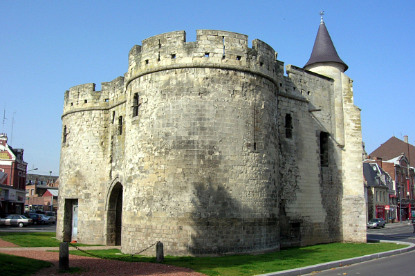
 Historic Cambrai blends WWI heritage with stunning architecture. Home to UNESCO-listed belfry, magnificent Notre-Dame Cathedral, and famous 'Bêtises de Cambrai' mints. This designated City of Art and History offers charming streets, baroque churches, and easy access from Belgium. |
Département du Pas-de-Calais
| Le Touquet-Paris-Plage |
|---|
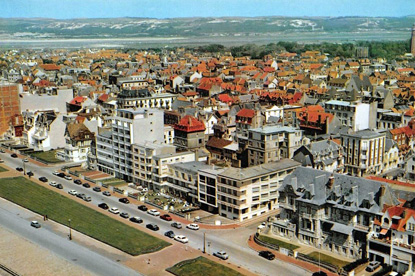
Elegant seaside resort on northern France's Opal Coast, known as the 'Monaco of the North'. Features beautiful sandy beaches, distinctive Belle Époque and Edwardian architecture, championship golf, luxury hotels, and fine dining. Just two hours from Paris and London. |
| Wissant |
|---|
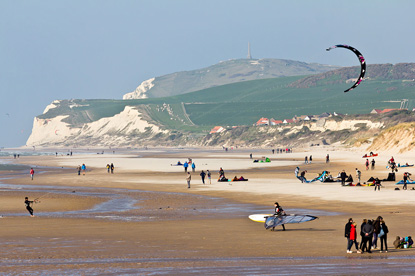
Charming fishing village on France's Opal Coast between Cap Blanc-Nez and Cap Gris-Nez. Famous for its expansive sandy beach, traditional flobarts, and world-class kitesurfing. Just 35km from England's coast with colourful fishermen's cottages and authentic local markets. |
|
Béthune |
|---|

 Historic Béthune features a magnificent 14th-century UNESCO belfry dominating its Art Deco main square, rebuilt after WWI destruction. This charming northern French market town offers excellent shopping, the beautiful Saint-Vaast Church, and lies conveniently between Arras and St Omer. |
|
Calais |
|---|

 France's busiest cross-Channel port offers rich Anglo-French heritage, UNESCO-listed belfry, Rodin's Burghers sculpture, miles of sandy beaches, and a spectacular mechanical dragon. Perfect base for exploring the Opal Coast with excellent shopping and dining. |


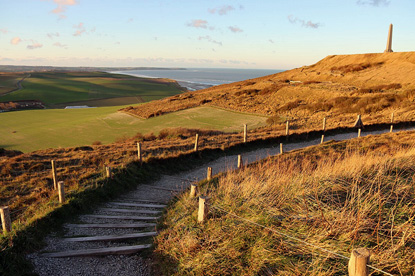
 Pas-de-Calais regional natural park featuring dramatic white chalk cliffs at Cap Blanc-Nez and Cap Gris-Nez, ancient cultivated marshlands, and diverse coastal ecosystems. Between Calais and Boulogne-sur-Mer, offering spectacular English Channel views and rich biodiversity.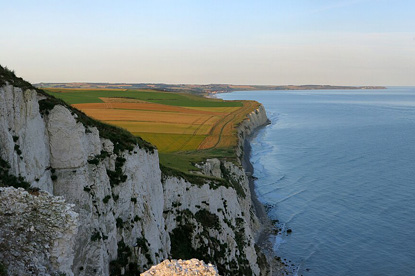
 Dramatic chalk and sandstone cliffs on France's stunning Opal Coast between Calais and Boulogne. Cap Blanc-Nez towers at 134m with spectacular views to Dover, whilst Cap Gris-Nez marks Europe's closest point to England. Perfect for hiking and coastal walks.

 Enchanting town renowned for its spectacular Flemish baroque squares, UNESCO-listed medieval belfry, and poignant WWI memorial sites. The beautifully reconstructed Grand'Place showcases magnificent 17th-century arcaded facades and lively markets.
 : Local interest
 : Moderately interesting
 : Outstanding place
 : Must-see in the country
 : Top cities in Europe