


| Contents |
|---|
Introduction
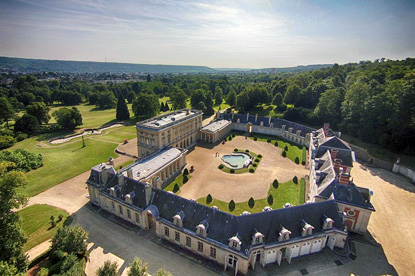
Known as the "Versailles of Normandy" (along with the Château du Champ de Bataille), the Château de Bizy stands as one of France's most enchanting 18th-century estates, gracefully presiding over the charming town of Vernon in the Eure valley. Built in 1740 for the Duke of Belle-Isle and later home to Napoleon's marshals, this neoclassical masterpiece seamlessly blends architectural elegance with spectacular gardens that rival those of the great royal palaces. Visitors are immediately captivated by the château's magnificent water features, including cascading fountains and ornamental pools that create a symphony of sound and movement throughout the meticulously maintained grounds. The interior showcases period furnishings, fine art, and historical artefacts that bring to life the stories of its illustrious residents, whilst the surrounding parkland offers peaceful walking paths beneath centuries-old trees. Whether you're drawn by its fascinating Napoleonic connections, its stunning horticultural displays, or simply the timeless appeal of French château life, Bizy promises an unforgettable glimpse into the refined world of aristocratic France, all within easy reach of both Paris and the historic treasures of Normandy.
Interesting Facts about Château de Bizy
- Nicknamed the “Little Norman Versailles,” the château boasts grand 18th-century stables modelled to echo royal splendour.
- The estate was transformed in the 1740s by the Duke of Belle-Isle, grandson of Nicolas Fouquet, who developed hydraulic fountains and formal gardens.
- Louis XV owned Bizy briefly before it passed to the philanthropic Duke of Penthièvre, a famed figure of the Ancien Régime.
- During the Revolution, the earlier Jubert de Bouville château was dismantled and sold off stone by stone.
- King Louis-Philippe frequented Bizy and added glass galleries and an English-style park to modernise the residence.
- The current neoclassical central block dates to the 19th century, built with architect William Henry White after Baron Schikler acquired the domain.
- Inside, highlights include Gobelins tapestries, fine panelling, and Napoleonic souvenirs such as a marquetry pedestal table.
- The landscaped grounds feature century-old trees, statues, ponds, and playful water features spread across multiple garden areas.
- Guided visits are required to see the richly furnished interiors, with set tour times throughout the day.
- The estate remains privately owned by a descendant of the Duke of Albufera, linking it to the Napoleonic Marshal Suchet.
History
The Château de Bizy has been shaped by centuries of aristocratic ownership and architectural evolution since the Jubert family first acquired the lands in the 14th century. In 1675, Nicolas Jubert de Bouville, State Councillor and intendant of Orléans, elevated the seigneury to marquisate status and constructed the original residential castle. The estate underwent dramatic transformation when Charles-Louis-Auguste Fouquet, Duke of Belle-Isle and grandson of Louis XIV's superintendent of finance Nicolas Fouquet, purchased the marquisate in 1721. The Duke, who became Marshal of France in 1741, retained the original château whilst focusing on expanding the estate and creating elaborate gardens with fountains and water features. Between 1741 and 1743, he commissioned Pierre Contant d'Ivry, renowned as "the best architect in Europe," to construct magnificent stables for sixty horses inspired by those at Versailles, earning Bizy its nickname "the Versailles of Normandy."
The château entered royal circles when the Duke of Belle-Isle hosted Louis XV and Madame de Pompadour in 1749, marking its significance as a prestigious residence. Upon the Marshal's death in 1761 without heirs, the estate passed to King Louis XV, who subsequently exchanged it with the count of Eu for the principality of Dombes. The property then passed to Louis Jean Marie de Bourbon, Duke of Penthièvre, the legitimised grandson of Louis XIV and Madame de Montespan, who possessed one of Europe's largest fortunes but was renowned for his charitable works. During the Revolution, the Duke remained popular with local people due to his generosity, settling permanently at Bizy in 1792 with his daughter Louise Marie-Adélaïde, Duchess of Orléans. Following the Duke's death in 1793, the château was confiscated as national property and tragically dismantled by merchants who sold it stone by stone, leaving only the Duke of Belle-Isle's stables and outbuildings intact.
The château's modern incarnation began in 1805 when General Le Suire purchased the ruins and built a modest house on the site of the former stable courtyard, which forms the foundation of today's main building. Under the Restoration, the Duchess of Orléans repurchased her family's property in 1817, and her son Louis-Philippe, future King of the French, inherited the estate in 1821. Louis-Philippe undertook extensive improvements, creating glass galleries to enclose the courtyard, establishing an English-style park with hundred-year-old trees including a remarkable catalpa, and frequently residing there, even travelling by railway after the line reached Vernon in 1843. Following further political upheavals and confiscation under Napoleon III, Baron Schickler acquired Bizy in 1858 and rebuilt the central building in sumptuous neoclassical style with architect William Henry White. In 1909, the baron bequeathed the estate to his grand-nephew Louis Suchet, fourth Duke of Albufera and descendant of Napoleon's Marshal Suchet, and today the château remains in the family, owned by Madame Vergé, born Isabelle Suchet d'Albuféra.
Description
Architectural Grandeur
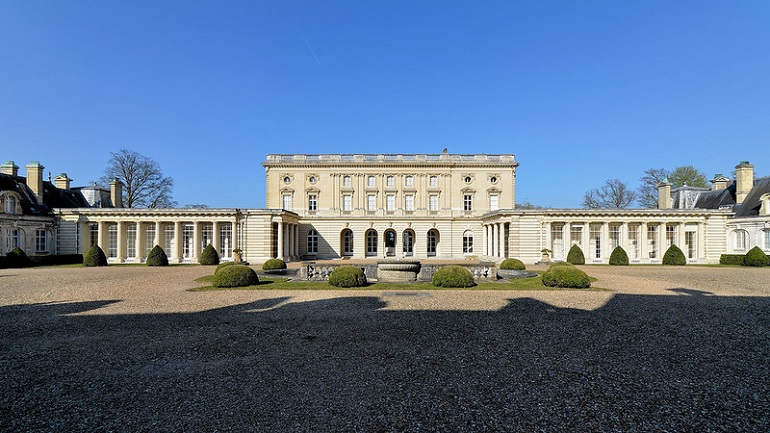
The château's exterior presents a striking example of 19th-century neoclassical architecture, masterfully designed to harmonise French and Italian influences. The main residential building, reconstructed in the mid-1800s under Baron Schikler's ownership with architect William Henry White, features a distinguished stone façade that exudes timeless nobility. The building's most prominent feature is its elegant balustraded terrace roof, which crowns the structure with aristocratic dignity, whilst the north side showcases a stately columned porch that welcomes visitors with classical grandeur.
The south-facing elevation reveals an open ground-floor gallery that creates an seamless transition between interior and exterior spaces, allowing natural light to flood the principal reception areas whilst providing direct access to the magnificent parkland beyond. The building's proportions follow classical principles, with perfectly balanced fenestration and refined stone detailing that speaks to the sophisticated taste of its creators.
The Legendary Stables
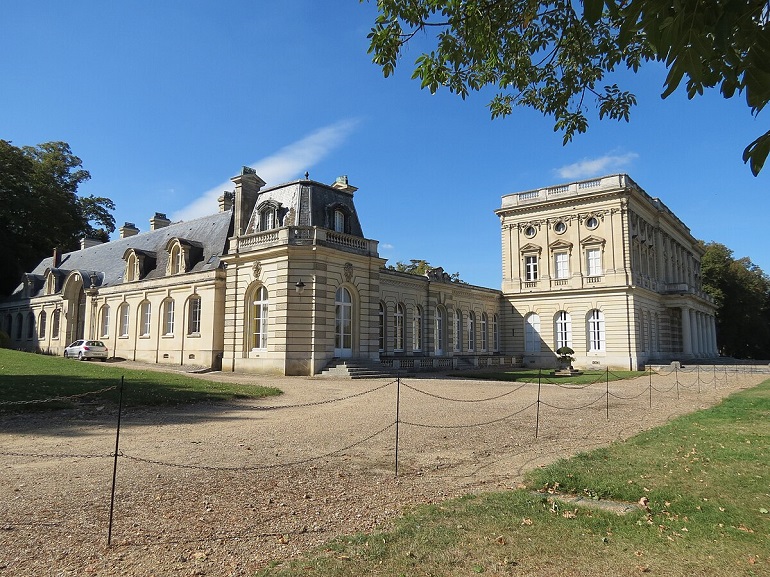
The estate's most architecturally significant structures are undoubtedly the magnificent 18th-century stables, designed between 1741 and 1743 by the celebrated architect Contant d'Ivry, who was considered amongst Europe's finest architectural talents of his era. These extraordinary buildings were conceived as a direct homage to the royal stables at Versailles, built to house sixty horses in unparalleled luxury. The stables represent some of the finest examples of equestrian architecture in France, featuring soaring vaulted ceilings, perfectly proportioned arched openings, and an ingenious drainage system that included a special basin for washing horses' hooves.
Today, these historic stables house a fascinating collection of six elegant 19th-century horse-drawn carriages, which were still in regular use by the château's owners well into the modern era, providing visitors with a tangible connection to the estate's living history.
Opulent Interior Spaces
The château's interior unfolds as a series of lavishly appointed rooms, each telling its own story of aristocratic refinement and historical significance. Guided tours lead visitors through carefully preserved spaces that showcase centuries of exquisite craftsmanship and artistic treasures.
The Grand Reception Room serves as the tour's centrepiece, featuring magnificent carved wood panelling that dates from the late Louis XIV and early Régence periods. This exceptional boiserie was salvaged from the demolished Château de Bercy and expertly reinstalled at Bizy, creating an atmosphere of authentic 18th-century grandeur. The room's soaring proportions are enhanced by elaborate ceiling mouldings and period furnishings that belonged to members of the Bonaparte family and several of Napoleon's most distinguished marshals, including Suchet, Masséna, and Davout.
The Salon Bonaparte houses some of the estate's most precious treasures, including sumptuous tapestries created by the renowned Gobelins Manufactory, whose intricate craftsmanship represents the pinnacle of French decorative arts. The room's crowning glory is an exquisite marquetry pedestal table that was personally gifted by Napoleon I, its delicate inlay work showcasing the emperor's appreciation for fine craftsmanship.
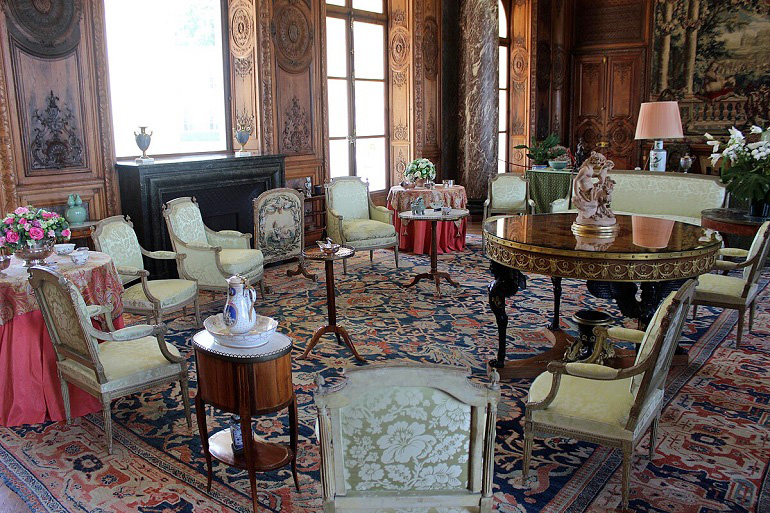
The Music Room, originally designed as an entertainment space beneath the main staircase, retains its original decorative scheme and now displays a fascinating collection of Napoleonic memorabilia, including military uniforms and personal effects that provide intimate glimpses into the lives of France's most celebrated military leaders.
The Formal Dining Room presents a perfectly preserved tableau of aristocratic dining, with an elegant table setting that demonstrates the refined entertaining traditions of the château's golden age, complete with period porcelain, crystal, and silverware.
The Magnificent Park and Gardens
The château is embraced by an extraordinary 80-hectare park that ranks amongst France's most beautiful historic landscapes, offering visitors multiple garden experiences within a single estate. The grounds were redesigned during the reign of King Louis-Philippe in the English romantic style, creating a naturalistic landscape that contrasts beautifully with the château's formal architecture.
The English-Style Parkland encompasses 20 hectares of rolling lawns punctuated by magnificent bicentennial trees, including ancient oaks, beeches, and chestnuts that create cathedral-like groves throughout the grounds. Serpentine pathways wind through this naturalistic landscape, leading visitors on contemplative journeys past romantic vistas and secluded glades where the interplay of light and shadow creates an ever-changing tapestry of natural beauty.
The Water Features represent one of the park's most enchanting elements, with an elaborate network of 18th-century fountains that bring movement and music to the landscape. The Neptune Fountain commands attention with its dramatic sculptural composition, whilst the Sea Horses Fountain delights with its playful aquatic themes. The whimsically named Gribouille Fountain adds a note of gentle humour to the otherwise stately proceedings. These water features are connected by a series of reflective ponds and cascades that were engineered during the Duke of Belle-Isle's ownership to create a sophisticated hydraulic system throughout the grounds.
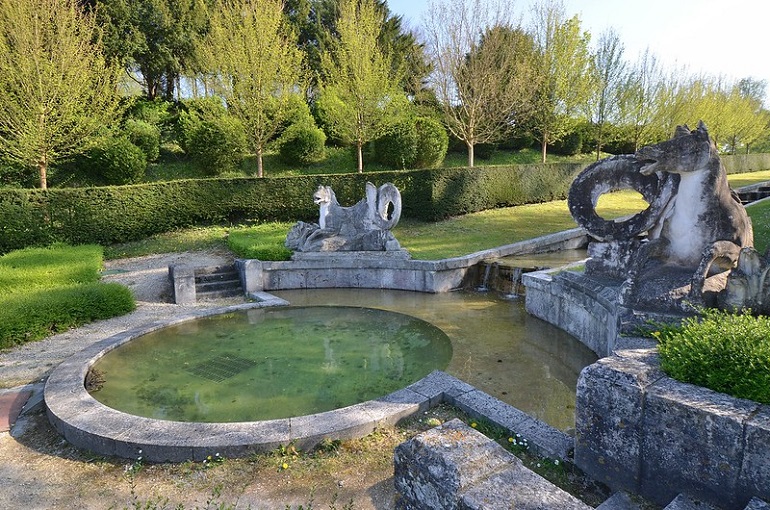
The Italian Garden offers a more intimate experience, designed with formal geometric patterns that create stunning visual perspectives from the château's principal reception rooms. This garden features a remarkable water staircase that demonstrates the sophisticated hydraulic engineering of the period, with water cascading down multiple levels in a choreographed display that delights both eye and ear.
The French Formal Garden pays homage to the classical tradition of French garden design, featuring precisely maintained parterres arranged in intricate patterns that can be fully appreciated from the château's upper floors. Box hedging creates elaborate geometric designs filled with seasonal plantings that provide year-round colour and interest.
The Woodland Sanctuary encompasses the wilder reaches of the estate, where ancient trees create a natural cathedral that serves as home to native wildlife, including graceful roe deer that can occasionally be glimpsed moving silently through the dappled shadows.
The Kitchen Garden represents the estate's agricultural heritage, featuring a beautifully maintained 19th-century potager that once supplied the château's kitchens with fresh produce, herbs, and cutting flowers, demonstrating the self-sufficiency that characterised great country estates of the period.
This extraordinary estate continues to enchant visitors with its seamless blend of architectural splendour, artistic treasures, and landscape artistry, offering an unparalleled glimpse into the refined world of French aristocratic life across multiple centuries.
Getting There
By train The frequent TER service from Paris-Saint-Lazare to Vernon-Giverny (about 45 minutes) is the simplest option; from the station it’s a pleasant 25-minute walk or a short hop on local bus 1 towards Sente du Bon-Dieu/Montgomery, which both stop roughly ten minutes from the château.
By coach or bus Long-distance tours from Paris to Giverny often include Vernon; if you’re already in town, SMT buses on route 1 link the station with stops near Avenue du Maréchal de Lattre de Tassigny, leaving a brief stroll to the gates.
By car Take the A13 from Paris or Rouen and exit at junction 16 for Vernon; from there it’s a quick 3 km drive to the château, which has its own on-site car park accessed via Avenue du Maréchal de Lattre de Tassigny (ignore GPS prompts for Rue de Bizy, which is for pedestrians).
Best Time to Visit
The best time to visit the Château de Bizy is from late April to early October, when the formal gardens are lush, the fountains are running, and daylight is long enough to pair a house tour with an unhurried stroll in the park. Spring offers fresh blossom and bright greenery, summer brings warmth but also the largest crowds, and early autumn adds gentle light and rich colours. For a calmer experience, choose a weekday morning and plan around the fixed guided-tour times, then linger in the grounds. Late May–June and September usually strike the best balance of pleasant weather and fewer visitors.