


| Contents |
|---|
Introduction
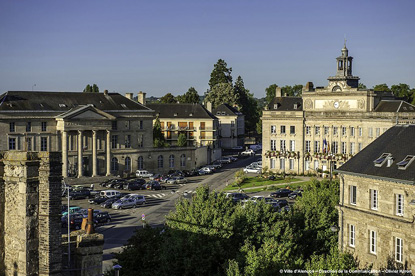
Elegant and unhurried, Alençon (pop. 25,000) blends lace-making finesse with small-city charm. At its heart, the Musée des Beaux-Arts et de la Dentelle celebrates the famed Point d’Alençon, while cobbled lanes around Notre-Dame lead past handsome stone façades and timbered houses. The River Sarthe drifts by café terraces and lively markets brimming with cider, cheeses and Perche produce. History endures in the Dukes’ château remains and the family home of Saint Thérèse, yet the city feels youthful, with galleries, festivals and easy cycling on the Véloscénie route. Beyond the centre, the Écouves Forest and the Normandie-Maine Regional Park promise walks, châteaux and quiet villages—making Alençon a graceful base for exploring inland Normandy.
Interesting Facts about Alençon
- Alençon is world-famous for Point d’Alençon needle lace, recognised by UNESCO as Intangible Cultural Heritage.
- The town was besieged by William the Conqueror in the 11th century after defenders mocked his tanner ancestry.
- Alençon became the seat of a French dukedom in 1415, lending it the moniker “City of the Dukes.”
- Sainte Thérèse of Lisieux was born in Alençon in 1873, and her birthplace is a site of pilgrimage.
- The Château des Ducs d’Alençon, largely demolished, later served as a prison until the 21st century.
- The Church of Notre-Dame d’Alençon blends late Gothic and Renaissance elements from the 15th–17th centuries.
- Traditional training for Point d’Alençon lace can take seven to ten years to master the full craft.
- Alençon sits between the Normandie-Maine and Perche regional natural parks, offering easy access to forests and trails.
- Despite heavy bombing in 1944, landmarks like the Maison d’Ozé and the 18th-century town hall survived.
- The town’s economy evolved from fine textiles to modern industries such as electrical goods and plastics.

History
Alençon's medieval origins trace back to the seventh century, when the settlement first appears in historical documents as a strategic buffer state between Normandy and Maine. During the ninth century, the town developed around a castle constructed near the banks of the River Sarthe, establishing its importance as a frontier fortress. The most dramatic episode in Alençon's early history occurred between 1049 and 1051, when William the Conqueror laid siege to the town after it rebelled in support of the Count of Anjou. According to William of Poitiers, the defenders mockingly waved animal hides from the castle walls, referencing William's lineage as grandson of a tanner, which provoked the future king to order the hands and feet of 32 prisoners cut off, forcing a swift surrender. The town subsequently endured English occupation during the Anglo-Norman wars from 1113 to 1203, with a new keep constructed in 1113 during the reign of Henry I. The original medieval castle was largely destroyed during William's siege, later rebuilt by Pierre II, Count of Alençon, between 1361 and 1404.
The transformation of Alençon into a ducal seat began in 1415, when it became the seat of a dukedom belonging to the sons of French kings until the Revolution. This period saw Alençon emerge as a centre of extraordinary craftsmanship with the development of its world-renowned lace industry during the 16th century. The industry reached its zenith under Louis XIV's finance minister Jean-Baptiste Colbert, who established a Royal Workshop in 1665 to produce Venetian-style lace and reduce French dependence on foreign imports. Local craftsperson Marthe La Perrière modified the Venetian technique, and by 1675, Alençon had developed its distinctive needle lace style known as point d'Alençon. This exquisite lace, later dubbed the "Queen of Lace" at the Great Exhibition of 1851, became so prized that Napoleon commissioned elaborate bed furnishings featuring imperial emblems for his marriage to Empress Marie Louise. The town also gained religious significance as the birthplace and childhood home of Saint Thérèse of Lisieux, born in January 1873 to Louis Martin and Marie-Azélie Guérin Martin, the latter being a celebrated local lace-maker.
The modern era brought both triumph and tragedy to Alençon, with economic development in the 19th century based on iron foundries, mills, and a flourishing printing industry. During the Second World War, German forces occupied the town from 17 June 1940, establishing a Gestapo headquarters in the medieval castle where resistance fighters were tortured and 38 people executed for their opposition activities. Alençon achieved the distinctive honour of becoming the first French city liberated by French forces when General Leclerc's 2nd Armoured Division freed the town on 12 August 1944. The post-war period witnessed dramatic population growth and industrial diversification, with the establishment of plastics industries that transformed Alençon into a major plastics education centre, culminating in the opening of a plastics engineering school in 1993. Meanwhile, the traditional lace-making craft survived through the dedication of Carmelite nuns and the establishment of a National Lace Workshop in 1976, leading to UNESCO recognition of Alençon needle lace-making as an Intangible Cultural Heritage of Humanity in 2010.
Main Attractions
Château des Ducs d’Alençon
The Château des Ducs d’Alençon is an impressive medieval fortress located in the very heart of the town. Its origins stretch back to the eleventh century, with significant fortifications and 14th-century additions by the powerful dukes who ruled the region. While only part of the original structure remains—most notably the grand twin-towered gatehouse—what survives bears strong witness to its former might and significance. Over centuries, the château served as a princely residence and later a prison, including during the Second World War when it was used by German forces. In recent years, the structure has been converted into an urban park, with ongoing renovations granting visitors a chance to wander its grounds and appreciate the blend of Gothic and Renaissance architecture. The exterior’s crenellated towers and imposing entrance evoke the grandeur of Normandy’s feudal past, and the surrounding gardens have become a peaceful retreat and popular site for local events and open-air performances.

Basilique Notre-Dame d'Alençon
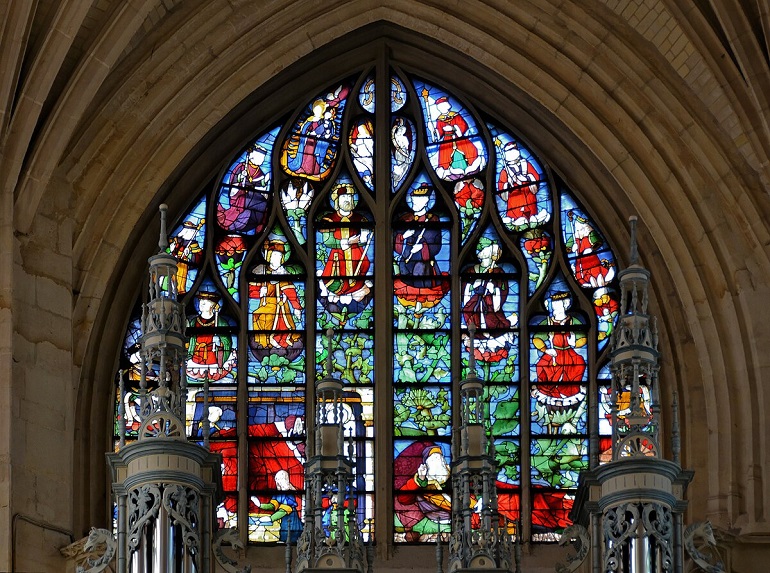
Commanding the centre of the old town, the Basilique Notre-Dame d'Alençon is a masterpiece of late Gothic art and a focal point for spiritual and cultural life. Its elegant façade, intricately carved with stone tracery and sculptures, draws the eye upwards to splendid rose windows that fill the nave with coloured light. Inside, tall columns and soaring vaults create a sense of airy grandeur, while delicate stained glass recounts chapters of local and biblical history. The church is renowned as the place where Sainte-Thérèse of Lisieux was baptised and her parents were married, which lends the basilica special significance as a site of pilgrimage. Its central location makes it a natural magnet for visitors beginning their exploration of Alençon's historic heart.
Alençon Town Hall
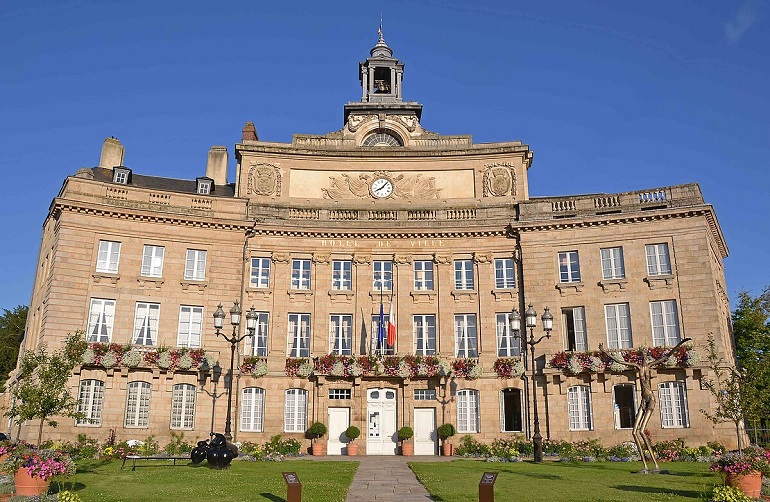
The Hôtel de Ville of Alençon is an elegant 18th-century town hall that reflects the city’s ducal heritage and later civic pride, standing out with a restrained classical façade of pale stone, tall arched windows, and a dignified pedimented central bay. Inside, ceremonial salons and a grand staircase underscore its historic role as the heart of municipal life, while the forecourt opens onto one of Alençon’s handsome squares, often animated by markets and community events. Framed by neighbouring period buildings and within easy reach of the old town’s lace-making quarters, the town hall offers a refined architectural counterpoint to the nearby château remains and basilica, embodying the continuity of Alençon’s governance from the Ancien Régime to the present day.
Maison d’Ozé and Gardens
Bordering the château, the Maison d’Ozé is a beautifully preserved Renaissance building that now serves the community as a venue for art exhibitions and local festivities. Distinguished by its elegant stonework, this former noble home boasts tall windows and an inviting façade that speaks to the refined tastes of 16th-century Alençon. Behind the house, lush gardens stretch out, offering shaded benches and flower-planted borders, ideal for a quiet stroll or a pause in the midst of sightseeing. Whether visitors are drawn by cultural events or the garden’s tranquillity, the Maison d’Ozé remains a delightful discovery in the town centre.

Halle au Blé
Distinct both for its unusual round shape and soaring ironwork dome, the Halle au Blé was built in the 19th century as a bustling grain exchange. Today, the building stands at the core of local life, repurposed for temporary exhibitions, craft fairs, and events that bring together residents and travellers alike. Its innovative architecture marks a bold transition from medieval townscape to the modern era, blending gracefully with the street life that pulsates around it. Even when no events are underway, its striking silhouette and central location make it a landmark that no visitor to Alençon can overlook.

Alençon’s Historic Town Centre
The old town is a living museum, with winding streets lined by medieval half-timbered houses, Renaissance stone buildings, and hidden courtyards. Wandering the narrow Rue du Bercail and Rue aux Sieurs, visitors uncover artisan workshops, family-run bakeries, and charming shops offering regional delicacies. The blend of ages and styles tells the story of Alençon’s prosperity under the dukes, its renewal after centuries of conflict, and its enduring community spirit. The town centre’s atmosphere is lively yet intimate, and the layout invites leisurely exploration by foot.
Parc des Promenades
Just steps from the historical centre, the Parc des Promenades provides visitors with broad lawns, stately trees, and charming walking paths. A central pond, home to ducks and swans, as well as carefully landscaped gardens, make this municipal park a favourite for families and those seeking a moment of peace. Benches offer spaces to rest amid flowers and greenery, and the park’s seasonal blooms ensure it is a pleasant spot in all months. The park is also used for community events, markets, and local festivities, making it a hub of everyday life.
Natural Parks Near Alençon
Alençon’s surroundings are a gateway to the Parc Naturel Régional Normandie-Maine and the Parc Naturel Régional du Perche, both extensive areas of protected woodland and gently rolling hills. The former is renowned for its ancient forests, walking trails, and opportunities for bird watching and cycling, while the latter features scenic villages, manors, and a landscape of orchards and hedgerows. These parks offer rustic adventures and moments of sublime natural quiet just beyond the town’s borders, complementing Alençon’s rich urban tapestry.
Top Museums
Musée des Beaux-Arts et de la Dentelle
Housed in a former Jesuit school, the Musée des Beaux-Arts et de la Dentelle stands as Alençon’s most iconic museum. The building on Cour Carrée de la Dentelle is a stately setting for exploring both the fine arts and the exquisite craft of Alençon lacework. The museum’s lace section is particularly exceptional, offering a journey through 350 years of lace-making including a breathtaking wedding veil from the 19th century—3.5 metres long and completely fashioned with the painstaking needlepoint technique known as “Point d’Alençon,” now on UNESCO’s Intangible Cultural Heritage list. This technique requires up to 7 hours of skilled work for just one square centimetre of lace and represents centuries of dedication and artistry.
The fine arts section offers an impressive collection spanning from the 15th to the 20th century. Notable works include pieces by Giovanni Massone, Jean Restout, Philippe de Champaigne, Jusepe de Ribera, Charles Landon, Henri Fantin-Latour, Gustave Courbet, and Eugène Boudin. Visitors can also discover works from regional artists and the renowned school of Saint-Céneri. In the graphic arts cabinet, rare pieces from Watteau and Coypel share space with remarkable Norman talent.
Adding to its diversity, the museum houses an outstanding collection dedicated to Cambodia, established thanks to the donations of Adhémard Leclère, a local who spent 25 years gathering Buddhist artefacts, ethnographical evidence, and photographs in French Indochina. This collection is considered pivotal for the study of Khmer culture. The sculpture section is enriched by original works of Victor Le Harivel-Durocher and reflects an array of historically significant styles.

Local Cuisine
Alençon’s culinary scene reflects the hearty traditions of the Orne, marrying rich dairy produce with rustic Normandy flavours. Begin with a buttery galette alençonnaise, a crisp pancake once baked by lacemakers to fuel long hours of work, before moving on to the peppery boudin noir de Mortagne, best enjoyed warm with caramelised apples. Sweet-toothed visitors should not miss creamy teurgoule, a slow-baked rice pudding scented with cinnamon, or the delicate almond-laden sablés d'Alençon. Local menus overflow with farmstead cheeses such as Camembert and Livarot, partnered with effervescent cider or a tot of apple-brandy Calvados, ensuring every meal ends with a distinctly Norman flourish.
Getting There
By train Alençon sits on the busy Paris–Granville line, so direct TER services from Paris-Montparnasse whisk you to the town’s compact station in about 1h50, with onward regional connections from Le Mans and Caen.
By coach or bus FlixBus and regional Alençon-link routes run several daily services from Paris-Bercy, Le Mans and Caen, depositing passengers at the Gare Routière next to the railway station, handy for onward local buses.
By car Motorists can reach Alençon easily via the A28 motorway that links Rouen and Le Mans, or by the D338 if arriving from Caen; the town lies just off junction 18, with well-signed exits leading straight into the centre.