


| Contents |
|---|

Introduction
Langres was the birthplace of Denis Diderot, prominent philosopher of the Enlightenment, and editor-in-chief of the Encyclopédie (one of the earliest general encyclopedia).
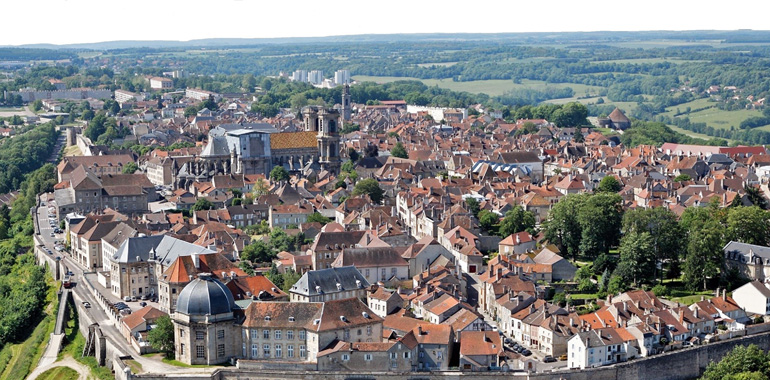
Located in the southeast confines of the Champagne region, Langres (pop. 8,000) is an old fortified town perched 466 metres above sea level on a limestone promontory. Settled continously since the times of the ancient Gauls, Langres has an unusually rich history for its size. Its citadel was reputedly impregnable. Originally the stronghold of the Lingones, a Gallic tribe, it later became the important Gallo-Roman settlement of Andematunum before evolving into a powerful medieval bishopric whose bishops held the titles of duke and peer of France from the 12th to 18th centuries. The town is renowned for its remarkable 3.5-kilometre circuit of medieval ramparts, which include Roman gates, 15th to 16th-century towers, and various fortifications spanning several centuries, making it one of the best-preserved fortified cities in France. Notable landmarks include the severe 12th-century Saint-Mammès Cathedral, which marks the architectural transition between Burgundian Romanesque and Gothic styles, and a statue commemorating Denis Diderot, the famous encyclopaedist who was born here. Langres holds the designation of City of Art and History and has the distinction of never having been conquered throughout its long military history.
Interesting Facts about Langres
- Langres crowns a limestone promontory 466 metres above sea level, giving it commanding vistas over the plateau that bears its name.
- The town preserves one of France’s most complete sets of ramparts, a 3.5 km circuit punctuated by medieval towers and monumental gates.
- Langres was the stronghold of the Gallic Lingones and later a major Gallo-Roman centre known as Andemantunum at the crossroads of twelve Roman roads.
- The severe yet elegant Cathédrale Saint-Mammès marks the transition from Burgundian Romanesque to early Gothic, fronted by an 18th-century façade.
- Philosopher Denis Diderot, co-founder of the Encyclopédie and a giant of the Enlightenment, was born in Langres and is commemorated across the town.
- The bishops of Langres held the rare dual dignity of duke and peer of France, reflecting the city’s formidable medieval influence.
- A second-century Roman gate still anchors the fortifications, harmonising with 15th–18th-century towers and portals around the walls.
- The Renaissance endowed Langres with fine civil, religious, and military architecture, enriching its tightly knit historic centre.
- From its lofty ramparts, the panorama sweeps across serene countryside and the nearby lakes that dot the Haute-Marne.
- Langres has been celebrated among France’s loveliest fortified towns, prized for its stone-built lanes, covered passages, and pastel shutters.
History
Langres was the ancient capital of the Lingones, a Celtic tribe that originally lived in Gaul in the area of the headwaters of the Seine and Marne rivers. After the conquest of Gaul by Julius Caesar, the new Roman town became known as Andemantunnum.
The bishopric of Langres is one of the oldest in France. It was founded in the 2nd century, at the time when religious freedom had not yet been granted to Christians in the Roman Empire (this only happened with the Edict of Milan in 313). During the Frankish period, Langres was the seat of an immense diocese extending over most of modern Champagne, Burgundy and Franche-Comté.
In the 12th century, the Bishops of Langres received the title of Dukes and Peers of France.
In the 17th and 18th centuries, Langres developed into an important trading post between Lyon and Lille. The town was then a famous knife making centre.
Main Attractions
The Ramparts and Bastions
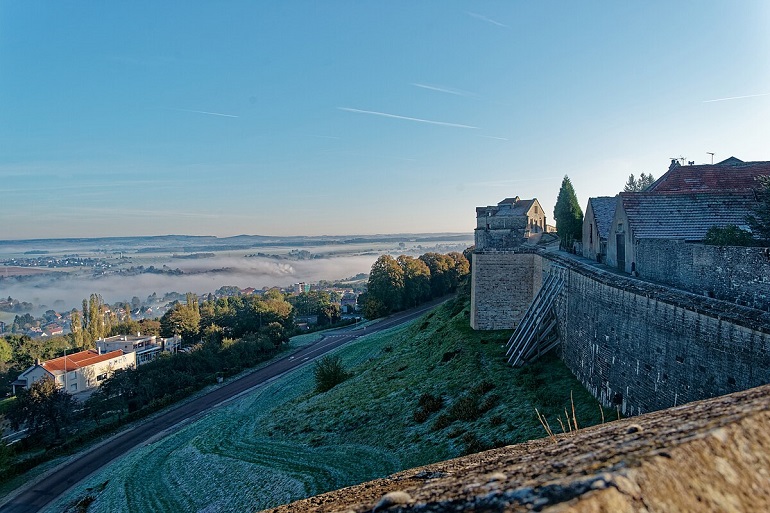
The defining feature of Langres is its breathtaking ramparts stretching for 3.5 kilometres around the old town and offering a virtually unbroken path punctuated by seven grand gates and an equal number of towers. They date mostly from the 15th to 17th centuries, with the notable exception of the Gallo-Roman Gate, built in 20 BCE, at the time of Emperor Augustus. The oldest tower is the Tour de Saint-Ferjeux, erected by Louis XI in 1472. Other notable fortifications include the Tour Virot (1470), Tour de Navarre et d'Orval (1511-1519), Tour du Petit Sault (1517-1521), Tour Saint Jean (1540), Porte des Moulins (1647) and Porte de l'Hôtel de Ville (1592, rebuilt in 1750).
Walking the ramparts rewards visitors with sweeping views of the valleys, lakes, and on clear days, the distant Vosges mountains. Along the walk, one encounters the Gallo-Roman arch—once a street gate—and fortified bastions that evoke the city's military might through the centuries. The route is well-paved and can be completed as a leisurely stroll or an in-depth historical exploration.
Tour de Navarre and Tour d'Orval
The Tour de Navarre and adjoining Tour d'Orval are two massive Renaissance towers of exceptional architectural and historical value. The Tour de Navarre, remarkable for its 20-metre height and seven-metre-thick walls, is unique in France for its design and survival. Built in the 16th century to intimidate potential invaders, these towers display ingenious military engineering: Orval features a spiral ramp allowing the movement of artillery, while Navarre’s upper levels present intricate carpentry. Their interiors are periodically open for visits, showcasing vaulted rooms and evocative stonework that reflect the defence strategies of the era.
Porte des Moulins
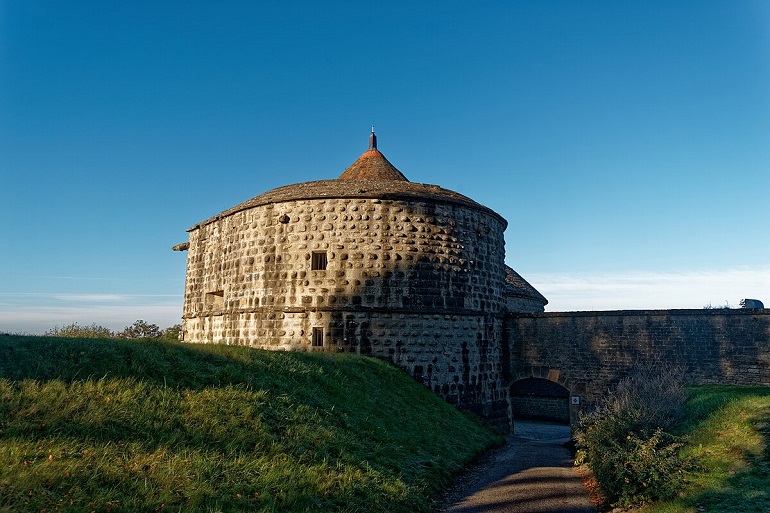
The Porte des Moulins is one of the town’s iconic gateways, lying at a major entry point in the fortifications. Its medieval structure stands as a lasting symbol of Langres’ status as a key strategic post controlling access and trade. The gate’s robust design, thick walls, and passageways stir the imagination, conjuring medieval comings and goings amid bustling market days or the arrival of travellers and merchants. Today, it adjoins delightful narrow streets bustling with daily life.
Place Diderot
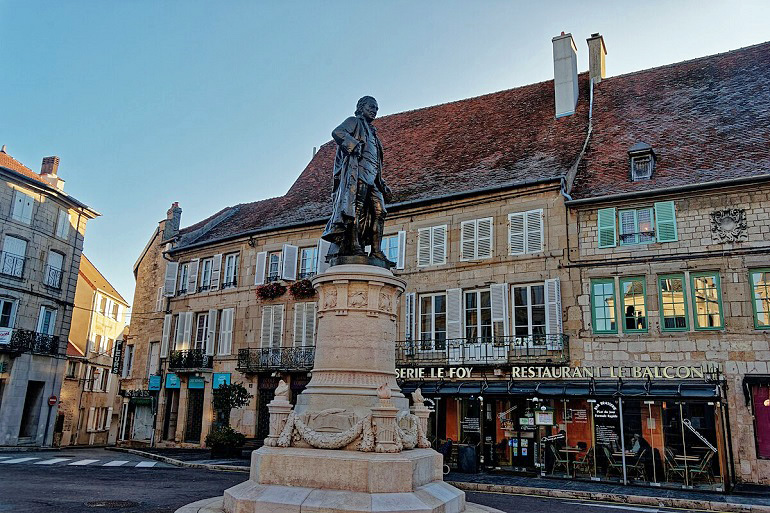
At the heart of Langres stands the vibrant Place Diderot, a spacious, tree-lined square centred around a commanding statue of Denis Diderot, the Enlightenment philosopher born here in 1713. The square anchors civic life, with café terraces, lively weekly markets, and Renaissance façades providing a harmonious setting for relaxation or people-watching. It also acts as a gateway to the pedestrianised streets of the old centre, radiating an atmosphere that blends centuries of intellectual and civic tradition.
Cathédrale Saint-Mammès
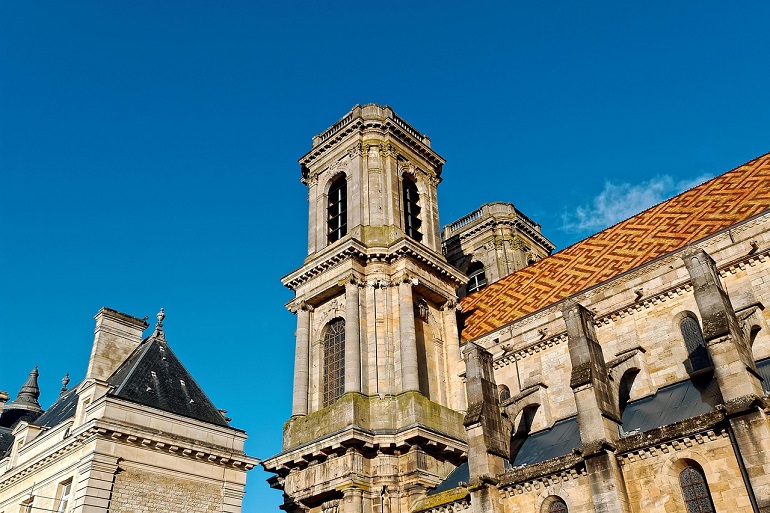
The cathedral, dedicated to the 3rd century martyr Mammes of Caesarea, was the seat of the powerful Bishopric of Langres. The edifice dates from the 12th century. Its structure melds Burgundian Romanesque roots with early Gothic flourishes, although the west facade was rebuilt in the neoclassical style from 1761 to 1786. Inside, visitors find intricately carved stone details, historic tapestries, the Renaissance Sainte-Croix chapel with striking ornamental stonework, and a celebrated treasury. The highlight for many is ascending the south tower’s 227 steps, rewarded with panoramic views over the historic rooftops, ramparts, and the rolling countryside.
Maison Renaissance
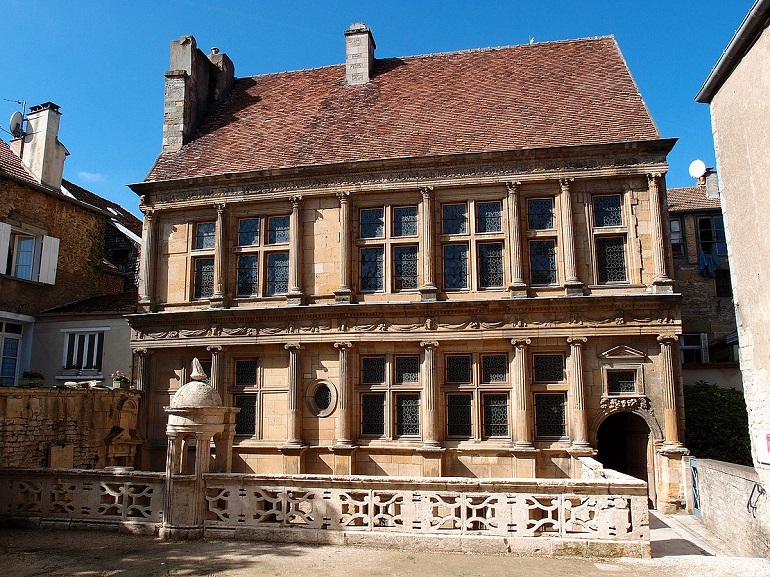
On the main street, the splendid Maison Renaissance (Renaissance House) stands as a prime example of Langres’ heritage. Its decorative façade, sculpted stonework, steep roof, and impressive windows evoke the town’s prosperous 16th-century era. Now home to the Langres Historical Society, its summer openings allow guests to explore restored rooms, an underground kitchen, and ancient water cisterns, gaining a vivid impression of domestic life during the French Renaissance. Cultural events often enliven the residence, reinforcing its link with the town's rich narrative.
Promenade de Blanchefontaine
For tranquil relaxation, the Promenade de Blanchefontaine forms a leafy belt along the edge of the city, ideal for walking, jogging, or simply savouring views of the landscape below the ramparts. It is adorned with the romantic Claude-Henriot square, an elegant 19th-century music kiosk, and centuries-old trees. In summer, the promenade comes alive with concerts and events, though even in quiet seasons, it remains a haven of greenery and calm within the urban setting.
The Four Langres Lakes
Surrounding the town, the four large lakes—Liez, Charmes, Mouche, and Vingeanne—are havens for water sports, walking, and picnicking. Created as reservoirs in the 19th century, they offer broad beaches for swimming, facilities for sailing, windsurfing, canoeing, and extensive fishing opportunities. Birdwatchers flock to the lake of Vingeanne for its wildlife, while tranquil paths at all four lakes make them perfect for scenic excursions just minutes from the historic centre.
Cheese Heritage: Fromage de Langres
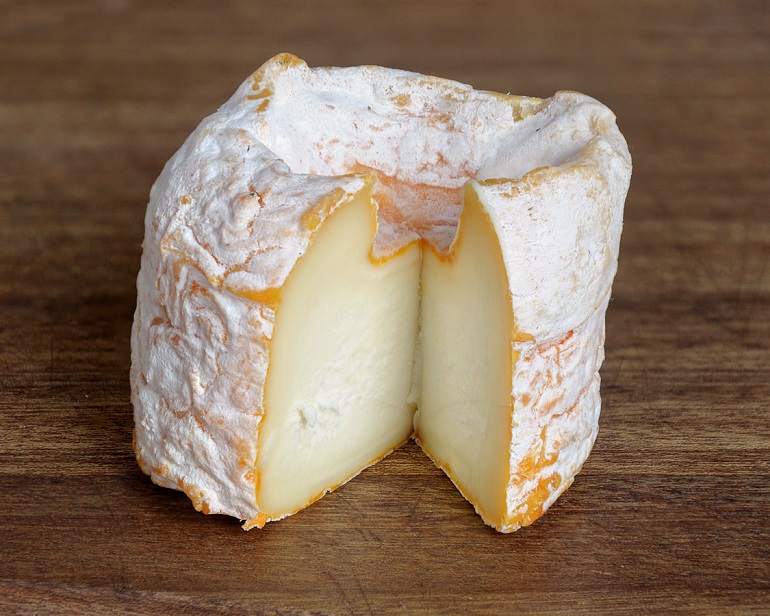
The town’s rich tradition is deliciously embodied in Fromage de Langres, the local AOC cheese with a signature washed orange rind and distinctive concave top. Tastings abound at shops, market stalls, and café counters throughout the town, and enthusiasts can discover the traditional processes by visiting producers in the nearby countryside. This regional treasure encapsulates the agricultural and gastronomic essence of Langres.
Top Museums
Maison des Lumières Denis Diderot
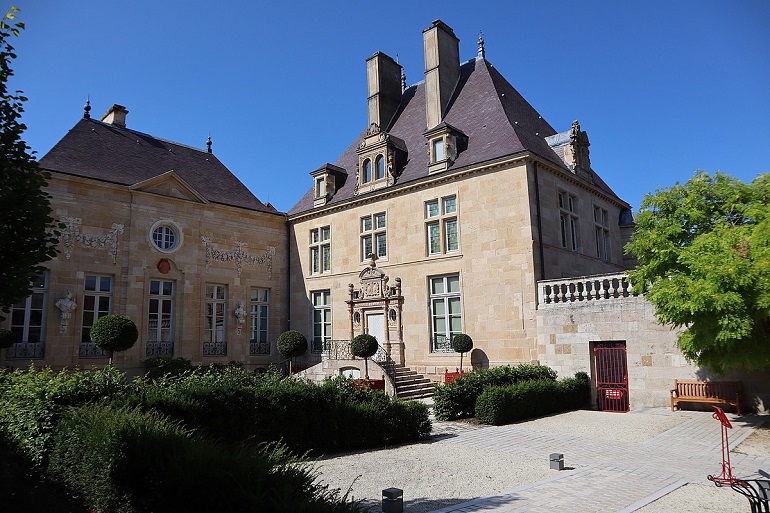
The Maison des Lumières Denis Diderot stands as France’s only museum dedicated to the philosopher, editor, and champion of the Encyclopédie, Denis Diderot, who was born in Langres. Housed within the elegant Du Breuil de Saint-Germain mansion — itself a blend of 16th and 18th-century architecture — the museum’s ten themed rooms unravel both the personal and public dimensions of Diderot’s life. The journey begins with his struggles in Langres and moves to his Parisian period, highlighting his fraught relationship with society, the risks associated with publishing revolutionary ideas, and his international correspondence with figures like Rousseau and Catherine II of Russia.
The museum’s multimedia installations and interpretive panels shed light on the Age of Enlightenment’s transformative spirit, with “Sapere Aude” — “Dare to know” — as its guiding motto. Among the exhibits are rare first editions of the Encyclopédie, manuscripts, letters, and scientific instruments that showcase the era’s thirst for knowledge. Artworks and sculptures by artists such as Antoine Besançon, Jean Antoine Houdon, Auguste Bartholdi, Joseph Vernet, Pierre-Jacques Volaire, Gabriel-François Doyen, Hugues Taraval, and Pierre-Alexandre Wille enrich the narrative, many acquired in the museum’s active collection campaigns. Artefacts surrounding Langres’s famous cutlery, the work of printers, and Europe’s interconnected scholarly networks reveal a vibrant world of creativity and exchange.
The museum’s atmospheric garden, philosophical café, and “laboratory” allow for reflection and debate, further embodying the spirit of the Enlightenment. Behind the classical façade lies a welcoming space for deeper exploration into ideas, aesthetics, politics, and the struggle for intellectual freedom.
Musée d’Art et d’Histoire Guy Baillet
Langres’s Musée d’Art et d’Histoire Guy Baillet presents a vast collection spanning prehistory to the present, housed in a contemporary structure that contrasts elegantly with its historical surroundings. The archaeological section features treasures from the Paleolithic and Neolithic ages, including tools, pottery, and funerary objects. Gallo-Roman mosaics, marble sculptures, and domestic implements provide vivid insights into Langres’s ancient roots.
Moving through the centuries, the museum’s galleries introduce visitors to medieval spirituality and Renaissance refinement, boasting statuary, ecclesiastical art, and Renaissance painting. Works such as “Jesus Among the Doctors” by José de Ribera stand out amongst the collection. Local artisan traditions are given pride of place, with Langres cutlery, faïences and decorative objects chronicling centuries of skill and innovation. The painting galleries include notable works such as “Adoration of the Shepherds,” “Storm at Sea,” and “Saint Michael Overwhelming,” representing international and regional artists of acclaim.
Centre Culturel Artemeum
Langres’s Centre Culturel Artemeum, although smaller, plays a vital role as a hub for contemporary cultural life. It frequently hosts temporary exhibitions, concerts, workshops, and events that provide visibility for local artists and new creative movements. The rotating programme ensures that each visit reveals something fresh, reflecting the vibrancy of the region’s artistic present.
Local Cuisine
The cuisine of Langres is anchored by the pungently aromatic Langres AOP cheese, its wrinkled orange rind washed in marc de Bourgogne and often served gently warmed so the centre turns irresistibly creamy; around it gravitate rustic dishes like andouillette de Troyes, a peppery chitterling sausage grilled over vine shoots, and hearty potée champenoise, a slow-simmered medley of pork, bacon and winter vegetables that epitomises farmhouse comfort. Market menus celebrate forest flavours too, pairing pan-fried game with earthy Burgundy truffles foraged in nearby woods, while dessert might feature a light brioche soaked in local ratafia or a spoonful of honey from the Plateau de Langres. Everything finds its convivial match in a flute of crisp Champagne or a nip of chilled rosé des Riceys, reminding visitors that Langres sits at the frontier where Burgundy and Champagne traditions deliciously converge.
Getting There
By train Langres is served by SNCF’s Gare de Langres, linked to Paris Est in roughly 2 h 40 min via regional TER services, with additional connections from Dijon and Reims making rail the most straightforward option for many travellers.
By coach / bus Long-distance FlixBus and BlaBlaCar Bus services stop at Langres (North Tollgate) on routes between major cities such as Brussels, Troyes, Dijon and Antwerp; from the stop it’s a short taxi or local bus ride up to the walled town.
By car Langres sits just off the A31 (E17) motorway between Dijon and Nancy; drivers from Calais or Lille can stay on fast autoroutes almost the entire way, reaching Langres in around 5 h, while the D974 offers a scenic alternative if you’re approaching from Burgundy.
| Travel destinations in Champagne-Ardenne | |||||||||||
|---|---|---|---|---|---|---|---|---|---|---|---|
|
|
|
| ||||||||
|
|
| |||||||||


