


| Contents |
|---|
Introduction
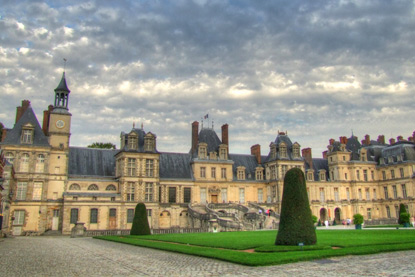
Fontainebleau is an enormous palace built, modified and expanded by French monarchs from the 12th to the 19th century. It was the favourite residence of Francis I and Napoléon I and the birthplace of Louis XIII.
Fontainebleau is the fourth most visited château in France (after Versailles, Chambord and Chenonceau). Spanning 800 years, it has a longer and richer history than any other royal residence, and was the residence of 34 French monarchs from the Middle Ages until Napoleon III. With its 1530 rooms (covering approximately 50,000 m², against 67,000 m² for Versailles), four courtyards, and its 130-hectare (320-acre) park, Fontainebleau ranks among Europe's vastest palaces.
Originally built as a hunting lodge in the 12th century, it has been continuously inhabited by French royalty for over 700 years, with each royal family adding their own architectural elements. The château was transformed into its current grandeur during the 16th century under King François I, who brought Italian artists to create what became known as the first School of Fontainebleau, helping to launch the French Renaissance. This UNESCO World Heritage site features a stunning blend of Medieval, Renaissance and Classical styles across its five courtyards, grand apartments, galleries, chapels and 130 hectares of gardens designed by André Le Nôtre. It was a favourite residence of many French monarchs including Henri II, Henri IV and Napoleon Bonaparte, who called it "the true dwelling of kings, the house of centuries."
The château houses a sumptuous theatre, built in 1857 for Napoléon III, and no less than four museums: the Empress' Chinese Museum (opened in 1863), the Napoleon I Museum, the Paintings Gallery, and the Furniture Gallery.
Interesting Facts about the Château
- The Château de Fontainebleau was originally built in the 12th century as a royal hunting lodge.
- It is the only château in France to have been continuously inhabited by royalty for over 700 years.
- The château was transformed into a Renaissance masterpiece under King Francis I, who commissioned Italian artists and architects to decorate it.
- Napoleon Bonaparte referred to it as "the true abode of kings, the house of ages" and abdicated there in 1814.
- The Horseshoe Staircase, built between 1632 and 1634, became an iconic architectural feature and witnessed Napoleon's famous farewell to his guard.
- Fontainebleau is home to the largest formal garden in Europe, the Grand Parterre, designed by André Le Nôtre.
- The château houses over 1,500 rooms, making it one of the most richly furnished royal residences in Europe.
- Fontainebleau has been a UNESCO World Heritage Site since 1981 due to its historical and cultural significance.
- The name "Fontainebleau" originates from "Fontaine Belle-Eau," meaning "Spring of beautiful water," referencing a natural spring near the château.
- It hosted significant historical events, including the meeting between Francis I and Holy Roman Emperor Charles V in 1539.
History
The Château de Fontainebleau initially served as a modest hunting lodge for French kings, its strategic location in the Gâtinais forest making it a favoured retreat for medieval monarchs. The castle's early features included a fortified tower surrounded by walls, which evolved over time into a sprawling estate. Under Francis I in the 16th century, Fontainebleau underwent significant transformation, becoming a masterpiece of Renaissance architecture. The monarch commissioned Italian artists and architects to create the Galerie François I, adorned with murals and stucco work that celebrated the king's reign. This period marked the birth of the first School of Fontainebleau, a pivotal movement in French Renaissance art.
Throughout its history, Fontainebleau has been more than just a royal residence; it has been a stage for key historical events. In 1539, it hosted a diplomatic meeting between Francis I and Charles V, reshaping European politics. The château also witnessed the births of prominent monarchs like Louis XIII and Louis XIV. Despite periods of turmoil, including occupation by foreign armies during the Franco-Prussian War and World War II, Fontainebleau has remained remarkably intact. Its survival through the French Revolution ensured its legacy as a symbol of national heritage rather than merely a relic of monarchy.
Today, the Château de Fontainebleau stands as an architectural marvel blending medieval, Renaissance, and classical styles. Its vast estate includes over 1,500 rooms and lush gardens that reflect centuries of artistic evolution. Recognised as a UNESCO World Heritage Site in 1981, it continues to attract visitors from around the globe who seek to explore its rich history and exquisite design. From its medieval roots to its Renaissance grandeur and modern restoration efforts, Fontainebleau remains an enduring testament to France's royal past.
Description
The Château de Fontainebleau stands as one of France's most magnificent royal residences, nestled amidst the verdant forests of Seine-et-Marne. This architectural marvel represents an extraordinary synthesis of Renaissance and classical design, showcasing the evolving tastes of the French monarchy across eight centuries. With its impressive 1,500 rooms spread across 45,000 square metres, Fontainebleau ranks among Europe's largest and most sumptuously furnished châteaux, earning its well-deserved nickname as "the true home of kings."
Unlike other royal palaces that adhere to a single architectural vision, Fontainebleau charms visitors with its harmonious blend of styles—a testament to the successive monarchs who expanded and embellished it according to their personal preferences. The result is a captivating tapestry of architectural elements that tells the story of French royal taste from the Middle Ages through the Second Empire.
The château's exterior presents an impressive façade of pale limestone, punctuated by tall windows and adorned with intricate sculptural details. Its silhouette, with its distinctive rooflines and chimneys, creates a striking profile against the sky, particularly when viewed from the surrounding gardens.
The Magnificent Courtyards
Fontainebleau is organised around four principal courtyards, each with its own character and historical significance. The Cour du Cheval Blanc (White Horse Courtyard), renamed the Cour des Adieux after Napoleon's famous farewell to his Imperial Guard in 1814, serves as the château's grand entrance. Its most celebrated feature is the iconic horseshoe-shaped staircase—a masterpiece of French Renaissance architecture that has become emblematic of Fontainebleau's elegance and grandeur.
The Cour de la Fontaine offers a more intimate setting, featuring a charming fountain and providing splendid views of the carp pond beyond. The Cour Ovale, the oldest part of the château, reveals medieval origins with its irregular shape and remnants of earlier fortifications. Finally, the Cour des Offices housed the kitchens and service quarters necessary for maintaining the elaborate royal household.
Each courtyard presents unique architectural perspectives, from Renaissance loggias to classical colonnades, creating a fascinating journey through French architectural history as one moves through these spaces.
The Sumptuous Interior Apartments
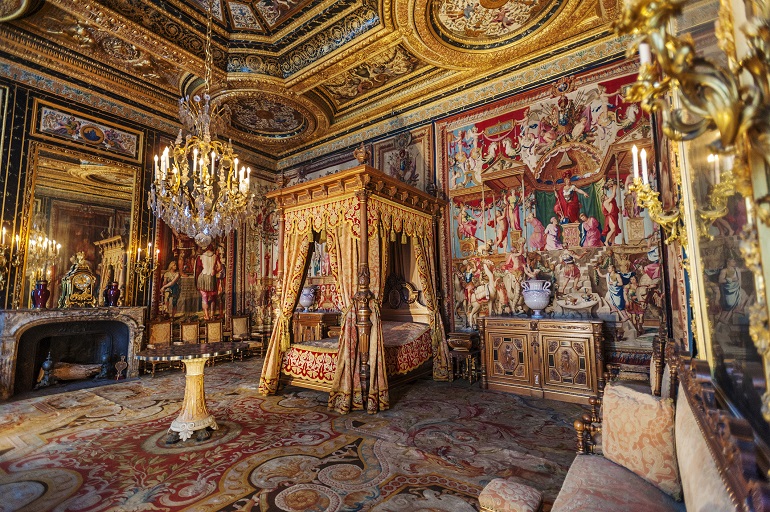
Stepping inside Fontainebleau reveals interiors of unparalleled opulence. The Grand Apartments, used for official functions and ceremonies, dazzle visitors with their gilded mouldings, marble fireplaces, and richly painted ceilings. The King's Apartment features the magnificent Throne Room, where the monarch would receive ambassadors and dignitaries beneath ceilings adorned with allegorical paintings celebrating royal virtues.
The Queen's Apartment, no less splendid, showcases the refined taste of Marie Antoinette, who commissioned delicate neoclassical decorations featuring floral motifs and pastoral scenes. Her bedchamber, with its exquisite silk wall coverings and elegant furniture, exemplifies the graceful Louis XVI style that she favoured.
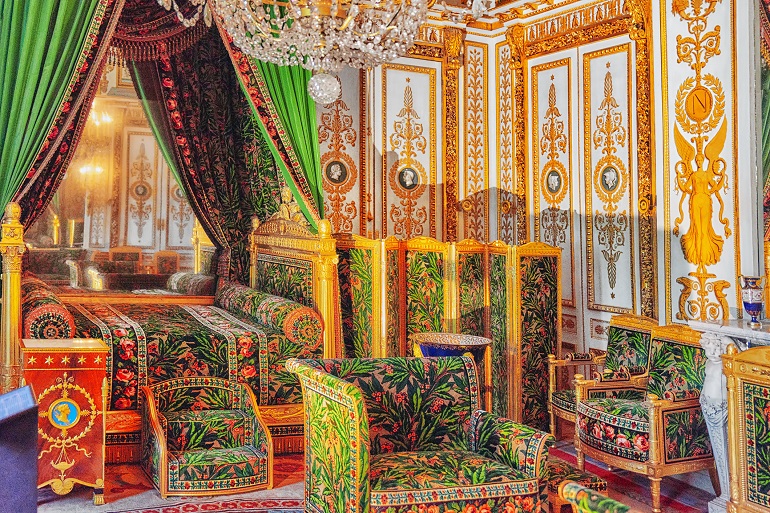
Napoleon's Apartment presents a striking contrast with its more austere Empire style, characterised by strong architectural lines, military motifs, and references to ancient Rome. The Emperor's study, where he signed his abdication in 1814, remains much as he left it, with its campaign desk and strategic maps still in place.
The Pope's Apartment, created for Pius VII during his forced stay at Fontainebleau, combines religious dignity with imperial grandeur. Its reception rooms and private chapel reflect the complex relationship between church and state during Napoleon's reign.
The Galerie François I: Renaissance Splendour
Perhaps the most celebrated interior space at Fontainebleau is the Galerie François I, a masterpiece of the French Renaissance. Commissioned by King François I in the 1530s, this 64-metre-long gallery served as a ceremonial passage between the royal chapel and the king's apartments. Its walls and ceiling are adorned with elaborate stucco work and frescoes by Rosso Fiorentino and his team of Italian artists known as the School of Fontainebleau.
The gallery's decorative scheme combines mythological scenes, allegorical figures, and royal emblems in a sophisticated programme glorifying the king. The famous salamander, François I's personal emblem, appears throughout, alongside classical gods and heroes. The rich walnut wainscoting and parquet flooring complement the painted decorations, creating an atmosphere of refined luxury that epitomises the French Renaissance.
The innovative style developed here—blending Italian mannerism with French traditions—would influence European art for generations to come, establishing Fontainebleau as a crucial centre of artistic innovation.
The Ballroom: A Feast for the Eyes
The Ballroom of Fontainebleau ranks among the most spectacular Renaissance interiors in France. Completed under Henri II, this vast space measures 30 metres in length and features a coffered ceiling richly decorated with mythological scenes. The walls display monumental paintings depicting festivities and celebrations, creating an appropriate backdrop for the lavish court entertainments that would take place here.
Particularly noteworthy are the carved walnut panels beneath the paintings, which showcase extraordinary craftsmanship with their intricate relief work. Two magnificent fireplaces anchor either end of the room, their monumental proportions and elaborate sculptural decoration making them artworks in their own right.
The room's perfect acoustics made it ideal for the musical performances that accompanied royal balls, while its generous dimensions accommodated the elaborate choreographed dances favoured by the French court.
The Chapel of the Trinity
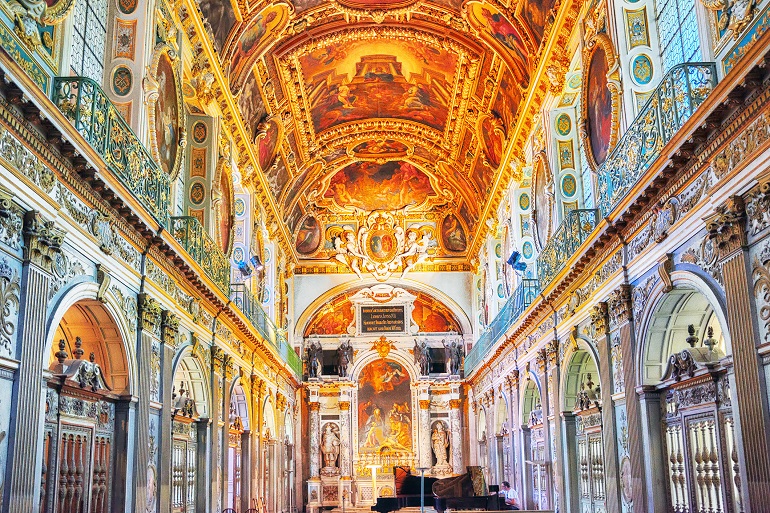
The Chapel of the Trinity represents a masterpiece of French classical architecture. Built under Henri IV and completed during Louis XIII's reign, it replaced earlier royal chapels and reflects the Counter-Reformation emphasis on grandeur in religious spaces. Its soaring barrel-vaulted ceiling, painted by Martin Fréminet with scenes from the Old Testament, creates an atmosphere of spiritual elevation.
The chapel's altar, with its imposing marble columns and gilded bronze tabernacle, provides a focal point for devotion, while the royal gallery allowed the monarch to attend services in privacy. The exquisite wood carvings of the choir stalls demonstrate the exceptional quality of craftsmanship employed throughout the château.
Many significant royal ceremonies took place here, including the marriage of Louis XV to Marie Leszczyńska and the baptism of the future Napoleon III, adding historical resonance to its religious function.
The Diana Gallery
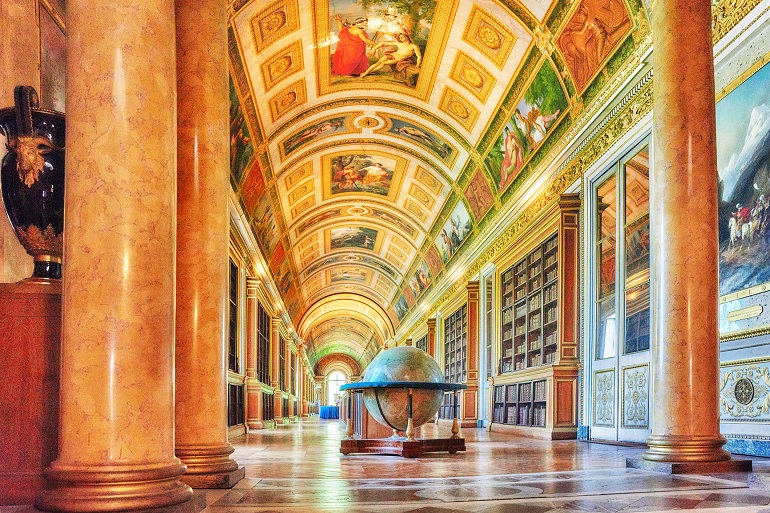
The Diana Gallery, created under Henri IV, served as a royal promenade during inclement weather. This 80-metre-long corridor is lined with paintings depicting hunting scenes and mythological subjects, many featuring Diana, the goddess of the hunt, who gives the gallery its name.
The gallery's most distinctive feature is its painted ceiling, divided into compartments adorned with scenes from Ovid's Metamorphoses. The warm tones of the wooden floor and wainscoting create an inviting atmosphere, while large windows provide views of the gardens beyond, connecting interior and exterior spaces.
During the reign of Napoleon III, this gallery housed part of the château's extensive library, with elegant bookcases lining the walls beneath the paintings—a testament to the evolving functions of royal spaces across different eras.
The Chinese Museum
The Chinese Museum offers a fascinating glimpse into European fascination with East Asian aesthetics. Created for Empress Eugénie, wife of Napoleon III, this suite of rooms houses an exceptional collection of Chinese and Japanese art objects, including porcelain, lacquerware, jade carvings, and silk embroideries.
The museum's décor combines authentic Asian artworks with European interpretations of Chinese motifs, creating a distinctive aesthetic that exemplifies the 19th-century taste for exoticism. Particularly noteworthy are the imperial robes, ceremonial weapons, and diplomatic gifts received from Asian courts, which testify to France's global connections during the Second Empire.
The empress's personal interest in these collections reflects the broader cultural exchange between East and West during this period, making the Chinese Museum not only a treasury of beautiful objects but also a document of cross-cultural fascination.
The Theatre
The Theatre of Fontainebleau, constructed under Napoleon III, represents a perfect miniature version of a 19th-century opera house. With its horseshoe-shaped auditorium, ornate boxes, and richly decorated ceiling, it provided an intimate setting for court entertainments without sacrificing architectural grandeur.
The theatre's colour scheme of crimson and gold creates an atmosphere of sumptuous elegance, while the stage machinery—much of which remains intact—allowed for sophisticated scenic effects. The imperial box, prominently positioned to ensure optimal views, features more elaborate decoration than the surrounding seating, emphasising the monarch's special status even in the context of theatrical entertainment.
This charming performance space hosted everything from classical tragedies to light comedies and musical soirées, catering to the varied tastes of the imperial court and their distinguished guests.
The Grand Parterre: Le Nôtre's Masterpiece
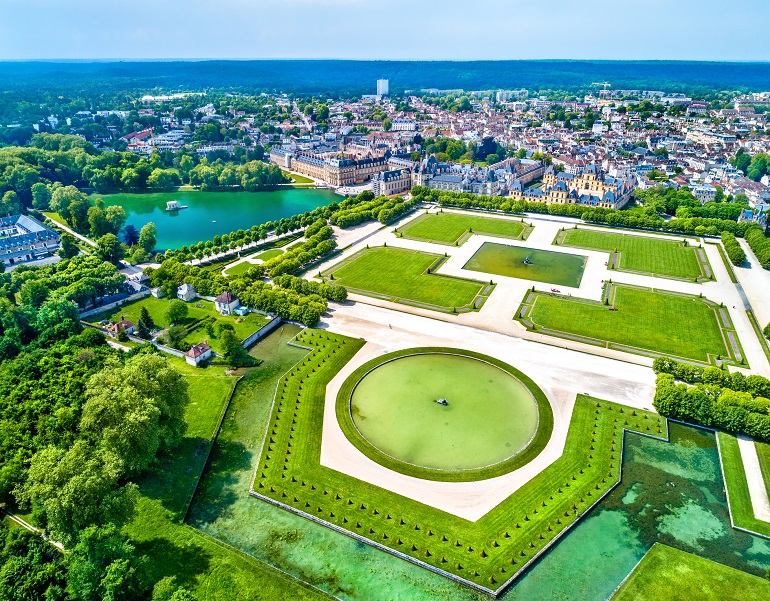
The Grand Parterre, designed by André Le Nôtre and Louis Le Vau during the reign of Louis XIV, represents the pinnacle of French formal garden design. Covering an impressive 11 hectares, it is the largest formal garden in Europe, its vast scale intended to reflect the sun king's absolute power through mastery over nature itself.
The garden's strictly symmetrical layout features geometric flowerbeds bordered by meticulously trimmed boxwood hedges, creating intricate patterns best appreciated from the château's elevated windows. Wide gravel paths divide the space into quadrants, converging on the magnificent central basin known as the Bassin des Cascades, where water tumbles down a series of stone steps in a carefully choreographed display.
Ornamental pools, strategically placed statuary, and precisely clipped topiary elements punctuate the space, creating a rhythm of forms that guides the visitor's eye toward the distant horizon. The garden's perfect proportions and mathematical precision exemplify the rational, ordered aesthetic that characterised the Grand Siècle under Louis XIV.
Throughout the seasons, the Grand Parterre presents different aspects of beauty: spring brings vibrant tulips and daffodils, summer features lush bedding plants in geometric patterns, autumn offers golden foliage, and winter reveals the elegant "bone structure" of the garden's design, sometimes enhanced by frost or light snowfall.
The English Garden: Romantic Naturalism
The English Garden provides a striking contrast to the formal rigidity of the Grand Parterre. Developed during Napoleon I's reign by landscape architect Maximilien Joseph Hurtault, it embraces the naturalistic principles that revolutionised European garden design in the late 18th century.
Unlike the Grand Parterre's emphasis on geometric order, the English Garden celebrates the picturesque irregularity of nature. Winding paths meander through groves of trees, opening onto unexpected vistas and charming rustic features. A gently flowing stream traverses the garden, crossed by ornamental bridges that invite visitors to explore both banks.
The planting scheme features a diverse collection of native and exotic species, including magnificent cedars of Lebanon, North American tulip trees, and Asian ginkgos. These specimens, many dating from the garden's creation, have matured into impressive examples of their kind, creating a living museum of historical horticulture.
Carefully placed boulders, some bearing Latin inscriptions, add to the romantic atmosphere, while classical statues glimpsed through foliage create moments of surprise and delight. Near the Belle-Eau Fountain stands a graceful statue of a Naiad, or water nymph, her sinuous form echoing the flowing water nearby.
Throughout the seasons, the English Garden offers changing pleasures: spring carpets of bluebells and anemones, summer shade beneath ancient trees, autumn's spectacular foliage display, and winter's stark beauty when snow outlines bare branches against the sky.
The Garden of Diana: An Intimate Retreat
The Garden of Diana occupies a sheltered position adjacent to the château's east wing. This intimate space centres around an elegant fountain featuring a marble statue of Diana, the Roman goddess of hunting, accompanied by her hounds. Water spills from the basin into a circular pool, creating gentle sounds that enhance the garden's tranquil atmosphere.
Surrounding the fountain, meticulously maintained lawns provide a restful expanse of green, while carefully positioned flowerbeds offer seasonal colour. Clipped yew hedges define the garden's boundaries, creating a sense of enclosure and privacy that contrasts with the more expansive spaces elsewhere in the grounds.
Stone benches placed at strategic intervals invite contemplation, offering views of both the fountain and the château façade. The garden's human scale and sense of enclosure make it particularly appealing for quiet moments of reflection away from the grander, more theatrical spaces of Fontainebleau.
The Garden of Diana has particular associations with Diane de Poitiers, the influential mistress of Henri II, though the current layout dates primarily from later periods. Its elegant simplicity and classical references make it a perfect embodiment of the French garden tradition at its most refined.
The Carp Pond: Reflective Splendour
The Carp Pond (Étang aux Carpes) extends before the château's southern façade, creating a magnificent reflective surface that doubles the building's grandeur. This artificial lake, covering four hectares, dates back to the 16th century and takes its name from the carp that have inhabited its waters since the reign of Henri IV.
The pond served multiple functions throughout its history: as an ornamental feature enhancing the château's setting, as a venue for boating parties and mock naval battles staged for royal entertainment, and as a practical source of fish for the royal kitchens. Today, descendants of those original carp still swim in its waters, some reaching impressive sizes and ages.
At the pond's centre stands the elegant Pavillon de l'Étang, an octagonal structure originally built under Louis XIV and later modified by Napoleon I. This pavilion, with its classical proportions and distinctive copper dome, creates a focal point within the watery expanse and offers splendid views back toward the château.
The banks of the pond feature carefully positioned trees that frame views of both the water and the château beyond. Weeping willows trail their branches into the water, creating romantic vignettes that have inspired painters and photographers for generations. Water lilies bloom in the shallower areas during summer months, adding splashes of colour to the reflective surface.
The pond takes on different characters with changing weather conditions: on still days, it creates perfect mirror images of the château and surrounding trees; when breezy, its rippled surface fractures these reflections into shimmering patterns of light and colour; and in winter, it occasionally freezes, transforming into a vast natural ice rink.
The Grand Canal: Majestic Perspective
The Grand Canal extends for 1,200 metres through the parkland beyond the Grand Parterre, creating a magnificent perspective that draws the eye toward the distant horizon. Constructed during the reign of Henri IV and later enhanced by André Le Nôtre under Louis XIV, this impressive water feature exemplifies the French garden tradition's emphasis on controlled vistas and axial design.
Unlike its more famous counterpart at Versailles, Fontainebleau's Grand Canal follows a single straight line rather than forming a cruciform shape. This linear design creates a powerful sense of perspective, particularly when viewed from the château's elevated windows, where the canal appears to stretch toward infinity.
Rows of mature elm trees, planted according to Le Nôtre's original design, line both sides of the canal, their vertical forms emphasising the water's horizontal expanse. These trees create pleasant promenades along the banks, offering dappled shade in summer and protection from winds in cooler seasons.
Historically, the Grand Canal served as a venue for elaborate water festivities, including gondola rides and illuminated boating parties. The French court imported authentic Venetian gondolas and gondoliers to enhance these entertainments, creating a fascinating cultural fusion of French and Italian traditions.
Today, the canal continues to serve as a central axis for the park's design, organising the surrounding landscape into a coherent whole. Its reflective surface changes with the sky above, sometimes appearing silver-grey, sometimes deep blue, and occasionally taking on the fiery hues of sunset, adding a dynamic element to the garden's otherwise formal structure.
The Park and Forest: Nature's Embrace
Beyond the formal gardens lies an expansive park covering 130 hectares, which gradually merges with the ancient Forest of Fontainebleau. This transitional zone offers a fascinating progression from highly controlled garden design to increasingly naturalistic landscapes, culminating in the forest's wild beauty.
The park features wide avenues radiating outward from the château, lined with mature trees that create green tunnels for visitors to explore. These avenues, originally designed for royal hunting parties, offer framed views back toward the château, each presenting the building from a different perspective.
Scattered throughout the park are various follies and garden structures, including the Temple of Love, a neoclassical rotunda set on a small island; the Grotto des Pins, a rustic pavilion decorated with pine cones and rough stonework; and several picturesque bridges spanning small streams and ornamental canals.
As one moves further from the château, the landscape becomes less formal, with naturalistic groupings of trees, meadow areas rich in wildflowers, and secluded glades that invite peaceful contemplation. This gradual transition from formal to natural exemplifies the evolution of European landscape design, with elements from different historical periods coexisting harmoniously.
The park provides habitat for diverse wildlife, including red deer, wild boar, foxes, and numerous bird species. Dawn and dusk visitors might glimpse these animals, adding an element of discovery to the experience of Fontainebleau's grounds.
The surrounding Forest of Fontainebleau, while technically separate from the château's grounds, forms an essential part of its setting. This ancient woodland, with its distinctive sandstone formations and varied ecosystems, has inspired generations of artists, particularly the Barbizon School of painters who found endless inspiration in its atmospheric landscapes.
The Conclusion: A Living Monument
The Château de Fontainebleau stands as one of Europe's most complete and authentic royal residences, its architecture and gardens telling the story of French royal taste across eight centuries. Unlike some royal palaces that represent a single moment in architectural history, Fontainebleau evolved organically, with each monarch adding their own contributions while respecting what came before.
This layered history creates an unparalleled richness of experience, allowing visitors to trace the development of French art, architecture, and garden design from the Renaissance through the 19th century. From François I's innovative
Getting There
The Château de Fontainebleau is located approximately 70 kilometres south of Paris and is easily accessible by public transport or car. From Paris, take a train from Gare de Lyon on the Transilien Line R, heading towards Montargis, Montereau, or Laroche-Migennes, and alight at Fontainebleau-Avon station. From there, board Bus Line 1 in the direction of Les Lilas and get off at the "Château" stop. The journey takes around 40 minutes by train and an additional 10 minutes by bus. Alternatively, you can drive from Paris via the A6 motorway (Porte d’Orléans or Porte d’Italie), exiting at Fontainebleau and following signs to the château. Parking options are available nearby, with prices starting at €5 for four hours. Whether by train or car, this historic destination is both convenient and picturesque.
Best Time to Visit
The best time to visit the Château de Fontainebleau is during the spring, summer, or autumn months. These seasons offer pleasant weather and allow you to fully appreciate the beautiful gardens and surroundings. Spring is particularly lovely, with vibrant flowers in bloom, while summer provides long days to explore the extensive grounds. Although summer is peak tourist season, visiting early in the morning can help avoid crowds. Autumn brings a picturesque backdrop of changing foliage, making it an ideal time for photography. It is advisable to avoid visiting on Tuesdays, as the château is closed, and also to steer clear of major holidays like Christmas Day and New Year's Day.
| Travel destinations in Île-de-France | ||||||||||||||
|---|---|---|---|---|---|---|---|---|---|---|---|---|---|---|
|
|
|
|
| ||||||||||
|
|
|
| |||||||||||


