


| Contents |
|---|
Introduction
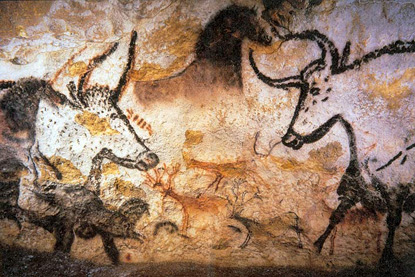
The Caves of the Vézère Valley comprise a remarkable collection of 147 prehistoric sites dating from the Palaeolithic period, including 25 decorated caves scattered across a 30km by 40km area in the Dordogne department. This UNESCO World Heritage Site, inscribed in 1979, serves as an exceptional window into prehistoric civilisations spanning 400,000 to 10,000 years ago, with Les Eyzies-de-Tayac-Sireuil earning recognition as the "Capital of Prehistory." The valley's significance extends beyond its famous Lascaux Cave, discovered in 1940, which contains nearly 100 meticulously rendered animal figures in vivid hunting scenes; other notable sites include Font-de-Gaume with over 200 animal paintings and the Cro-Magnon rock shelter that gave its name to early modern humans. Three locations within the valley have become so archaeologically important that they lent their names to entire prehistoric periods: the Micoquien, Mousterian, and Magdalenian. These sites collectively represent one of the world's most concentrated areas of Palaeolithic remains, featuring not only decorated caves with polychrome paintings in red, black, brown, and yellow pigments, but also workshops, habitats, and burial sites that provide invaluable insights into the daily lives, artistic achievements, and cultural practices of our prehistoric ancestors.
Interesting Facts about the Caves of the Vézère Valley
- The Vézère Valley holds one of the world’s densest concentrations of Palaeolithic sites, with around 147 prehistoric deposits and about 25 decorated caves.
- Lascaux, discovered by local teenagers in 1940 near Montignac, is famed for vivid polychrome animal panels like the Great Hall of the Bulls.
- The region helped define key prehistoric cultures, giving names to the Mousterian, Magdalenian, and Micoquien from type-sites Le Moustier, La Madeleine, and La Micoque.
- Les Eyzies-de-Tayac-Sireuil is often called the “Capital of Prehistory,” anchoring many of the valley’s major cave and rock-shelter discoveries.
- Font-de-Gaume preserves more than 200 multi-coloured animal figures, one of the last original polychrome cave art sites still open to limited visitors.
- Rouffignac, nicknamed the “Cave of a Hundred Mammoths,” extends for kilometres and is visited in part by electric train due to its scale.
- Cap Blanc’s rock-shelter showcases a striking high-relief Magdalenian frieze of horses carved directly into the limestone.
- Abri du Poisson contains a rare life-size salmon in relief, among the earliest known fish depictions from the Upper Palaeolithic.
- Discoveries at Font-de-Gaume and Les Combarelles in 1901 were pivotal in proving the authenticity and antiquity of European cave art.
- The valley’s superimposed cultural strata allow archaeologists to trace a long sequence of human occupation and artistic development in Ice Age Europe.
History
The Caves of the Vézère Valley, located in the Dordogne department of the Nouvelle-Aquitaine region, represent one of the world's most significant prehistoric territories. This remarkable valley contains 147 prehistoric sites dating from the Palaeolithic period and 25 decorated caves, collectively designated as a UNESCO World Heritage Site in 1979. The concentration of prehistoric activity in this area is unparalleled elsewhere in the world, likely due to a unique abundance of game during the glacial age. The geological formation of the valley played a crucial role in creating these archaeological treasures, with limestone cliffs formed during the Upper Coniancian and Lower Santonian stages providing both horizontal rock shelters in the lower porous levels and numerous caves in the highly karstified upper levels. The area spans roughly 30 kilometres by 40 kilometres and centres around Les Eyzies-de-Tayac-Sireuil, often called the "Capital of Prehistory".
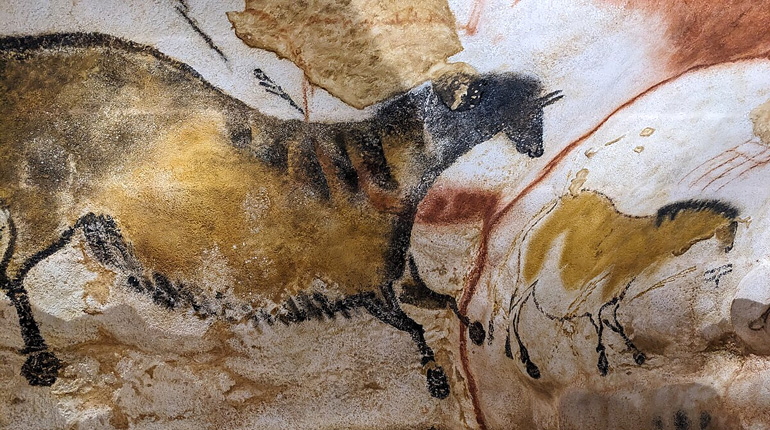
The history of cave discoveries in the Vézère Valley fundamentally changed our understanding of prehistoric art and human civilisation. The first decorated cave recognised in France was La Mouthe in 1895, investigated by archaeologist Émile Rivière, who found engravings 90 metres from the entrance and produced the first photographs of such art. However, the authenticity of prehistoric art remained hotly debated until the pivotal discoveries of 1901, when Henri Breuil, Denis Peyrony, and Louis Capitan found engravings at Les Combarelles, followed eight days later by Peyrony's discovery of polychrome paintings at Font-de-Gaume. These discoveries finally convinced sceptics, including Émile Cartailhac, who had been the main critic of the notion that Palaeolithic humans could produce such sophisticated art. The monumental discovery of Lascaux cave in 1940 by four boys marked a new era in prehistoric art knowledge, revealing hunting scenes with nearly 100 animal figures remarkable for their detail, rich colours, and lifelike quality.
The caves of the Vézère Valley have provided invaluable insights into prehistoric cultures, with many sites giving their names to entire archaeological periods. Three locations became namesakes for prehistoric periods: the Micoquien (named after La Micoque), Mousterian (after Le Moustier), and Magdalenian (after Abri de la Madeleine). The Cro-Magnon rock shelter provided the generic name for European early modern humans. The valley contains some of the world's most celebrated prehistoric art masterpieces, including the Venus de Laussel at Marquay, the equine frieze in high relief at Cap-Blanc, and especially the wall paintings of Lascaux, often called the "Sistine Chapel of prehistoric art". Other significant decorated caves include Rouffignac, known as the "Grotto of a Hundred Mammoths" for its 10-kilometre length filled with mammoth paintings, and numerous sites that have revealed superimposed culture strata sometimes totalling many feet thick, enabling archaeologists to establish a complete sequence of prehistoric culture types. The region's archaeological potential remains considerable, as demonstrated by ongoing discoveries during preventive excavations since the UNESCO inscription.
Description
Lascaux: The Sistine Chapel of Prehistory
The most renowned of all the valley's treasures is the Lascaux Cave. Whilst the original cave has been closed to preserve its delicate artworks, the nearby replica, Lascaux IV, is a breathtakingly accurate recreation that allows visitors to experience the full splendour of the original. The cave's interior is a masterful gallery of over 600 paintings and 1,500 engravings, dominated by vast and dynamic hunting scenes. The famous Hall of the Bulls features enormous aurochs, horses, and stags that seem to thunder across the curving rock walls, their forms rendered with astonishing realism, rich colour, and a vibrant sense of movement that has captivated the world since its discovery.
Other Major Decorated Caves
Beyond Lascaux, a constellation of other decorated caves offers unique and compelling experiences.
- Font-de-Gaume This is one of the last caves in France with original, multi-coloured (polychrome) paintings that remains open to the public. The narrow passage reveals more than 200 mesmerising images of bison, horses, and mammoths, some superimposed in layers that create a sense of depth and time.
- Les Combarelles Cave A very different experience awaits in this long, narrow cavern. It is celebrated for its astounding collection of over 600 intricate engravings depicting a wide range of animals, as well as a number of rare human-like figures, etched with incredible precision into the rock.
- Rouffignac Cave Known as the "Cave of a Hundred Mammoths," this vast cave system is explored via an electric train. The journey reveals hundreds of engravings and black-outline drawings, with mammoths being the most prominent subject, alongside woolly rhinoceroses and ibex.
Rock Shelters and Sculptures
The valley's artistic heritage extends beyond painted caves to include remarkable open-air rock shelters featuring bas-relief sculptures.
- Cap Blanc Shelter This site is home to a monumental masterpiece of Palaeolithic sculpture: a 13-metre-long frieze of animals, including horses and bison, carved directly into the limestone cliff face in high relief. The scale and artistry of the work are truly impressive.
- Abri du Poisson Within this small rock shelter is a rare and beautifully detailed carving of a salmon, over a metre in length. It stands as one of the oldest known depictions of a fish in the world.
Geological Wonders
Contrasting with the ancient human artistry is the stunning natural beauty of the valley's geological formations. The Grand Roc Cave is a geological marvel, a "mineral forest" filled with a dazzling and dense profusion of stalactites and stalagmites. A visit here is not about prehistoric art, but about marvelling at the myriad crystal formations and translucent draperies sculpted by nature over millennia.
Getting There
The Caves of the Vézère Valley, centred around Les Eyzies-de-Tayac, are easily accessible from major French cities by various transport methods. By train, take the Paris-Limoges-Périgueux-Agen line, with Les Eyzies station approximately 30 minutes from Périgueux, whilst the caves themselves are between 2-9 kilometres from the station depending on which site you visit. From Bordeaux, travellers can take the hourly train service to Périgueux (approximately 90 minutes) and connect with local bus services.
By bus, regular services operate from Périgueux to Les Eyzies via the Dordogne regional transport network, with connections available from Bordeaux via Périgueux, though journey times are longer at around 3-4 hours with transfers. Some routes also operate via Brive-la-Gaillarde for those travelling from other regions.
By car, the caves are situated along the D47 between Les Eyzies and Sarlat, making them easily accessible from the A20 and A89 motorways, with Bordeaux approximately 2 hours away and Toulouse around 2.5 hours. Free parking is available at most cave sites, though some require short walks through forest paths to reach the entrances.
Best Time to Visit
Late spring (May–June) and early autumn (September–October) are ideal for the Vézère Valley caves, balancing comfortable weather with widespread opening and fewer queues than the busy summer period when access is highly sought after. Many sites follow a seasonal schedule from late March to early November, while Lascaux’s complex in Montignac-Lascaux operates virtually year‑round, making the shoulder seasons especially convenient for planning. Strict daily quotas and guided‑tour capacities mean advance booking is essential at marquee sites like Font‑de‑Gaume and Combarelles, so steering clear of peak summer weeks helps secure preferred times and a calmer experience. Underground temperatures remain cool at roughly 10–14°C, making visits pleasant even on hot days and warranting a light layer in any season. Outside the main season, several caves close or run reduced schedules, so spring and autumn typically offer the best blend of access, comfort and availability.