


| Contents |
|---|
Introduction
Set amid wooded hills a short hop from the Channel coast, the Château d’Eu blends Renaissance elegance with the brick-and-stone classicism of the Orléans princes and today houses the Musée Louis‑Philippe, a trove of royal memorabilia. Once the summer retreat of King Louis‑Philippe, it famously welcomed Queen Victoria in the 1840s, moments that helped cement Anglo‑French friendship. Visitors can wander panelled salons hung with portraits, explore intimate royal apartments, and step out to terraces overlooking formal parterres and a sweeping park. The historic town of Eu, with its collegiate church and quiet streets, adds depth to a visit, while nearby Le Tréport and Mers‑les‑Bains bring sea air and Belle Époque charm within easy reach. Whether you come for the history, the art, or the gardens, this serene château makes a rewarding day trip and an evocative window onto the July Monarchy.
Interesting Facts about Château d'Eu
- The Château d’Eu was begun in 1578 by Henri I, Duke of Guise, and Catherine de Clèves on the site of a demolished medieval fortress.
- Anne Marie Louise d’Orléans, known as “La Grande Mademoiselle,” oversaw its completion in the 17th century and enriched its collections.
- King Louis‑Philippe I adopted the château as a favoured summer residence during his reign in the 1830s and 1840s.
- Queen Victoria was received here twice, in 1843 and 1845, landmark visits that helped cement Franco‑British amity.
- The chapel preserves the tombs of Henri I, Duke of Guise, and his wife Catherine de Clèves.
- During the French Revolution, the château was repurposed as a hospital before later restorations.
- Exiled Brazilian royalty lived here, and Isabel, Princess Imperial of Brazil, died at the château in 1921.
- The town acquired the property in 1964, later housing the town hall and creating the Musée Louis‑Philippe in 1973.
- Its long red‑brick and stone façade, reworked by architect Pierre Fontaine, is a hallmark of Louis XIII‑style elegance.
- The formal terraced gardens descend the hillside, blending classical French layout with 19th‑century exotic species.
History
The Medieval Fortress
The Château d'Eu has its origins in medieval fortifications that played a crucial defensive role on the northern frontier of the Duchy of Normandy. The earliest castle on this site was first documented in 925, when the Norman leader Rollo is said to have garrisoned it with a thousand Norman soldiers. Throughout the medieval period, the fortress witnessed significant historical events, including Duke William's siege in 1049 following a rebellion by Guillaume Busac, Count of Eu. The castle is believed to have hosted William the Conqueror's marriage to Matilda of Flanders around 1050-1051, and later entertained Harold in 1065, the year before the Battle of Hastings. The fortress changed hands multiple times during conflicts between England and France, notably falling to the French in 1193 when Richard the Lionheart was imprisoned. Even Joan of Arc reportedly stayed in the castle's prison during her captivity by the English. However, this medieval stronghold met its end in 1475 when Louis XI, learning that the Count of Eu intended to surrender it to Edward IV of England, ordered its complete destruction.
Renaissance Construction
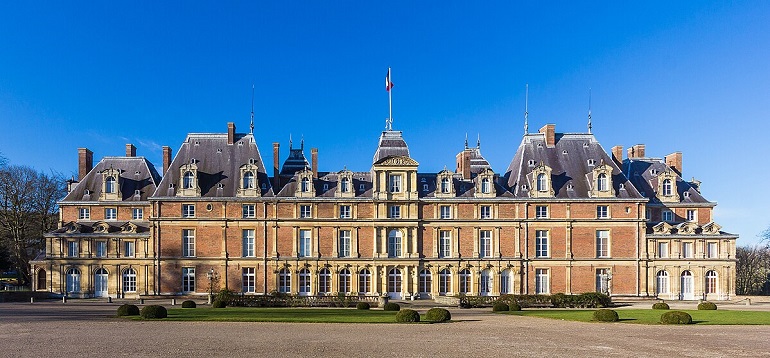
Following the demolition, a modest manor house was erected on the ruins in 1480, but the magnificent château visitors see today was constructed between 1578 and 1583. The project was initiated by Henri de Lorraine, Duke of Guise (known as "le Balafré"), and his wife Catherine de Clèves, Countess of Eu, who began construction after their marriage. The building's completion came nearly a century later under the direction of Anne-Marie-Louise d'Orléans, known as "la Grande Mademoiselle", who was Louis XIV's cousin and took possession of the property in October 1657. The château was built in the classic 17th-century French architectural style, featuring a central main building flanked by two pavilions, constructed of brick and stone with slate roofs. The Grande Mademoiselle not only completed the structure but significantly expanded and embellished it, creating the elegant residence that would later captivate French royalty.
Royal Residence and Modern Era
The château reached the pinnacle of its royal significance during the July Monarchy when it served as King Louis-Philippe I's summer residence from 1830 to 1848. During this period, the building was enlarged by renowned architect Pierre-Léonard Fontaine to accommodate the royal court's needs. The château became internationally famous when Louis-Philippe entertained Queen Victoria there on two occasions, from 3-7 September 1843 and 8-10 September 1845, marking historic diplomatic meetings under the "Entente Cordiale". After Louis-Philippe's abdication in 1848, the château was confiscated by Napoleon III, and the family's collections were sold at auction. Following the fall of the Second Empire, the property returned to the Orléans family and was subsequently restored by the famous architect Eugène Viollet-le-Duc for Philippe VII, Count of Paris. In its final royal chapter, the château became the residence of the exiled Brazilian Imperial Family, where Princess Isabel, who had abolished slavery in Brazil, died in 1921. The city of Eu purchased the château in 1964, and since 1973 it has housed both the town hall and the Musée Louis-Philippe, preserving its rich royal heritage. In 1987, the château, its dependencies, and park were classified as a Monument Historique by the French Ministry of Culture.
Description
Standing magnificently at the heart of its namesake town, the Château d'Eu presents an imposing architectural spectacle built of warm red brick and pale stone. This grand residence extends across an impressive 90-metre façade, creating a commanding presence that speaks more of grandeur than mere decoration. The building's length is elegantly punctuated by stone pilasters, whilst dormer windows pierce the slate roof, and tall chimneys add vertical emphasis to the roofline. The château's classical French architecture, begun in the 16th century and refined over subsequent centuries, demonstrates the evolution of royal residential design.
The Exterior and Setting
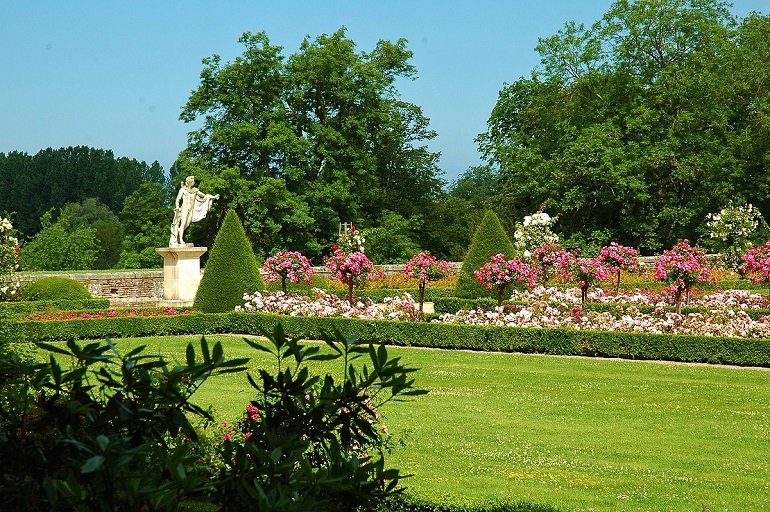
The château sits within extensive and meticulously maintained parkland, where formal French gardens blend seamlessly with more naturalistic landscaping. Ancient trees provide shade along well-maintained pathways, making the grounds ideal for leisurely exploration. The formal gardens closest to the château feature geometric patterns typical of French garden design, whilst the broader park offers more informal walking routes through mature woodlands. The entire estate, encompassing not only the château itself but also its various outbuildings and dependencies, enjoys protection as a French Monument historique.
The Musée Louis-Philippe
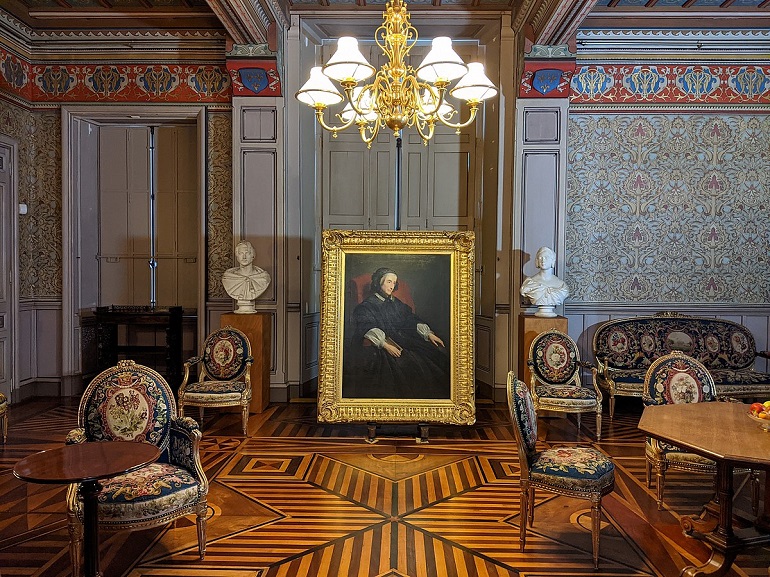
Today, the château houses the renowned Musée Louis-Philippe, which brings this royal residence back to life through carefully curated collections. The museum's interior comprises a series of beautifully restored period rooms where visitors can experience the atmosphere of a lived-in royal residence. The quality of the restoration work is exceptional, with sublime parquet floors, intricate period woodwork, and magnificent antique fireplaces creating an authentic 19th-century ambiance.
The Spectacular Guise Gallery
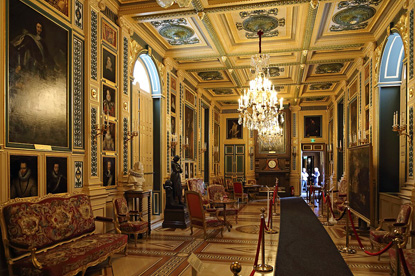
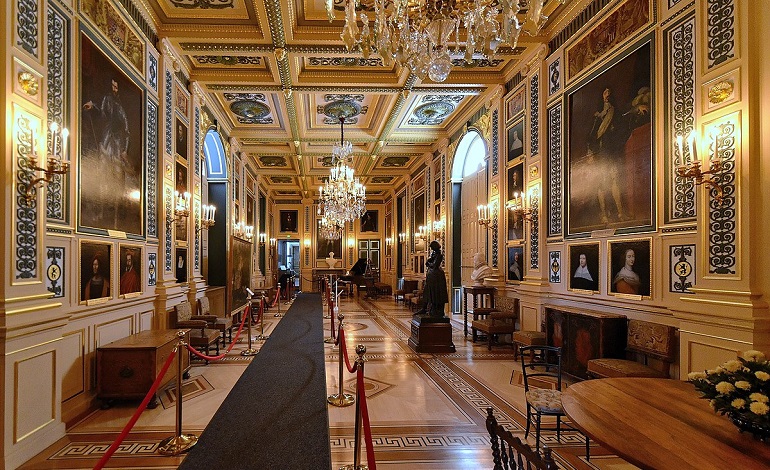
The crown jewel of the château's interior is undoubtedly the magnificent Guise Gallery, a grand reception room that serves as the château's main ceremonial space. This spectacular hall was completely destroyed by fire in 1902, but a painstaking decade-long restoration programme has brought it back to its former glory. The restoration team used historical paintings, drawings, and photographs as guides to ensure absolute accuracy in recreating every detail.
The gallery now houses an exceptional collection of 141 family portraits, originally assembled in the 17th century by Anne Marie Louise d'Orléans, Duchess of Montpensier, known as La Grande Mademoiselle. This remarkable collection includes 46 portraits specifically of the Guise family, forming the heart of the gallery's display. The room itself has been refurnished with period-appropriate seating, including four grand sofas, six armchairs, and twelve chairs in carved and gilded wood, covered in Beauvais tapestry designed by Amédée Couderc. These magnificent pieces originally came from the Senate's furnishings at the Luxembourg Palace.
The Grand Salon and Reception Rooms
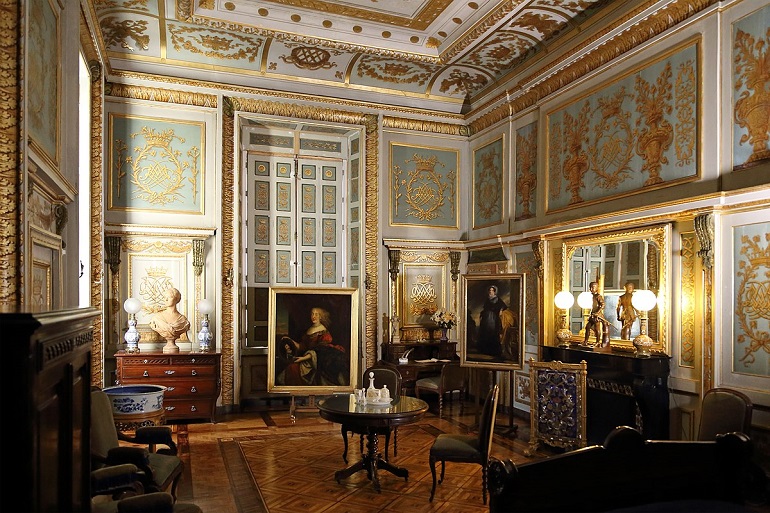
Adjacent to the Guise Gallery, the Grand Salon represents another masterpiece of 19th-century interior design. This room has been meticulously furnished with an ensemble of period pieces that perfectly capture the luxury of royal living. The salon features a sofa, two bergère chairs, six armchairs, six chairs, a fireplace screen, and a footstool, with some woodwork dating to the 18th century from the original château furnishings, whilst other pieces date from the Louis-Philippe era.
The various reception rooms throughout the château showcase different aspects of royal life, from intimate family gatherings to formal state occasions. Each room maintains its original character through careful attention to period detail, including appropriate window treatments, wall coverings, and decorative objects that would have been familiar to the château's royal inhabitants.
Collections and Decorative Arts
The museum's collections represent some of the finest examples of French decorative arts from the 18th and 19th centuries. The porcelain collection is particularly noteworthy, featuring exquisite pieces from the Manufacture de Sèvres that demonstrate the highest levels of craftsmanship. Services commissioned specifically for royal use display the refined taste of the period, whilst the silverware collection includes pieces by renowned makers such as Christofle.
The furniture collection spans several centuries and includes pieces by celebrated ébénistes and menuisiers of the period. Visitors can admire the work of the Maison Jacob, whose creations represent the pinnacle of French furniture-making. Tapestries throughout the château add warmth and colour to the rooms, many featuring designs that complement the overall decorative scheme.
The Brazilian Collection
One of the château's most unique features is its remarkable Brazilian collection, a testament to the family connections between the French Orléans dynasty and the Brazilian imperial family. The centrepiece of this collection is a spectacular gilded berline (state carriage) that was originally commissioned by King John V of Portugal and later used by the Brazilian imperial family. This magnificent vehicle, which arrived at the château following Emperor Pedro II's abdication in 1889, represents one of the finest surviving examples of 18th-century ceremonial transport.
The Brazilian collection extends far beyond this impressive carriage to include furniture, portraits, sculptures, books, and ethnographic objects from indigenous Amazonian peoples. Maps, archaeological artefacts, and photographic records provide insight into Brazil's imperial period, whilst personal effects and official regalia tell the story of the Brazilian royal family's exile in Europe.
The Chapel
The château's chapel deserves particular attention for its beautiful modern stained-glass windows, created by the renowned artists Chenavard and Paul Delaroche. These windows demonstrate how 19th-century artistic sensibilities could enhance historic religious spaces whilst maintaining appropriate reverence. The chapel's intimate scale and refined decoration make it a peaceful counterpoint to the château's grander public rooms.
Architectural Details and Restoration
Throughout the château, visitors can appreciate the exceptional quality of 19th-century craftsmanship and the skill of modern restorers who have preserved this heritage. The building features work by celebrated architects including Pierre-Léonard Fontaine, who enlarged the château for King Louis-Philippe, and Eugène Viollet-le-Duc, who undertook significant restoration and decoration work for the Comte de Paris.
Recent restoration projects have addressed both structural concerns and aesthetic refinement, ensuring that the château continues to serve as both a functioning civic building (housing the town hall) and a world-class museum. The restoration of the Guise Gallery represents perhaps the most ambitious project, requiring extensive research and exceptional skill to recreate accurately what had been lost to fire.
The château's portique, adorned with vitraux designed by Viollet-le-Duc and executed by Oudinot between 1879 and 1880, exemplifies the attention to detail that characterises the entire restoration programme. These architectural elements demonstrate how 19th-century architects successfully integrated new designs with existing historical fabric.
Getting There
By train From Paris-Gare du Nord, take a TER service toward Beauvais or Abbeville and change for Eu; the station is a short walk from the château.
By coach or bus Regional buses run from Dieppe, Le Tréport and Abbeville to Eu’s central stops, placing you within minutes of the château; services are infrequent, so check timetables in advance.
By car The most flexible option is the 2 hr 30 min drive from Paris via the A16 and D925; parking is free and plentiful around the château and in the town centre.
Best Time to Visit
Late spring to early autumn is the ideal window for the Château d’Eu, with mild temperatures, long days, and gardens at their best; June and September balance pleasant weather with fewer crowds, while July and August feel livelier thanks to coastal visitors and occasional events nearby; early autumn adds rich woodland colour in the Forêt d’Eu for atmospheric walks, whereas winter is serene but brings short daylight and possible reduced access, suiting a quieter, contemplative visit.