


| Contents |
|---|
Introduction
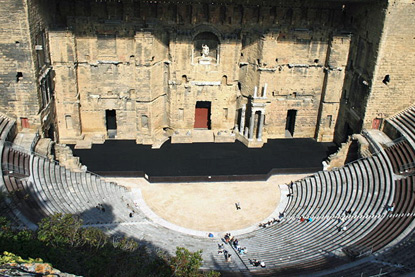
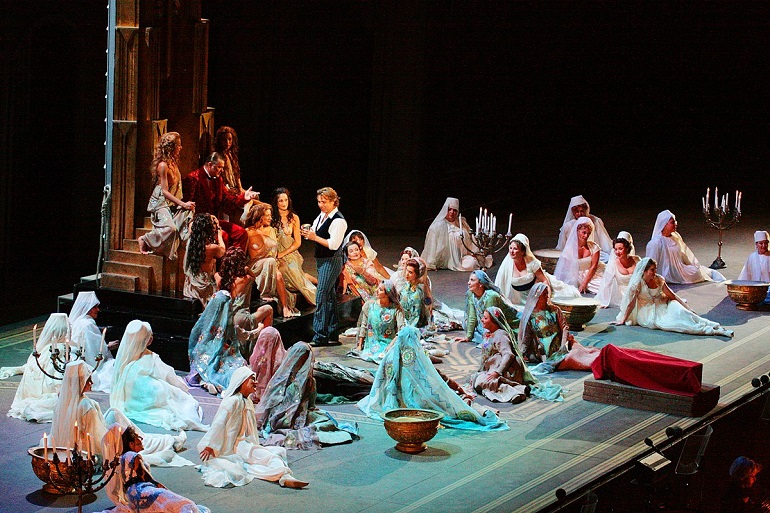
Founded by the Romans in 35 BCE and named after the Celtic god Arausio, Orange (pop. 29,000), the city is renowned for its exceptionally well-preserved Roman Theatre, dating from the 1st century CE during Emperor Augustus's reign, which features an intact stage wall and hosts the annual Chorégies d'Orange opera festival each July. The second UNESCO monument is the Triumphal Arch, a 20-metre-high structure decorated with reliefs celebrating Roman victories, also built during Augustus's rule.
The County of Orange, founded under Charlemagne, evolved into a principality in 1163. The title of Prince of Orange passed to the House of Nassau, future rulers of the Netherlands, and is now carried by the Dutch crown prince.
The city also features the Romanesque Cathédrale Notre-Dame-de-Nazareth, the Museum of Art and History with Roman artefacts including mosaics and sculptures, and Colline Saint-Eutrope hill offering panoramic views across the Rhône valley to Mont Ventoux.
Interesting Facts about Orange
- Orange is famed for its exceptionally well-preserved Roman theatre, whose monumental stage wall still stands and dominates the heart of the town.
- The town’s Roman Theatre and Triumphal Arch are jointly inscribed as UNESCO World Heritage for their outstanding testimony to ancient Roman civic life.
- Orange’s name originates from Arausio, a Gaulish water deity, with the Roman colony later Latinised as Arausio before evolving into Orange.
- The Principality of Orange gave its title to the House of Orange-Nassau, linking this Provençal town to Dutch royal history and European politics.
- The Triumphal Arch of Orange is among the largest surviving Roman arches, richly carved with reliefs celebrating early imperial military victories.
- Louis XIV’s forces repeatedly captured Orange in the late seventeenth century before it was definitively ceded to France by the Treaty of Utrecht in 1713.
- The Roman theatre’s vast stage wall, rising over 30 metres, is famed for its acoustics and continues to host summer performances and opera.
- Orange sits on the Rhône plain just north of Avignon, where a Mediterranean climate and fertile lands have supported viticulture and agriculture for centuries.
- The town’s museum holds notable Roman finds, including mosaics and a marble cadastral map that hints at Orange’s administrative importance under Rome.
- Although long subsumed into France, the historic title “Prince of Orange” endured with the Dutch dynasty, cementing Orange’s pan-European legacy.
History
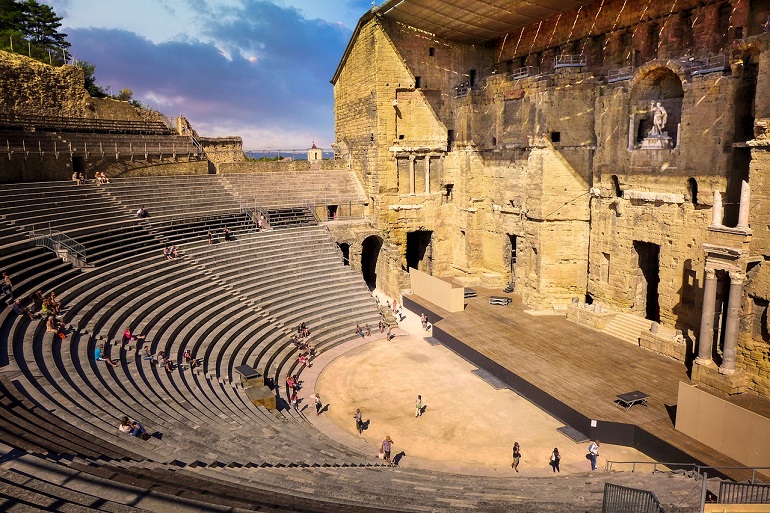
Orange boasts a fascinating history that spans over two millennia, beginning with its Celtic origins and reaching its pinnacle as a magnificent Roman colony. The city was originally established as a Celtic settlement named after Arausio, the local water god, before becoming the site of the worst military defeat in Roman history in 105 BCE when two Roman armies were crushed by the Cimbri and Teutones tribes at the Battle of Arausio. However, Roman fortunes were restored thirty years later when Julius Caesar founded the colony of Colonia Julia Firma Secundanorum Arausio in 35 BCE, settling veterans of his Second Legion in the strategically important location. The Roman city flourished magnificently, covering 70 hectares and featuring impressive civic monuments including the world-renowned theatre, triumphal arch, forum, and monumental temple complex. Orange served as the capital of northern Provence, with Roman colonists systematically parcelling the surrounding territory into agricultural lots, creating what historians describe as "a miniature Rome" complete with all the public buildings familiar to Roman citizens, albeit on a smaller scale to accommodate the local population.
The medieval period transformed Orange into a significant principality that would play a crucial role in European politics for over five centuries. Following the collapse of Roman authority, the city endured invasions by various barbarian tribes including the Alamanni and Visigoths, with the Visigoths sacking the settlement in 412 CE. The city's fortunes revived under Charlemagne, who recognised Orange's strategic importance and appointed William au-Cornet as its governor in the late eighth century, a appointment that gave the city its distinctive coat of arms featuring a horn. From 1163, Orange was elevated to a sovereign principality within the Holy Roman Empire by Emperor Frederick I, marking the beginning of its remarkable political independence. The principality passed through several noble families, including the renowned troubadour Rimbaut of Orange in the County of Venaissin, then the Houses of Baux and Chalon. During the fourteenth century, Orange established its own university, which continued teaching until 1791, whilst enduring periodic challenges including the devastating Black Death of 1348 that decimated half the population.
The principality reached international prominence when it passed to the House of Nassau in 1530, becoming intrinsically linked with Dutch independence and European Protestant resistance. The most famous ruler was William the Silent (1533-1584), whose inheritance of Orange in 1544 established the connection between the small Provençal principality and the Dutch royal family that continues today. Orange became a Protestant stronghold during the Wars of Religion, suffering repeated sackings, particularly in 1562, as Catholic forces targeted this bastion of Reformed faith. The Nassau princes were ambitious builders, constructing an impressive fortress château on the hill that Louis XIV viewed as a direct challenge to royal authority. After visiting Orange in 1660, the Sun King ordered the complete destruction of the fortifications, though he famously spared the Roman theatre's stage wall, reportedly declaring it "the most beautiful wall in my kingdom". The principality's independence finally ended with the Treaty of Utrecht in 1713, when it was formally ceded to France after repeated military occupations by Louis XIV's forces, though the Nassau family retained the princely title, which the Dutch royal house still bears today.
Main Attractions
Roman Theatre of Orange
The Théâtre Antique d'Orange is undoubtedly the city's most famous landmark and one of the best-preserved Roman theatres in the world. Built during the reign of Emperor Augustus in the 1st century CE, its most striking feature is the monumental stage wall, which stands at an impressive 37 metres high. This architectural marvel ensured excellent acoustics and continues to serve its original purpose today, most notably by hosting the renowned summer opera festival, the Chorégies d'Orange. Visitors can admire the imposing statue of Emperor Augustus, which resides in the central niche of the wall, and imagine the spectacles that have unfolded on its stage for two millennia.
Triumphal Arch of Orange
At the northern entrance to the city stands the Triumphal Arch, another of Orange's magnificent Roman monuments. This impressive structure is one of the largest and oldest of its kind from the Roman era. Believed to have been built to honour the veterans of the Gallic Wars who founded the Roman colony, its facades are intricately decorated with reliefs depicting naval and land battles. For many years, traffic passed directly through its arches, but thankfully, this grand monument is now the centrepiece of a roundabout, allowing visitors to admire its detailed carvings and historical significance up close and in safety.

Colline Saint-Eutrope
For breathtaking panoramic views over the city, the Roman Theatre, and the surrounding countryside towards Mont Ventoux and the Rhône, a walk up the Colline Saint-Eutrope is essential. This hill, the highest point in Orange, is not just a viewpoint but also a place of historical significance. It was once the site of the grand château of the Princes of Nassau, a formidable fortress that was dismantled in the 17th century under the orders of Louis XIV. Today, it is a pleasant public park where you can find remnants of the old fortifications, enjoy a picnic, or simply take a leisurely stroll amidst the greenery.
Orange Cathedral
In the heart of the historic centre, you will find the Cathédrale Notre-Dame-de-Nazareth. Though perhaps overshadowed by the city's Roman marvels, the cathedral is a significant landmark in its own right. Its history stretches back centuries, and while it has undergone numerous alterations over time, it remains an active place of worship and a peaceful sanctuary away from the bustling streets. Its architecture reflects various periods, offering a different kind of historical insight into the long story of Orange.
Orange Market
To experience the authentic rhythm of Provençal life, a visit to the weekly market is a must. Every Thursday, the streets and squares of Orange come alive with around 300 vendors, making it one of the most popular markets in the region. Stalls are laden with an abundance of local produce, from sun-ripened fruits and vegetables to regional delicacies like olive oil and the famed local sweet muscat wine. It's a perfect opportunity to browse for handicrafts, soak in the vibrant atmosphere, and taste the fresh flavours of Provence.
Top Museums
Art and History
Museum of Art and History of Orange
Housed in a distinguished 17th-century mansion that once belonged to the counts of Orange, this museum stands directly opposite the city's magnificent Roman Theatre. Its collections offer a comprehensive narrative of Orange and the surrounding region, from its earliest prehistoric settlements to the 19th century.
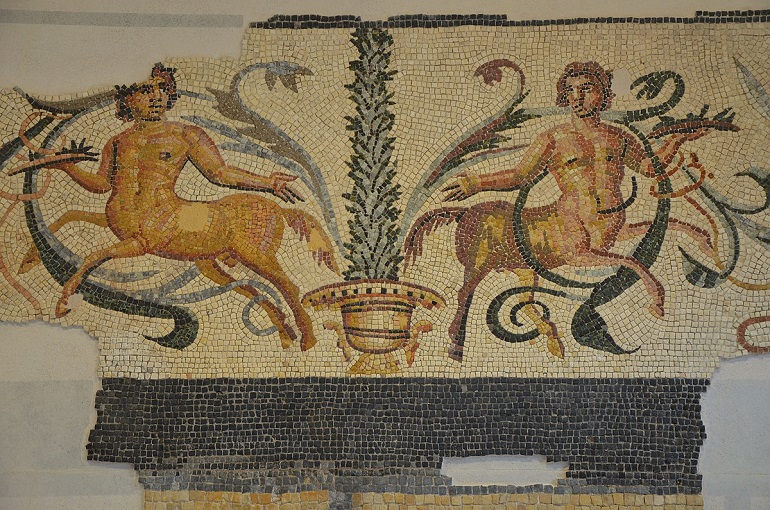
The museum's undeniable centrepiece is its Roman collection, which provides profound context to the city's famous landmarks. Foremost among these treasures is the Cadastre d’Orange, a series of marble tablets from the 1st century CE that constitute one of the most complete Roman land registries ever discovered. These engravings meticulously detail the division of land around the Roman colony of Arausio, offering an unparalleled glimpse into ancient administration and daily life. The galleries also feature stunning archaeological finds excavated from the Roman Theatre and the Triumphal Arch. These include a large 2nd or 3rd-century mosaic known as the 'Petites Amphores' and a beautifully sculpted frieze depicting a battle of centaurs, which once adorned the theatre itself.
Beyond its Roman antiquities, the museum unfolds into a series of rooms that chart the city’s later history. There are galleries dedicated to the period when Orange was a significant bishopric and principality. The fine art collection includes an array of paintings and tapestries dating from the 16th to the 19th centuries. A particular highlight is the space devoted to the works of two notable English artists with ties to the region, the painter and lithographer Albert de Belleroche and the versatile artist Sir Frank Brangwyn. Further rooms explore the cultural identity of Provence through displays of traditional furniture and intricate Provençal fabrics, while a 19th-century curiosity cabinet captures the eclectic collecting tastes of the era.
Aviation
Aerospace Museum of Orange
For those with an interest in aviation and military history, the Aerospace Museum of Orange (Musée Aéronautique d’Orange) presents a formidable collection of aircraft, primarily displayed in an expansive open-air setting. The museum is dedicated to preserving the heritage of aviation, with a strong focus on the aircraft of the French Air Force, many of which served at the nearby Orange-Caritat Air Base.
The museum's collection features approximately 40 aircraft, showcasing the rapid evolution of military aviation from the post-war period to the modern jet age. Iconic French fighters are well-represented, with various models of the Dassault Mirage series, including the Mirage III, Mirage F1, and Mirage 2000, forming the backbone of the display. Other notable aircraft include the Vought F-8 Crusader, the Lockheed T-33 trainer, the imposing Sud Aviation Vautour bomber, and the large Aérospatiale SA 321 Super Frelon helicopter.
A significant aspect of the museum's mission is the restoration of these historic machines. Many of the aircraft have been painstakingly restored by a dedicated team of volunteers, and visitors can often observe this process, gaining insight into the technical complexities of aircraft maintenance. Beyond the hardware, the museum houses a wealth of historical documents, photographs, and personal accounts that provide context, covering the roles these aircraft played during the Cold War and other conflicts. The museum offers an engaging, hands-on experience, allowing visitors to get remarkably close to these legendary planes.
Science and Nature
Harmas Jean-Henri Fabre
A short journey from Orange, in the village of Sérignan-du-Comtat, lies the Harmas Jean-Henri Fabre, a site that is part museum, part historic home, and part botanical sanctuary. This was the final home and "open-air laboratory" of the illustrious naturalist and entomologist Jean-Henri Fabre (1823–1915), who spent the last 36 years of his life here observing and documenting the insect and plant life of Provence.
The property has been meticulously preserved to retain the unique atmosphere that Fabre created. Visitors can explore his rustic house, stepping into his study, which remains just as he left it, filled with his books, scientific instruments, and personal collections. Here, one can imagine him penning his masterwork, the Souvenirs Entomologiques. The museum displays his vast herbarium containing over 20,000 specimens and a remarkable collection of over 600 watercolour paintings of mushrooms, showcasing his artistic talent. His correspondence with contemporaries, including Charles Darwin, is also on display.
The garden, which Fabre called his harmas (a Provençal term for fallow land), has been designated a "Jardin Remarquable" (Remarkable Garden) of France. It is a living testament to his work, containing more than 500 plant species, a kitchen garden, an orchard, and a tranquil pond. Fabre cultivated this land not just for its beauty but as a field for observation, and scattered throughout the grounds are the ingenious devices he created to study insect behaviour. An audio tour, featuring anecdotes from Fabre's daughter, Aglaé, adds a personal and intimate layer to the visitor experience, creating a profound connection to the life and work of this extraordinary scientist.
Local Cuisine
Orange’s culinary scene is a vibrant reflection of Provençal tradition, with the region’s rich soil and sunny climate yielding a bounty of ingredients that shape its renowned gastronomy. Local markets brim with fragrant herbs, fresh vegetables, and ripe fruit, which find their way into rustic favourites such as ratatouille, a hearty vegetable stew, and daube provençale, a slow-cooked beef dish infused with red wine and aromatic herbs. The area’s vineyards are synonymous with celebrated Côtes du Rhône wines, which perfectly accompany regional treats like tapenade, an olive paste spread on crusty bread, and calissons d’Orange, delicate almond and candied fruit confections. Dining in Orange offers an authentic taste of Provence, where the art of simple, seasonal cooking is delightfully preserved.
Getting There
By train Orange is on the Paris–Marseille main line, with fast Intercités and TER services from Paris Gare de Lyon, Lyon Part-Dieu, Avignon Centre and Marseille Saint-Charles; the station sits a short stroll from the historic centre, making rail the simplest option for most visitors.
By coach Long-distance coaches link Orange with major French cities, while regional buses run frequently from Avignon, Carpentras and the surrounding Rhône valley towns, stopping at the Gare Routière beside the railway station for a smooth onward walk into town.
By car Drivers can follow the A7 autoroute and leave at exit 21 (Orange-Centre), or take the scenic D routes through vineyards along the Rhône; the compact centre has several well-signposted car parks just outside the old walls, allowing an easy stroll to the Roman theatre and central squares.