


Introduction
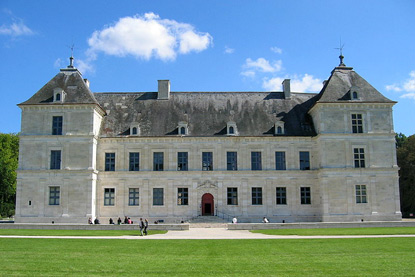
The Château d'Ancy-le-Franc is a 16th-century Renaissance palace built between 1544 and 1550 for Antoine III de Clermont, brother-in-law of Diane de Poitiers. Designed by Italian architect Sebastiano Serlio, who was brought to France by King Francis I, the château represents one of the finest early examples of Italian Renaissance architecture in France, constructed on a perfectly square plan around a magnificent rectangular courtyard. The interior features exceptional mural paintings and frescoes created by Francesco Primaticcio and other artists from the School of Fontainebleau, decorating more than twelve principal rooms including the famous Chambre des Nudités and Chambre de Diane. Set within a 123-acre park that includes formal gardens originally designed by André Le Nôtre, the château has welcomed numerous French monarchs throughout its history, including Henri IV, Louis XIII, and Louis XIV, and today offers visitors a remarkable journey through five centuries of French aristocratic life and Renaissance artistry.
Interesting Facts about Ancy-le-Franc Castle
- The château is a pure Renaissance masterpiece designed by the Italian architect Sebastiano Serlio, who was invited to France by Francis I and applied Italian principles to a Burgundian setting.
- Its plan is a perfect square enclosing a harmonious courtyard, an exercise in symmetry that was highly innovative in sixteenth-century France.
- Ancy-le-Franc was purpose-built in the 1540s rather than converted from a medieval fortress, making it an exceptionally coherent Renaissance residence.
- The interiors preserve one of France’s largest ensembles of sixteenth- and seventeenth-century wall paintings, spanning mythological, religious and historical themes.
- Francesco Primaticcio and artists of the Fontainebleau school contributed to the lavish decorative scheme, linking the château to the epicentre of French Mannerism.
- The Galerie de Pharsale, an ochre cameo stretching some 32 metres, uniquely depicts Caesar’s decisive battle and is a showpiece of the noble floor.
- Kings including Henri IV, Louis XIII and Louis XIV visited the estate, cementing its status as a courtly residence of distinction.
- In the late seventeenth century, Louis XIV’s minister Louvois owned the château and commissioned André Le Nôtre to shape grand formal gardens.
- The estate includes an eighteenth-century pavilion known as “la Folie,” built on a pond and adding a whimsical note to the classical setting.
- After periods of neglect, extensive modern restoration has revived the château’s façades, courtyards and painted cycles to remarkable effect.
History
Rising on the banks of the River Armançon, Ancy-le-Franc Castle was conceived in 1542 for Antoine III de Clermont—brother-in-law of Diane de Poitiers—who wanted a cutting-edge Renaissance residence instead of refurbishing the site’s medieval fortifications. He hired the Italian architect Sébastiano Serlio, freshly invited to France by François I, to design a perfectly square palace that married classical Italian symmetry with French roofing traditions; construction ran from 1542 to around 1550, and the interiors were later enriched by artists such as Francesco Primaticcio. Contemporary chroniclers praised the château’s harmonious façades, arcaded courtyard and pioneering “modular” proportions that signalled the arrival of the Second French Renaissance.
After Antoine’s death in 1578, his grandson Charles-Henri de Clermont finished the lavish frescoed apartments and welcomed royal guests including Henry III, Henri IV (in 1591) and Louis XIII (in 1631). Financial pressures forced the Clermont-Tonnerre family to sell the estate in 1683 to Louis XIV’s powerful war minister François-Michel Le Tellier, Marquis de Louvois, who promptly commissioned André Le Nôtre to lay out grand parterres and command stables and an orangery that turned the property into a miniature Versailles. Later heirs replaced some formal gardens with an English-style park in the mid-18th century, yet retained the château’s celebrated cycle of mythological murals, including the Chambre des Nudités and Chambre de Diane.
Seized as émigré property during the Revolution, Ancy-le-Franc was reclaimed by the Le Tellier line in 1795, then repurchased in 1844 by another Clermont-Tonnerre descendant, Louis Aimé Gaspard, before passing through the Belgian princes of Merode and several private owners. A listed Monument Historique, it is now held by Paris Investir SAS, whose restoration campaigns have revived Serlio’s limestone façades, the coffered ceilings and the whimsical 1761 lakeside pavilion nicknamed La Folie. Today the castle stands as one of Burgundy’s finest expressions of Italianate artistry blended with five centuries of French aristocratic taste.
Description
Architectural Excellence
Ancy-le-Franc Castle stands as one of France’s most extraordinary examples of Italian Renaissance architecture, representing a remarkable fusion of Italian design principles with French tradition. This palace showcases the sophisticated elegance that defined the Renaissance period whilst maintaining a distinctly refined and harmonious character.
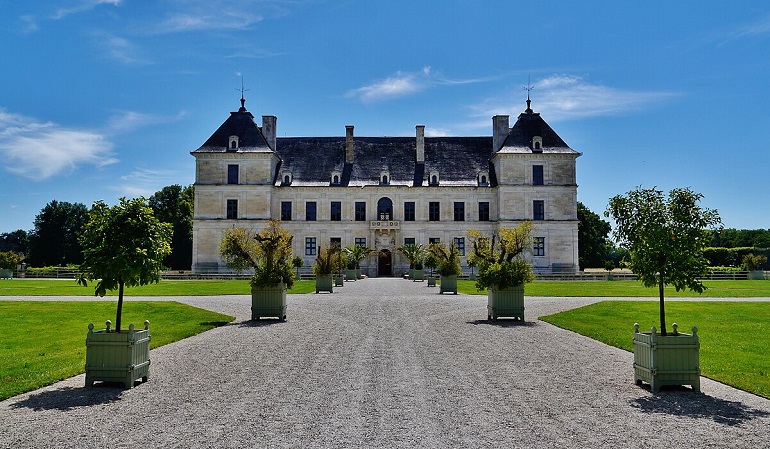
The castle follows a perfectly symmetrical square plan, with four identical wings arranged around a magnificent central courtyard called the Cour d’Honneur. Four square pavilions anchor each corner, creating an elegant and sober composition that demonstrates the genius of Italian architect Sebastiano Serlio. Every element contributes to the overall sense of balance and refinement characteristic of Renaissance design.
The Cour d’Honneur is regarded as one of the most elegant courtyards in France, featuring two levels of graceful arcades with perfectly proportioned arches, decorative niches, and ribbed columns. Elaborately sculpted elements add visual impact from the moment visitors enter this remarkable space.
Magnificent Interior Decorations
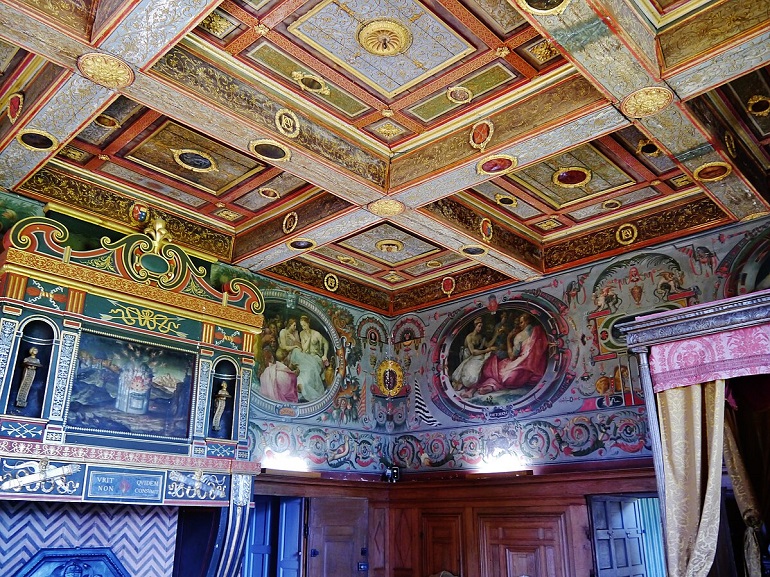
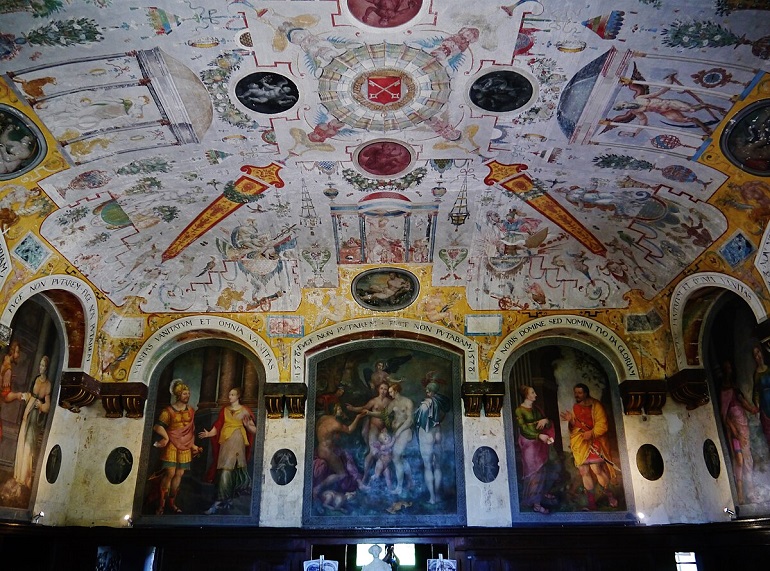
The castle houses one of France’s largest and most significant collections of Renaissance mural paintings, rivalling even the famed Château de Fontainebleau. These extraordinary decorations were created by master artists from the School of Fontainebleau, including Francesco Primaticcio, Nicolò dell’Abbate, Ruggiero de Ruggieri, and Flemish painters such as Nicolas de Hoey.
Notable Rooms and Galleries
- Chambre des Arts: Exquisite parquet flooring and elaborately painted walls and ceilings with medallions representing the liberal arts beneath a stunning coffered ceiling of golden interlacing patterns on blue, green, and amaranth backgrounds.
- Galerie de Pharsale: A 32-metre gallery depicting the ancient Battle of Pharsalus in a monochrome ochre frieze, restored to its original splendour in the early 2000s.
- Chambre des Fleurs: Romantic 17th-century wall paintings of exotic flowers, originally decorated for a young bride when tulips were more valuable than gold.
- Judith’s Chamber: Paintings attributed to Nicolas de Hoey featuring biblical and mythological themes.
- Galerie de Médée and Galerie des Sacrifices: Additional painted decorations with medallions, arabesques, and mythological scenes reflecting the Fontainebleau influence.

Chapel and Additional Spaces
The chapel, completed in 1604, contains decorations attributed to painter Ménassier and reveals centuries-old wall paintings following recent restoration. The Guards’ Hall, antechambers, and numerous bedrooms display period furnishings, sculpted wainscoting, marble floors, and painted ceilings that create an immersive journey through five centuries of French artistic heritage.
Gardens and Parkland
The castle is set within 123 acres of parkland that combines French formal garden design with English landscape style.
- French-style gardens (created 1684): Elaborate parterres, manicured lawns, fountains, and classical statuary laid out by André Le Nôtre, transforming the estate into Louvois’s private Versailles.
- English-style gardens (developed 1759): Naturalistic landscaping with an artificial lake on the southern side and an octagonal pavilion called La Folie on a small island.
- Recent restorations added two award-winning parterres in the East and West gardens, seamlessly integrating contemporary landscape design with historical character.
Estate Buildings and Features
Beyond the main castle, visitors find vast stables, an orangery, and agricultural buildings that supported the estate over the centuries. The stables illustrate the importance of horses in aristocratic life, while the orangery reflects advanced Renaissance horticulture.
The parkland includes centuries-old trees, decorative bridges, winding paths, fountains, and scenic views across the Burgundy countryside. Proximity to the Burgundy Canal enhances the picturesque setting and underlines the harmonious integration of architecture and nature.
Getting There
By train Take the regional TER service from Paris‐Bercy to Nuits‐sous‐Ravières (around 2 h), then pick up a local taxi for the 9 km trip to the château via the D905 road, or continue to nearby Tonnerre or Montbard if timetables better suit your itinerary; each station lies within 25 km of Ancy-le-Franc, giving several daily rail options.
By coach or bus FlixBus runs services from Paris-Bercy Seine to Auxerre, where Mobigo route 804 connects to Ancy-le-Franc, tying in neatly with castle opening hours and avoiding the need for a car for those happy with a longer, two-stage journey.
By car Drivers coming from Paris should leave the A6 at Tonnerre, follow the D965 towards Tonnerre and join the D905 for the final approach; from Lyon, exit the A6 at Nitry and follow signs for Noyers-sur-Serein before joining the D905 northbound—ample visitor parking is signposted directly beside the estate gates.
| Travel destinations in Burgundy | ||||||||||||||
|---|---|---|---|---|---|---|---|---|---|---|---|---|---|---|
|
|
|
|
| ||||||||||
|
|
|
|
| ||||||||||
| >
| |||||||||||||


