France Guide  |
|---|
|
| | Top French Cities |
|---|
|
| | French Regions |
|---|
|
| | Photos |
|---|
|
| | Europe Guide |
|---|
|
| | Travel Tools |
|---|
|
|
|
|
Languedoc-Roussillon Travel Guide
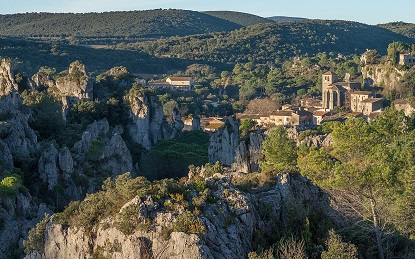
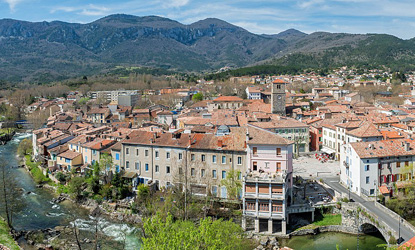
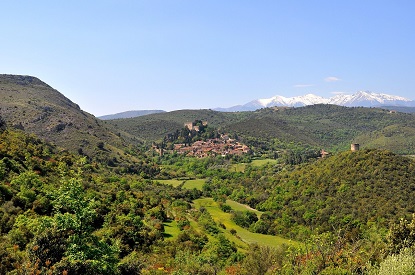
 Roquebrun village, Languedoc. Roquebrun village, Languedoc.
Introduction

The Languedoc-Roussillon is one of France's three Mediterranean regions, along with Provence-Alpes-Côte-d'azur and Corsica. It was formed from the historical provinces of Languedoc (meaning 'Oc language', i.e. Occitan), Gévaudan (the present-day Lozère département), and the five Catalan 'countries' (Roussillon, Vallespir, Conflent, Capcir, and Cerdagne) that are now simply referred to as Roussillon. In 2015 it fused with the Midi-Pyrénées region to form the Occitanie region.
Languedoc is divided in limestone plateaux and national parks of Upper Languedoc, and the vineyard-filled plains of Lower Languedoc, where three main cities (Montpellier, Nîmes and Carcassonne) are located. Occitan, a Romance language halfway between French, Spanish and Italian, is still widely spoken, or at least understood, by a large part of the population, despite efforts of Paris to suppress it since the 16th century.
Roussillon was part of Catalonia until 1659, and is both French and Catalan-speaking today, keeping strong ties with their fellow Catalan speakers across the Spanish border. Some Spaniards, especially Catalan nationalists, like to refer to Roussillon as 'Northern Catalonia'. Perpignan, the largest city in Roussillon, was the continental capital of the Kingdom of Majorca in the 13th and 14th centuries.
Languedoc-Roussillon is the single biggest wine-producing region in the world, being responsible for more than a third of France's total wine production. Until a few decades ago most of the wine produced was cheap table wine, but following a deep restructuration the region is producing wines of increasingly good quality. The best appellations are Corbières and Minervois. Produced since 1531, the Blanquette de Limoux is the world's oldest sparkling wine.
Regional culinary specialities include cassoulet (a casserole of meats and white beans), bourride (a kind of bouillabaisse), brandade (an emulsion of salt cod and olive oil), tielle (squid or octopus pie), and fougasse (a flatbread similar to focaccia).
No other region plays more rugby in France than Languedoc-Roussillon. Bullfighting is a popular spectator sport, especially in Nîmes, though the bulls are not put to death like in Spain. Corridas even enjoy legal protection in areas where there is an uninterrupted tradition.
Famous people from the Languedoc-Roussillon include (chronologically): the entrepreneur Pierre-Paul Riquet (who built the Canal du Midi), the novelist Alphonse Daudet, the WWI general Joseph Joffre, the Nobel Prize chemist Paul Sabatier, and the singer Georges Brassens.
History
The Midi-Pyrénées region boasts a remarkably rich history spanning over two millennia, beginning with its incorporation into the Roman Empire in the 2nd century BCE. The Romans established their first province outside the Italian peninsula here, creating Gallia Narbonensis with Narbonne as its capital, though the territory extended westward to encompass Toulouse. During the Gallo-Roman period, the region flourished as a crucial corridor between Italy and Iberia, with cities like Tolosa (Toulouse) developing into significant urban centres. The area was Christianised in the 3rd century through Saint Sernin, a Greek missionary who was martyrised in Toulouse in 250 CE, dragged through the streets by a bull destined for pagan sacrifice - his route is now commemorated by monuments including the Capitole, Notre-Dame du Taur, and the Basilique Saint-Sernin.
Following the decline of Roman power, the region experienced the fascinating period of Visigothic rule from the 5th century, when Toulouse became the capital of the Visigothic Kingdom that stretched from southwestern Gaul into Spain. Contrary to popular perception, the Visigoths were sophisticated rulers who maintained Roman legal traditions through the Breviary of Alaric, preserving a high degree of civilisation and allowing the emergence of a prosperous urban bourgeoisie. After the Frankish victory at the Battle of Vouillé in 507, the Visigoths retreated beyond the Pyrenees, though they retained control of Septimanie (roughly modern-day Languedoc-Roussillon). Under Carolingian rule, the County of Toulouse expanded dramatically, extending its influence as far as the Rhône river, whilst the 11th century witnessed remarkable urban growth including the founding of Montpellier and the flourishing of Occitan literature through the troubadour tradition.
The region's most tumultuous chapter unfolded during the 13th century with the devastating Albigensian Crusade (1209-1229), launched by Pope Innocent III to eradicate the Cathar religious movement that had gained substantial support among the local nobility. This brutal campaign, which began with the massacre of 15,000-20,000 inhabitants of Béziers in a single day, fundamentally transformed the political landscape of southern France. The crusade served dual purposes: eliminating what the Catholic Church deemed heretical beliefs whilst simultaneously allowing the French crown to assert control over the previously independent territories of Languedoc. By 1271, Toulouse had been brought under direct French rule, marking the end of the region's political independence and the beginning of its integration into the expanding French kingdom. The aftermath saw the construction of the imposing Sainte-Cécile cathedral in Albi as a symbol of Catholic dominance, whilst the distinct regional culture of Languedoc was significantly diminished.
Cuisine
Languedoc-Roussillon’s cooking is rooted in the Mediterranean diet, with olive oil, garlic and locally foraged garrigue herbs such as thyme, rosemary and bay leaf flavouring most dishes. The long, sunny coastline and the Thau lagoon supply abundant seafood: Bouzigues oysters are cultivated on ropes to compensate for the lack of tides, while red mullet, sea bass and Collioure anchovies appear daily on market stalls. Inland vineyards create France’s second-largest AOC wine region, so meals are naturally accompanied by a glass of local red, white or rosé.
Signature plates are both hearty and inventive. The celebrated cassoulet, a slow-cooked stew of haricot beans, duck confit and Toulouse sausage, claims its birthplace in Castelnaudary but is hotly contested by Carcassonne and Toulouse. Coastal towns contribute brandade de Nîmes, a whipped purée of salt cod and olive oil, the fiery octopus pie tielle sétoise imported from Naples in the 14th century, and stuffed squid ‘à la Sétoise’ simmered in tomato sauce. Catalan influence shows in cargolade—snails grilled in their shells with herbs—while mountain menus offer aligot, an elastic mix of mashed potato and melted Tomme cheese, and the Gard’s bull-wine stew gardiane. Charcuterie from the Haut Languedoc, where pigs feed on chestnuts and acorns, rounds out the region’s meaty repertoire.
Cheeseboards highlight Pélardon, a tangy raw-milk goat cheese from the Cévennes, alongside Roquefort matured in the caves of the Larzac plateau. Sweet bites range from the cotton-reel shaped petit pâté de Pézenas filled with spiced lamb and candied fruit, to honey-and-liquorice ‘grisettes’ of Montpellier and the citrus-scented crème catalane. Market stalls brim with Cévennes chestnuts, wild mushrooms and the mild Lézignan onion known as the cèbe, and apéritif hour features Lucques olives with tapenade, glasses of vermouth-based Byrrh or Noilly Prat and, of course, one of the region’s many AOC wines—the second-largest output in France.
|
Attractions
Départements are listed from North to South. Attractions are roughly listed from north (top) to south (bottom) and from west (left) to east (right).
Département de la Lozère
|
Cévennes National Park ※ |
|---|

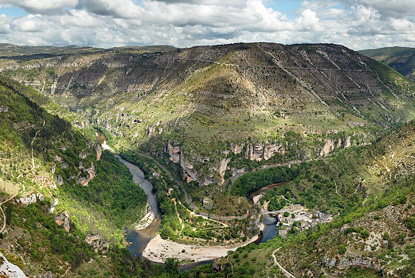
 The Cévennes National Park offers a remarkable blend of natural splendour and rich cultural heritage. Boasting over 5,000 km of paths, including 300 one-day hikes with spectacular Mediterranean views from Mount Lozère and Mount Aigoual, the park is a paradise for outdoor enthusiasts. Its diverse landscapes encompass granite highlands, majestic forests, limestone plateaus, and the dramatic Tarn and Jonte gorges. Wildlife abounds with deer, roe deer, vultures and rare flora, whilst the park's historical significance stems from its role as a refuge for persecuted Huguenots (French Protestants) and the site of the Camisard War in the early 18th century. Visitors can explore the famous Stevenson Trail, which follows the route taken by Robert Louis Stevenson in 1878, discover traditional architecture in tiny hamlets, and sample regional delicacies such as honey, charcuterie and Pélardon cheese. The park's commitment to preserving both natural environments and cultural heritage earned it UNESCO World Biosphere Reserve status. |
Other attractions
 Dargilan Cave Dargilan Cave
Département du Gard
| Vézénobres |
|---|
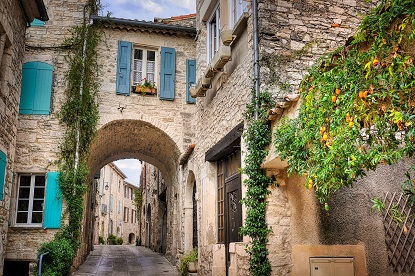
 Perched medieval village in the Gard offering stunning Cévennes panoramas. Features cobbled streets, 11th-12th century Romanesque houses, and a rich fig-growing heritage. This classified Village of Character boasts medieval gates, château ruins, and traditional stone architecture. |
| Bambouseraie de Prafrance (Anduze) |
|---|

Magnificent bamboo garden near Anduze showcasing over 1,000 varieties across 34 hectares. Founded in 1856, this botanical paradise features towering bamboo groves, Japanese gardens, tropical glasshouses, and peaceful lily ponds in the stunning Cévennes landscape. |
| Portes Castle |
|---|
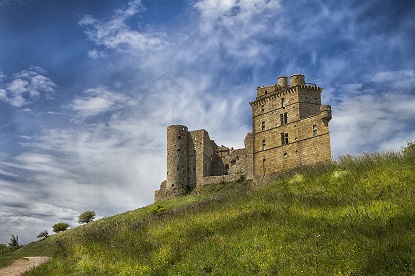
 Medieval fortress and Renaissance bastion perched dramatically in the Cévennes, famed for its unique ship's prow architecture earning it the nickname 'Vessel of the Cévennes'. Built from the 11th century to guard the ancient Regordane pilgrimage route, this monument offers spectacular valley views. |
Other attractions
Abîme de Bramabiau
 Alès
 Chartreuse de Valbonne Chartreuse de Valbonne
Sommières
|
Nîmes ※ |
|---|

 Nîmes was one of the most important cities in Roman Gaul and possess a rich heritage of ancient Roman monuments. The exceptionally well preserved Roman amphitheatre, sitting 25,000, is still used for spectacles. The Maison Carrée is the only complete Roman temple outside Italy. |
|
Pont du Gard ※ |
|---|

 Constructed across the Gard River, the Pont du Gard is the world's second best preserved ancient Roman aqueduct bridge (after Segovia). It was added to UNESCO's list of World Heritage Sites in 1985. |
| Uzès |
|---|
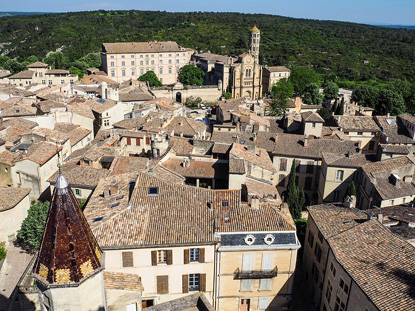
Uzès, a refined Languedoc town near Nîmes and Avignon, charms with creamy limestone facades, arcaded squares and cobbled lanes. Browse the lively Place aux Herbes market, explore the Duchy’s towers, and linger at café terraces beneath plane trees in serene, timeless elegance. |
| Villeneuve-lès-Avignon |
|---|
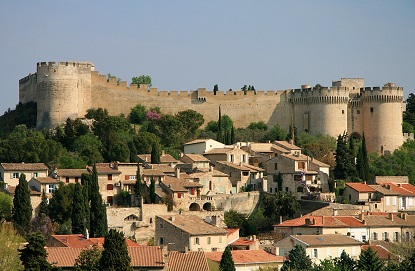
Medieval Villeneuve-lès-Avignon sits tranquilly across the Rhône from Avignon, offering stunning panoramic views from Fort Saint-André. This charming fortress town delights with cobbled streets, authentic Provençal atmosphere, and rich 14th-century heritage from papal times. |
|
Aigues-Mortes |
|---|

Aigues-Mortes is a medieval fortified town in the Camargue Regional Nature Park. It is flanked by bright red salt evaporation ponds. |
|
Camargue Regional Park |
|---|

The Camargue Regional Nature Park offers visitors a unique wetland environment with exceptional biodiversity and stunning landscapes. Established in 1970, this protected area features salt marshes, ponds, lagoons and beaches where visitors can observe remarkable wildlife, including pink flamingos, Camargue bulls and the famous white horses that roam freely. The park boasts a rich history dating back to prehistoric times, with Roman influences and medieval development through abbeys that drained the marshes. Visitors can explore the park through various activities such as 4x4 safaris, horseback riding, cycling along the 20km sea dyke, or walking the landscaped paths of the Pont de Gau ornithological park to witness over 237 bird species in their natural habitat. The park also preserves the authentic cultural heritage of the region, including traditional bull and horse breeding, whilst balancing human development with nature conservation. |
Département du Hérault
|
Montpellier |
|---|

Capital and largest city of the Languedoc-Roussillon, Montpellier is a modern university city and the fastest growing city in France. Montpellier is renowned for its neoclassical architecture, its museums and festivals, and the country mansions (or "follies") built by wealthy merchants in the 18th century. |
| Sète |
|---|
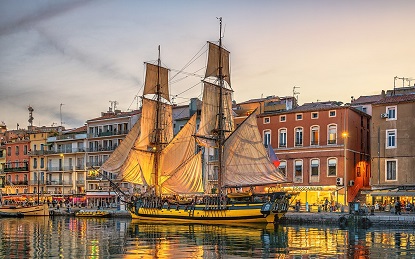
Sète, the “Venice of Languedoc,” charms with canals, a bustling fishing port, and sweeping views from Mont Saint-Clair. Wander pastel quays, savour fresh seafood, and relax on long sandy beaches along the lido. A vibrant arts scene and nautical jousts enliven this coastal town. |
Other attractions
Clamouse Cave
Montferrand Castle (ruins)
 Pic Saint-Loup
Département de l'Aude
| Gouffre de Cabrespine |
|---|
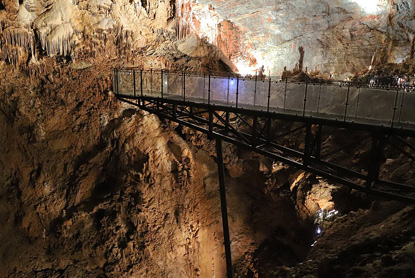
One of Europe's ten most spectacular caverns, this giant chasm near Carcassonne plunges 250 metres deep. Marvel at stunning crystallisations from secure viewing balconies and brave the thrilling glass footbridge suspended 200m above the void. A magical underground world with constant 14°C temperatures year-round. |
| Gorges de Galamus |
|---|
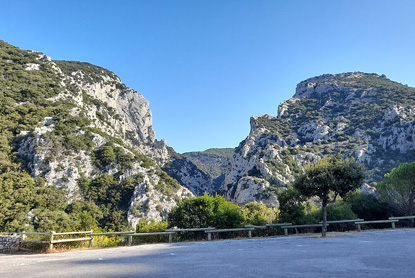
Spectacular limestone gorge carved by the River Agly between Aude and Pyrénées-Orientales departments. The dramatic canyon, hundreds of metres deep, features a historic hermitage built into the cliff face dating from 1395. Accessed via a thrilling narrow road hewn directly from the rock face. |
Other attractions
Chalabre
Cucugnan
Gruissan
Lagrasse Abbey
Marseillette
Pierre-Lys Gorge
Saint-Hilaire Abbey
Villelongue Abbey
| Narbonne |
|---|
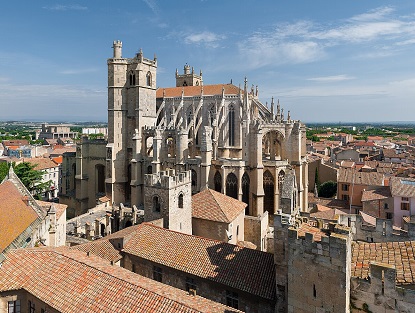
Historic Roman city founded 118 BCE, featuring Gothic cathedral, UNESCO Canal de la Robine, Archbishop's Palace and ancient remains. Southern France location near Mediterranean beaches with markets and rich heritage spanning 2000+ years. |
| Leucate |
|---|
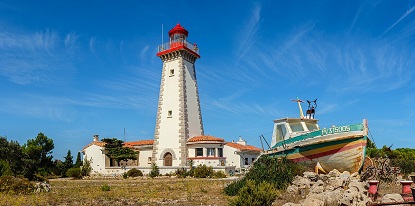
Mediterranean coastal resort in southern France's Aude region, renowned for world-class windsurfing at La Franqui beach. Features dramatic limestone cliffs, castle ruins, colourful village streets, exceptional seafood, and pristine sandy beaches flanked by lagoons and vineyards. |
| Fontfroide Abbey |
|---|
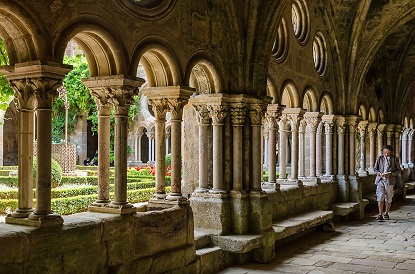
A former Cistercian abbey near Narbonne, founded in 1093. Features stunning Romanesque and Gothic architecture, peaceful cloisters, colourful stained glass, and beautiful rose gardens. Now privately owned, it hosts cultural events and produces wine. |
Département des Pyrénées-Orientales
| Serrabone Priory |
|---|
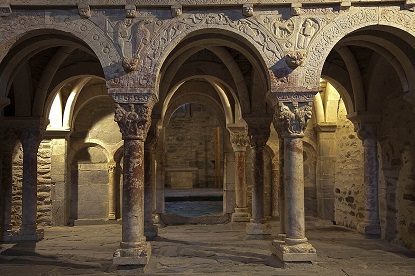
Secluded in the Aspres near Boule-d’Amont, Serrabone Priory is a Romanesque treasure famed for its 12th-century pink marble gallery and finely carved capitals, set against schist stone and holm oak slopes. A serene stop with views, cloister, and Mediterranean garden. |
| Perpignan |
|---|
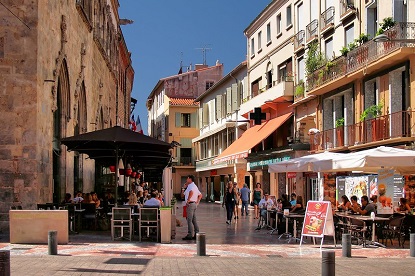
France's southernmost major city, Perpignan blends vibrant Catalan culture with French elegance. This sun-drenched medieval town near the Spanish border boasts Gothic architecture, the iconic Castillet fortress, and the Palace of the Kings of Majorca, all set between the Pyrenees and Mediterranean. |
Other attractions
Font-Romeu
Fort Lagarde de Prats-de-Mollo
Fort de Salses
| Collioure |
|---|
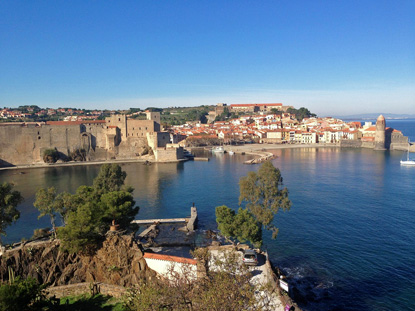
Collioure, a sunlit Catalan-tinged harbour on the Côte Vermeille, charms with pastel lanes, anchovy boats and the bell-towered Notre-Dame-des-Anges beside the sea. Overlooked by the Royal Castle and vine-striped hills, this Fauvist muse blends beaches, art and Mediterranean ease. |
| Port-Vendres |
|---|
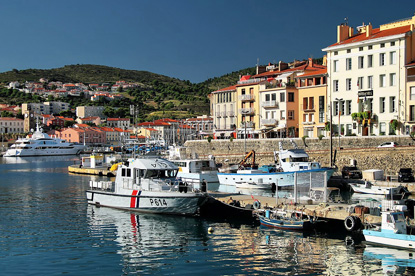
Harbour town on the Côte Vermeille, Port-Vendres blends Catalan character with working quays, seafood markets and terraced vineyards. Boats bustle beneath Vauban-era fortifications, while nearby coves like Paulilles and Cap Béar offer clear-water swims and coastal walks. |
| Banyuls-sur-Mer |
|---|
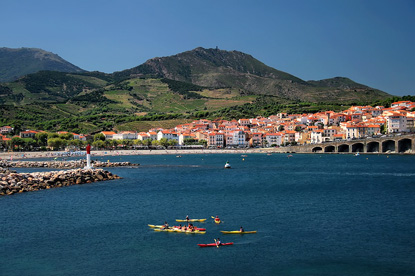
Banyuls-sur-Mer is a captivating seaside resort on France's Côte Vermeille, nestled between Mediterranean beaches and terraced vineyards producing world-renowned sweet wines. This picturesque town features traditional architecture, sculptures by native son Aristide Maillol, and exceptional marine biodiversity in its protected reserve. |
|


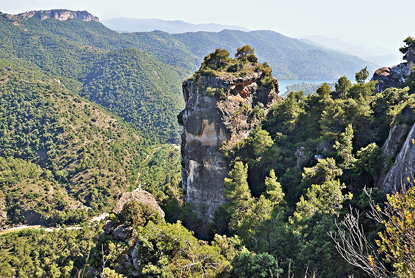

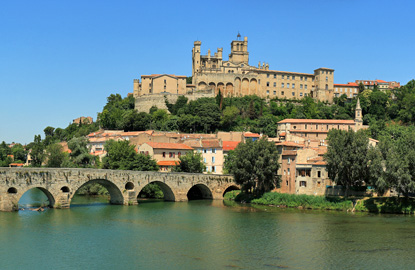
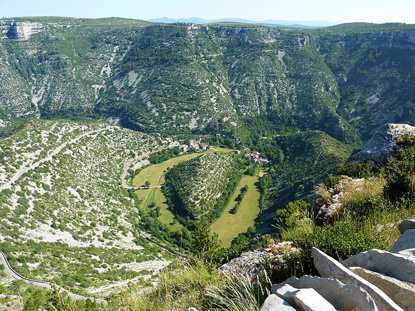
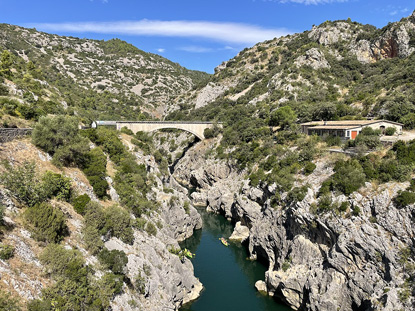

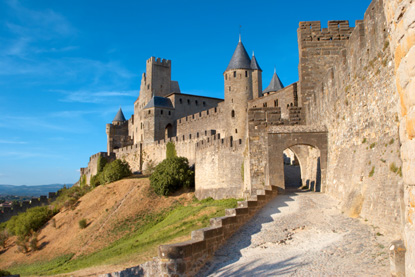
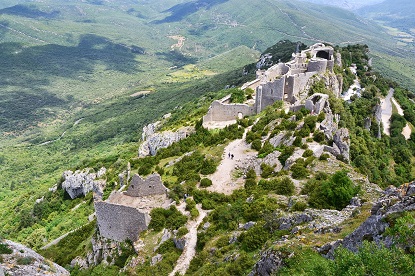
 Carcassonne is probably Europe's most famous fortified town. A stronghold of Occitan Cathars in the 13th century, the fortress was restored in 1853 by the Gothic Revival architect Viollet-le-Duc.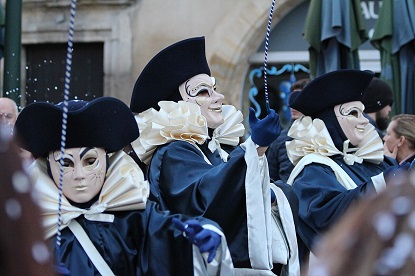
 : Local interest
 : Moderately interesting
 : Outstanding place
 : Must-see in the country
 : Top cities in Europe