


Introduction
Built in 1583 by Jean du Breil on the foundations of an ancient Gallo-Roman villa and enlarged during the 18th century, the Château de La Bourbansais has remained in the same family for over 20 generations and is classified as a Historic Monument. The estate features French-style gardens classified as Remarkable Gardens, whilst the zoo, established in 1965 by Régis de Lorgeril and Josette Barbezet, spans nearly 100 hectares and houses over 400 animals representing more than 60 species from around the world. The zoological park actively participates in European Endangered Species Programmes and offers educational experiences alongside entertainment such as falconry displays and traditional French hunting demonstrations with dogs. Visitors can explore the castle's Louis XIV and XV-period furnished interiors, stroll through the formal gardens inspired by Versailles' Potager du Roi, and observe exotic wildlife in naturalistic settings designed for both conservation and education.
Interesting Facts about La Bourbansais Castle
- La Bourbansais combines a 16th–18th-century château, formal French gardens and a conservation-minded zoo in one estate between Rennes and Saint-Malo.
- The château was built on the site of a former Gallo-Roman villa and later refreshed in the 18th century, earning protection as a Historic Monument.
- The zoo cares for around 400 animals across roughly 80 species in nearly 100 hectares, with more than 50 viewpoints designed for close observation.
- Conservation is central to the park’s mission, with participation in multiple European breeding programmes for endangered species.
- Signature residents range from Siberian tigers and giraffes to hyacinth macaws, giant anteaters, gelada baboons and European mink.
- A 4,000 m² lemur woodland walk lets visitors observe three Malagasy species in a naturalistic setting.
- Daily presentations include an acclaimed birds-of-prey display showcasing raptors’ hunting techniques.
- The “Fidèle meute” hound demonstration highlights a historic Breton hunting tradition with French tricolour hounds.
- The château interiors feature notable 18th-century décor, including the Blue Room with exceptional woodwork by cabinetmaker Mancel.
- Owned by the de Lorgeril family since 1583, the estate’s modern revival began when the mid-20th-century owners introduced a small menagerie that grew into today’s zoo.
History
Castle Origins and Early Construction
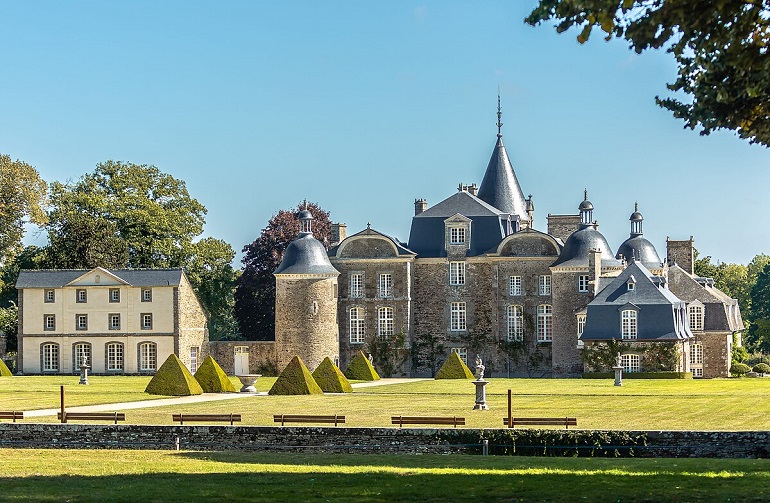
The magnificent Château de La Bourbansais was constructed in 1583 on the foundations of an ancient Gallo-Roman villa, establishing it as one of Brittany's most significant Renaissance estates. Built by Sir Jean du Breil, the castle was strategically positioned between Rennes and Saint-Malo and served as a residence for Members of Parliament of Brittany. The 16th-century structure was designed with remarkable architectural harmony, featuring four distinct façades that overlook the main courtyard, French gardens, carousel garden, and grand perspective. Since its initial construction, the castle has remained within the same family for over four centuries, representing an extraordinary example of continuous aristocratic ownership in France.
Architectural Evolution and Family Legacy
During the 18th century, the château underwent significant enlargement and refinement, with the interior decoration and furnishings dating from this classical period. The estate's architectural significance was officially recognised in 1959 when it was classified as a Historic Monument. Notable features include the exceptional Blue Room with its remarkable woodwork crafted by cabinetmaker Mancel, six magnificent Aubusson tapestries adorning the reception rooms, and French-style gardens inspired by the renowned landscape designer Le Nôtre. Count Olivier de Lorgeril, the current owner, represents the 19th generation of his family to manage the estate and maintains connections to the historic Compagnie des Indes, which contributed significantly to the family's maritime trading wealth. The castle's various owners throughout history included members of parliament, officers of the Royal Navy, and members of the prestigious East India Company.
Transformation into a Modern Zoological Park
The estate's transformation from a private residence to a major tourist attraction began fifty years ago when Régis de Lorgeril and his wife Josette Barbezet, grandparents of the current owner, conceived the innovative idea of converting part of the gardens into a zoological park to revitalise the family estate. What began as a modest collection of exotic animals has evolved into one of France's most distinctive zoos, now housing more than 400 animals representing over 60 species from around the world across nearly 100 hectares. The modern La Bourbansais actively participates in European Livestock Programs (EEPs), contributing to scientific conservation projects for endangered species protection, and welcomes approximately 140,000 visitors annually. The unique combination of Renaissance architecture and wildlife conservation has created an innovative model that demonstrates how historic monuments can remain vibrant and relevant, featuring distinctive shows such as "Around the World in 80 Birds" and "Dogs and Men" that have been running for over 30 years.
Description
The Château
The castle's imposing façade commands attention from the moment visitors pass through wrought-iron gates flanked by carved stone lions. Built from warm golden limestone, the main structure rises three storeys beneath a slate roof punctuated by ornate dormer windows and cylindrical towers capped with conical spires. Gothic revival elements blend seamlessly with Renaissance detailing—pointed arch windows frame views of manicured lawns, while elaborate stone tracery adorns the central entrance portal.
The western wing showcases the château's most photogenic angle, where ivy-clad walls contrast beautifully with cream-coloured shutters and flower-filled window boxes. A grand stone staircase sweeps dramatically to the main entrance, its balustrade carved with heraldic shields and mythical creatures. Tall French doors open onto a stone terrace furnished with wrought-iron benches and trailing wisteria, offering panoramic views across formal parterres to the distant spires of Pleugueneuc village.
Surrounding gardens unfold in carefully orchestrated layers. The formal parterre immediately before the château features geometric box-hedge patterns filled with seasonal blooms—spring tulips give way to summer lavender, then autumn chrysanthemums in shades of burgundy and gold. A central fountain crowned with bronze cherubs creates gentle water music, while gravel pathways radiate outward like spokes of an elegant wheel.
Beyond the parterre, romantic English-style gardens meander through mature parkland where ancient oaks, copper beeches and towering cedars provide dappled shade. Hidden among the trees, a rose garden bursts with over fifty varieties, from climbing 'Madame Alfred Carrière' scaling pergolas to bush roses in every shade from snow-white to deepest crimson. Stone benches tucked into leafy alcoves offer intimate spots for contemplation, while a glass conservatory houses tender specimens including camellias, jasmine and exotic orchids.
Interior Splendour
Cross the threshold into the entrance hall and polished marble floors reflect light streaming through stained-glass windows depicting scenes of medieval courtly life. A sweeping oak staircase, its banister carved with intertwining vines and hunting scenes, curves upward beneath a coffered ceiling painted in soft blue and gold.
The grand salon epitomises French château living, with silk-covered walls in pale green complementing gilt-framed portraits of former châtelains. Crystal chandeliers cast warm light over Aubusson tapestries and Louis XVI furniture upholstered in cream damask. A massive marble fireplace dominates one wall, its mantelpiece adorned with Sèvres porcelain and bronze candelabra. Tall windows draped in rose-coloured silk offer garden views, while Persian rugs warm the parquet floors.
Adjacent, the library houses thousands of leather-bound volumes in floor-to-ceiling walnut bookcases. Deep armchairs covered in forest-green velvet invite leisurely reading, while a partners' desk positioned near windows provides natural light for correspondence. Glass-fronted cabinets display rare manuscripts, antique globes and curiosities collected by generations of château owners.
The dining room showcases French culinary tradition with a mahogany table that seats twenty beneath a Baccarat crystal chandelier. Delft blue and white porcelain fills a massive dresser, while oil paintings of hunting scenes and still-life compositions create an atmosphere of refined abundance. Service corridors allow glimpses into the modernised château kitchen, where copper pots gleam alongside contemporary equipment.
Upstairs, the master bedroom retains its period charm with a four-poster bed draped in rose-pink silk and an en-suite bathroom featuring original marble fixtures. Guest chambers showcase different decorative periods, from Empire mahogany furniture to delicate Directoire pieces, each room appointed with antique textiles and period artwork.
The Zoo: A Living Safari
Beyond the château's manicured lawns, woodland paths lead into the zoological realm, where over 500 animals from six continents inhabit thoughtfully designed habitats that prioritise both animal welfare and visitor engagement.
The African Savannah sprawls across several hectares, replicating the grasslands of Kenya and Tanzania. Here, Rothschild's giraffes move gracefully alongside herds of Grant's zebra, Thomson's gazelle and oryx. A raised wooden walkway allows eye-level encounters with the giraffes, whose gentle demeanour and curious nature delight visitors of all ages. Nearby, African elephants splash in a specially designed pool complex, while spacious paddocks house various antelope species including impala, springbok and the striking sable antelope with their curved black horns.
The Big Cat Trail houses some of Europe's most impressive predators in state-of-the-art enclosures. White Bengal tigers reign supreme in a habitat featuring swimming pools, rocky outcrops and dense vegetation for privacy. Glass viewing panels allow safe observation as these magnificent cats patrol their territory or cool off in deep pools. Adjacent compounds house Amur leopards, one of the world's rarest big cats, and African lions whose powerful roars echo across the park during feeding times.
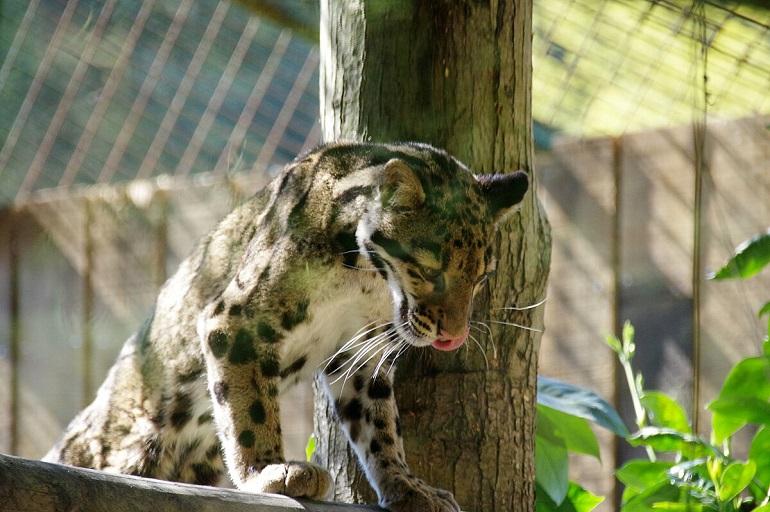
A heated Tropical House transports visitors to equatorial rainforests through soaring glass ceilings and carefully controlled humidity. Sumatran orangutans swing through elaborate rope networks suspended above visitors' heads, while ring-tailed lemurs and black-and-white ruffed lemurs inhabit Madagascar-inspired settings complete with baobab-like structures. Colourful macaws and toucans fly freely in the space, their brilliant plumage flashing through artificial mist systems that replicate jungle conditions.
The Wetlands Complex centres around a large lake where Chilean flamingos create living pink carpets alongside scarlet ibis and sacred ibis. Wooden hides positioned around the lake's perimeter offer excellent photography opportunities, while grey crowned cranes perform their elaborate courtship dances on nearby grasslands. Hidden speakers broadcast authentic African and South American soundscapes, enhancing the immersive experience.
Primate Island features purpose-built structures for various monkey species. Japanese macaques enjoy hot springs during winter months, while squirrel monkeys inhabit a walk-through enclosure where visitors share pathways with these agile, inquisitive creatures. Capuchin monkeys demonstrate their intelligence through enrichment activities involving puzzle feeders and climbing challenges.
The Discovery Farm allows hands-on encounters with domestic and farm animals. Children bottle-feed pygmy goats, brush Shetland ponies, and collect warm eggs from heritage chicken breeds. Educational talks throughout the day explain sustainable farming practices and the importance of traditional livestock breeds.
Experiences and Amenities
Daily keeper talks provide insights into animal behaviour and conservation efforts, while scheduled feeding demonstrations reveal the dietary needs of different species. The popular falconry display showcases birds of prey in flight, with Harris hawks, peregrine falcons and European eagle owls demonstrating their hunting prowess mere metres from spectators.
For dining, the Orangerie Restaurant occupies a restored Victorian glasshouse where tropical plants create an atmospheric backdrop for meals featuring local Breton ingredients. The menu celebrates regional specialities including Cancale oysters, Saint-Malo sea bass and artisanal cheeses from nearby farms. A terrace café offers lighter fare—galettes, crêpes and locally sourced salads—with outdoor seating overlooking the flamingo lake.
The gift shop showcases Breton artisans alongside wildlife-themed merchandise, featuring hand-thrown pottery, organic honey from château beehives, and beautifully illustrated children's books about animals and châteaux life. An adventure playground keeps young visitors entertained with rope bridges, climbing frames and a miniature zip-line, all safely positioned within view of the café terrace.
La Bourbansais achieves the remarkable feat of preserving authentic château grandeur while creating engaging wildlife experiences, ensuring every visitor—whether drawn by architectural heritage or animal encounters—departs with lasting memories of this unique Breton treasure.
Getting There
By train The nearest major station is Rennes, served by high-speed TGV services from Paris and other French cities. From Rennes, local TER trains run to Combourg or Dol-de-Bretagne; from either stop, a short taxi ride (about 15 km) brings you directly to La Bourbansais Castle & Zoo.
By coach or bus Regional BreizhGo buses link Rennes and Saint-Malo along the D137 corridor: take line 580 from Rennes or line 581 from Saint-Malo and alight at the “La Bourbansais” stop outside Pleugueneuc, a brief walk from the entrance.
By car La Bourbansais lies just off the D137 dual carriageway that connects Rennes (30 min south) and Saint-Malo (30 min north); exit at junction C10 (Pleugueneuc/Plesder/Evran), follow signs onto the D637, then continue to the château’s clearly signposted, free car park.