


| Contents |
|---|
Introduction
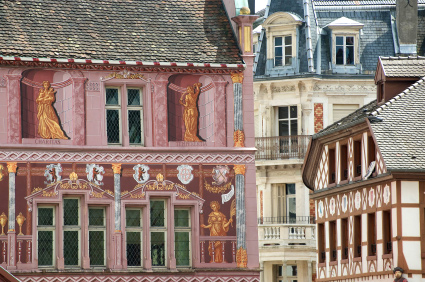
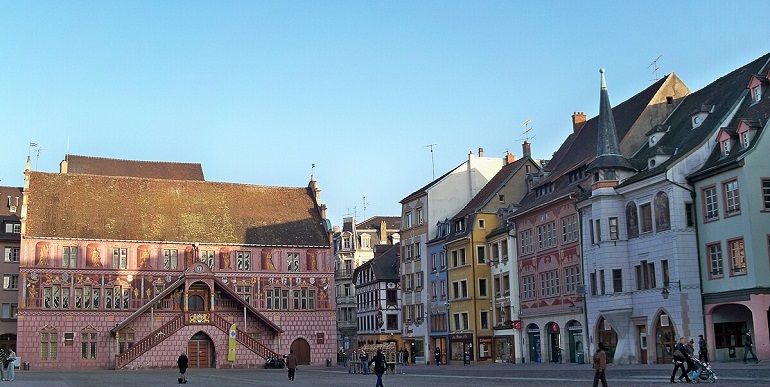
Mulhouse (Mülhausen in German, Milhüsa in Alsatian ; pop. 105,000, with suburbs 250,000) is is located just 18 km from the German border and 30 km from the Swiss border (Basel). Despite its reputation as an industrial centre, Mulhouse boasts a rich cultural heritage with a beautifully preserved historic centre featuring colourful Renaissance-style buildings, painted façades, and the striking Place de la Réunion dominated by the ornate 16th-century Hôtel de Ville. The city has earned recognition as a "City of Art and History" and is renowned internationally for its world-class museums, including the Cité de l'Automobile (the world's largest car museum) and the Cité du Train, which celebrate France's contributions to transportation innovation. Mulhouse's unique character is further defined by its vibrant street art scene, multicultural atmosphere reflecting its complex history between French, German, and Swiss influences.
Mulhouse proclaimed its independence from the Holy Roman Empire in 1347, founding the Republic of Mülhausen, then joined the Swiss Confederation as an associate in 1515. It is not until 1798 that Mulhouse citizens voted to be reunified with the young French Republic. Mulhouse was one of the first cities in Central Europe to become industrialised. In the early 1800's, it was nicknamed the "French Manchester".
Well known people from Mulhouse include the mathematician and physicist Johann Heinrich Lambert, captain Alfred Dreyfus (of the Dreyfus affair, made famous by Emile Zola's open letter J'accuse !), and Alfred Werner who won the Nobel Prize for Chemistry in 1913. Mulhouse is also the seat of the European Physical Society.
Interesting Facts about Mulhouse
- Mulhouse sits at the meeting point of France, Germany and Switzerland, giving it a distinctly cross-border, Alsatian character.
- Mulhouse is curtailed to the north and west by the Parc Naturel Régional des Ballons des Vosges, one of France's largest nature reserve.
- The city’s name means “mill house,” a nod to its origins around watermills and the mill-wheel that still appears in its coat of arms.
- Once a free imperial city, Mulhouse allied with the Swiss Confederation in 1515 and only voted to join France in 1798.
- Nicknamed the “French Manchester,” Mulhouse boomed on textiles, engineering and chemicals during the Industrial Revolution.
- Mulhouse is home to the Cité de l’Automobile, housing one of the world’s greatest car collections, including a famed Bugatti set.
- The Cité du Train in Mulhouse is among the largest railway museums anywhere, charting two centuries of French rail history.
- Saint-Étienne Protestant Church boasts the tallest Protestant steeple in France and striking medieval stained glass.
- The flamboyantly painted Renaissance town hall bears a copy of the Klapperstein, once hung on the necks of gossips as punishment.
- Mulhouse’s manufacturers pioneered model workers’ housing in the 19th century, influencing European garden-city ideas.
- The city’s vibrant street art trail reflects a creative spirit born of its industrial past and multicultural present.
History
The first written records of Mulhouse date from 803 as Mulinhuson. Around 1223, Mülhausen (as it was then known) obtains city rights, and in 1261 its citizens revolt against the authority of the bishop of Strasbourg. Mülhausen seeks the protection of Rudolph of Habsburg, who would become King of Germany and Duke of Austria, and becomes a Free Imperial City in 1308.
In 1340, 1350 and 1354, the craftsmen rise up against the local aristocracy. In 1354, Mülhausen joins the Décapole, an association of ten Free Imperial Cities in Alsace. Between 1445 and 1449, the burghers expel the nobles and patricians from the city. Supported by the Habsburgs, the nobles returned to attack the city, prompting Mülhausen to seal an alliance with the Swiss cities of Bern and Solothurn in 1466. In 1515, the alliance is extended to the whole of the Swiss confederation. The Protestant Reform begins in 1523 and is completed six years later.
In 1648, the Peace of Westphalia forces Germany to cede Alsace to France, but Mülhausen remains staunchly independent. In 1746, the first textile mill opens, leading the way to the industrial revolution. In 1798, the city votes the unification act with France. At the time, its population did not exceed 6,000, but it would grow exponentially in the 19th century, to 30,000 in 1850, 63,000 en 1880 and 90,000 in 1900.
It is not until 1848 that the Francisised name 'Mulhouse' was officially adopted instead of the German 'Mülhausen'. The new appellation was short lived since in 1871 the city reverts to German control following the defeat of France against Prussia. The locals had to wait until 1919 for Mülhausen to become Mulhouse again.
Main Attractions
Place de la Réunion (Main Square)
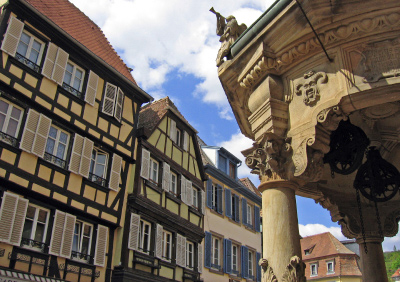
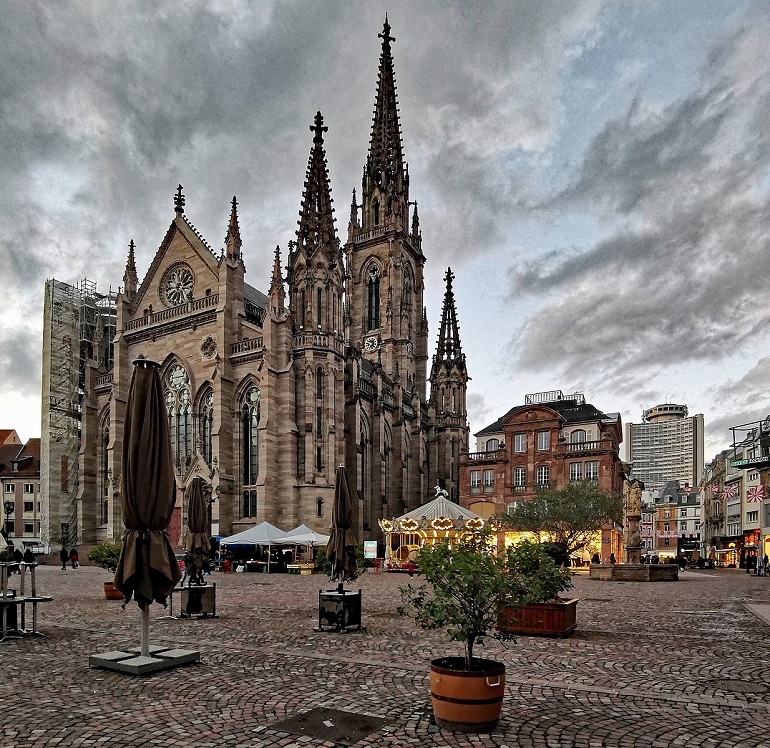
The historical centre is dominated by Place de la Réunion, a vast and picturesque central square that serves as the city's main gathering spot. This historic square is framed by splendidly preserved buildings, showcasing a rich tapestry of architectural styles. The most prominent of these are the striking Temple Saint-Étienne, one of France's few major Protestant church, and the magnificent Renaissance-style former city hall, the Hôtel de Ville (known in Alsatian as the Rothüs). The city hall was built in 1553 and is famous for its trompe l'oeil paintings depicting allegories representing the vices and virtues.
Temple Saint-Étienne (Mulhouse Cathedral)
Dominating the Place de la Réunion is the magnificent Temple Saint-Étienne, an imposing church often referred to as the city's cathedral due to its grand scale. As the tallest Protestant church in France, its soaring spire is a key feature of the Mulhouse skyline. Built in the Gothic Revival style, the temple is as impressive inside as it is out, with stunning stained-glass windows that date back to the 14th century, which were preserved from the previous church that stood on this site. It functions as a vibrant place of worship and frequently hosts concerts and cultural events, welcoming all visitors to admire its architectural splendour.
City Walls, Towers & Gates
The Nessel Tower and Devil's Tower are the only remnants of the medieval palace of the Bishops of Strasbourg, destroyed by the burghers in 1262. They were integrated to the city walls. Nessel Tower became the fifth gate of the city under the name of Nesseltor. It is located on boulevard Charles-Stoessel near the intersection of rue Gay-Lussac.
Another surviving part of the city walls is the so-called Bollwerk ("bastion") in the Nordfeld neighbourhood. Its name changed times and again across the centuries, first called the Neuensteinerturm (after a local family) in the late 14th century, then the Hugh Walch Tower around 1400, the Donkey Tower around 1700, the Pig Tower (being next to a slaughterhouse) in 1850, before eventually settling for its current name in 1900.
Marché du Canal Couvert
To experience the authentic flavours of the Alsace region, a visit to the Marché du Canal Couvert is essential. Housed in a large, airy structure, this bustling covered market is a feast for the senses. Vendors offer an abundance of local produce, including regional wines, artisanal cheeses, and cured meats, alongside fresh fruits, vegetables, and baked goods. It’s more than just a food market; you can also find stalls selling clothing and other goods. The lively atmosphere, filled with the chatter of locals and the enticing aromas of Alsatian specialities, makes it a perfect place to sample local life and find delicious souvenirs.
Square de la Bourse
In the Nouveau Quartier ('New Quarter'), dating from the 19th century, is the Square de la Bourse (Stock Exchange Square) and the building of the Société Industrielle de Mulhouse.
Parks & Zoo
Parc Zoologique et Botanique de Mulhouse
Mulhouse's Zoological and Botanical Park spreads on 25-hectare (62-acre) and keeps more than 1200 animals representing nearly 200 species, including 94 species that are rare or endangered. Founded in 1868, it is France's oldest zoo outside Paris. The botanical gardens contain 400 kinds of iris in spring and 100 cultivars (varieties) of dahlias in summer. Its collection of rare and endangered plants that includes Catharanthus from Madagascar (7 taxa), Canary Islands (22 taxa), and Madeira (11 taxa).
Parc Steinbach
Located centrally, Parc Steinbach is a charming urban park that provides a peaceful green oasis amidst the city's streets. This welcoming space is ideal for a relaxing break, with ample lawns for picnics and benches set beneath shady trees. The park is particularly popular with families, thanks to its well-equipped playground where children can play. Being open 24 hours a day, it offers a tranquil retreat at any time, whether for a morning walk or a quiet evening moment away from the bustle of the city centre.
Parc Salvator
Parc Salvator is another of Mulhouse's lovely green spaces, known for its pleasant atmosphere and variety of mature trees that provide welcome shade during the warmer months. This city park features beautiful garden areas and open grassy spaces, making it another excellent choice for picnics or a quiet walk. During the summer, the park comes alive with a programme of events, including open-air concerts and film screenings, adding to its appeal as a community hub. With a playground for children and a dedicated dog park, it caters to all visitors looking for a slice of nature within the city.
Top Museums
Cité de l'Automobile
The Cité de l'Automobile, also known as the Schlumpf Collection, is the largest and most prestigious car museum in the world, making it a cornerstone of Mulhouse's cultural landscape. The museum's origins are as fascinating as its collection. It began with the secret passion of two textile industrialists, the brothers Hans and Fritz Schlumpf. Starting in the early 1960s, Fritz Schlumpf began covertly acquiring an enormous number of classic and luxury cars. He housed this growing collection in a former woollen mill, meticulously restoring the vehicles with a dedicated team, all while keeping the project hidden from the public eye.
The sheer scale of the museum is breathtaking, with over 500 exceptional vehicles from nearly 100 different manufacturers, all housed within a 25,000 square metre exhibition space. The collection is particularly famous for housing the world's most significant collection of Bugatti automobiles, with over 120 models, including two of the six incredibly rare Bugatti Royales ever made. The museum is divided into several areas, including a chronological "Motorcar Experience" with 243 iconic cars, a "Motor Racing" section with historic Grand Prix cars, and a "Motorcar Masterpieces" area showcasing the most luxurious and beautifully designed vehicles in automotive history.

Cité du Train - Patrimoine SNCF
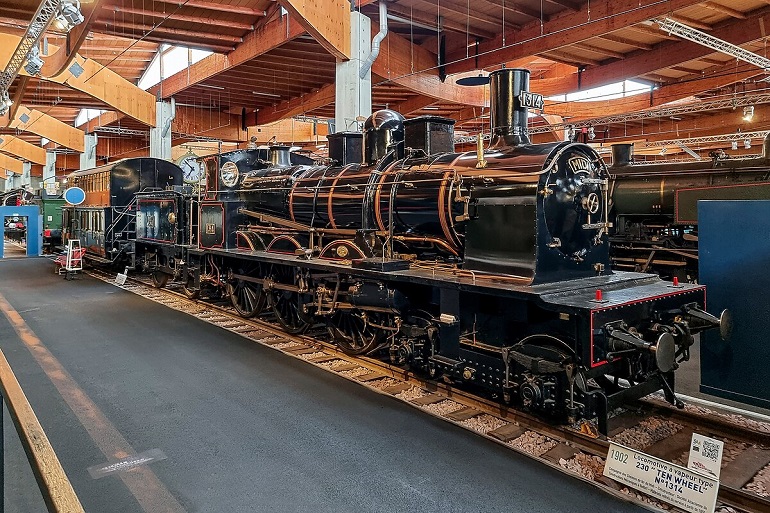
As the largest railway museum in Europe, the Cité du Train offers an unparalleled journey through the history of French railways. The museum's vast collection appeals to both avid enthusiasts and casual visitors, showcasing the evolution of train travel from its earliest days to the present.
The exhibits are thoughtfully arranged into distinct thematic areas. "The Platforms of History" presents a stunning lineup of iconic locomotives and carriages, capturing the golden age of rail travel. In contrast, "The Railway Adventure" uses modern scenography, including sound and light shows, to create an immersive experience that brings the story of the railways to life. Visitors are invited to climb aboard many of the historic trains, offering a tangible connection to the past. Beyond its permanent collection, the museum hosts a dynamic programme of special exhibitions, live performances, and even interactive activities like escape games.
Electropolis Museum
This museum is dedicated to the fascinating story of electricity and its transformative impact on society. The Electropolis Museum guides visitors through centuries of scientific discovery and technological innovation, from the earliest experiments to the complex electrical world of today.
At the heart of the museum is its most impressive artefact: the colossal Sulzer-BBC alternator. This steam-powered generator, built in 1901, once powered a local textile mill and stands as a monumental testament to Mulhouse's industrial might. The machine is demonstrated daily in a spectacular presentation of light and sound. The museum's collection boasts over 12,000 objects, with around 1,000 on display at any time, ranging from early batteries and scientific instruments to vintage domestic appliances. A dedicated space also explores the intersection of art and electricity, showcasing how artists have engaged with this powerful force.
Musée des Beaux-Arts (Fine Arts Museum)
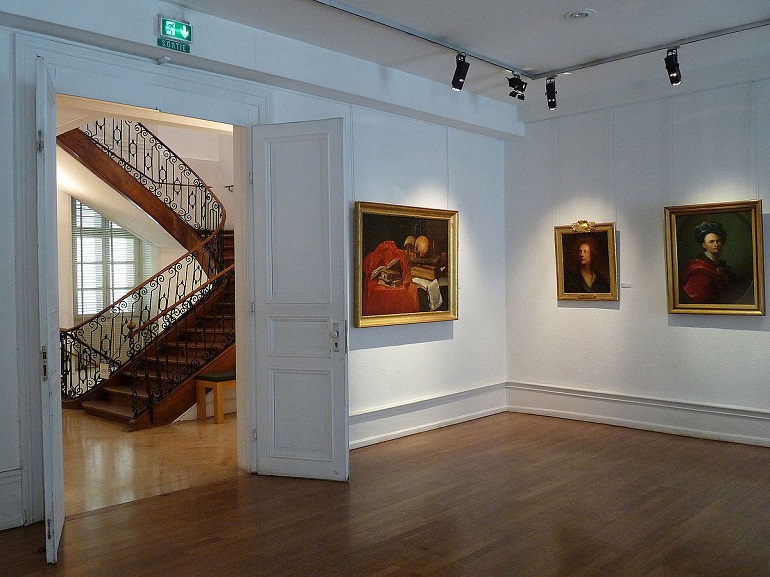
Housed in the Villa Steinbach, an elegant 18th-century mansion, the Musée des Beaux-Arts is a gem of a museum focused on European art. Its collections span from the medieval period to the present day, with a particular emphasis on 19th-century French art. The museum was founded on the collections of Mulhouse's prominent industrialist families and continues to pursue its goals of promoting art history, celebrating French painting, and supporting local artists.
The galleries feature works by renowned artists such as Pieter Brueghel the Younger, William-Adolphe Bouguereau, and the celebrated Mulhouse native, Jean-Jacques Henner. The intimate and refined atmosphere of the villa provides a charming backdrop for appreciating the artworks.
Musée Historique (Historical Museum)
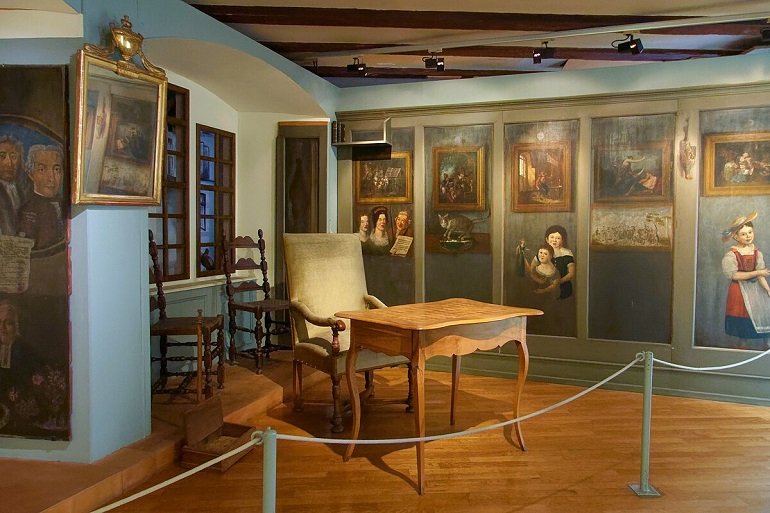
Located in the magnificent former City Hall, a masterpiece of 16th-century Rhineland Renaissance architecture, the Musée Historique delves into the rich and unique history of Mulhouse. For centuries, Mulhouse was an independent republic allied with the Swiss cantons before it voted to become part of France in 1798.
The museum's exhibits trace the city's journey from its earliest archaeological origins to the modern era, covering its political, social, and cultural development. Visitors can explore collections of traditional Alsatian clothing, view historical documents, and wander through period rooms that reconstruct the lifestyle of past centuries. The building itself is a key exhibit; its lavishly painted façade depicts allegorical figures of justice and virtue, reflecting the city's proud history of self-governance.
Musée de l'Impression sur Étoffes (Museum of Printed Textiles)
This museum celebrates Mulhouse's legacy as a world leader in textile printing. It houses one of the most comprehensive collections of printed fabrics in the world, containing millions of patterns that testify to the city's industrial prowess and artistic creativity.
The exhibitions chart the history of textile printing from the 18th century onwards, showcasing the evolution of decorative styles, techniques, and machinery. The collection includes an astonishing variety of textiles, from traditional Alsatian designs to intricate patterns from across the globe. A particularly valuable part of the collection is the archive of original sample books from local textile firms, which remain an important resource for designers and fashion historians today.
Musée du Papier Peint (Wallpaper Museum)
Situated in the nearby town of Rixheim, the Musée du Papier Peint is dedicated to the decorative art of wallpaper. Housed in a historic 18th-century building, the museum's collection covers the entire history of wallpaper, from its origins to contemporary creations.
A highlight of the museum is its collection of exquisite panoramic wallpapers produced by the local Zuber company, which continues to operate in Rixheim. These large-scale, narrative scenes, often depicting idyllic landscapes or historical events, were the height of fashion in the 19th century. One famous Zuber panoramic, "Views of North America," has graced the walls of the White House since 1961. Please be aware that the museum is undergoing extensive restoration and is scheduled to remain closed to the public until the end of 2025.
Écomusée d'Alsace
Located a short distance from Mulhouse in Ungersheim, the Écomusée d'Alsace is the largest open-air museum in France. It functions as a living history museum, reconstructing an entire Alsatian village from the turn of the 20th century.
The museum features over 70 authentic historic buildings—including farmhouses, a school, a chapel, and workshops—which were carefully dismantled from their original locations across Alsace and rebuilt on the site. Artisans in period dress demonstrate traditional skills, and daily activities like horse-drawn carriage rides and workshops bring the village to life. The museum provides an immersive and engaging look at the rural customs and daily life of Alsace between 1850 and 1950.

Local Cuisine
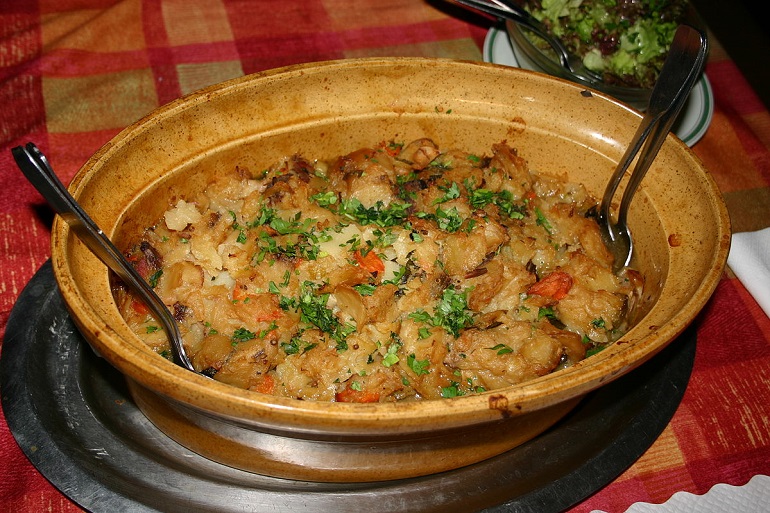
Among its specialities, choucroute garnie stands out as a comforting medley of sauerkraut slow-cooked with various cuts of pork and sausages. Another local favourite is baeckeoffe, a rustic casserole of marinated meats, potatoes and onions, traditionally prepared in a clay pot. Mulhouse is also known for its delicious flammekueche—a thin, crisp flatbread topped with crème fraîche, onions and lardons—while for those with a sweet tooth, the delicate kouglof brioche and pain d’épices capture the essence of Alsace’s complex flavours.
Getting There
By train Mulhouse sits astride high-speed lines linking Paris, Strasbourg, Basel and Zurich, so direct TGV-Lyria or ICE services whisk you to Gare de Mulhouse-Ville in as little as three hours from the French capital and under half an hour from Basel, with seamless regional TER connections fanning out across Alsace.
By coach Long-distance coaches operated by pan-European networks call at the Mulhouse bus station beside the railway hub, offering an economical alternative from major French and German cities; the frequent services from Paris and Lyon prove especially convenient for travellers who favour overnight journeys or require generous luggage allowances.
By car Motorists can reach Mulhouse via the north–south A36 (La Comtoise) motorway, which meets the A35 Rhine corridor and the Swiss A3 just beyond the border, making the city an easy detour off the main Rhône–Rhine and Burgundy–Alps routes; ample parking at edge-of-centre park-and-ride sites helps drivers avoid inner-city congestion.
| Travel destinations in Alsace | ||||||||||||||
|---|---|---|---|---|---|---|---|---|---|---|---|---|---|---|
|
|
|
|
| ||||||||||
|
|
|
|
| ||||||||||


