


| Contents |
|---|
Introduction
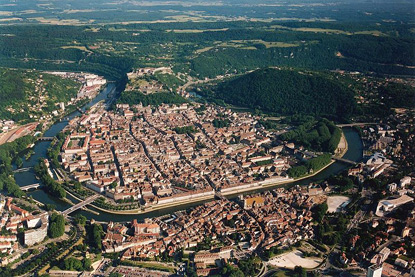
The strategic position of Besançon (pop. 120,000; urban 285,000) in natural horseshoe bend of the River Doubs made it an important settlement since the Roman era. Its magnificent 17th-century citadel, designed by renowned military architect Vauban, is one of the largest in Europe.
Besaçon was the first 'green city' in France. The city is recognised as a UNESCO World Heritage Site for its exceptional fortifications and holds the distinction of being the birthplace of Victor Hugo and the Lumière brothers, whilst its historic centre, known as "La Boucle," contains well-preserved Renaissance architecture, Roman remains including eight Corinthian columns from an ancient theatre, and numerous museums including the Museum of Fine Arts and Archaeology, one of France's oldest. Besançon has a strong watchmaking heritage that was recognised by UNESCO as an intangible cultural heritage in 2020, and today functions as a vibrant university city that combines its rich cultural legacy with modern student life, offering visitors both architectural treasures and access to the surrounding Jura mountain landscapes.
Interesting Facts about Besançon
- Besançon sits within a dramatic horseshoe meander of the Doubs River, giving its Old Town the nickname “la Boucle.”
- The city’s mighty hilltop citadel was engineered by Vauban and is part of a UNESCO World Heritage ensemble of fortifications.
- Long famed as France’s watchmaking capital, Besançon’s timekeeping savoir-faire is recognised on UNESCO’s Intangible Cultural Heritage list.
- Victor Hugo, one of France’s greatest writers, was born in Besançon in 1802.
- The Musée des Beaux-Arts et d’Archéologie in Besançon is often cited as the oldest public museum in France, with origins in the late 17th century.
- Besançon’s Saint-Jean Cathedral houses an intricate astronomical clock with tens of thousands of moving parts.
- The Roman triumphal arch known as the Porte Noire stands as a striking relic of the city’s ancient past.
- With abundant parks and riverside greenery, Besançon is frequently ranked among the greenest cities in France.
- The city developed a renowned school of microtechnology, evolving from its Watch Valley heritage into cutting-edge precision industries.
- The elegant Quai Vauban, lined with classical façades, offers one of the most charming riverfront promenades in eastern France.
History
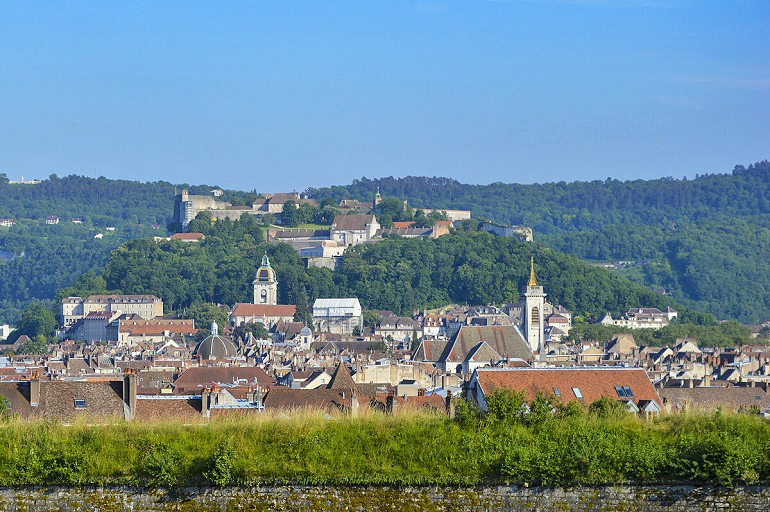
Besançon's history stretches back over two millennia, beginning with Bronze Age Gallic settlements around 1500 BCE in the strategic river loop of the Doubs. The city first gained prominence as Vesontio, capital of the Sequani Gauls, strategically positioned where the Alps rise abruptly to form a natural barrier. In 58 BCE, Julius Caesar conquered the town during his Gallic Wars, recognising its exceptional defensive potential within the horseshoe meander of the river. Under Roman rule, Vesontio flourished as a major trade junction in Gaul, evidenced by surviving archaeological treasures including the Porte Noire triumphal arch built under Marcus Aurelius in the 2nd century, eight Corinthian columns in Square Castan, remnants of an ancient amphitheatre, and sophisticated aqueduct infrastructure. The city became the seat of an archbishopric in the 2nd century, with its prelates eventually acquiring considerable temporal power.
During the medieval and Renaissance periods, Besançon's fortunes fluctuated between various European powers whilst developing into a significant regional capital. In 1184, Holy Roman Emperor Frederick Barbarossa granted it free imperial city status. The 14th century brought control under the Dukes of Burgundy, followed by Habsburg rule through Maximilian I's marriage to Mary of Burgundy. Under Austro-Spanish domination from 1477 to 1674, Besançon prospered and superseded Dole as the virtual capital of Franche-Comté. The city obtained minting rights in 1526, striking coins bearing Charles V's name until 1673. Following Charles V's abdication in 1555, the region passed to Philip II of Spain, with Besançon remaining a free imperial city under Spanish protection until the Peace of Westphalia in 1648. During this period, the Spanish constructed the citadel on Mont Saint-Étienne following designs by the renowned military engineer Vauban.
The definitive French period began in 1674 when Louis XIV's forces, led by the Duke of Enghien, successfully besieged Besançon after 27 days. The Treaties of Nijmegen formally annexed the city and surrounding region to France in 1678-1679. Louis XIV designated Besançon as capital of Franche-Comté in 1676, transferring the regional parliament, university, and mint from Dole. Under French rule, Vauban extensively redesigned the citadel between 1674 and 1695, creating his masterpiece that now stands as a UNESCO World Heritage Site. The 18th century marked an era of exceptional prosperity under effective intendants, with the population doubling from approximately 14,000 to 32,000 inhabitants as the city was embellished with monuments and private mansions. This period established Besançon's renowned watchmaking tradition, making it the historical capital of French horology and birthplace of numerous innovations in microtechnology and precision engineering.
Main Attractions
Besançon Citadel
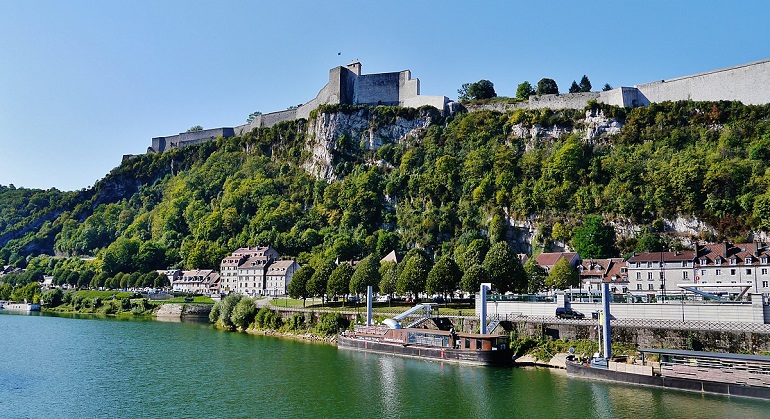
Besançon’s most remarkable landmark is the Citadel, a masterpiece of military engineering crafted by the celebrated architect Vauban in the seventeenth century. This UNESCO World Heritage site occupies a commanding position on Mount Saint-Etienne, a location whose strategic importance was recognised as early as 58 BCE by Julius Caesar. Its imposing stone ramparts and watchtowers, some reaching 15 to 20 metres in height, crown the hilltop, providing breathtaking panoramic views across the old city and the oxbow of the Doubs river. The 11-hectare fortress was designed to be impregnable, with a system of interlocking firing angles and fortifications that left no blind spots. A walk along its ancient walls offers an atmospheric journey through centuries of military history, with the King's and Queen's towers standing as silent sentinels over the city below.
Vieille Ville (Old Town)
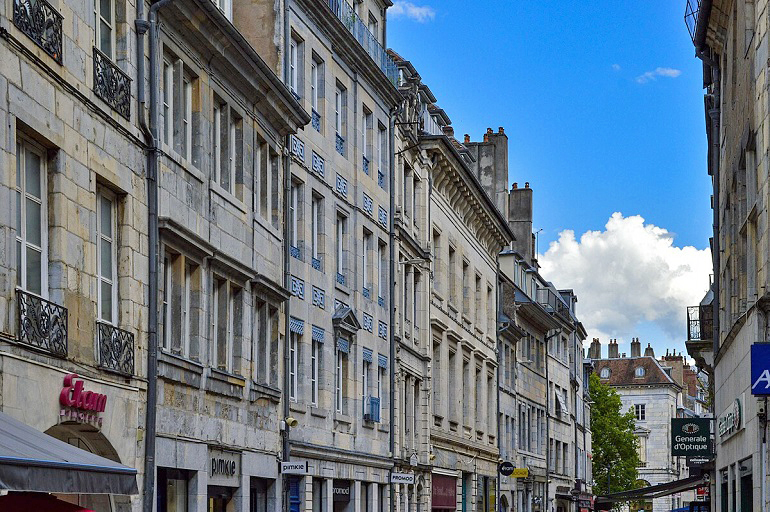
Cradled within a graceful horseshoe bend of the river Doubs, Besançon’s old town—known locally as La Boucle—is a patchwork of two millennia of history, where Roman relics like the sombre Porte Noire punctuate cobbled lanes that still trace the ancient Grande Rue. Above the limestone rooftops soars Vauban’s formidable Citadelle, a UNESCO World Heritage fortress that seals the neck of the loop and showcases one of France’s finest defensive ensembles. Behind 18th-century hôtel particuliers, hidden courtyards reveal elegant external staircases and arcaded galleries, while blue-grey façades shimmer in the soft Franche-Comté light. The chime of public clocks evokes the city’s famed watchmaking workshops—an expertise inscribed on UNESCO’s Intangible Heritage List in 2020 and celebrated today in the Musée du Temps. Boasting more than 200 listed monuments, this compact, pedestrian-friendly quarter lures visitors from shaded river quays to lively café terraces, affirming Besançon’s status as one of the largest protected urban areas in France.
Cathédrale Saint-Jean de Besançon
Dominating the skyline with its imposing silhouette, Cathédrale Saint-Jean de Besançon is a splendid architectural mosaic that tells a story of faith spanning centuries. Its origins trace back to the 11th century, and its structure blends Romanesque and Gothic elements, reflecting its evolution through different eras. An 18th-century façade with a grand rose window adds a touch of classical elegance to the medieval building. Inside, visitors are greeted by soaring vaulted ceilings and the ethereal play of light through beautiful stained-glass windows. The cathedral is also home to a famous and intricate astronomical clock, a 19th-century marvel with 30,000 moving parts, which adds another layer of fascination to this profound spiritual and historical site.

Porte Noire
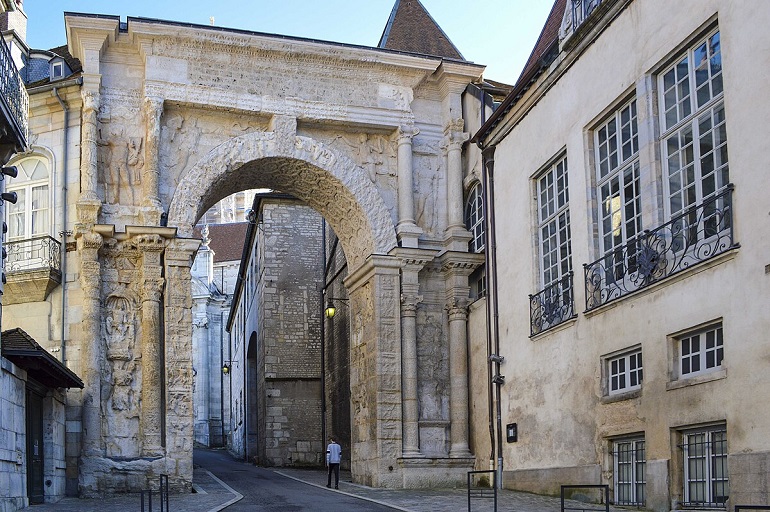
The Porte Noire serves as an evocative portal to the city's ancient past, standing proudly as a Gallo-Roman triumphal arch in the heart of Besançon. Erected between 171 and 175 CE under the Emperor Marcus Aurelius, this monument was built to commemorate military victories. Originally, it was lavishly decorated with fine sculptures depicting mythological scenes and battles, though the passage of time has weathered most of these intricate details. Standing at over 16 metres high, the arch once served as a grand honorific entrance to the Roman city of Vesontio before being integrated into defensive walls during the late Empire. It has been a protected historical monument since 1840 and remains a powerful symbol of Besançon's deep Roman roots.
Porte Rivotte
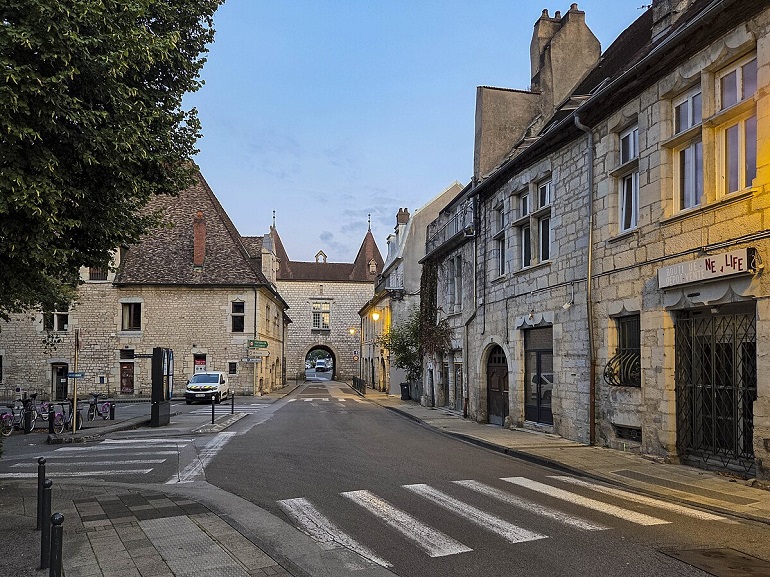
The Porte Rivotte stands as a stately entrance to Besançon's historic centre, situated on the charming Rue Rivotte. As one of only two remaining city gates in Besançon, this beautifully preserved 16th-century structure is a tangible link to the city's medieval past. Originally part of the old fortifications, it was later enhanced following the French conquest when Louis XIV commanded that a radiant sun, his personal emblem, be added to the pediment. A stroll down Rue Rivotte provides a picturesque approach to the gate, offering a glimpse into the city's rich military architecture and its former defensive system.
Square Castan
Adjacent to the cathedral, Square Castan is a tranquil archaeological garden that offers a unique glimpse into Roman Vesontio. This leafy enclave is named after the 19th-century historian Auguste Castan, who excavated the site in 1870, revealing significant Roman ruins from the 2nd and 3rd centuries CE. The square features the remains of a semi-circular water distribution basin, or nymphaeum, which was part of an aqueduct system, as well as a collection of eight Corinthian columns. Strolling among these ancient stones under the shade of plane trees offers a moment of peaceful reflection on the city's layered history, connecting modern life with its classical heritage.
Parc Micaud
Stretching gracefully along the banks of the Doubs, Parc Micaud is a beloved public park that serves as a green lung for the city. It welcomes locals and visitors to its verdant lawns, tree-shaded avenues, and beautifully manicured flower beds. The park is a hub of leisurely activity, with playgrounds for children, paths for cyclists and joggers, and benches offering prime views of the river. A focal point is the Cascade de Micaud, a picturesque waterfall that, while appearing natural, is a masterpiece of 19th-century engineering designed to be part of the park's landscape. In the evenings, the illuminated waterfall creates a magical atmosphere, making the park a popular spot for a romantic stroll.
Bregille Fort
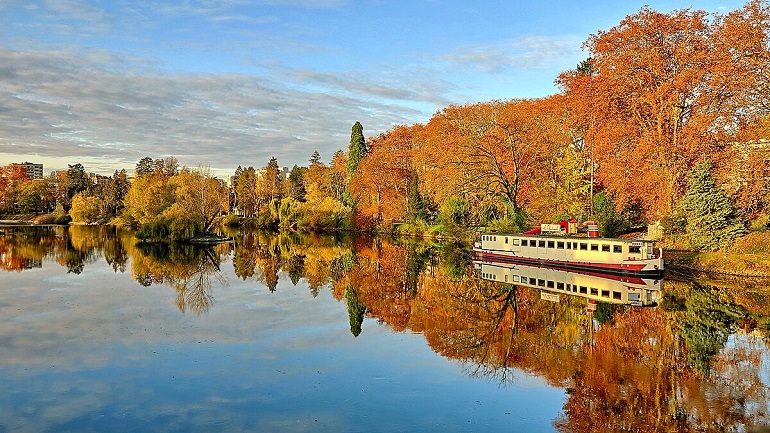
Across the river from the Citadel, Bregille Fort stands sentinel on a 446-metre summit, offering its own spectacular vistas over Besançon’s rooftops and the gentle sweep of the Doubs river valley. Constructed in the 19th century following the Napoleonic Wars, the fort was a direct response to the city’s vulnerability from this higher ground, a weakness that had been exploited in previous conflicts. Known also as Fort Morand, its primary purpose was to defend the Citadel and the city from any future invasions. While it was not tested during the Franco-Prussian War or World War I, it housed an anti-aircraft battery during the Second World War. Today, though the interior is not open to tourists, its ramparts and surrounding grounds provide tranquil walking paths and some of the most stunning panoramic photo opportunities in the region.
Griffin Fort
Another key component of Besançon's defensive network, Griffin Fort (Fort Griffon) is also a creation of Vauban and is included alongside the Citadel as a UNESCO World Heritage site. Built in the 17th century under Louis XIV, this fortress sits on a gentle rise near the city centre, reflecting the pinnacle of military architecture of its era. The fort’s design incorporates three impressive stone buildings arranged around a central courtyard, and its imposing bastions were strategically placed to protect the city. Visitors can wander its expansive grounds, explore its tunnels, and appreciate the same panoramic views of the river and city that made it such a vital strategic asset.
The Little Train of Besançon
For a more relaxed tour of the city's highlights, The Little Train of Besançon offers a charming and informative journey through its historic heart. This delightful miniature road train trundles through the winding streets of the old town, passing beneath centuries-old arches and skirting leafy parks. A scripted commentary narrates the city's history, telling tales of figures like Victor Hugo and Vauban as it passes landmarks such as Square Castan. The route culminates at the gates of the Citadel, where passengers have the option to disembark for a visit, with the convenience of being able to catch a later train for the return journey. It provides an ideal and effortless introduction to the city's layout and heritage for visitors of all ages.
Top Museums
Art and Archaeology
Musée des Beaux-Arts et d’Archéologie: A Labyrinth of Art and Time
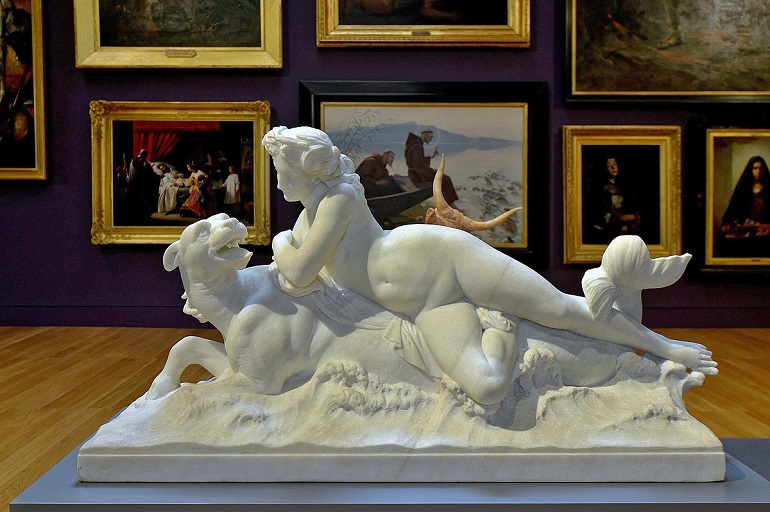
As France’s oldest public museum, founded in 1694, the Musée des Beaux-Arts et d’Archéologie offers an experience that is as architecturally compelling as its collections are vast. The building itself is a striking dialogue between past and present: a 19th-century grain hall masterfully integrated with a raw concrete structure designed by a student of Le Corbusier. This design embodies the concept of a "museum with unlimited growth," creating a labyrinthine space of ramps and corridors intended to encourage visitors to lose themselves in discovery.
The collections traverse epochs and continents with breathtaking scope:
- Archaeology: The journey begins in antiquity with a significant Egyptian collection, featuring the mummies of a royal scribe and an artist to the god Amon, alongside divine statuettes. It then moves through prehistory into the Gallo-Roman era, showcasing exquisite local finds like the intricate Neptune and Medusa mosaics, and the enigmatic bronze statue of a three-horned bull from Avrigney. Medieval sculptures and stone sarcophagi further chart the city’s layered history.
- Fine Arts: The painting collection is an exceptional survey of Western art from the 15th to the 20th century. It features masterpieces by Italian titans such as Bellini and Tintoretto, Northern European masters including Rubens, and a wealth of French art from Poussin to Courbet, the region's native son.
- Drawing Cabinet: One of the museum's greatest treasures is its graphic arts collection. With over 5,500 works, it is one of the largest in France, boasting drawings by Dürer, Rembrandt, Fragonard, Matisse, and Rodin.
Horology and History
Musée du Temps: The Measure of a City
Housed within the magnificent Palais Granvelle, a jewel of the Renaissance, the Musée du Temps is a singular institution dedicated to humanity’s perpetual quest to measure time. The museum pays homage to Besançon's heritage as the capital of French watchmaking, weaving this local history into the universal story of timekeeping.
Its collections are a captivating journey from ancient methods to modern precision:
- Horology: The galleries display an astonishing variety of timepieces, from early sundials to a modern atomic clock. The heart of the collection showcases the intricate craftsmanship of Besançon's watchmakers, with over 1,500 watches, movements, and tools on display. It also features around a hundred iconic horloges comtoises (grandfather clocks) from the region.
- Science and Symbolism: A highlight is the mesmerising Foucault pendulum, which provides elegant, visible proof of the Earth's rotation. Beyond the science, the museum explores the symbolic dimension of time through precious objects and historical paintings. The visit culminates in the palace tower, offering a wonderful panoramic view of the city.
Literary Heritage
Maison Natale de Victor Hugo: A House of Ideas
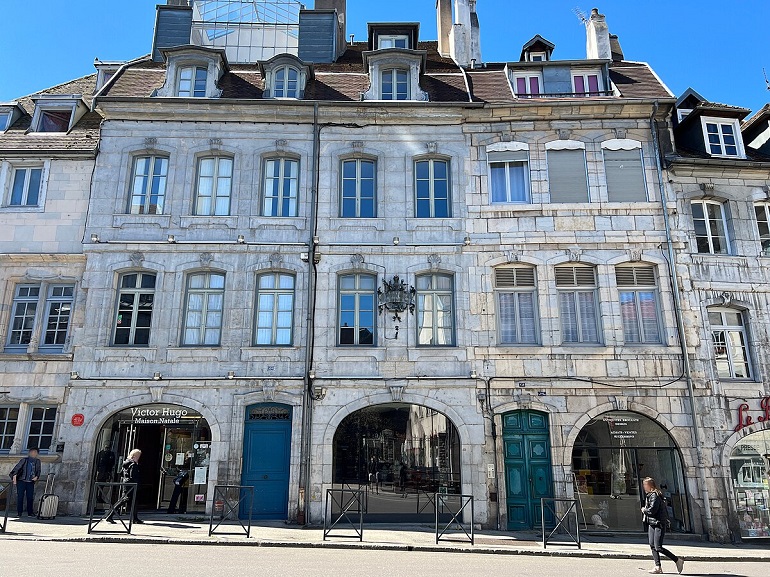
At 140 Grande-Rue, the birthplace of Victor Hugo offers a modern and thought-provoking museum experience. Rather than a simple reconstruction of his childhood home, the space is dedicated to the author's powerful ideas and lifelong battles for justice, freedom, and human rights. Through immersive scenography and multimedia displays, the exhibition illuminates the political and social commitments of the celebrated writer. It connects his origins in Besançon to the universal values he championed, creating a space for reflection on his enduring legacy.
Fortress of Culture
The Citadelle Museums
Perched over 100 metres above the city, the Citadelle of Besançon is a UNESCO World Heritage site and a masterpiece of military architect Vauban. Beyond its formidable ramparts and spectacular views, this 30-acre fortress hosts three distinct "Museums of France," offering a full day of discovery.
- Musée de la Résistance et de la Déportation: Recently reopened after extensive renovation, this powerful museum offers a poignant and deeply moving account of one of history’s darkest chapters, with a particular focus on the local context during the Second World War. Through artefacts, photographs, artworks, and personal testimonies, it honours the memory of those who fought against Nazism and those who suffered in the concentration camps. The exhibits provide a space for remembrance and reflection on the importance of freedom and human dignity.
- Musée Comtois: This museum celebrates the traditional life and culture of the Franche-Comté region. It delves into the area's rural heritage, showcasing everything from agricultural tools and regional costumes to puppets and folklore. The exhibits provide a window into the social fabric, crafts, and beliefs that have shaped the local identity over centuries.
- Muséum de Besançon (Natural History Museum): This unique institution is a guardian of biodiversity, combining the functions of a traditional natural history museum with those of a modern zoological park. It is home to vast collections of over a million objects and is dedicated to preserving endangered species through internationally recognised breeding programmes for animals like lemurs and local crayfish. The grounds include a Zoological Garden, Aquarium, Insectarium, and Noctarium, offering a comprehensive look at the richness and fragility of the animal kingdom.
Contemporary Art
FRAC Franche-Comté: A Beacon of Contemporary Art
Set on the banks of the River Doubs within the Cité des Arts, the Regional Fund for Contemporary Art (FRAC) is an architectural landmark designed by the renowned Japanese architect Kengo Kuma. The building's design, with its pixelated glass façade, reflects the surrounding water and historic bastions. Inside, the FRAC presents a dynamic programme of exhibitions based on its collection, which has been developed around the theme of time. It serves as a vibrant platform for multidisciplinary cultural events, including meetings with artists, performances, concerts, and lectures, making it a crucial centre for contemporary creation in the region.
Local Cuisine
Besançon's cuisine reflects the rich traditions of Franche-Comté, highlighting robust flavours and comforting dishes sourced from the surrounding countryside. Local menus often feature saucisse de Morteau, a smoked sausage made nearby and served with potatoes or lentils, and the creamy cancoillotte cheese, enjoyed melted over bread or potatoes. Another regional delight is Poulet au Vin Jaune, chicken cooked in the region's distinctive yellow wine with morel mushrooms, delivering a unique and earthy aroma. Visitors should also seek out tarte aux myrtilles, a sweet blueberry tart, often found at local patisseries. Dining in Besançon offers a warm invitation to savour both rustic and refined flavours that have been cherished in the region for generations.
Getting There
By train High-speed TGV services from Paris Gare de Lyon sweep you to Besançon Franche-Comté TGV station in under two and a half hours, with frequent TER shuttles completing the short hop to the city centre; regular regional trains also link Dijon, Belfort and Strasbourg, making rail the quickest and most comfortable choice.
By coach or bus Long-distance coaches run by national operators connect Besançon with Paris, Lyon, Dijon and other major cities, arriving beside Gare Viotte, where local buses and trams radiate across the town—an easy option if you favour direct, fuss-free travel.
By car Drivers reach Besançon via the A36 autoroute (exit 3) skirting the northern suburbs; from Geneva or Lausanne follow the scenic N57 across the Jura, while those coming from Paris can pair the A6 and A39 before joining the A36, enjoying flexible stops en route and convenient park-and-ride facilities on arrival.
| Travel destinations in Franche-Comté | ||||||||||||||
|---|---|---|---|---|---|---|---|---|---|---|---|---|---|---|
|
|
|
|
| ||||||||||
|
|
|
| |||||||||||


