


Introduction
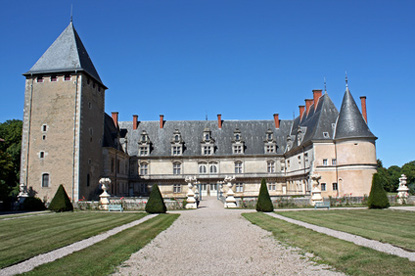
The Château de Fléville, located in Fléville-devant-Nancy, stands as one of Lorraine's most significant architectural treasures, combining medieval and Renaissance elements in a single structure. The current château was completed in 1533 in the French Renaissance style by Nicolas de Lutzelbourg, though it incorporates a substantial 30-metre donjon dating from 1320 that serves as a rare surviving example of feudal architecture in Lorraine. Notably spared from destruction by Cardinal Richelieu during the Thirty Years' War, the château features distinctive Italian-influenced design elements, including a continuous balcony spanning the entire façade, and retains the dried moat from its medieval predecessor. The furnished interior, which has been open to the public since its designation as a historic monument in 1982, houses Renaissance woodwork, 18th-century tapestries, and several rooms dedicated to Lorraine's history, while the property has remained in the hands of the Lambel family since 1812, ensuring its preservation across more than two centuries.
Interesting Facts about the Château de Fléville
- Completed in 1533, the château’s elegant French Renaissance façade is uniquely paired with a 30‑metre medieval keep dating from 1320.
- Its long, continuous balcony across the main façade reflects notable Italian influence on early Renaissance Lorraine.
- The castle was one of the few in Lorraine spared by Cardinal Richelieu during the devastations following the Thirty Years’ War.
- Often compared to Azay-le-Rideau for the purity of its lines, the château blends defensive medieval elements with refined Renaissance grace.
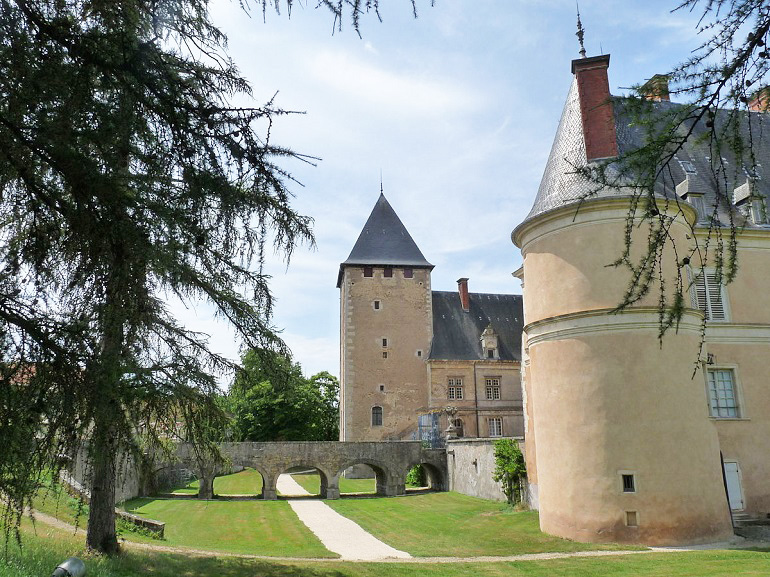
- The estate retains the dry moat of its earlier feudal fortress, underscoring its layered architectural history.
- The interiors are fully furnished and include rooms devoted to the history of Lorraine, offering an immersive historical visit.
- A prestigious Hall of Coats of Arms celebrates the Dukes of Lorraine, alongside Renaissance woodwork and 18th‑century tapestries.
- The property has been owned by the Lambel family since 1812 and remains a lived‑in residence.
- Its 20‑hectare landscaped park is labelled a “Jardin remarquable,” featuring an 18th‑century orangery and romantic‑era design.
- The château’s courtyard, opened in the eighteenth century, is adorned with rocaille vases that add a playful Baroque accent.
History
The history of the Château de Fléville stretches back to the late 13th century when the Fléville family first settled on this strategic location near Nancy in 1298. The name derives from the Frankish word "flabod," meaning "brilliant messenger," reflecting the site's importance as a forward post for the city of Nancy. Around 1320, the family constructed a formidable feudal castle and imposing donjon on the western side of the current château, establishing Fléville as a significant stronghold in the Duchy of Lorraine. Through marriage, the property passed to the Lutzelbourg family in the early 15th century when Ide de Fléville wed into this noble lineage, beginning a new chapter in the château's aristocratic heritage.
The Renaissance transformation of Fléville began in 1533 when Nicolas de Lutzelbourg undertook the ambitious project of constructing an elegant new château in the emerging French Renaissance style. This magnificent structure, completed in 1533, was built around the ruins of the earlier feudal castle, incorporating the original 30-metre-high donjon that still dominates the skyline today. The château's distinctive architecture features an unusual continuous balcony running along the entire façade, reflecting the influence of Italian Renaissance design on Lorraine's architectural evolution. Often compared to the renowned Château d'Azay-le-Rideau for its refined elegance and pure lines, Fléville became one of the finest examples of early French Renaissance architecture in the region. Remarkably, it survived the destructive campaigns of Cardinal Richelieu during the Thirty Years' War, making it one of the rare Lorraine châteaux to escape demolition on the orders of Louis XIII.
The château's modern era began in 1812 when General Alexandre de Lambel, a distinguished figure of the Napoleonic Empire, purchased the property and its extensive lands during the Russian campaign. The Lambel family has maintained ownership for over two centuries, transforming Fléville into both a cherished family residence and an important cultural monument. The château's interior was enriched with remarkable collections, including Renaissance woodwork, 18th-century tapestries, and the prestigious Hall of Coat-of-Arms featuring the blazons of the Dukes of Lorraine. Royal apartments were dedicated to Stanislas Leszczyński, the King of Poland and Duke of Lorraine, adding to the château's distinguished heritage. In 1982, the French government recognised Fléville's exceptional historical and architectural significance by designating it as a historic monument, ensuring its preservation for future generations whilst it remains a living testament to over seven centuries of Lorraine's noble history.
Description
Rising from the gentle Lorraine countryside just south of Nancy, the Château de Fléville strikes an arresting balance between medieval strength and Renaissance refinement. A 30-metre square keep—its rough ashlar walls pierced by arrow-slits—anchors the ensemble like a stern sentinel. Against this robust tower leans an elegant early-sixteenth-century façade in warm, blond stone: mullioned windows framed by pilasters, ornate dormers capped with finials and, most distinctive of all, a continuous open balcony that runs the full length of the frontage—a rare Italianate flourish in northern France. Two round corner turrets soften the angles, while the drained moat and drawbridge arches still outline the castle’s original defensive perimeter.
Passing through the wrought-iron gates, visitors enter a gracious cour d’honneur paved in pale cobbles. Eighteenth-century rocaille vases punctuate the parapet, and a low arcade links the main corps de logis to charming wings once used as stables and kitchens. Beneath the stone arcade, a ceremonial doorway ushers guests into a residence that is very much alive: the same family has lived here for over two centuries, lending the rooms a welcoming, lived-in warmth.
Interior highlights unfold in leisurely succession.
- Guard Room: A vast space beneath heavy oak beams where suits of armour flank a monumental fireplace carved with the Lutzelbourg coat of arms.
- Hall of the Estates of Lorraine: Sometimes called the Hall of Coats of Arms, this grand salon displays the richly painted heraldry of the dukes and noble families of Lorraine beneath a gilded plafond à la française.
- Royal Apartments: A suite reserved for Stanislas Leszczyński, last Duke of Lorraine and former King of Poland, fitted with silk-covered walls, an intricately marquetried parquet floor and a ceremonial four-poster bed.
- Renaissance Gallery: Lined with finely carved walnut panelling and sixteenth-century portraits, it offers a sweeping view over the park through tall, leaded casements.
- Private Family Rooms: Smaller parlours and boudoirs decorated with 18th-century Aubusson tapestries, Sèvres porcelain and personal photographs that quietly reveal the château’s ongoing domestic life.
- Chapel: An intimate oratory with a polychrome stone altarpiece and stained glass depicting saints venerated in Lorraine.
- Library: Floor-to-ceiling bookcases hold folios on regional history; a secret spiral stair, once a priest-hole, tucks into the thickness of the wall.
Stepping outside, one discovers twenty hectares of landscaped grounds that are as carefully curated as the interiors. Closest to the château stretches a classical parterre of clipped box hedges and broderie flower-beds arranged in precise geometric panels, their symmetry accentuated by gravel paths and sentinel yews. A stone basin at the axial point mirrors the façade, doubling the Renaissance balcony’s reflection on still water.
Beyond this formal carpet lies a Romantic park laid out in the nineteenth century. Winding paths meander beneath plane, cedar and copper-beech, opening onto meadows where wild orchids bloom in spring. Occasional follies—a rustic belvedere, a moss-clad grotto—frame borrowed views of the countryside.
The Jardin Remarquable label, awarded by the French Ministry of Culture, recognises the variety within the grounds: a kitchen garden fragrant with heritage roses, an orchard of espaliered fruit trees and a shaded arboretum where rare gingko and tulip trees thrive. Perhaps most unexpected is the eighteenth-century orangery, its sober limestone façade hiding a spectacular seventeenth-century trompe-l’œil; the illusionistic fresco conjures an open loggia with distant seascapes, transporting viewers far from Lorraine’s gentle hills.
Getting There
By train From Paris or Strasbourg, take a high-speed TGV or Intercités service to Nancy-Ville station, then change to the local TER line toward Laneuveville-devant-Nancy; from there it is a 40-minute walk or a short taxi ride to the château.
By coach or bus If you are already in Nancy, the STAN network’s hourly bus 21 departs from Nancy-Gare and stops at “Croix du Soldat,” just a one-minute stroll from the gates; several other suburban routes such as 56 and 66 also serve Fléville-devant-Nancy from the city centre.
By car Follow the A33 south from Nancy for 8 km, leave at exit 5 for Fléville-devant-Nancy, then simply follow signs to “Château de Fléville”; the drive takes roughly 15 minutes and on-site parking is available.
| Travel destinations in Lorraine | ||||||||||||||
|---|---|---|---|---|---|---|---|---|---|---|---|---|---|---|
|
|
|
|
| ||||||||||
|
|
|
|
| ||||||||||


