


Introduction
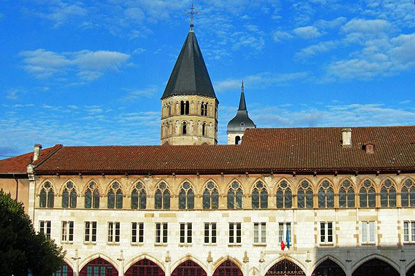
Cluny Abbey, founded in 910 by William I, Duke of Aquitaine and Count of Auvergne, was in its heyday one of the wealthiest and most influential Benedictine monasteries in Europe. The abbey became the spiritual and administrative centre of the Cluniac reform movement that transformed Western monasticism through strict adherence to the Rule of Saint Benedict. At its zenith around 1100, the abbey controlled a vast network of approximately 1,500 monasteries and 10,000 monks across Europe, making it the most influential monastic institution of its time. The abbey was a major spiritual and intellectual centre in the Middle Ages. As the seat of the reformation of the Rule of St. Benedict, Cluny became acknowledged as the leader of Western monasticism.
The abbey's church, built in the Romanesque style and dedicated to Saints Peter and Paul, was the largest in Christendom until the construction of the new Saint Peter's Basilica in Rome. Though the French Revolution brought devastating destruction to the complex in 1790, with most buildings demolished for their stone, the surviving remnants—including the impressive southern transept tower—continue to bear witness to Cluny's extraordinary medieval grandeur and its pivotal role in shaping European Christianity for over four centuries.
Interesting Facts about Cluny Abbey
- Founded in 910 by William the Pious, Cluny Abbey became the spiritual powerhouse of medieval Europe, spearheading the Cluniac Reform of Benedictine monasticism.
- Cluny’s third great church, the Maior Ecclesia, was the largest church in Christendom for centuries until St Peter’s Basilica rose in Rome.
- At its zenith around the 11th–12th centuries, the Cluniac network influenced thousands of monks across hundreds of priories from England to Spain and Italy.
- Cluny’s liturgy-centred model replaced manual labour with almost continuous prayer, elevating ceremony, music, and splendour in worship.
- The abbey enjoyed exceptional independence, answering directly to the Pope rather than local secular or ecclesiastical powers.
- Cluny’s abbots became international figures, shaping church politics and culture well beyond Burgundy.
- Despite its austere rule, Cluny was famed for artistic richness, with lavish metalwork, sculpture, and textiles that set Romanesque standards.
- The French Revolution devastated the complex, which was largely quarried for stone, leaving only fragments of the once colossal church.
- Archaeologist Kenneth J. Conant’s 20th‑century excavations helped reconstruct the plan of Cluny III and revived scholarly understanding of its scale.
- The Hôtel de Cluny in Paris, once the abbots’ urban residence, later became a museum of the Middle Ages that preserves the abbey’s legacy.
History
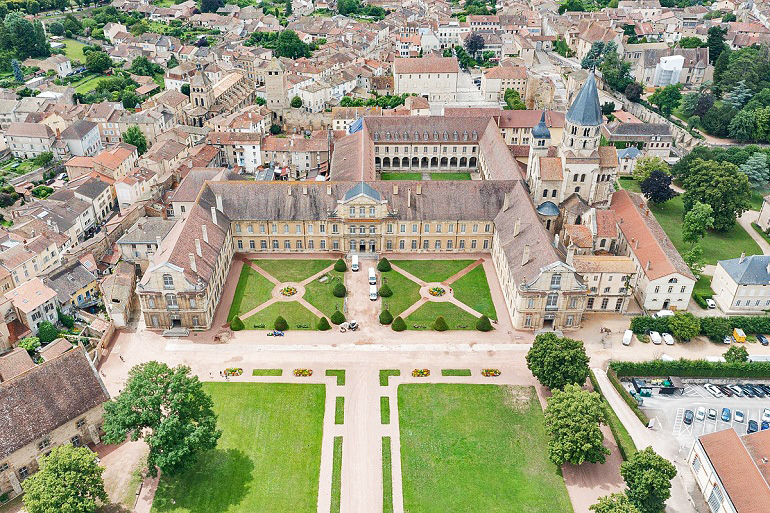
The construction of the monastery started in 910. Culny I was completed in 927. A larger complex as built from 963 and consecrated in 981. The last expansion was launched in 1080 by Abbot Hugh of Cluny, and ended in 1130. The new 187-metre long abbey was then the largest religious edifice in the West until the reconstruction of St Peter's of Rome from 1505. Cluny was entirely built in the Romanesque style.
Many of the abbey's buildings were destroyed in 1791 during the French Revolution. The archives were burnt in 1793 and the church looted. For the next 20 years, until 1813, the abbey was used as a stone quarry to build houses in the town. What can be seen today only represents 10% of the the medieval abbey, but is nevertheless impressive.
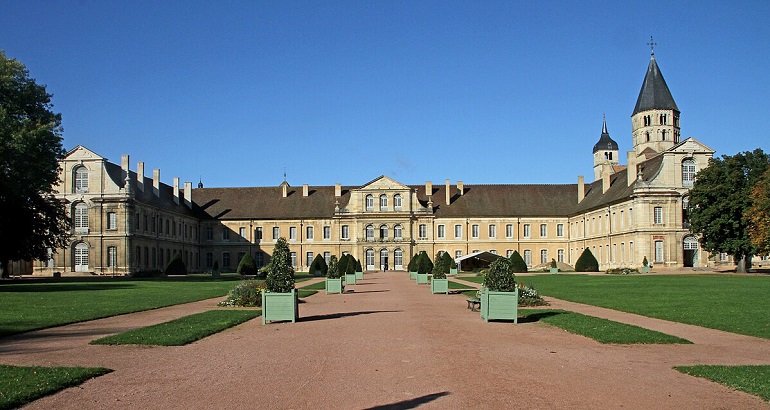
Since 1901, the abbey has housed a centre of Arts et Métiers ParisTech, a major engineering school in the fields of mechanics and industrialization.
Description
The Surviving Great Transept
Cluny Abbey stands as one of Europe’s most extraordinary architectural achievements, representing the pinnacle of Romanesque artistry and monastic ambition. Nestled in the heart of Burgundy, this remarkable complex offers visitors a fascinating glimpse into medieval spirituality and craftsmanship through its surviving structures and exceptional museum collections.

The abbey’s most impressive surviving feature is the great transept, which rises nearly 30 metres in height and demonstrates the breathtaking scale of the original church. This light-filled space, constructed in the 12th century, was designed to evoke the divine presence through its monumental proportions. The transept showcases different architectural periods, with the southern absidiole retaining its original Romanesque character whilst the Chapel of Saint Martial was rebuilt in the 14th century in the Gothic style, complete with a liturgical cupboard and pool.
The Bell Tower of the Holy Water crowns the central bay of the south arm of the great transept. This octagonal tower, built in the latter half of the 12th century, displays particularly refined decoration across two levels of bays. The first level features a motif of crosses, whilst the second is adorned with pearl designs. The pyramid-shaped spire, reconstructed by Abbot Jean de Bourbon in the 15th century, served as a model for other Cluniac bell towers, including that of Paray-le-Monial.
The Museum of Art and Archaeology
Housed within the elegant Jean de Bourbon Palace, the Museum of Art and Archaeology presents one of Europe’s most significant collections of Romanesque sculpture. This 15th-century palace, constructed between 1456 and 1485, exemplifies Gothic residential architecture with its noble façade featuring four high mullioned windows and a grand spiral staircase housed within the eastern tower.
The museum’s extensive collections include architectural fragments from the great abbey church, featuring elements of the magnificent portal, frieze fragments, keystones and exquisitely carved capitals. Visitors can marvel at a full-scale reconstruction of the Grand Portal of Cluny III, showcasing the tympanum, architrave, arches and jambs that represent masterpieces of Romanesque sculpture. The museum also houses the ancient library, containing rare printed books inherited from the Cluniac collection, with some volumes dating back to 1492.
Digital Reconstructions and Immersive Experiences
Modern technology brings the abbey’s vanished grandeur to life through sophisticated digital presentations. The 3D film “Maior Ecclesia” provides visitors with stunning visualisations of the original abbey church, revealing the scale of what was once the largest Christian building in Western Europe. Advanced augmented-reality installations throughout the site allow visitors to witness the abbey’s architectural evolution and visualise the missing structures.
Four fixed augmented-reality devices positioned along the visitor circuit enable guests to combine real views of the surviving vestiges with virtual reconstructions of the complete medieval complex. This innovative approach helps overcome the natural frustration of seeing only fragments of what was once an architectural marvel spanning 187 metres in length.
The Jean de Bourbon Chapel
The recently restored Jean de Bourbon Chapel represents a jewel of flamboyant Gothic architecture. This 12-metre construction from the 1460s features ogive vaulting and tall windows now adorned with contemporary stained glass created by the artist Sarkis. The chapel displays fifteen surviving carved consoles from its rich sculptural programme, whilst the modern rainbow-coloured windows echo the polychromatic glass that once illuminated the medieval structure.
The Tour des Fromages
The Tour des Fromages (Cheese Tower), formerly known as the Tour des Fèves, provides visitors with spectacular panoramic views across the abbey-city. Climbing the 120 steps to the summit rewards visitors with extraordinary vistas of Cluny’s heritage and the surrounding countryside. The tower also houses a photographic exhibition showcasing the preservation work carried out by the Friends of Cluny heritage association.
The Treasure Room
A permanent exhibition showcases the remarkable archaeological treasure discovered in 2017 during excavations in the abbey grounds. This exceptional find includes more than 2,200 silver deniers and obols alongside 21 Islamic gold dinars, representing the largest cache of medieval silver coins ever discovered in a monastic setting. The treasure, hidden in the former infirmary during the 12th century, offers fascinating insights into medieval monetary systems and the abbey’s international connections.
Architectural Heritage Throughout the Complex
Beyond the main church remains, the abbey complex preserves numerous other significant structures. The 18th-century monastic buildings form an elegant U-shaped arrangement around the great cloister, showcasing classical architecture punctuated by decorative wrought-iron balconies. The hostelry of Abbot Hugues represents one of the largest surviving buildings from the late 11th century.
The Galilee Passage once connected the cloister to the great church and now serves as an exhibition space for the abbey’s collection of reliquaries. Visitors can also explore the restored chapter house, where the monks gathered daily, and discover the medieval wash basin that opened onto the now-demolished refectory.
The abbey grounds contain archaeological remains of earlier churches, including the foundations of the first abbey church built around 1000, marked by a floor slab indicating the location of the main altar. These discoveries, revealed through ongoing excavations, continue to expand our understanding of the abbey’s millennium-long evolution.
Cluny Abbey remains a testament to medieval architectural ambition and artistic achievement, offering visitors an unparalleled journey through nearly a thousand years of religious and cultural heritage. Through its combination of surviving medieval structures, world-class museum collections and innovative digital presentations, the abbey provides a comprehensive understanding of what was once the spiritual heart of Western monasticism.
Getting There
By train Travellers can board a TGV or TER service from Paris-Gare de Lyon to Mâcon-Loché TGV or Mâcon-Ville, then continue by local TER train to the small Cluny station, located a pleasant 15-minute walk from the abbey’s entrance.
By coach or bus For those already in Mâcon, frequent inter-urban buses on the Route 701 line whisk visitors directly to Cluny’s town centre, with stops a short stroll from the monastic complex; regional coach services also link Cluny to Lyon and Chalon-sur-Saône, offering a relaxed, scenic approach through the rolling vineyards of southern Burgundy.
By car Motorists can follow the A6 motorway to junction 29 (Mâcon-Sud) and then the D906 and D980, a route that threads through vine-covered hills before reaching ample parking on the edge of Cluny’s medieval core—ideal for those keen to explore the surrounding countryside at their own pace.
| Travel destinations in Burgundy | ||||||||||||||
|---|---|---|---|---|---|---|---|---|---|---|---|---|---|---|
|
|
|
|
| ||||||||||
|
|
|
|
| ||||||||||
| >
| |||||||||||||


