


| Contents |
|---|

Introduction
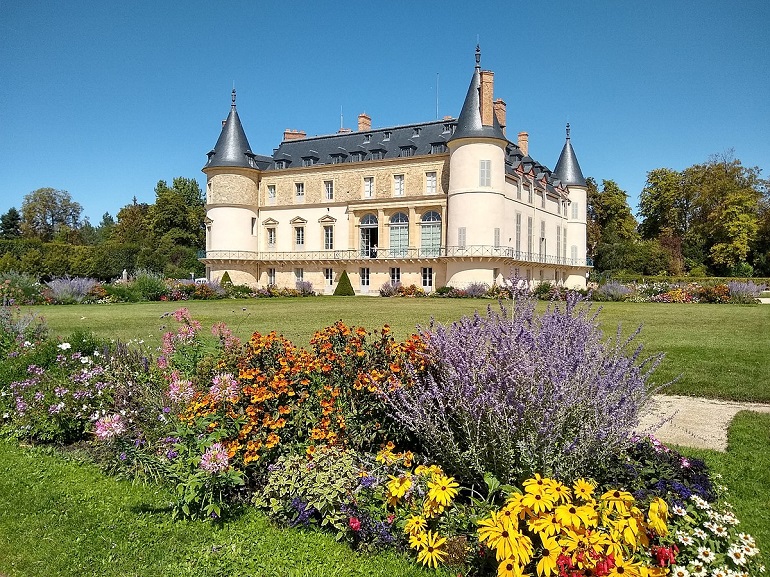
The Château de Rambouillet is a 14th-century fortified castle located in the Yvelines department near Paris, originally built as a manor in 1368 and gradually transformed into a royal residence. The castle retains its distinctive medieval pentagonal bastioned footprint despite losing its eastern wing during Napoleon's reign. Throughout its history, it has housed numerous illustrious figures including King Francis I, who died there in 1547, Louis XVI who purchased the estate in 1783, and Napoleon I who spent his last night in France at the château. Following the Third Republic in 1895, the château served as the summer residence of French presidents from 1896 until 2009. The estate encompasses over 200 square kilometres of the ancient Forest of Rambouillet and features notable architectural elements including Marie-Antoinette's famous dairy, the Shell Cottage set within an English garden, and Napoleon's restored apartments. Today, it functions as a presidential residence whilst remaining open to the public and occasionally hosting visiting heads of state.
Interesting Facts about the Château de Rambouillet
- Originally a fortified manor from the 14th century, the château still preserves a distinctive pentagonal, bastioned footprint.
- King Francis I died at Rambouillet on 31 March 1547, likely in the imposing medieval tower that now bears his name.
- Louis XVI bought the estate in 1783 to extend his hunting grounds in the game-rich Rambouillet forest.
- To charm Marie-Antoinette, Louis XVI secretly commissioned the exquisite Queen’s Dairy, complete with Sèvres porcelain pails painted to look like wood.
- The park features the whimsical Shell Cottage, lavishly decorated with mother-of-pearl and European shells for the Princesse de Lamballe.
- Rambouillet witnessed Charles X’s abdication in 1830, marking a dramatic turning point in French monarchy.
- The château served as the summer residence of French Presidents from 1896 to 2009, hosting state visits and diplomatic retreats.
- Its interiors showcase notable 18th- and early 19th-century decors, including rich oak panelling and neo-Pompeian motifs from the First Empire.
- The surrounding Rambouillet forest spans over 200 square kilometres, long famed for royal and presidential hunts.
- Despite later alterations, including the loss of its eastern wing under Napoleon, the château retains a striking medieval character set amid formal French gardens.
History
The Château de Rambouillet began its illustrious history in 1368 as a fortified manor house, strategically positioned during the tumultuous period of the Hundred Years' War when English forces threatened the French countryside. Originally constructed in 1345 by Jean Bernier, the fortress was later acquired by the powerful d'Angennes family towards the end of the 14th century, who gradually transformed it from a military stronghold into a luxurious pleasure residence over nearly three centuries. The château retains its medieval character today, including its imposing pentagonal bastioned footprint and a 14th-century dungeon, despite losing its eastern wing during Napoleon's era. Most notably, King Francis I died within the castle's medieval tower on 31st March 1547, making Rambouillet a site of profound historical significance in French royal history.
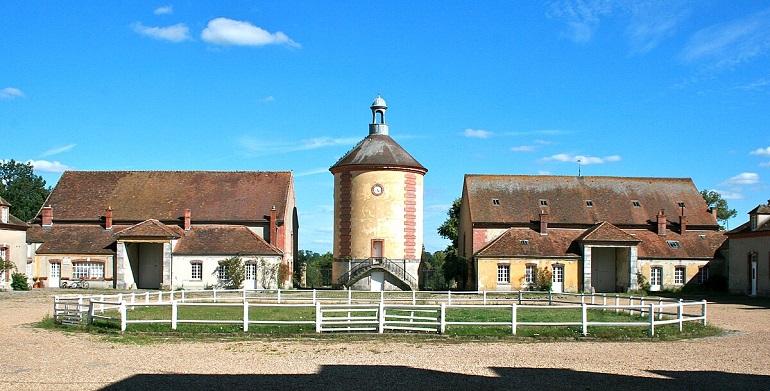
Throughout the 17th and 18th centuries, the château continued to evolve under various distinguished owners, becoming increasingly important as a royal residence and hunting retreat. After the d'Angennes family sold the property in 1699 due to financial difficulties, it passed to Fleuriau d'Armenonville, who created impressive French-style gardens around the castle. In 1706, the Count of Toulouse acquired the property and further enhanced both the castle and its facilities, including the construction of elaborate stables. The château's most significant royal chapter began in 1783 when King Louis XVI purchased it from his cousin, Louis Jean Marie de Bourbon, Duke of Penthièvre, for the extraordinary sum of 16 million pounds—one hundred times more than d'Armenonville had paid a century earlier. Louis XVI envisioned Rambouillet as his private hunting refuge away from the pressures of Versailles and commissioned several remarkable additions, including an experimental farm to house imported Spanish merino sheep and the renowned Laiterie de la Reine (Queen's Dairy) to entice his reluctant wife Marie Antoinette, who famously dismissed the castle as a "gothic toadhouse".
Following the French Revolution, Château de Rambouillet entered a new era as both an imperial and later presidential residence, making it unique amongst French châteaux as the only residence to have welcomed princes, kings, emperors, and presidents throughout its history. Napoleon I developed ambitious plans for the property and spent his last night in France at Rambouillet, whilst his nephew Napoleon III also used it as a hunting retreat. King Charles X dramatically abdicated at the château, marking the definitive end of royal rule in France. In 1896, during the presidency of Félix Faure, Rambouillet officially became the summer residence of French Presidents, a role it maintained until 2009. The château hosted numerous significant diplomatic events under the Fifth Republic, including General de Gaulle's important state receptions, G6 summit meetings, Kosovo peace agreement discussions, and state visits by world leaders such as Boris Yeltsin and Nelson Mandela. Today, the château and its magnificent 150-hectare park, encompassing the Queen's Dairy, the extraordinary Shell Cottage decorated with mother-of-pearl and marble fragments, and the Bergerie Nationale sheep farm, are managed by the Centre des Monuments Nationaux and open to the public as testament to France's rich political and cultural heritage.
Description
Architectural Character and Exterior Ambience
The château's limestone façade gleams pearly white in morning light, softened by fine grooves that catch passing shadows. From a distance, the central keep, flanked by symmetrical wings, resembles a stately manor rather than an intimidating fortress. Elegant dormer windows punctuate the steep slate roof, each crowned with ornate copper finials that have weathered to a soft verdigris. A triple-arched bridge spans the moat, its reflection rippling across still water where carp glide lazily beneath weeping willows. In spring, blush-pink wisteria drapes the terrace balustrade, lending a fleeting perfume to the air.
Grand Vestibule and Principal Staircase
Stepping inside, visitors enter the Grand Vestibule, where chequerboard marble flooring in alternating white Carrara and grey Bardiglio creates an optical rhythm that draws the eye towards a magnificent stone staircase. The balustrade, carved with acanthus leaves and mythical griffins, winds gracefully to the first floor beneath a coffered dome painted in soft celestial blues. Each panel depicts a different constellation, picked out in gold leaf that catches the natural light filtering through the central oculus. Diffused daylight spills over bronze urns brimming with seasonal blooms—white orchids in winter, pale yellow tulips in spring—filling the entry with a subtle, earthy scent. Frescoed lunettes by 18th-century masters depict pastoral scenes that echo the estate's bucolic heritage: shepherdesses with ribbon-tied crooks, farmers gathering golden wheat, and children playing beneath spreading oaks.
The State Apartments
The Ducal Apartment
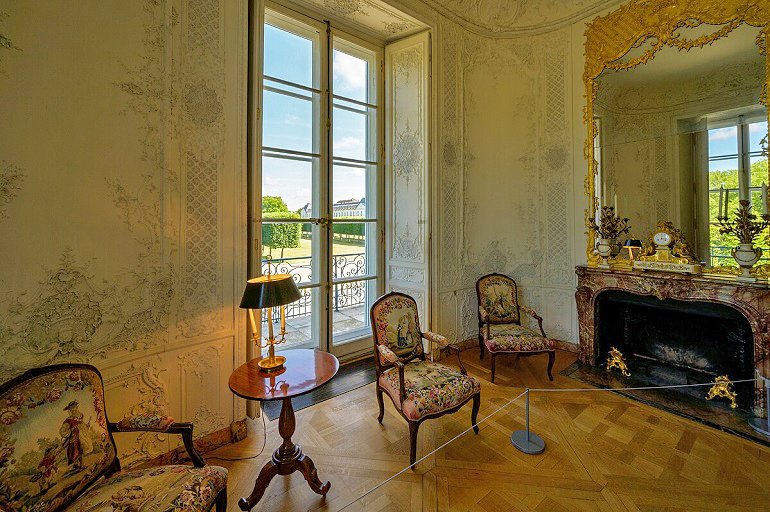
Beyond the vestibule, the Ducal Apartment unfolds in a magnificent suite of seven interlinked chambers, each flowing seamlessly into the next through tall double doors crowned with gilded overdoors. The walls throughout are clad in pale dove-grey damask woven with silver thread, creating a subtle shimmer as one moves through the rooms. Here, Louis XVI-style gilt mirrors with bevelled edges bounce light onto intricate parquet de Versailles flooring, where geometric patterns of oak, walnut and ebony create mesmerising optical effects.
The Grand Salon serves as the apartment's centrepiece, dominated by an enormous Aubusson carpet in shades of sage and cream that depicts the Four Elements through allegorical figures. Above, a coffered ceiling painted in trompe-l'oeil creates the illusion of carved stone rosettes, while crystal chandeliers from the Baccarat workshops cast prismatic rainbows across silk-upholstered bergères. Sèvres porcelain garnitures in soft celadon green grace lacquered console tables, their surfaces reflecting the glow from paired torchères of bronze doré.

The Boudoir, more intimate in scale, features walls covered in hand-painted silk panels depicting exotic birds amongst flowering branches—peacocks unfurling iridescent tail feathers, golden pheasants perched on cherry blossom, and delicate finches nestled in cascading wisteria. A secretaire à abattant of marquetry and mother-of-pearl holds correspondence, while a small marble fireplace with bronze ormolu mounts keeps the space cosy during cooler months. The scent of potpourri made from estate-grown lavender and dried orange peel lingers here, emanating from porcelain bowls placed strategically on side tables.
The Salon des Glaces
The adjoining Salon des Glaces dazzles with an entire wall of mirror panels framed by gilded rosettes and palm fronds, subtly amplifying the glow from crystal girandoles mounted on marble consoles. The opposite wall features a series of painted panels in the manner of Watteau, depicting fêtes galantes where elegantly dressed courtiers dance beneath flowering pergolas. Venetian blackamoors carved from ebony support marble-topped guéridons, while chairs upholstered in amber silk damask invite lingering conversation. The polished parquet reflects the ceiling's painted clouds and cherubs, creating an almost vertiginous sense of space.
Intimate Chambers and Private Retreats
The Reading Cabinet
A cosy alcove off the main salon, the Reading Cabinet exemplifies Rambouillet's talent for intimate spaces. Floor-to-ceiling walnut bookcases house leather-bound volumes on botany, natural philosophy, and the works of Voltaire and Rousseau, their gilded spines creating subtle vertical rhythms. A bergère chair upholstered in bottle-green velvet with nail-head trim sits angled towards a marble fireplace where logs crackle invitingly. Above the mantel, a still life by Chardin depicts peaches and plums so realistically that visitors often feel compelled to reach towards them. Persian carpets in jewel tones warm the oak floor, while a small escritoire with secret compartments holds quills, sealing wax, and correspondence folders bound in moroccan leather.
The Chinese Antechamber
The Chinese Antechamber transports visitors to an imagined Orient through hand-painted wallpaper panels featuring peonies, pheasants and whimsical pagodas rendered in soft blues and pinks against a cream ground. Each panel tells part of a narrative: here, a mandarin in flowing robes contemplates a lotus pond; there, exotic birds perch amongst bamboo while children chase butterflies. Lacquered coffers in vermillion and black hold delicate jade carvings—horses with flowing manes, seated Buddhas, and intricate landscape scenes—that sparkle under paper lantern-shaped sconces. A low table of ebony inlaid with mother-of-pearl displays a tea service of blue and white porcelain, while silk cushions embroidered with chrysanthemums invite visitors to sit and absorb the room's serene atmosphere.
The Music Room
The Music Room resonates with both visual and aural harmony. Walls painted in soft powder blue feature musical motifs—lyres, flutes, and scrolling sheet music—executed in white and gold. A magnificent Erard grand piano from 1825, its case decorated with bronze reliefs of Apollo and the Nine Muses, occupies the room's centre. Gilded chairs with lyre-shaped backs upholstered in primrose yellow silk form intimate seating groups, while music stands of carved fruitwood await performers. Acoustics have been carefully considered: the ceiling's gentle curve and strategically placed tapestries create perfect resonance for both intimate soirées and solo performances. On certain afternoons, the distant sound of someone practising scales drifts through the château, adding an almost ghostly musical backdrop to one's visit.
The Blue Cabinet
This intimate study earned its name from the Delft tiles surrounding the fireplace, each hand-painted with Dutch pastoral scenes in classic cobalt blue. The walls, covered in powder blue silk with a subtle damask pattern, create a soothing cocoon enhanced by white-painted woodwork picked out in gold. A writing table of kingwood and tulipwood marquetry holds crystal inkwells and silver sandbox for blotting, while a collection of botanical prints in matching frames documents the flora of the surrounding forests. A daybed upholstered in cream silk invites afternoon repose, positioned to catch the changing light through tall casement windows that frame views of the park's ancient oaks.
The Imperial Apartments
Napoleon's Study
Napoleon's Study preserves the atmosphere of imperial authority within Rambouillet's genteel setting. Mahogany bookshelves reach to a ceiling painted with military emblems—eagles, laurel wreaths, and crossed sabres—while a massive desk of Empire style dominates the centre. Maps of Europe remain unfurled across its leather-inlaid surface, weighed down by bronze paperweights shaped like cannons. The emperor's campaign chair, upholstered in green morocco leather with brass studs, sits precisely positioned, while personal effects—a telescope, compass, and inkstand of malachite and gilt bronze—suggest recent use. Red damask curtains frame windows overlooking the cavalry grounds, and the air carries a faint aroma of leather and tobacco that seems to emanate from the very walls.
Napoleon's Pompeian Bathroom
Perhaps the most personal and artistically dense space in the imperial suite is Napoleon's Bathroom, a spectacular chamber decorated in the vibrant Pompeian style. Created in what was formerly Marie-Antoinette's boudoir, its ochre-painted walls, inspired by the excavated villas of Pompeii, are covered in a rich tapestry of neoclassical and imperial motifs. One can spot the Emperor’s personal emblems—the 'N', the industrious bee, and the eagle—woven amongst mythological griffins, graceful swans, and winged horses. A curious feature is the set of painted medallions by the artist Jean Vasserot. Originally, these depicted female members of the imperial family, but Napoleon, finding their presence in his bathroom unbecoming, had them painted over and replaced with landscapes and palaces associated with each princess, creating a discreet and coded tribute. The centrepiece is the surprisingly modest bathtub itself, crafted from tinned copper and nestled within a dedicated alcove.

The Empress's Boudoir
In marked contrast, The Empress's Boudoir epitomises feminine refinement through rose-coloured silk wall coverings embroidered with silver thread roses. A magnificent bed à la polonaise, its canopy suspended from the ceiling by silk cords, features hangings of ivory silk trimmed with Brussels lace. Delicate bergères upholstered in cream silk surround a marble-topped table where porcelain miniatures depict scenes from classical mythology. A secretaire-cabinet of satinwood and kingwood contains correspondence, perfume bottles of cut crystal, and jewellery caskets lined with padded silk. The scent of rose water seems permanently infused in the fabric, while mirrors positioned at strategic angles create infinite reflections of light and beauty.
The Chapel and Sacred Spaces
The Private Chapel
The Private Chapel, accessed through a discreet corridor, surprises with its architectural sophistication despite intimate proportions. Delicate grisaille panels by renowned decorative painters evoke Renaissance engravings, depicting scenes from the Life of the Virgin in subtle gradations of grey and white. A star-shaped marble floor in alternating black and white creates a celestial mandala that draws the eye towards the altar, where a tabernacle of gilt bronze houses sacred vessels. Light filters through stained glass windows depicting the Four Evangelists, casting jewel-toned patterns across limestone walls. Choir stalls of carved oak bear individual prayer books bound in vellum, while the lingering scent of beeswax candles and frankincense creates an atmosphere of profound tranquillity.
Service Areas and Functional Spaces
The Great Kitchen
Descending to the château's lower level, The Great Kitchen reveals the sophisticated infrastructure required to support aristocratic life. Massive stone hearths equipped with rotating spits and bread ovens could accommodate banquets for hundreds, while copper batterie de cuisine—gleaming pots, moulds, and cauldrons—hangs from wrought-iron hooks. Stone sinks fed by natural springs ensure constant fresh water, while limestone counters remain cool for pastry work. Herbs dry in hanging bundles from oak beams, filling the space with aromatic complexity, whilst wine cellars adjoining the kitchen maintain perfect temperatures for the château's extensive collection of Burgundies and Bordeaux.
The Butler's Pantry
The Butler's Pantry showcases the art of domestic organisation through floor-to-ceiling cupboards housing porcelain services, crystal glassware, and silver plate. Each piece occupies a designated place: Sèvres dinner services in one cabinet, Baccarat crystal in another, whilst silver vessels rest in felt-lined drawers. A serving counter of marble provides workspace for arranging formal presentations, while speaking tubes allow communication with the kitchen below and dining rooms above.
The Queen's Dairy (Laiterie de la Reine)
Tucked behind a hedgerow of box and yew stands the Queen's Dairy, a neo-classical folly conceived as a temple to pastoral simplicity yet executed with sophisticated artistry. Fluted Doric columns support a pediment engraved with carved garlands of milk thistle and wheat sheaves, while the interior rotunda features a marble frieze depicting shepherdesses in classical drapery tending to docile ewes beside babbling brooks.
The main chamber centres around a marble table where fresh milk was once displayed in Sèvres bowls of translucent porcelain, each painted with pastoral motifs. Sunlight pours through an oculus window designed to create dramatic chiaroscuro effects on the milky-white surfaces below. Stone alcoves, originally functional storage spaces, now display period utensils: wooden butter churns, ceramic cream pots, and copper milk jugs polished to mirror brightness. Cool air, tinged faintly with the sweet scent of straw, drifts through carefully positioned vents, creating a natural refrigeration system.
The antechamber features trompe-l'oeil paintings of rural implements: pitchforks lean against painted walls, baskets appear to overflow with fresh eggs, and hanging cheese rounds cast realistic shadows. The overall effect creates an idealised vision of rural life filtered through aristocratic sensibilities.

Parkland, Formal Gardens and Water Features
The surrounding Parc de Rambouillet stretches over hundreds of hectares, blending French formality with English romantic landscaping. Key highlights include:
The Grand Parterre: An intricate embroidery of clipped box hedges creating geometric patterns filled with seasonal plantings—tulips and hyacinths in spring, roses and lavender in summer, chrysanthemums and late dahlias in autumn. Bronze statues representing the Four Seasons punctuate the corners, whilst a central fountain featuring Neptune and his dolphins provides both visual focal point and soothing water music.
The Canal: A narrow, mile-long waterway flanked by double rows of plane trees reflects autumn's golds and russets like a living ribbon of colour. Stone benches positioned at regular intervals invite contemplation, whilst small classical temples provide shelter during sudden showers. Swans glide serenely along the water's length, occasionally joined by visiting herons and kingfishers.
Hidden Glades: Meandering footpaths reveal surprise vistas—an antique sundial marking the hours amidst climbing roses, a marble nymph emerging from ivy-covered grottos, Chinese-style bridges spanning babbling brooks lined with water iris and forget-me-nots.
Wildlife flourishes in this verdant sanctuary; deer often graze on meadow fringes at dusk, red squirrels dart along oak boughs overhead, and badger sets remain active in the deeper woodlands. Birdwatchers may spot kingfishers flashing turquoise along the lake or hear the distant drumming of lesser spotted woodpeckers high in the ancient chestnuts.

The Bergerie and Shepherd's Retreat
Set apart from formal gardens, the Bergerie exudes rustic charm through its half-timbered gables and thatched roof thick with moss and wildflowers. The main hall features exposed timber rafters supporting drying herbs and lavender sachets that infuse the space with soothing aromatics. A central hearth, blackened from centuries of shepherds' fires, remains equipped with period cooking implements: iron pot-hooks, wooden bellows, and copper kettles.
The spinning room displays antique looms and spinning wheels alongside skeins of wool in natural colours—cream, grey, brown—spun from sheep that continue grazing the estate. Baskets overflow with raw fleece whilst wooden tools for carding and combing hang from pegs along whitewashed walls. The sleeping loft, accessed by a ladder of rough-hewn oak, recreates humble shepherd accommodations with straw mattresses, woollen blankets, and simple wooden chests for personal belongings.
On certain weekends, visitors can meet rare breed sheep—Rambouillet Merinos, Jacob sheep with distinctive spotted fleeces, and gentle Leicester Longwools—that maintain the estate's pastoral heritage whilst providing wool for ongoing textile demonstrations.
Visitor Comforts and Modern Touches
A thoughtfully designed visitor centre offers tactile displays and audio guides voiced in multiple languages, whilst the Orangerie Café sources herbs, honey, and orchard fruit from the estate. Here, one can savour fragrant tarts, locally pressed cider, and seasonal specialities like chestnut soup in autumn or strawberry confiture in summer. Map boards scattered along pathways indicate distances and recommended photography spots, ensuring each viewpoint captures optimal lighting angles.
Getting There
Château de Rambouillet is easily accessible from Paris by train, with regular services departing from Montparnasse station. The TER semi-direct service reaches Rambouillet in approximately 35 minutes, whilst the Transilien N line takes around 55 minutes to the terminus. From Rambouillet station, the château is a pleasant 14-minute walk through the town centre, though visitors can also take the local bus line 5301 which runs every 20 minutes, or opt for a brief taxi ride. For those travelling by car, the château lies roughly 50 minutes from central Paris via the A13, A12, and N10 from the west, or the A6, A10, A11, and N10 from the south, with free parking available in the château grounds. Cycling enthusiasts will find Rambouillet conveniently positioned on two major cycle routes: La Véloscénie (which runs from Paris to Mont-Saint-Michel) and the Paris-Brest-Paris route, making it an excellent destination for a day trip by bicycle.
Best Time to Visit
The best time to visit Château de Rambouillet is during the warmer months from late spring through early autumn, particularly between May and September. Summer months offer the most pleasant weather conditions with warm temperatures averaging around 20°C, perfect for exploring both the château's magnificent interiors and its extensive 150-hectare park and gardens. During this period, the grounds are at their most beautiful with blooming flowers and lush greenery, whilst the extended opening hours from April to September (10am-12pm and 1:30pm-6pm) provide ample time to discover the château, the Queen's Dairy, and the enchanting Shell Cottage. Spring and early autumn are particularly appealing for those seeking fewer crowds whilst still enjoying mild weather and the full seasonal opening schedule, making these months ideal for a leisurely exploration of this historic royal residence just 45 minutes from Paris.
| Travel destinations in Île-de-France | ||||||||||||||
|---|---|---|---|---|---|---|---|---|---|---|---|---|---|---|
|
|
|
|
| ||||||||||
|
|
|
| |||||||||||


