


| Contents |
|---|
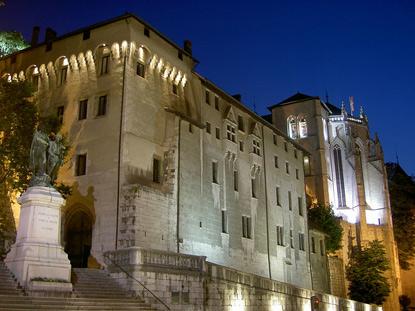
Introduction
Chambéry (pop. 60,000; urban 200,000) is the historic capital of the Savoy, a mountain town nestled in the Leysse Valley between the Bauges and Chartreuse massifs in the northern Pre-Alps. Once the capital of the Duchy of Savoy from the 14th century until 1860, when the region was annexed to France following a plebiscite, Chambéry served as home to the Dukes of Savoy and briefly housed the Shroud of Turin in its ducal château from 1502 to 1578. The town displays a distinctive Piedmontese-inspired architecture throughout its well-preserved medieval quarter, whilst its strategic position at the gateway to the main Alpine resorts and adjacent to Lac du Bourget, France's largest natural lake, makes it an important administrative and commercial centre for the region. Notable for being the birthplace of the Opinel knife and home to philosopher Jean-Jacques Rousseau, Chambéry blends Italian and French cultural influences, reflected in its gastronomy, architecture, and the famous trompe-l'oeil paintings that adorn the Cathedral of Saint-François-de-Sales.
Interesting Facts about Chambéry
- Chambéry was the historical capital of Savoy, where the counts and dukes made their seat from the 13th and 14th centuries.
- The Château des Ducs de Savoie once safeguarded the Holy Shroud in its Sainte-Chapelle from 1502 to 1578.
- The city’s emblematic Elephant Fountain (1838) honours General de Boigne and famously shows four elephants without hindquarters.
- Chambéry’s old town feels distinctly Italianate, with Piedmontese-inspired arcades, trompe-l’œil façades and narrow traboules.
- The vast trompe-l’œil interiors of Chambéry Cathedral are among the most striking in France, with painted vaults that trick the eye.
- Jean-Jacques Rousseau lived at Les Charmettes on the city’s edge, later romanticised as a refuge of learning and love.
- The city lies between the Bauges and Chartreuse massifs, acting as a gateway to Alpine passes and ski resorts.
- Nearby Lac du Bourget is France’s largest natural lake, adding lakeside leisure to Chambéry’s Alpine appeal.
- Much of northern Chambéry was rebuilt after 1944 bombings, while the south retains a 17th-century character.
- Chambéry’s carillon at the castle is one of the largest in the world, with dozens of bells chiming over the rooftops.
History
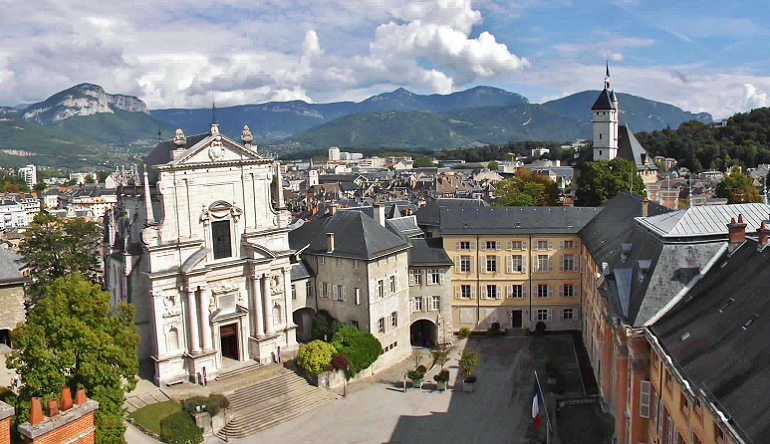
Chambéry's origins trace back to the Roman era, when it was known as Lemencum, a modest settlement along important Alpine trade routes. The town's true significance emerged in the 11th century when Count Humbert I of Savoy established it as a strategic stronghold. By 1232, Count Thomas I of Savoy had elevated Chambéry to the status of capital of the Duchy of Savoy, transforming this Alpine town into the political and administrative heart of a realm that would eventually span both sides of the Alps. The construction of the imposing Château de Chambéry began during this period, serving as the primary residence of the House of Savoy for over two centuries. The castle became home to one of Christianity's most sacred relics, the Holy Shroud of Turin, which was housed in the Sainte-Chapelle from 1453 until a devastating fire in 1532 prompted its transfer to Turin.
The 16th and 17th centuries marked a golden age for Chambéry as the seat of the Savoyard court. The University of Savoy was founded in 1679, establishing the city as an important centre of learning and intellectual discourse in the Alpine region. However, the town's fortunes shifted dramatically during the French Revolutionary Wars when Savoy was annexed by France in 1792. This period of French rule lasted until 1815, during which time Chambéry experienced significant administrative and social reforms under Napoleon's influence. The Congress of Vienna restored Savoy to the Kingdom of Sardinia-Piedmont, but French cultural and linguistic influences had become deeply embedded in the region's identity.
The most pivotal moment in Chambéry's modern history came in 1860 with the Treaty of Turin, when Emperor Napoleon III and King Victor Emmanuel II agreed to the permanent annexation of Savoy to France. A plebiscite held that same year saw an overwhelming majority of Savoyards vote in favour of French union, with Chambéry serving as the administrative centre for this historic transition. The arrival of the railway in 1856 had already begun to integrate the region more closely with France, and the city rapidly modernised throughout the late 19th century. Notable figures associated with Chambéry include Jean-Jacques Rousseau, who spent formative years in the city during the 1730s, and Joseph de Maistre, the influential political philosopher born here in 1753. The 20th century saw Chambéry develop into the thriving préfecture of Savoie it remains today, balancing its role as a modern administrative centre with careful preservation of its remarkable medieval and Renaissance architectural heritage.
Main Attractions
Ville Ancienne (Old Town)
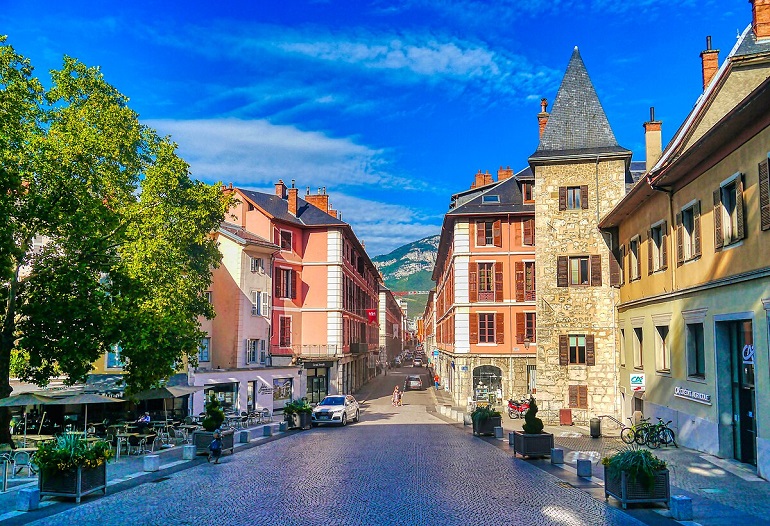
The heart of Chambéry beats in its Ville Ancienne, a picturesque historic centre dating from the 15th and 16th centuries. Labyrinthine lanes, elegant squares, and private mansions adorned with colourful façades and ornate ironwork evoke a distinct Piedmontese influence. Meandering through the alleys reveals secret courtyards, medieval passageways known as traboules, and a vibrant atmosphere enhanced by artisan shops and lively cafés. The Place Saint-Léger stands as a focal point, surrounded by period buildings, chic boutiques, and inviting terraces, making it ideal for leisurely strolls and soaking up local character.
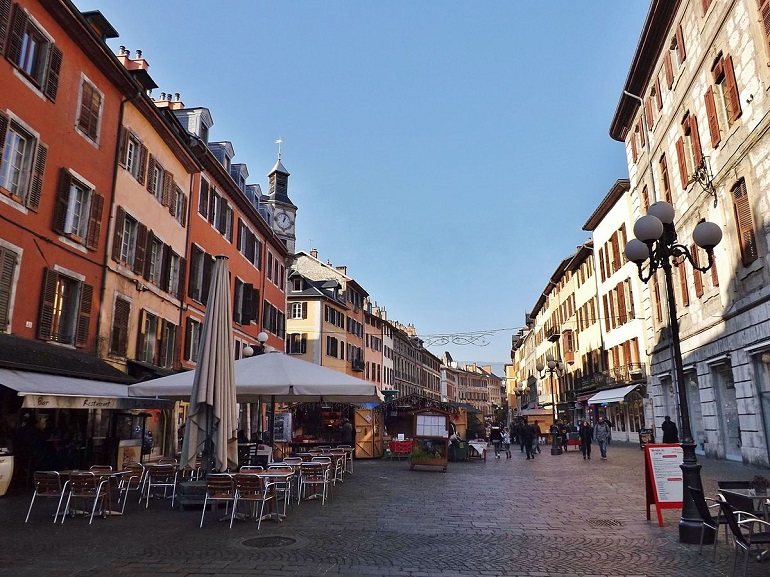
Place Saint-Léger
As the principal pedestrian thoroughfare in the Ville Ancienne, Place Saint-Léger is the dynamic heart of Chambéry’s historic centre. This long, open square was once the city’s political and economic hub and remains a favourite gathering spot for both residents and visitors. It is lined with the colourful façades of historic townhouses and several distinguished private mansions, while the ground floors are occupied by a lively succession of boutiques, specialist food shops, and cafés with inviting terraces. The square frequently hosts markets and cultural events, adding to its vibrant atmosphere and making it an essential and bustling landmark for anyone exploring the city.
Château des Ducs de Savoie (Castle of the Dukes of Savoy)
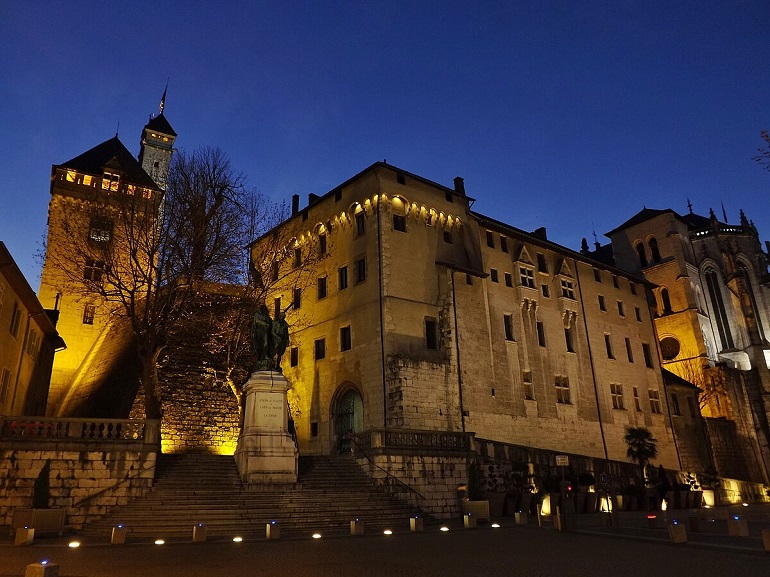
Presiding majestically over the city, the Château des Ducs de Savoie reflects Chambéry’s eminent role as former capital of the Duchy of Savoy. Once home to counts and dukes, this centuries-old fortress today accommodates the regional government. Visitors can admire structures from the medieval ramparts to the Renaissance wings and tour the Sainte-Chapelle, which famously housed the Turin Shroud in the sixteenth century. The ramparts and towers afford impressive vistas over the rooftops and surrounding Alpine peaks, while the castle’s 70-bell Grand Carillon regularly fills the city with music.
Cathédrale Saint-François-de-Sales
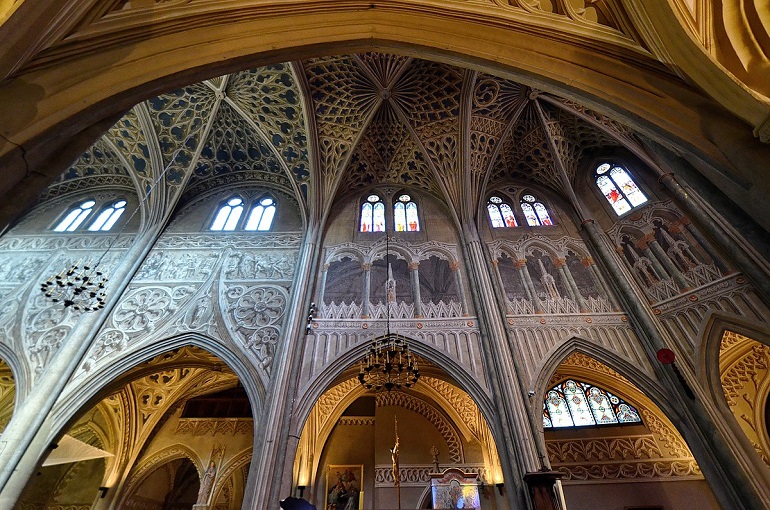
With its understated Gothic façade, the Cathédrale Saint-François-de-Sales houses one of Europe’s largest ensembles of trompe l’oeil murals, making its interior an unexpected artistic treasure. Built in the fifteenth century, the cathedral’s vaulted ceilings and walls are intricately painted to mimic marble and architectural features, lending extraordinary illusion and depth. Stained glass windows and a grand organ add to the atmospheric experience, while the cathedral’s tranquil setting invites quiet reflection. It is a unique encounter with religious art in the heart of the city.
La Fontaine des Éléphants (Fountain of the Elephants)
A defining symbol of Chambéry, the Fountain of the Elephants was erected in 1838 to honour the philanthropic General Count de Boigne. Rising 17 metres, the monument features four dramatic elephants, each jutting out two front legs and a head—as a playful nod, the locals call it "La Fontaine des quatre sans cul." The fountain is both a work of art and a historical marker, referencing Hannibal's legendary Alpine crossing. Its central location and impressive scale provide a photographic highlight for visitors, especially when illuminated in the evening.
Parc du Verney
A verdant oasis in central Chambéry, Parc du Verney was redesigned in the nineteenth century and now offers broad lawns dotted with fountains, mature trees, and vibrant flowerbeds. Popular with families, the park features a modern playground, skateboarding area, and a dedicated dog park. Its inviting paths make it perfect for picnics, leisure walks, or simply unwinding amidst nature. Seasonal colours and shaded benches ensure it remains a favourite destination for both locals and visitors throughout the year.
Lake Bourget (Lac du Bourget)
A short distance from Chambéry lies Lake Bourget, France’s largest natural lake, renowned for its serene beauty and wealth of outdoor activities. The lakeshore is ideal for swimming, sailing, paddleboarding, or cycling along scenic trails. Framed by dramatic mountains, it offers opportunities for hiking and wildlife observation, while lakeside villages present charming stops for traditional Savoyard cuisine. The area draws both adventure enthusiasts and those seeking relaxation by clear waters.
Top Museums
Fine Arts
Musée des Beaux-Arts
Located in a converted 19th-century grain hall next to the Palace of Justice, the Musée des Beaux-Arts stands as Chambéry’s most significant venue for art enthusiasts. Its extensive collection places particular emphasis on Italian paintings, spanning from the early Renaissance to the 18th century, making it one of the most distinguished Italian art collections outside Italy itself. The museum owes much of its foundation to the generosity of local art dealer Hector Garriod, whose bequest established its reputation.
Visitors are treated to a captivating journey through Western art history, with masterpieces such as the Portrait of a Young Man by Paolo Uccello, alongside works from masters of the Italian and Northern schools. The French and Savoyard sections offer a lively counterpoint, showcasing how local talent engaged with wider European trends. The museum also hosts temporary exhibitions, giving insights into specific artists, styles, or periods, and ensuring there is always something new to discover.
History and Heritage
Musée Savoisien
Set in a complex of historic religious and civic buildings—including a former convent, palace, and Gothic church—the Musée Savoisien is the foremost place to explore the history and culture of the Savoie region. Following a comprehensive renovation, it presents a modern, engaging narrative that takes visitors from the prehistoric settlements of Savoie through Roman antiquity, the Middle Ages, Renaissance, and into the modern era.
Among its most extraordinary artefacts are the early 14th-century secular murals from the Château de la Rive in Cruet, a unique set of profane medieval paintings that tell the chivalric romance of Girart de Vienne. Interactive displays, touchscreens, and multimedia enhance the storytelling, making the museum as educational as it is immersive. Special exhibitions often highlight regional craftsmanship and local history, further enriching the visitor experience.
Literature and Philosophy
Les Charmettes, Maison de Jean-Jacques Rousseau
Perched on a leafy hillside overlooking Chambéry, Les Charmettes is the beautifully preserved country house where Jean-Jacques Rousseau lived with Madame de Warens from 1736 to 1742. These years proved pivotal for the philosopher, marking a period of passionate study, music, botany, and philosophical reflection that he later described as “the happiest of my life.” The house maintains its period furniture, personal effects, and the ambiance of a quiet 18th-century retreat.
The surrounding gardens, planted with medicinal herbs, vegetables, and fruits as they would have been in Rousseau’s time, invite contemplation and reflection. It has been a site of pilgrimage for writers, artists, and admirers of Rousseau since the French Revolution, and today, it continues to evoke the spirit of one of Europe’s most influential Enlightenment thinkers.
Natural Sciences
Musée d'Histoire Naturelle de Savoie
Housed in the former gardener’s house of the Château de Chambéry, the museum of natural history is a cabinet of curiosities that transports visitors back to the golden age of scientific exploration. Founded in 1844, its collections of geology, paleontology, botany, and zoology number over 300,000 specimens, with a strong emphasis on the unique biodiversity of the Savoie region.
The zoology room, with its original 19th-century display cases, is especially remarkable, presenting a rare glimpse into historic scientific practices. Visitors can marvel at birds of prey, Alpine wildlife, and a wide variety of insects and fossils, all presented in the spirit of wonder and discovery that animated 19th-century science.
Science and Technology
Galerie Eurêka
Galerie Eurêka is Chambéry’s interactive centre for scientific culture, designed to make science accessible, playful, and engaging for all ages. Its approach is hands-on and interactive, encouraging visitors to experiment, touch, and play with exhibits that bring scientific principles to life.
The centre’s “mountain space” is a highlight, using the Alpine environment as a natural laboratory to explore geology, ecosystems, climate, and the technology that enables life and industry at high altitude. The emphasis is on learning through discovery, making it an ideal destination for families, school groups, and anyone curious about the world around them.
Atelier de l'eau (Cognin)
Located a short distance from Chambéry in Cognin, Atelier de l’eau is a unique museum dedicated to the science and history of water power. Housed in a restored spinning mill, the museum explores the industrial heritage of the “Canal des Usines,” which once powered Chambéry’s textile mills, forges, and workshops.
The exhibits are divided into three broad areas: the history of the canal and its industries, the science of water as a source of life and energy, and interactive models demonstrating water’s role in mills, hydroelectricity, and daily life. The museum is both a tribute to local ingenuity and a reflection on sustainable resource use.
Other Notable Museal Venues
Hôtel De Cordon
While not primarily a museum, the elegant Hôtel De Cordon hosts a variety of exhibitions and cultural events, often focusing on art, photography, and regional heritage.
La Chartreuse d’Aillon
Located in the nearby mountains, this former Carthusian monastery has been transformed into a cultural centre and museum dedicated to the history and traditions of mountain life in the Savoie. Its exhibitions and events explore Alpine culture, nature, and community.
Local Cuisine
Chambéry’s local cuisine is rooted in the rich traditions of the Savoie region, drawing on hearty mountain flavours and Alpine ingredients. Visitors will be tempted by tartiflette, a comforting dish of potatoes baked with Reblochon cheese, onions and lardons, as well as diots, Savoyard pork sausages served in white wine sauce. Cheese lovers should not miss raclette and fondue savoyarde, communal feasts featuring melted cheese, bread, and charcuterie. The area’s creamy croûte savoyarde offers another indulgent way to enjoy local bread and cheese, while for dessert, the fragrant bugnes—crisp, airy pastries dusted with sugar—provide a sweet finish to a meal. Chambéry’s markets and bistros deliver an authentic taste of Savoie hospitality, celebrating the region’s rustic yet refined culinary heritage.
Getting There
Chambéry is readily reached by rail, with frequent direct TGV and TER services from Paris Gare de Lyon and Lyon Part‑Dieu to Chambéry–Challes‑les‑Eaux station, a short walk north of the centre; typical journeys take about three and a half hours from Paris and roughly ninety minutes from Lyon. For air arrivals, Chambéry–Savoie Airport (CMF) beside Lac du Bourget operates seasonal winter flights, offering convenient Alpine access when services run. Long‑distance coaches also connect major French hubs with Chambéry, providing an alternative to the train for cross‑country travel. If driving, the city is well connected by motorways and main roads to Lyon and Grenoble and across the wider Auvergne‑Rhône‑Alpes region, making it an easy gateway to Savoie.