


| Contents |
|---|
Introduction
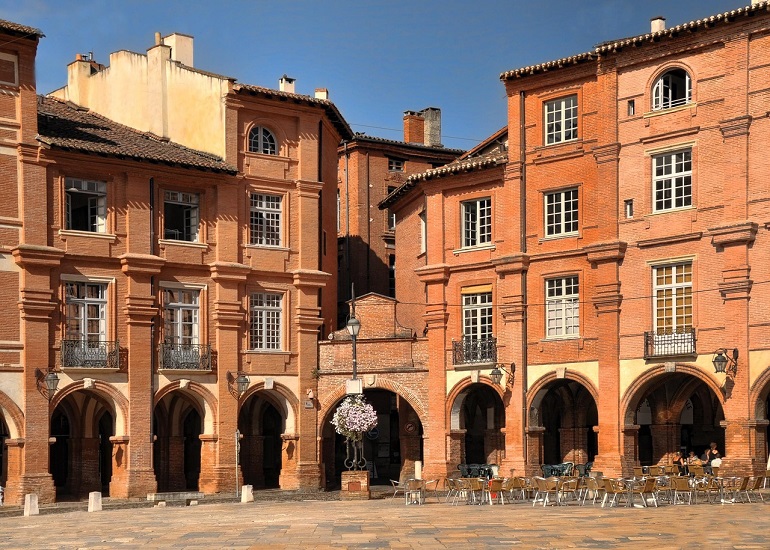
Dubbed the "red city" due to its distinctive pink brick architecture, Montauban (pop. 61,000) is an attractive medieval city renowned as the birthplace of the famous neoclassical painter Jean-Auguste-Dominique Ingres. The town flourished as an important commercial and cultural centre throughout the medieval period and later became a significant Protestant stronghold during the French Wars of Religion, notably withstanding a siege by King Louis XIII in 1621. Montauban's rich architectural heritage includes the stunning Place Nationale with its characteristic pink-brick arcades.
Interesting Facts about Montauban
- Montauban is a historic “pink-brick” city whose distinctive rosy façades come from local clay used since the Middle Ages.
- Founded in 1144 by Alphonse Jourdain, Count of Toulouse, it is one of the oldest planned medieval bastide towns in southern France.
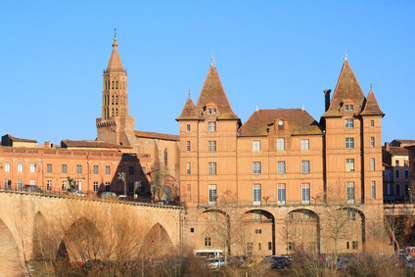
- The Pont Vieux, a handsome 14th-century bridge over the Tarn, long anchored the town’s trade and defences.
- As a major Huguenot stronghold, Montauban famously withstood an 86-day royal siege in 1621, an episode still commemorated locally as “les 400 coups.”
- The city gave France two towering artists—painter Jean-Auguste-Dominique Ingres and sculptor Antoine Bourdelle—celebrated in its flagship museum.
- Montauban became the préfecture of the Tarn-et-Garonne department in 1809 after Napoleon created the département.
- The stone-built Cathedral of Notre-Dame de l’Assomption stands out amid the city’s brick architecture, reflecting royal Catholic authority after the Wars of Religion.
- Place Nationale, lined with elegant double arcades, is a model southern square that frames markets, cafés, and civic life in warm brick tones.
- The Church of Saint-Jacques preserves medieval fabric and still bears scars from cannon fire during the 1621 siege.
- Montauban sits at the confluence of the Tarn and Tescou rivers, a setting that shaped its commerce, fortifications, and urban plan.
History
Montauban is the second oldest bastide (fortified new town) in southern France, founded in October 1144 by Count Alphonse Jourdain of Toulouse, who granted the settlement a liberal charter to develop trade activities in the north-western extremity of his territory. The town's name derives from the Latin "mons albanus" (white mountain), likely referring to the hill covered with pale-leaved willow trees where it was originally built. The inhabitants were drawn chiefly from Montauriol, a neighbouring village that had grown around the monastery of St Théodard, and the town was constructed according to a revolutionary grid pattern arranged around a central square, making it the first new medieval town in south-western France.
During the 13th century, Montauban suffered greatly from the ravages of the Albigensian Crusade and the Inquisition, but by 1317 it had recovered sufficiently to be chosen by Pope John XXII as the head of a diocese, with the basilica of St Théodard becoming the cathedral. The town's strategic location at the confluence of the Rivers Tarn and Tescou made it a valuable prize during the Hundred Years' War, and in 1360, under the Treaty of Brétigny, it was ceded to the English, who occupied it until the inhabitants expelled them in 1414. In 1560, the bishops and magistrates embraced Protestantism, expelled the monks, and demolished the cathedral, transforming Montauban into one of France's most important Huguenot strongholds alongside La Rochelle and Cognac.
The most famous episode in Montauban's history occurred during the Protestant Wars of Religion, when it became known as "Little Geneva" and served as headquarters for the Huguenot rebellion of 1621. The city successfully withstood an 86-day siege by Louis XIII, during which the frustrated king allegedly fired 400 cannonballs in a few hours on 19-20 September 1621, an event that Montaubanais commemorated by holding a banquet during the cannonade as a symbol of their defiance. The city did not submit to royal authority until after the fall of La Rochelle in 1629, when Cardinal Richelieu destroyed its fortifications and offered financial advantages to secure its loyalty. The Protestant persecution continued under Louis XIV with the dragonnades and the revocation of the Edict of Nantes in 1685, though Montauban later flourished under Napoleon, who made it the head of the newly created Tarn-et-Garonne department in recognition of its loyalty.
Main Attractions
Place Nationale
The Place Nationale serves as the focal point of Montauban’s historic centre, exuding an atmosphere of timeless elegance and lively southern charm. This spacious square is defined by its distinctive double arcades and harmonious red brick facades, which glow warmly in sunlight and lend an unmistakable Italianate feel to the surroundings. Its symmetry is especially striking, and the square regularly hosts local events and bustling outdoor cafés. The newly installed water mirror creates periodic jets and illuminated displays, making the Place a magical spot to pause and soak up the city’s social life day or night, truly at the beating heart of Montauban.
Montauban Cathedral
Dominating the town’s silhouette from its elevated position, Montauban Cathedral presents a magnificent contrast to the red brick architecture around it, owing to its imposing classical façade of pale stone. Inside, the cathedral displays baroque artistry, a grand organ, finely carved choir stalls, and houses the significant painting “Vœu de Louis XIII” by the famous artist Ingres. The cathedral’s historical legacy is tied to its late construction, necessitated by the town’s turbulent religious past and the destruction of its medieval predecessor.
Pont Vieux
The Pont Vieux is a mediaeval bridge spanning the Tarn River, celebrated for its age and architectural beauty. Its robust arches and distinctive brickwork are emblematic of Montauban's resilience and historical significance, offering splendid views of the town’s skyline. A stroll across the Pont Vieux provides not just picturesque scenery but also a sense of the centuries of history and commerce that have traversed it, linking the heart of Montauban to its riverbanks.
Botanical Garden
Nestled within the town, Montauban’s Botanical Garden is a tranquil oasis boasting a remarkable array of trees, flowering shrubs, and themed plant collections. The garden is the ideal place for leisurely strolls or peaceful picnics—an inviting retreat for families and solo travellers alike. Its pathways, playgrounds, and picnic areas encourage visitors to unwind and savour moments of natural beauty, making it a cherished green space amid the cityscape.
Port Canal
Lining the banks of the Tarn, the Port Canal is a reminder of Montauban’s close connection to its waterways and trading history. Today, it’s a vibrant precinct ideal for walking, cycling, or boating, with marinas, shaded avenues, and riverside cafés. It is especially lively during the summer months when visitors can enjoy a relaxed atmosphere, watching boats drift by or embarking on gentle excursions along the canal’s scenic towpaths.
Rue Jules Michelet
This enchanting street threads through Montauban’s centre, offering a blend of historical and modern vitality. Architectural details, vibrant shops, and ornate doorways line Rue Jules Michelet, drawing visitors into the city’s living cultural tapestry. The street is ideal for those who appreciate both heritage and the energy of daily urban life, providing glimpses into Montauban’s affluent merchant past alongside contemporary attractions.
Tohubohu Theme Park
Perfect for families seeking entertainment, the Tohubohu Theme Park invites children and adults into a whimsical world of inflatable play structures, amusement rides, and arcade games. Renowned for its friendly atmosphere and diverse amenities—including spaces for the LGBTQ+ community—it’s a place where laughter and fun are guaranteed, especially on warm weekends and school holidays.
Top Museums
Fine Art and Sculpture
Ingres Bourdelle Museum
The Ingres Bourdelle Museum is perhaps Montauban’s most celebrated cultural landmark. Housed in a majestic former episcopal palace that towers over the Tarn river, this museum is dedicated to two of the city’s most illustrious natives: the neo-classical painter Jean-Auguste-Dominique Ingres and the sculptor Antoine Bourdelle. The museum’s permanent collection is a true feast for art lovers, displaying major paintings, a vast selection of delicate drawings (Ingre's studies exceed 4,500), and an entire floor devoted to Bourdelle’s monumental sculptures. The galleries are arranged in grand historic rooms, including the renowned Hall of the Black Prince, blending opulence with artistic reverence. Visitors will also find Ingres's personal items, including his violin, as well as Bourdelle's expressive busts and reliefs, offering an immersive journey into creative genius.
Natural History and Science
Muséum d'Histoire Naturelle Victor Brun
At the Victor Brun Natural History Museum, the wonders of the natural world take centre stage. Located in the stately Cour des aides, the museum traces its roots to the mid-19th century, founded by Montauban’s scientific society. Inside, one can marvel at extensive collections of mammals, birds from every continent, shells, insects, and striking fossils—most notably, the phosphorite fossils of Quercy and a fragment of the celebrated Orgueil meteorite. Special exhibitions often showcase rare specimens and interactive displays, while the permanent collection features a new, captivating mascot—a magnificent brown bear known as Nénette. The museum’s mission is both scientific and educational: expect to leave with a fresh perspective on wildlife and the regional environment.
Toys and Nostalgia
Musée des Jouets (Toy Museum)
The Toy Museum offers a delightful voyage back to childhood for visitors of all ages. Entering the museum, guests are greeted by a nostalgic panorama of toys and games spanning centuries, from vintage dolls and lead soldiers to elaborate Meccano models and model trains. The museum presents not merely static displays, but also interactive areas and working models—including mechanical sets, puppet theatres, miniature doll houses, games of skill, and a vibrant games room. This is a space designed for shared family wonder, where adults can reminisce and children can play, all while exploring the evolution of toys and craftsmanship over generations.
Wartime History
Museum of the Resistance and the Fighter
For those interested in twentieth-century history, the Museum of the Resistance and the Fighter provides a compelling look at Montauban’s role—and that of France—in WWII. Carefully curated exhibits trace the rise of the Resistance, the occupation, clandestine life, and the liberation of the region. Personal testimonies, photographs, documents, and artefacts bring to life stories of resistance members and daily life under threat, ensuring the events and sacrifices of the era are not forgotten. The museum’s timeline and educational displays encourage reflection, making it a moving and essential stop for visitors wanting to understand the deeper historical currents of Montauban.
Archaeology and Crafts
Archeodeco
Archeodeco is a specialty museum and gallery that complements the city’s cultural offering, often displaying thematic temporary exhibitions on archaeology, artisanal heritage, and regional history. It bridges art, history, and craftsmanship in a more contemporary and interactive setting, offering both children and adults opportunities to engage with cultural objects and creative processes.
Local Cuisine
Montauban’s local cuisine is a celebration of traditional southwestern French flavours, offering hearty and rustic dishes that reflect the agricultural riches of the surrounding region. A visit to Montauban provides an opportunity to savour specialities such as cassoulet montalbanais, a fragrant slow-cooked casserole of white beans, duck, and sausage, and magret de canard, the tender breast of duck, often served with tangy plum or fig sauces. The area is equally known for its foie gras, traditionally prepared and enjoyed on toasted bread, and the irresistible pastis de Montauban, a delicate puff pastry treat layered with apples and scented with aniseed. Local markets brim with fresh seasonal produce, which find their way into delectable garbure soups and a variety of goat’s cheeses, ensuring that every meal in Montauban is a true taste of the region’s rich culinary heritage.
Getting There
By train Montauban-Ville-Bourbon station sits on the busy Paris–Toulouse axis, so frequent inter-city and regional services sweep in from Toulouse Matabiau in under 30minutes and from Paris Austerlitz in about five hours; direct TER links also fan out towards Agen, Brive-la-Gaillarde and Cahors, making rail the swiftest and most straightforward option for most visitors.
By coach Long-distance coaches operated by national networks tie Montauban to Toulouse, Bordeaux, Paris and many smaller towns; most services drop passengers at the central coach stop near the railway station, so connections onward into the historic centre are short and simple.
By car Drivers reach Montauban via the A20 autoroute, which traces a largely toll-free route south from Limoges and north from Toulouse, or via the A62/A68 if arriving from Bordeaux or Albi; once in town, the inner ring road (boulevard périphérique) helps skirt the medieval core before diving into signposted car parks near all the major sights.
| Travel destinations in Midi-Pyrénées | ||||||||||||||
|---|---|---|---|---|---|---|---|---|---|---|---|---|---|---|
|
|
|
|
| ||||||||||
|
|
|
|
| ||||||||||
|
|
| ||||||||||||


