


| Contents |
|---|

Introduction
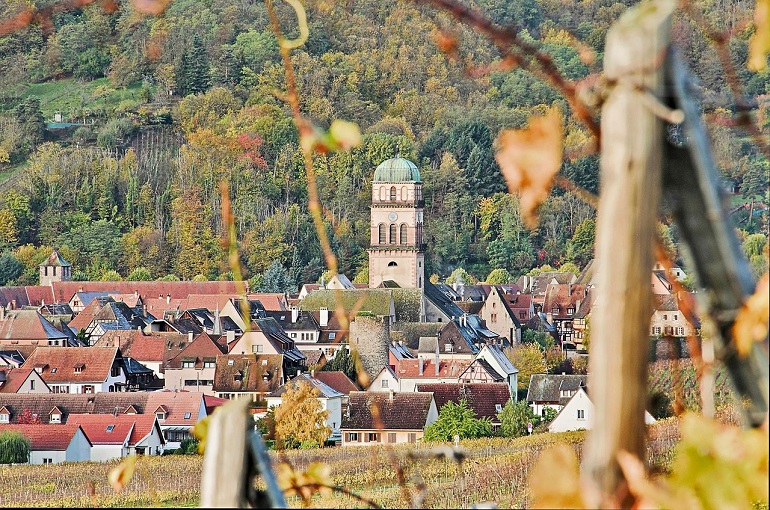
Kaysersberg (pop. 2,700) is a gorgeous fortified village on the Alsatian wine route. Kaysersberg's history started in 1227 when Emperor Frederick II purchased a small castle that would give the village its name (Kaisersberg meaning the 'Emperor's mountain' in German). The castle was quickly expanded into one of the largest fortresses in the region as a defense against the Duchy of Lorraine.
In 1293, Kaysersberg is elevated to the rank of Free Imperial City, under the direct control of the Holy Roman Emperor. In 1354, it would become one of the ten Alsatian cities and towns forming the Décapole alliance, which would last until 1679, soon after the brutal annexation of Alsace to France by Louis XIV.
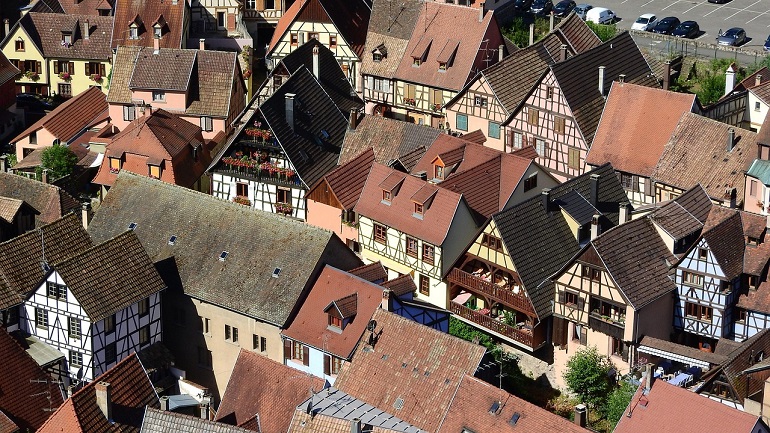
The town's well-preserved medieval centre features remarkable half-timbered Renaissance houses, remnants of 15th-century ramparts with five surviving towers, and the unique fortified bridge dating from 1514 that spans the River Weiss, earning Kaysersberg recognition as France's favourite village in 2017.
Interesting Facts about Kaysersberg
- Kaysersberg’s name means “Emperor’s Mountain,” a nod to its strategic medieval castle that once controlled the Weiss Valley.
- The town was first recorded in 1227 when Holy Roman Emperor Frederick II acquired and refortified its hilltop stronghold.
- Kaysersberg became part of France in 1648 yet long retained German as the everyday language, reflecting Alsace’s shifting borders.
- In 2017, Kaysersberg was crowned France’s “Village préféré des Français,” highlighting its enduring national appeal.
- The fortified stone bridge from 1514, complete with parapets and former lock-up, uniquely spans the Weiss through the old town.
- Kaysersberg sits on the famed Alsace Wine Route and is renowned for high-quality vineyards encircling the village.
- The village is the birthplace of Albert Schweitzer, the humanitarian doctor and Nobel Peace Prize laureate of 1952.
- Kaysersberg merged with neighbouring Kientzheim and Sigolsheim in 2016 to form the commune of Kaysersberg Vignoble.
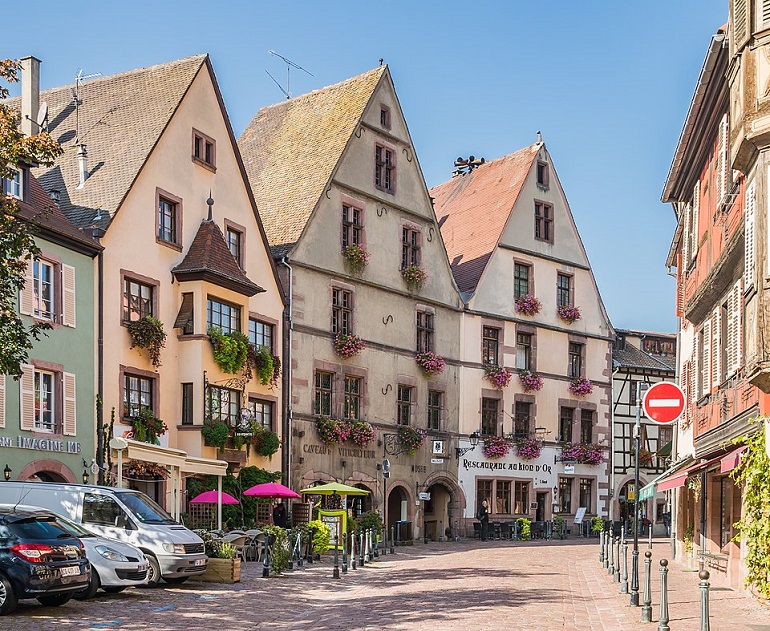
- The town’s half-timbered Renaissance houses and cobbled lanes create one of Alsace’s most photogenic streetscapes.
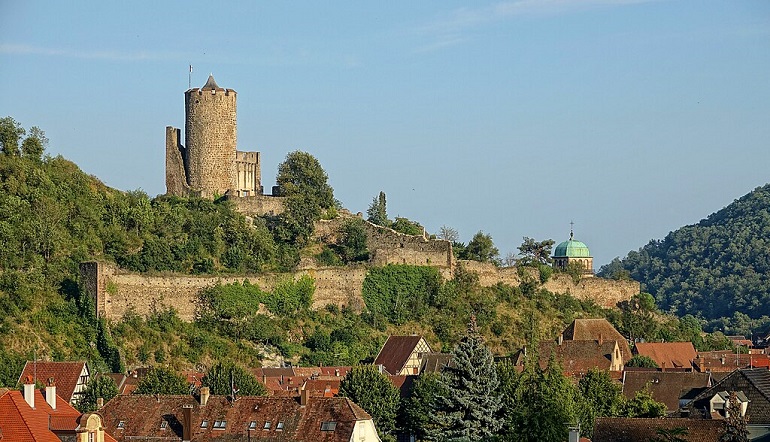
- The ruined imperial castle’s circular keep offers sweeping views over vine-clad slopes and the medieval rooftops below.
History
Kaysersberg's origins trace back to its strategic location on an ancient Roman road connecting Alsace to Lorraine through the Col du Bonhomme pass. The town was first documented in 1227 when Frederick II, Holy Roman Emperor, purchased the existing castle and ordered its refortification to control the crucial Weiss Valley. The settlement's German name literally translates to "Emperor's Mountain," reflecting its imperial significance. In 1293, King Adolf of Germany granted Kaysersberg the same rights and exemptions as Colmar, elevating it to the prestigious status of an imperial free city. This newfound autonomy meant that no feudal lord could claim rights over the town, fostering a spirit of independence that would define its character for centuries.
During the medieval period, Kaysersberg flourished as a member of the Décapole, a remarkable league of ten Alsatian free cities within the Holy Roman Empire established in 1354 by Emperor Charles IV. This unique alliance provided military cooperation and financial assistance—an exceptionally rare arrangement for the era—amongst cities including Colmar, Haguenau, Wissembourg, and Sélestat. The town's prosperity was significantly enhanced by viticulture, particularly after the introduction of Tokaj grape varieties from Hungary in the 16th century, which established its reputation as a premier wine-producing region. However, this golden age was severely disrupted by the devastating Thirty Years' War, which brought widespread destruction to the region. The Décapole was eventually dissolved by Louis XIV in 1674 after Alsace became part of France in 1648, marking the end of an era of independent city-states.
Kaysersberg's modern history reflects the complex Franco-German heritage of Alsace, having changed sovereignty multiple times over the centuries. Following its incorporation into France in 1648, most inhabitants continued to speak German, maintaining their cultural identity despite political changes. The town experienced further transitions when it belonged to Germany from 1871 to 1918 following the Franco-Prussian War, and again from 1940 to 1944 during World War II. The 19th century brought international recognition when Albert Schweitzer, the future Nobel Peace Prize winner, was born here in 1875 in a distinctive turreted house at the town's summit. In recent decades, Kaysersberg has gained renewed acclaim, being voted "Village préféré des Français" in 2017, whilst maintaining its reputation for exceptional wines, particularly the Grand Cru Schlossberg, which in 1975 became the first Alsatian wine to receive the prestigious Appellation Grand Cru d'Alsace qualification.
Main Attractions
Kaysersberg Castle
Dominating the skyline, Kaysersberg Castle dates from the early thirteenth century and was commissioned by Frederick II of the Holy Roman Empire to secure a significant route between Upper Alsace and Lorraine. The castle’s late Romanesque design features a formidable circular keep, one of the oldest of its type in Alsace, boasting walls over 4 metres thick and offering outstanding views over the town, valley, and vineyards below. Visitors can ascend a spiral staircase of 122 steps to a panoramic platform, while the castle’s historic ramparts and remains evoke its once crucial military defence role. Though the castle was severely damaged during the Thirty Years’ War and other conflicts, its imposing silhouette today stands as the town’s emblem and a national monument, ensuring an unmissable stop on any Kaysersberg itinerary.
Ramparts and Towers
The medieval fortifications remain a striking feature, with the imposing Kessler Tower dating from 1372 and the Witches Tower standing guard above the vineyards. These towers remind travellers of Kaysersberg’s turbulent history and strategic importance, with some used as defensive bastions and others as places of confinement, giving insight into life in medieval Alsace.
Old Town & Fortified Bridge
The heart of Kaysersberg comprises a warren of cobbled lanes and brightly painted half-timbered houses, many dating to the Renaissance period and earlier. Among these, the fortified stone bridge built in 1514 stands out, ingeniously designed with embrasures and parapets for defence across the Weiss River. Unique among Alsace’s bridges, it even houses a small chapel at its centre, once used as a place of penance. The picturesque river setting is enhanced each season with flower displays along the parapet, and nearby the charming Faller Brief House showcases classic Rhenish Renaissance timber architecture, drawing guests for both its elegant façades and local wine tastings.
Town Hall
The Town Hall, or Hôtel de Ville, of Kaysersberg is a superb example of Rhineland Renaissance architecture, built in stone in 1521. Standing prominently in the town centre, its elegant façade is distinguished by a beautifully worked two-storey bay window and a stair turret to the left. Once serving as the residence for the imperial bailiff, the building now houses the town's administrative offices and the local tourist information centre. The interior's council hall features a coffered ceiling and intricate wood panelling, reflecting the civic pride and historical importance of Kaysersberg during its time as a free imperial city.
Church of Sainte-Croix

Standing at the centre of the village, the Romanesque and Gothic Church of Sainte-Croix captivates with its soaring steeple, finely carved grand portal, and remarkable wooden altarpiece from 1518. Inside, visitors will find an oversized statue of Christ and beautiful stained glass, set in an atmosphere that combines artistic mastery with centuries of devotion. In front of the church sits the striking Emperor Constantine Fountain, adding to the site’s tranquil appeal.
Verrerie d’Art de Kaysersberg
Just off the main lanes, the Verrerie d’Art de Kaysersberg invites guests to watch master glassblowers in action, transforming glowing molten glass into delicate works of art. Workshops and a boutique ensure a memorable experience and the chance to acquire beautifully crafted souvenirs.
Galtz Monument
On the wooded heights above Kaysersberg, the impressive Galtz Monument—a gigantic statue of Christ—offers exceptional hiking and remarkable views of the valley below, stretching all the way to the Black Forest in Germany on clear days. This tranquil spot is a favourite for outdoor enthusiasts and those seeking reflective moments away from the bustling village.
Alsace Wine Route & Vineyards
Set amid rolling vineyards, Kaysersberg is a celebrated stop along the Alsace Wine Route, especially noted for its Schlossberg Grand Cru terroir. Walking trails through the surrounding hills lead past rows of grapevines glowing gold in autumn, with plentiful opportunities for tasting notably crisp Riesling and aromatic Gewürztraminer wines. Many family-run wine cellars offer both tours and tastings, making this one of the region’s top destinations for oenophiles and those seeking a scenic countryside stroll laced with local flavour.
Seasonal Events and Markets
The festive rhythm of Kaysersberg is best experienced during its vibrant seasonal celebrations, from the bustling Christmas market—regularly ranked among Alsace’s finest—to folk festivals and artisan fairs lining the streets through the year. Visitors can wander among elaborately decorated stalls, sample local treats, and join the lively atmosphere exemplifying Alsatian hospitality.
Top Museums
Historical Museum
Historical Museum of Kaysersberg
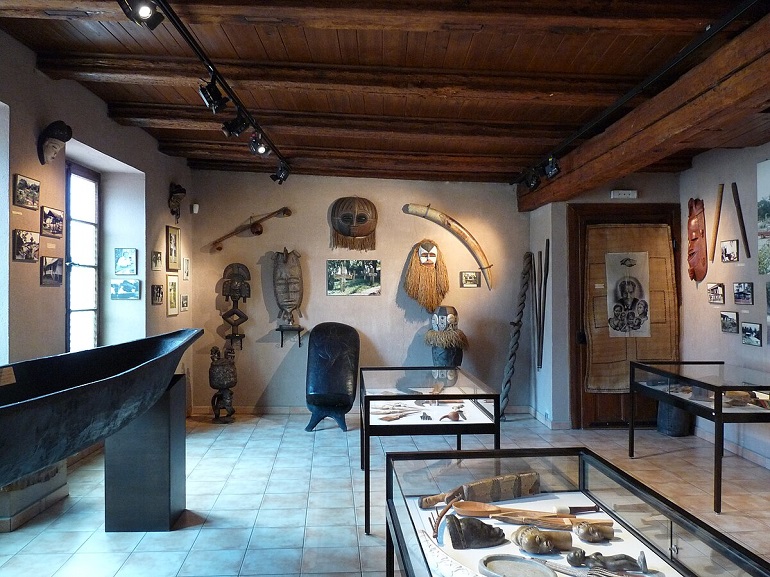
Housed in a beautifully restored residence from the 16th century, the Historical Museum of Kaysersberg offers a journey through the town’s storied past. The collection vividly evokes life in Alsace over the centuries, beginning with archaeological finds that reveal Kaysersberg’s importance since the Neolithic era. Rustic tools, ancient weapons, and household objects provide insight into early local settlement. The museum’s rooms open onto a world of religious art: intricately carved altarpieces, sculptures, and painted panels spanning the 16th to 18th centuries are displayed with reverence, the highlight being the “Vierge Ouvrante,” an extraordinarily rare 14th-century carved Madonna that opens to reveal painted scenes. Local artisan crafts, from pottery to woodwork, sit alongside ceremonial costumes and folk art, conjuring the spiritual and secular customs of the region. The intimate layout, creaking wooden floors, and subtle play of light make a visit an evocative step back in time, offering both casual visitors and aficionados of Alsatian art a deep appreciation of Kaysersberg’s heritage.
Wine Museum
Museum of Alsatian Vineyards and Wine
Located in nearby Kientzheim within the historic Château de Schwendi, the Museum of Alsatian Vineyards and Wine provides a comprehensive exploration of the region’s centuries-old wine culture. The museum’s galleries are filled with traditional winemaking equipment—presses, barrels, glassware, and hand tools—each artefact revealing a step in the wine production process. Visitors learn about iconic Alsatian grape varieties and the importance of terroir. Panels and displays recreate seasonal vineyard work and festive rural celebrations, highlighting wine’s central role in Alsatian identity and economy. Photographs, period documents, and even historical advertising posters add context, while guided tastings and sensory exhibits enhance the experience for enthusiasts pursuing deeper knowledge of viticulture and regional gastronomy.
Biographical Museum
Albert Schweitzer Museum (Schweitzer Centre)
The Albert Schweitzer Museum—known as the Schweitzer Centre—has recently been renovated to emphasise not only the life of Dr. Albert Schweitzer, Nobel Peace Prize laureate and native of Kaysersberg, but also the modern-day resonance of his universalist message of peace. The museum takes the visitor chronologically through Schweitzer’s childhood in Alsace, his achievements in medicine, theology, and music, and his humanitarian work in Africa. Stylistically bold and interactive, the museum combines digital installations, archival photographs, and evocative personal artefacts such as family furniture, correspondence, and medical instruments from Schweitzer’s hospital in Lambaréné.
Exhibits focus on themes of international solidarity, respect for life, and the philosophy of “Reverence for Life.” Special displays explore the famous phrase “It’s midnight, Dr. Schweitzer,” evoking his tireless commitment to emergency medicine and peace-building even in the most challenging circumstances. For those interested in musical history, sections celebrate Schweitzer’s skills as a renowned organist. The Centre’s dedication to accessibility is evident, with audioguides for the visually impaired and hearing loops for those with aids, enabling a truly inclusive experience.
Workshops for children are a highlight in the summer months, encouraging creative engagement with Schweitzer’s legacy by allowing youngsters to construct animals inspired by those he encountered in Africa. The museum is designed for both immersive learning and quiet contemplation, offering a uniquely moving tribute to one of the twentieth century’s great humanitarians.
Regional Museums
Additional Museums in the Region
While the three above are the most prominent in the immediate Kaysersberg area, the nearby Musée Mémorial du Linge in Orbey commemorates World War I’s tragic battles, with authentic trenches, artefacts, and testimonies from the frontline offering a sobering window into the conflict that shaped Europe. In Lapoutroie, the Museum of Eaux-de-Vie delves into Alsatian spirits, blending local history with the traditions behind celebrated regional liqueurs.
Local Cuisine
Kaysersberg's culinary scene reflects its position in the heart of Alsace, where French finesse meets German heartiness in a delightful fusion of flavours. The town's restaurants and winstubs serve traditional Alsatian fare, with choucroute garni reigning supreme as the region's signature dish—tender sauerkraut accompanied by an array of smoked meats and sausages. Visitors should not miss the paper-thin tarte flambée, topped with crème fraîche, onions, and lardons, which pairs beautifully with local Riesling wines. The renowned Munster cheese, produced in nearby valleys, appears on many menus alongside hearty baeckeoffe, a slow-cooked casserole of mixed meats and potatoes. For those with a sweet tooth, the ring-shaped kugelhopf cake, often studded with almonds and raisins, makes for a perfect accompaniment to afternoon coffee, whilst the town's bakeries offer delicate bretzel and other Germanic pastries that showcase Kaysersberg's unique cultural heritage.
Getting There
By train The most straightforward rail route is to take a high-speed or regional service to Colmar, whose station enjoys frequent links with Paris, Strasbourg and Basel; from Colmar, the Fluo 68 local bus 145 completes the short, scenic journey through the Alsatian vineyards to Kaysersberg.
By coach or bus Direct long-distance coaches rarely serve the village itself, so the simplest option is to ride an intercity bus to Colmar or Strasbourg and transfer to the same Fluo 68 regional service, which drops passengers at the edge of Kaysersberg’s medieval centre.
By car Motorists should follow the A35 motorway towards Colmar, exit at the signposted junction for Kaysersberg, then glide west along the D415, a picturesque road that winds past half-timbered wine villages and delivers you directly to the town’s riverside car parks.
| Travel destinations in Alsace | ||||||||||||||
|---|---|---|---|---|---|---|---|---|---|---|---|---|---|---|
|
|
|
|
| ||||||||||
|
|
|
|
| ||||||||||


