


| Contents |
|---|
Introduction
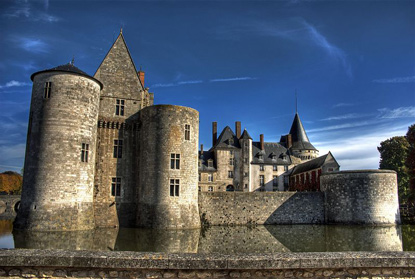
The Château de Sully-sur-Loire, located 45 minutes south of Orléans, is a 14th-century medieval castle converted into a residential château built at a natural fording point of the Loire River. First documented in 1102 as a defensive post on the left bank of the Loire, it has served for centuries as protection for the river crossing. The château features a rectangular keep flanked by four circular towers, surrounded by water-filled moats, and comprises two distinct parts: the donjon and the petit château. Though never a royal residence, it hosted numerous illustrious figures throughout history, including Joan of Arc who met the future Charles VII there in 1429, Louis XIV who sought refuge during the Fronde rebellion in 1652, and Voltaire during his exile. Its most famous owner was Maximilien de Béthune, Duke of Sully and minister to King Henri IV, who purchased and renovated the château in 1602, extending the original fortress and creating the surrounding park. Today, the château is owned by the Loiret Department, classified as a Historic Monument, and is the only château in Loiret to be listed among the 'Grands Sites du Val de Loire'. The castle has a rich array of tapestries, old paintings, fine sculptures and historical furniture, dating mostly from the 17th century.
Interesting Facts about the château
- The Château de Sully-sur-Loire is the only château in Loiret to be listed as one of the 'Grands Sites du Val de Loire'.
- Joan of Arc, Louis XIV, Voltaire, and Anne of Austria all visited the château at various points in history.
- The château was built on three grouped islands that were only submerged during the worst Loire floods.
- Maximilien de Béthune, the first Duke of Sully and minister to King Henry IV, purchased the château in 1602 and transformed it for his use.
- The young Louis XIV sought refuge at the château in March 1652 during the Fronde des princes.
- Voltaire was sheltered at the château in 1716 and 1719 when he was exiled from Paris.
- The château remained in the family of the 1st Duke of Sully for four centuries until 1962.
- The château's impressive towers and imposing silhouette conceal ravishing interiors where the Great Sully lived in splendour.
- A 42-hectare departmental natural park surrounds the château, serving as a fabulous biodiversity reservoir.
- The château was designed to defend the Loire châteaux route and has maintained its sturdy and intimidating silhouette since the 12th century.

History
The origins of the castle go back to the early 12th century. In 1218, King Philip II Augustus erects a first tower. It was not until 1396 that the present castle took shape though, under the ownership of Guy de la Trémouille.
The medieval fortress controlled one of the few crossing points on the Loire River, linking the regions of Sologne and Berry.
Sully-sur-Loire was purchased in 1602 by the Duke of Sully, marshal of France, faithful minister and staunch supporter of Henry IV, the Protestant King of France and Navarre.
Cardinal Mazarin, Anne of Austria and the young Louis XIV sought refuge here in March 1652 during the Fronde, France's civil war.
Sully-sur-Loire remained in the possession of Sully's descendants for four centuries, until 1962 when the General council of the Loiret department acquired it.
Description
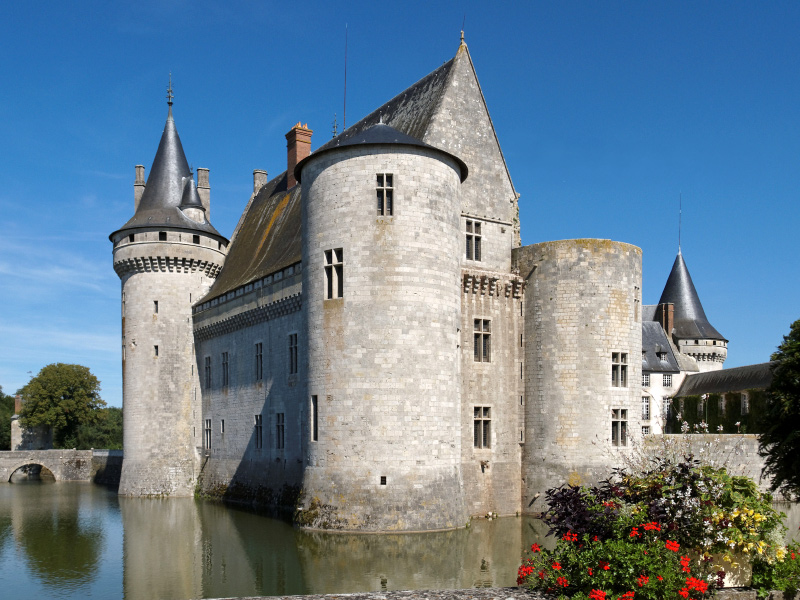
Nestled on the banks of the Loire River, the Château de Sully-sur-Loire stands as a magnificent example of medieval architecture. This imposing fortress, with its massive towers and deep moats, offers visitors a glimpse into France's rich past. The château's distinctive silhouette, characterised by its pointed conical roofs and robust stonework, creates an unforgettable impression against the backdrop of the Loire Valley landscape.
The Castle's Exterior
As you approach the château, you'll be struck by its formidable appearance. The castle is surrounded by water-filled moats, reflecting its impressive silhouette and creating a natural defensive barrier that has protected the structure for centuries. The moats, which once served a purely military purpose, now enhance the romantic appeal of the château, particularly when viewed at sunset when the stone walls take on a golden hue.
The structure consists of two distinct parts: the donjon (keep) and the petit château (small castle). The donjon, a rectangular building flanked by four circular towers, dominates the landscape with its imposing presence. Its southern façade features a gate with two towers, adding to the castle's defensive character. The weathered stone exterior bears witness to the passage of time, with subtle variations in colour and texture that speak to the château's long history.
The round towers, capped with their distinctive slate-covered conical roofs, are quintessentially French in design. These architectural elements not only provided strategic advantages for defence but also create the fairy-tale silhouette that makes the château so visually striking. The main entrance, accessed via a stone bridge that replaced the original drawbridge, invites visitors to step back in time.
The Grand Interiors
Inside the château, you'll find a wealth of architectural and historical treasures that reveal the building's evolution over the centuries. The first floor of the donjon houses the great hall, a magnificent space adorned with 17th-century wooden doors and a painting of the Château de Rosny-sur-Seine above the fireplace. The hall's dimensions speak to its importance as a gathering place for both ceremonial and everyday activities.
Don't miss the iron door leading to Sully's private chamber, a more intimate space that offers insights into the personal life of the château's most famous resident. The chamber features period furnishings that evoke the lifestyle of the French nobility.
One of the most remarkable features is the 14th-century vaulted timber roof structure, a true masterpiece of medieval carpentry. This extraordinary wooden framework, known as a "charpente," resembles an upturned ship's hull and demonstrates the exceptional skill of medieval craftsmen. The intricate network of wooden beams creates a cathedral-like space beneath the roof, with natural light filtering through small openings to illuminate the remarkable construction.
Throughout the interior, you'll encounter ornate fireplaces, tapestries, and period furniture that recreate the atmosphere of different eras in the château's history. The stone spiral staircases within the towers offer glimpses of the building's defensive design while connecting the various levels of the structure.
The Petit Château
The petit château, which closes off the courtyard to the south of the donjon, consists of a main building and two towers. While its interiors largely date from the 19th century, it complements the medieval charm of the main structure. The architectural style of this section provides an interesting contrast to the older donjon, illustrating how the château evolved to meet changing needs and tastes.
The courtyard formed between these two sections offers a sheltered space where visitors can appreciate the different architectural elements up close. The stone walls, weathered by centuries of exposure to the elements, display subtle variations in texture and colour that add to their visual appeal.
The Enchanting Gardens and Park
Surrounding the château is a vast 42-hectare natural park, offering a delightful contrast to the fortress's stern façade. The park is divided into two sections: the historic domain and a natural area featuring the Marçon ponds, which reflect the sky and surrounding trees to create picturesque vistas.
As you stroll through the gardens, you'll walk along beautiful tree-lined alleys dating back to the 19th century. These pathways, shaded by mature trees, provide pleasant routes for exploring the grounds in all seasons. In spring, wildflowers carpet areas of the park, while autumn brings a spectacular display of colour as the leaves change.
Although the original symmetrical beds of the Baroque garden are no longer present, the pathways still hint at the former layout. The park now boasts a rich biodiversity, home to nearly 90 bird species, about 30 butterfly species, and hundreds of different plants. Birdwatchers will appreciate the opportunity to spot herons, kingfishers, and various waterfowl around the ponds and river.
The relationship between the château and its natural setting is particularly harmonious, with the stone structure seeming to rise organically from the landscape. From various vantage points within the park, visitors can enjoy different perspectives of the château, each offering a new appreciation of its architectural beauty.
A Hidden Gem
While exploring the park, be sure to seek out the Lourdes grotto, an intriguing feature built in 1883 at the request of the Countess of Sully. This unexpected addition adds a touch of 19th-century romanticism to the medieval setting. The grotto, a man-made cave dedicated to Our Lady of Lourdes, reflects the religious devotion common among the French aristocracy of the period.
Other delightful discoveries await in the grounds, including ancient trees with massive trunks and spreading canopies that have witnessed centuries of history. Some of these venerable specimens may date back to the time when the château was first constructed, providing a living link to the past.
Seasonal Splendours
The château and its surroundings transform with the seasons, offering different experiences throughout the year. In spring, the gardens burst into life with fresh greenery and blossoms, while summer brings lush foliage that contrasts beautifully with the stone walls. Autumn paints the landscape in gold and crimson, with fallen leaves creating a carpet of colour. Winter perhaps shows the château at its most dramatic, when bare trees reveal the full outline of the structure and occasional frost or snow emphasises its medieval character.
Architectural Details
For those interested in architectural elements, the château offers numerous fascinating details to discover. Notice the arrow slits in the towers, designed to allow defenders to fire upon attackers while remaining protected. Observe the variations in stonework that reveal different construction periods, and the gargoyles that serve both decorative and practical purposes in directing rainwater away from the walls.
The Château de Sully-sur-Loire, with its blend of imposing architecture and natural beauty, offers visitors a unique journey through time. From its fortified walls to its tranquil gardens, this Loire Valley gem promises an unforgettable experience for history enthusiasts, architecture admirers, and nature lovers alike. Whether you're captivated by medieval military architecture, fascinated by the evolution of French garden design, or simply seeking a peaceful retreat in beautiful surroundings, Sully-sur-Loire delivers a truly memorable visit.
Getting There
Located just 45 minutes south of Orléans, the château de Sully-sur-Loire is easily accessible by various means of transport. If travelling by car, simply follow the D948 and D951 roads which lead directly to this magnificent medieval fortress. For those relying on public transport, REMI buses operate regular services from Orléans bus station to Sully-sur-Loire, with additional connections from Dampierre-en-Burly, Montargis, Neuvy-en-Sullias and Les Bordes. The château can be found at Chemin de la Salle Verte in Sully-sur-Loire (postcode 45600). Once you arrive, admission costs 6€ for adults and 3€ for children aged 6-17, with free entry for children under 6. The château is open throughout the year except January, with varying opening hours depending on the season—generally from 10:00 to 18:00 during summer months and more limited hours during winter.
Best Time to Visit
The best time to visit the Château de Sully-sur-Loire largely depends on your preferences regarding weather and crowd levels. For those seeking a more relaxed atmosphere, the spring months of April, May, and June are ideal, as the castle is open from 10:00 AM to 6:00 PM, offering ample time to explore its rich history and architecture. During the peak summer months of July and August, the castle is open daily from 10:00 AM to 6:00 PM, which is perfect for families and those who enjoy guided tours available at multiple times throughout the day. For a more serene experience with fewer tourists, consider visiting in the autumn months of September or October, when the castle maintains its summer hours on weekends but closes on Mondays. If you prefer cooler weather and fewer crowds, February, March, and November are also good options, though the castle operates on reduced hours and is closed on Mondays.


