Introduction

Picardy is the former administrative region that spreads north of Paris until the Somme River, delineated by Normandy to the west and Champagne to the east. It is a perfectly average French region in term of population (1.9 million) and land area (19,399 km² / 7,490 sq mi). In 2015 Picardy fused with the Nord-Pas-de-Calais to form the Hauts-de-France region.
Picard, an Oïl language closely related to French, is the traditional language of Picardy, as well as of the Nord-Pas-de-Calais and the western edge of Wallonia. There are still at least half a million native speakers of Picard (mostly among older generations), representing approximately 10% of the population.
The name Picardy is thought to have originated from a Frankish tribe of pike-bearers (picards). The term does not appear until the early 13th century though, and was then applied to all the territory where the Picard language was spoken, and occasionally also Walloon. Picard became a generic term for northern French people who did not speak Flemish.
Famous people from Picardy include (chronologically): the Protestant reformator Jean Calvin, the fabulist Jean de La Fontaine, the dramatist Jean Racine, the philosopher and mathematician Nicolas, marquis de Condorcet, the naturalist Jean-Baptiste de Lamarck, and the writer Alexandre Dumas.
History
In 486, the Frankish forces under Clovis I defeated the last Gallo-Roman stronghold north of the Loire at the Battle of Soissons, thus laying the foundations of the Kingdom of France (=> see Frankish History). From the 7th century, the County of Vermandois, making up the largest part of modern Picardy, was typically bequeathed to the sons of Frankish rulers (including Charles Martel and Charlemagne), then of French Kings. It was definitively added to the royal domain by Philip II Augustus in 1185.
Located near the new Frankish seat of power in Paris, Picardy thrived during the Middle Ages. The 11th and 12th centuries were golden ages for Soissons and Laon, which were endowed with some of the greatest Romanesque edifices in the country.
The world's second and third Gothic cathedrals were built respectively in Noyon and Senlis in the early 1100's. They were followed in the next century by the great cathedrals of Amiens, the tallest complete cathedral in France and second largest in the world in volume, and Beauvais, which boasts the highest and tallest Gothic choir ever built.
In the 16th century, the French Protestant leader, Louis de Bourbon (1530-1569), inherited the Château de Condé. For the next three hundred years, his descendants, the influential Princes of Condé, would reside in Picardy and erect one of France's most splendid castles, the Château de Chantilly. It now houses the Musée Condé, one of the finest art galleries in the country.
After several centuries of relative stagnation, Picardy was once again in the spotlight during the Second French Empire, when Napoleon III made of Compiègne his favourite residence, and one of Europe's great palaces. The emperor also commissioned architect Viollet-le-Duc to restore the medieval castle of Pierrefonds in the Romantic style - a proud rival of Bavaria's Romantic castles.
The western front of World War I was fought by by British, French, and German forces in the fields of northern Picardy, notably at the infamous Battle of the Somme. 4 million soldiers and 300,000 French civilians died in northern France, most of them in Picardy or in Nord-Pas-de-Calais. The region was so devastated that it hasn't completed recovered today, nearly a century after the tragic events. Nowadays Picardy remains the poorest region of France (excluding the overseas departments and territories) in terms of GDP per capita.
The battlefields and cemeteries of the Somme have become a sort of pilgrimage to the meaningless slaughter and atrocities of war. The main war memorials are the Thiepval Memorial (between Amiens and Arras), honouring British and South African soldiers, the Ulster Memorial Tower in Thiepval, the Somme American Cemetery in Bony (between Saint-Quentin and Cambrai), the Australian National Memorial in VillersBretonneux (15 km east of Amiens), the Australian Corps Memorial Park in Le Hamel (between Amiens and Péronne), the New Zealand National Memorial in Longueval (15 km north of Péronne), the South African National Memorial in Delville Wood (near Longueval), and the Beaumont-Hamel Newfoundland Memorial (between Amiens and Arras). Visitors can learn about the history and context of WWI at the Historial de la Grande Guerre in Péronne.
Cuisine
Picardy’s cuisine is deeply rooted in the region’s rich agricultural landscape, offering an array of hearty and authentic dishes. One of the most iconic specialities is ficelle picarde, a savoury crêpe filled with ham, mushrooms and shallots, coated in Mornay sauce, then baked until golden. Traditional pies, such as flamiche aux poireaux—made with locally grown leeks, butter, milk, and crème fraîche—provide a taste of Picardy’s country fare and are often compared to the renowned quiche Lorraine of neighbouring regions. Fresh vegetables like carrots, rhubarb, endive, and white beans from Soissons further enhance the region’s recipes, reflecting Picardy’s status as a culinary “kitchen garden”.
Dairy products and cheeses play a significant role in Picardy gastronomy, thanks to its lush pastures and historic dairy tradition. Maroilles and Rollot are two distinctive regional cheeses, often featured in tarts and served alongside fresh bread. Chantilly cream, hailing from the town of Chantilly, is perhaps the region’s most famed dairy export, celebrated for its delicate sweetness and whipped texture. Several meat specialities can be found, most notably duck pâté en croûte from Amiens, a pastry-encased terrine enjoyed throughout the region since the 17th century. Lamb, chicken, beef and pork also form the basis of traditional stews and roasts.
Picardy’s desserts reflect the area’s love for simple, sweet indulgence. Gâteau battu—a rich, brioche-like cake with a distinctive shape—is a popular treat, as are Amiens macarons, which feature almonds and honey for a refined flavour. The region’s drinks include crisp cider, crafted from locally grown apples, and renowned Champagne made from Chardonnay, Pinot Meunier, and Pinot Noir grapes. Whether sampling seafood chowder, marinated herring, or salicornia (sea asparagus), visitors can expect Picardy’s food to be both rustic and imaginative.
Attractions
Départements are listed from North to South.
Département de la Somme
| Baie de Somme Natural Reserve |
|---|
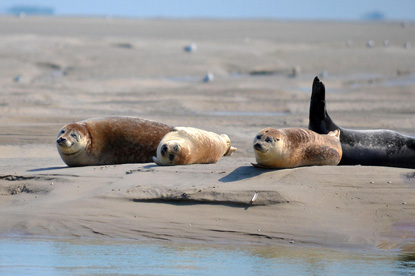
 Northern France's largest natural estuary and Grand Site, renowned for its diverse wildlife including over 300 bird species and France's biggest harbour seal colony. This exceptional wetland reserve offers spectacular landscapes of mudflats, salt marshes and sandy expanses. |
| Le Bois de Cise |
|---|
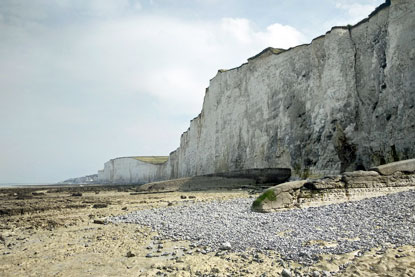
Hidden in a wooded notch between Ault and Mers-les-Bains, Le Bois de Cise blends chalk cliffs, serene footpaths and Belle-Époque villas. Wander leafy trails to panoramic Channel views, then descend wooden stairs to the shingle for sunset solitude and peace. |
| Amiens |
|---|

 Amiens, capital of the Somme, boasts Europe's largest Gothic cathedral, a UNESCO World Heritage site. This charming northern French city, dubbed the 'little Venice of the north' for its picturesque canals and floating gardens, was beloved author Jules Verne's home for three decades. |
| Château de Bagatelle |
|---|
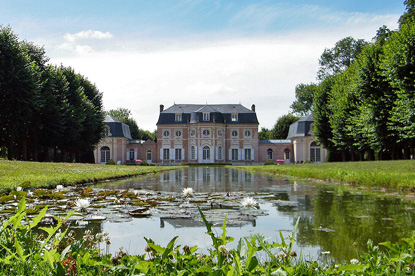
An elegant 18th-century baroque château in Abbeville, built by the Van Robais textile dynasty during Louis XIV's reign. This refined architectural folly features exquisite formal French gardens and represents a fine example of Somme's built heritage. |
| Valloires Abbey |
|---|
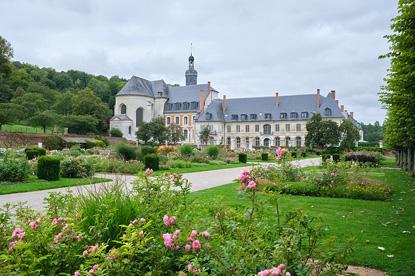
France's only complete 18th-century Cistercian abbey, this baroque jewel in Argoules combines monastic simplicity with rococo splendour. Founded in 1138 but rebuilt after centuries of conflict, it showcases Austrian sculptor Pfaffenhoffen's magnificent work and stunning gardens. |
Other attractions

Picquigny Castle (ruins)
Rue
Saint-Valery-sur-Somme
Département de l'Aisne
| Laon |
|---|

 Spectacular medieval city perched 100 metres above northern France's plains. Known as 'the crowned mountain', Laon features one of Europe's first Gothic cathedrals, ancient ramparts, 80+ historic monuments, and mysterious underground limestone tunnels. |
| Château de Condé |
|---|

Renaissance château in Condé-en-Brie, 100km from Paris, featuring sumptuous 17th-18th century interiors by masters like Watteau and Boucher. Former residence of the Princes of Condé, this historic monument on the Champagne route showcases magnificent trompe-l'œil effects and frescoes. |
| Saint-Quentin |
|---|
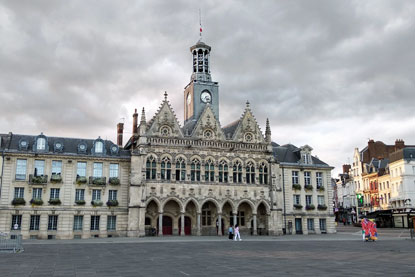
Saint-Quentin in northern France is a captivating town renowned for its Art Deco architecture, dating from its 1920s reconstruction after WWI devastation. It is now a quiet and pleasant city with a wide market square and a Gothic basilica. |
| Château de Coucy |
|---|
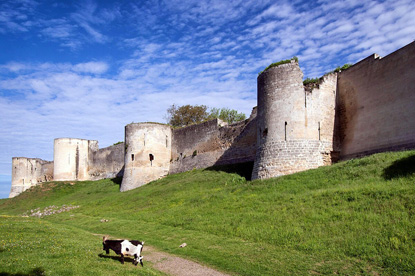
 Haunting ruins of a mighty 13th-century fortress in Picardy, once boasting Europe's largest keep and seat of the fiercely independent Lords of Coucy. German forces destroyed this colossal medieval stronghold in 1917, leaving dramatic stone remnants. |
Other attractions
Franco-American Museum inside the Château de Blérancourt
Guise Castle (ruins)
La Ferté-Milon Castle (ruins)
Septmonts Castle (ruins)
Département de l'Oise
|
Château de Chantilly |
|---|

 A fairytale Renaissance château just 50km north of Paris, featuring the world-renowned Musée Condé art collection, magnificent Le Nôtre gardens, and historic Great Stables. Home to France's second-largest collection of ancient paintings after the Louvre. |
|
Pierrefonds Castle |
|---|

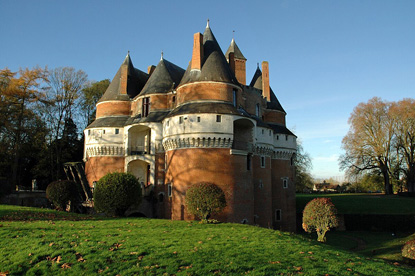
 This romantic neo-Gothic castle, originally built in 1397, was spectacularly restored by architect Viollet-le-Duc for Napoleon III. Rising majestically from Compiègne Forest, the fairy-tale fortress with eight towers famously served as Camelot in BBC's Merlin. |
|
Beauvais |
|---|

Beauvais, Oise's capital, boasts France's tallest Gothic cathedral choir at 48 metres and a fascinating astronomical clock. This historic city, just an hour from Paris, combines medieval charm with remarkable architectural ambitions. The MUDO museum, housed in a former bishop's palace, showcases fine art, whilst the charming Place Jeanne-Hachette celebrates the local heroine who defended the city in 1472. |
|
Château de Compiègne |
|---|

A magnificent neoclassical royal château built for Louis XV and later restored by Napoleon. This former imperial residence, 80km from Paris, houses opulent state apartments, museums of the Second Empire and vintage cars, set within vast forest grounds. |
|
Senlis |
|---|

A charming medieval town, Senlis enchants with cobbled streets, half-timbered houses, and 2,000 years of history. Former royal residence where Hugh Capet was crowned, featuring the magnificent Gothic cathedral and Roman ruins. It is also home to the Parc Asterix theme park. |
|
Noyon |
|---|

A historic town in northern France's Oise department, Noyon is celebrated for its magnificent 12th-century Gothic cathedral—one of France's earliest examples. Birthplace of Protestant reformer John Calvin, this charming medieval centre boasts cobbled streets, the Calvin Museum, and peaceful riverside walks along the Canal de la Sambre à l'Oise. |



 : Local interest
 : Moderately interesting
 : Outstanding place
 : Must-see in the country
 : Top cities in Europe