


| Contents |
|---|

Introduction
Locronan (pop. 800) is a remarkably preserved Renaissance village, officially recognised as one of France's most beautiful villages and holding the status of "Petite Cité de Caractère de Bretagne". The village, perched on a hill approximately 300 metres above sea level and just five kilometres from the coast, is renowned for its harmonious collection of 16th and 17th-century granite houses that line cobbled streets radiating from the central Place de l'Église. Locronan attracts approximately 400,000 visitors annually who come to admire its well-preserved Renaissance architecture, including the remarkable Church of Saint-Ronan built in the 15th century, and to experience the village's deep connection to Celtic and Christian traditions, most notably through the famous Grande Troménie pilgrimage held every six years.
Interesting Facts about Locronan
- Locronan is named after Saint Ronan, an Irish hermit whose legacy shaped the town’s early Christian identity.
- The village flourished from the 15th to 18th centuries thanks to linen and hemp weaving, supplying robust sailcloth for maritime fleets.
- Locronan is officially listed among Les Plus Beaux Villages de France for its remarkably preserved granite architecture.
- The Grande Troménie, a major pilgrimage held every six years, traces a 12-kilometre sacred route marked by granite crosses around the historic minihi.
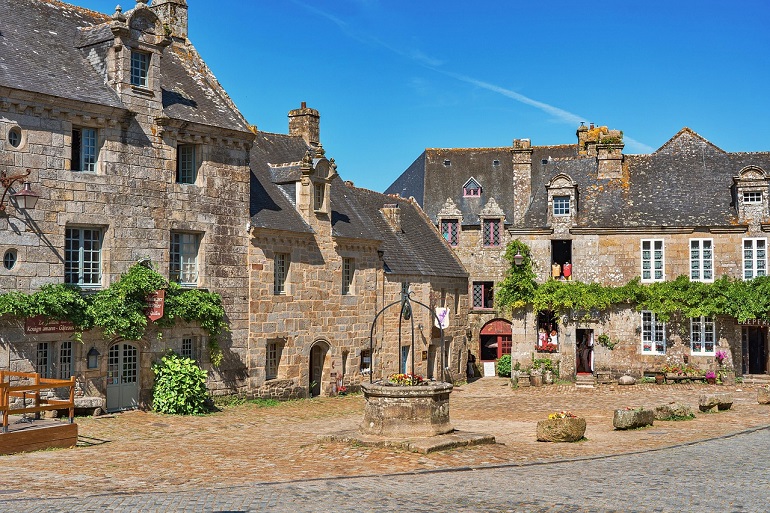
- Its car-free central square, centred on a historic well, is surrounded by Renaissance-era granite mansions that showcase the town’s former prosperity.
- The Church of Saint-Ronan features fine Gothic elements and artwork celebrating the saint’s life, reflecting the town’s religious heritage.
- Locronan’s meticulously preserved streetscapes have made it a favourite filming location for period dramas and historical films.
- The village sits on a rocky promontory with sweeping views towards Douarnenez Bay and the Crozon peninsula.
- Ancient Celtic traditions linger in local legends, including the fertility-linked granite rock known as the “stone mare” on the Locronan hill.
- Locronan’s winter illuminations transform the town with festive lights that draw visitors from across Brittany.
History
Celtic Origins and Saint Ronan's Legacy
Locronan's history stretches back to ancient Celtic times, when the site was originally a sacred Celtic sanctuary known as a nemeton, inhabited by only around 800 people. The village's destiny changed dramatically in the 6th or 7th century with the arrival of Saint Ronan, an Irish hermit and missionary who gave the town its name and established Christianity in the region. Saint Ronan set up a hermitage that survived for an incredible 300 years, spreading Christianity whilst banishing the druids from this sacred site. The hermitage was eventually destroyed by Norman invasions, and Locronan fell into obscurity for approximately four centuries. The saint's influence remains profound today, with his tomb housed in the 15th-century Church of Saint-Ronan, and his legacy celebrated through the ancient pilgrimage tradition of the Grande Troménie, held every six years along a 12-kilometre sacred route marked by 12 granite crosses.
The Golden Age of Sailcloth Weaving
Locronan experienced its most prosperous period from the 14th to the 18th century, when it became the capital of canvas production in Brittany. The village's wealth was built on the locally grown hemp industry, which was essential for manufacturing sailcloth coveted by sailors and shipowners throughout Europe. At the peak of the weaving industry in the mid-18th century, there were 240 weavers working in Locronan. The village's strategic location near the port of Pouldavid (former port of Douarnenez) allowed sailors to obtain linen stocks easily, which helped develop the thriving textile industry. Major clients included ships from the prestigious East India Company and the French National Navy, and Locronan's cloth was even sold to the Spanish Armada to fight the British. This affluent period was when the majority of Locronan's magnificent granite Renaissance architecture was built, including the grand houses around the cobbled Place de l'Église, which served as homes and offices for weaving and shipping companies, lawyers, and officers from merchant companies.
Decline, Preservation, and Modern Recognition
The 17th century marked the beginning of Locronan's decline as commercial competition intensified and the local sailing industry gradually diminished. The living conditions of weavers became increasingly difficult, epidemics spread throughout the community, and Locronan sank into poverty. However, the village's fortunes changed in 1924 when it was classified as a historical monument, beginning its transformation into one of France's most treasured heritage sites. The town was granted official status in 1505 by Anne of Brittany, and today it holds the prestigious designation of one of "Les Plus Beaux Villages de France" and is classified among the "Small Cities of Character". Locronan's remarkably preserved medieval and Renaissance architecture has made it a favourite location for filmmakers, with over thirty films shot there, most notably Roman Polanski's Oscar-nominated "Tess" and Jean-Pierre Jeunet's "Un long dimanche de fiançailles". In 2013, the village achieved national recognition when the TV programme "Le village préféré des français" ranked it as the second most beautiful village out of 22 participants.
Main Attractions
Centre Historique (Historical Centre)

Locronan’s Centre Historique stands as the village’s most captivating attraction, celebrated across France for its remarkably preserved medieval and Renaissance stone buildings. The winding cobbled lanes encircle the iconic Grande Place, where elegant granite mansions, many dating from the prosperous linen-fuelled heyday between the 15th and 18th centuries, bear beautiful carved details, ornate dormer windows, and traditional shop signs. The square itself, with its central well, is an atmospheric setting for local markets and festivals, and remains at the very heart of daily village life. Strolling through these historic streets offers a journey back in time, soaking up the authentic charm that has inspired filmmakers and artists for decades.
Église de Saint Ronan
The Église de Saint Ronan, located just off the main square, epitomises Locronan’s spiritual and architectural heritage. Built in the Gothic style during the 15th century, it boasts beautifully crafted stained glass, a splendid carved wooden rood screen, and several intricate sculptures. Inside, visitors will discover the tomb of Saint Ronan himself, an Irish hermit credited with founding Locronan in the 10th century. The adjoining Chapelle du Pénity holds the saint’s recumbent statue and further treasures, while the church is a centrepiece for local religious processions, including those associated with the renowned Troménie pilgrimages.
Chapelle Notre-Dame-de-Bonne-Nouvelle
The Chapelle Notre-Dame-de-Bonne-Nouvelle lies a short stroll northwards from the centre, nestled in a tranquil and picturesque setting near a small pond known as Fontaine Saint-Eutrope. Dating from the 15th century, this peaceful chapel is a stop along the Grande Troménie pilgrimage and a place of quiet devotion for locals and visitors alike. Its rustic charm is complemented by a bucolic garden and an old washhouse, offering a serene retreat from the busier village lanes. The site is further enlivened during pilgrimage seasons, drawing those seeking spiritual reflection and picturesque moments.
Grande Troménie
Locronan’s Grande Troménie is a spectacular pilgrimage and festival held every six years, drawing thousands to the village for a 12-kilometre procession that traces ancient spiritual routes around sacred sites and granite crosses. Revered across Brittany, this event celebrates both the village’s Celtic and Christian traditions, with statues and relics of local saints paraded in an atmosphere of deep reverence and festivity. Between the main pilgrimages, the Petite Troménie takes place annually in July, maintaining the spiritual rhythm and continuity of Locronan’s living heritage. Visitors in these periods will experience the village transformed by colourful crowds, traditional costumes, and a festive spirit radiating throughout its streets.
Montagne de Locronan and Bois de Névet
For those seeking natural beauty, the surrounding Montagne de Locronan and Bois de Névet beckon with hiking routes and panoramic views. Climbing the gentle slopes, walkers are rewarded with sweeping vistas over the Crozon peninsula and Bay of Douarnenez. The woodland of Névet offers lush tranquility, ancient oaks, and a sense of legendary atmosphere, with shaded trails ideal for hiking or casual strolls. These outdoor experiences allow visitors to connect with Locronan’s mythic history, as both the forests and hills are closely linked to the town’s druidic and Breton folklore.
Les Archi Kurieux
One of Locronan’s more playful attractions, Les Archi Kurieux, is a local organiser offering treasure hunts and photo rallies that lead visitors on exploration adventures through the village. Families and groups can solve clues and discover hidden corners, deepening their appreciation for Locronan’s architecture and charming atmosphere. These self-guided activities immerse participants in the town’s secrets, providing a fun, interactive discovery tour that appeals to all ages.
Artisan Shops and Bakeries
A visit to Locronan is best enjoyed at a leisurely pace, exploring artisan bakeries, chocolate shops, and local boutiques dotting the lanes and cobbled streets. The renowned Ty Kouign Amann bakery, famous for Brittany’s much-loved butter cake, is a sensory delight, tempting travellers with its sweet aromas and vibrant displays. Other speciality shops offer regional treats, crafts, ceramics, and books, reflecting the enduring spirit of Breton tradition and creativity. Relaxing in a café or strolling from stall to stall is as much a part of the Locronan experience as admiration of its historic architecture.
Top Museums
Musée Charles Daniélou
The Musée Charles Daniélou is a centrepiece of Locronan’s cultural life, created in 1934 by the town’s distinguished mayor and minister, Charles Daniélou. The museum’s setting—a restored historic building on the main square—perfectly frames the extensive collection of Breton art from the 19th and 20th centuries.
Within recently renovated galleries, visitors encounter paintings by local masters such as Emile Simon, Désiré Lucas, Kamesuke Hiraga, and Yvonne Jean-Haffen. There are etchings by Marie-Renée Chevalier-Kervern, and a monumental work by Henri Barnoin depicting the neighbouring village of Tréboul. The museum’s highlight is a large canvas by Odette Pauvert, celebrated as the first woman to win the Prix de Rome. Restored in 2019 and now a National Treasure, the painting is protected as a Historic Monument.
The collections extend to sculpture, with Anne de Bretagne by Jean Fréour gracing the entrance, alongside pieces by Bazin, Beaufils, and Le Louet. A ground-floor room tells the story of Locronan’s historic weaving industry, which prospered until the 18th century. The upper floors are devoted to modern and contemporary Breton art, regularly energised by themed temporary exhibitions, such as the seasonal retrospectives on Mathurin Méheut and Yvonne Jean-Haffen. Throughout, the museum illustrates the creative spirit and local pride which define the town and the region.
Verrerie de Locronan
The Verrerie de Locronan is more than a museum—it is a living workshop dedicated to the timeless art of glassmaking. Located close to the heart of Locronan, the glassworks beckon visitors with a mesmerising blend of tradition and innovation.
Step inside for an immersive encounter with glassblowers at work. Artisans skilfully shape molten glass, giving form to vases, lamps, tableware, and decorative ornaments, often right before visitors’ eyes. The atmosphere is one of vibrant colour and subtle luminosity, with both classic and contemporary pieces arrayed throughout the showroom.
The Verrerie is a haven for collectors and enthusiasts wishing to appreciate or purchase unique creations: from delicately tinted bowls to elaborate candlesticks, each piece reflects both ancestral technique and modern flair. Glassmaking demonstrations are a staple, providing an educational and interactive experience that highlights Locronan’s place in the world of applied arts. The venue has become a creative hub for local artists and an essential stop for those passionate about craftsmanship.
Les Archi Kurieux
Les Archi Kurieux, located on the square, reimagines the museum experience through playful, hands-on discovery. It is especially popular with families, embracing interactive, experiential learning through games, puzzles, and urban adventures.
At its core are outdoor escape-game style treasure hunts, rallyes, and photo challenges that lead participants through the historic lanes of Locronan. Children and adults work together to solve mysteries, decode clues, and uncover the town’s secrets whilst engaging with history in an active manner. These activities are regularly refreshed to fit the seasons, making each visit different and memorable.
The museum caters to a range of interests and ages, offering themed challenges and expertly designed circuits both indoors and out. Participants can embark on quests linked to local folklore, explore lesser-known corners of Locronan, or take part in special events designed to celebrate local heritage. Its approach fosters teamwork, creativity, and discovery, ensuring that the story of Locronan remains dynamic and fun for all generations.
Local Cuisine
Locronan’s local cuisine is a delightful celebration of Breton tradition, with charming crêperies lining the cobbled streets and offering a sweet or savoury taste of the region. Visitors can indulge in galettes de blé noir, traditional buckwheat pancakes often filled with ham, cheese, and eggs. For those with a sweet tooth, crêpes de froment topped with local salted butter and caramel are a beloved treat. The area is also renowned for its kouign amann, a rich, buttery pastry with a caramelised crust, and cidre brut, a dry, robust cider produced in the surrounding countryside and perfectly paired with any meal. Locally made far breton, a rustic prune flan, provides a deliciously authentic finish to any culinary experience in this picturesque village.
Getting There
By train Locronan itself is not on the rail network, so the swiftest rail option is to take a TGV or Intercités service to Quimper—regular departures connect from Paris-Montparnasse in about four hours—then continue on to Locronan by local bus (lines 10 or 937) from Quimper station, a transfer of roughly 20 minutes.
By coach or bus Direct long-distance coaches do not yet reach the village, but BlaBlaCar Bus and FlixBus run several daily services to Quimper from major French cities such as Paris, Nantes and Rennes; once in Quimper you simply board the BreizhGo or QUB network bus to Locronan, which drops you near the historic centre.
By car Drivers can join the N165 motorway that follows the Breton south coast, leave at exit 56 for Quimper, then follow signs for Locronan via the D63 and D887; the journey from Quimper is 15 km and takes about 20 minutes, while routes from Brest or Saint-Malo join the D887 at different points for an easy scenic approach through rolling Finistère countryside.