


| Contents |
|---|
Introduction
Soissons (pop. 29,500) is one of the most ancient towns of northern France, with origins dating back to Roman times when it was known as Noviodunum. Often referred to as the "Cradle of France," the town played a pivotal role in the early Frankish kingdom. Capital of its own kingdom for about 100 years, it became a major medieval city before falling into near oblivion for centuries. Soissons is well-known among French people for the story of the Vase of Soissons (see frame below).
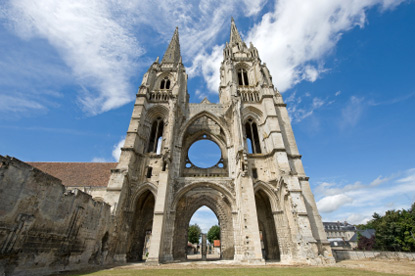
The town centre is dominated by two major monuments: the Gothic cathedral, built between the 12th and 13th centuries with its distinctive asymmetrical façade, and the striking ruins of the Abbey of Saint-Jean-des-Vignes, a former Benedictine monastery whose dramatic towers and arches remain after the main church was destroyed during the French Revolution. Located along the Aisne River, Soissons combines its rich archaeological and architectural heritage with its modern role as a commercial and manufacturing centre, offering visitors Roman remains, medieval buildings, museums housed in former religious buildings, and peaceful riverside settings.
Interesting Facts about Soissons
- Soissons is one of France’s most ancient towns, taking its name from the Gaulish tribe of the Suessiones who made it their capital.
- The city’s ancient Celtic name was Noviodunum, meaning “new hillfort,” later recorded by Julius Caesar during his Gallic campaigns.
- From 457 to 486, Soissons served as the centre of the “Kingdom of Soissons,” a last Roman enclave ruled by Aegidius and his son Syagrius before falling to Clovis I.
- After Clovis’s victory in 486, Soissons became pivotal in the early Frankish realm and later the Merovingian heartland.
- The famous “Vase of Soissons” legend, tied to King Clovis I, remains one of the best-known tales in early French history.
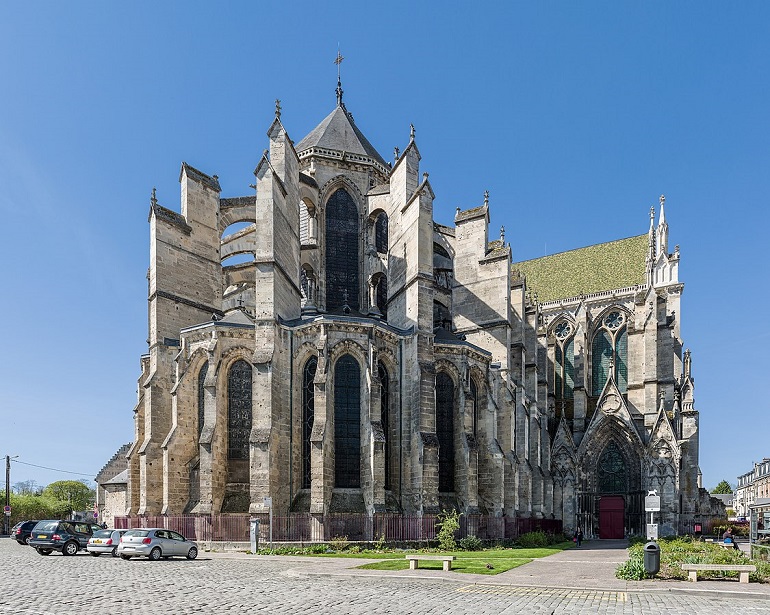
- Soissons Cathedral pioneered elements of High Gothic design, with a choir completed in 1211 that predates the comparable elevation at Chartres.
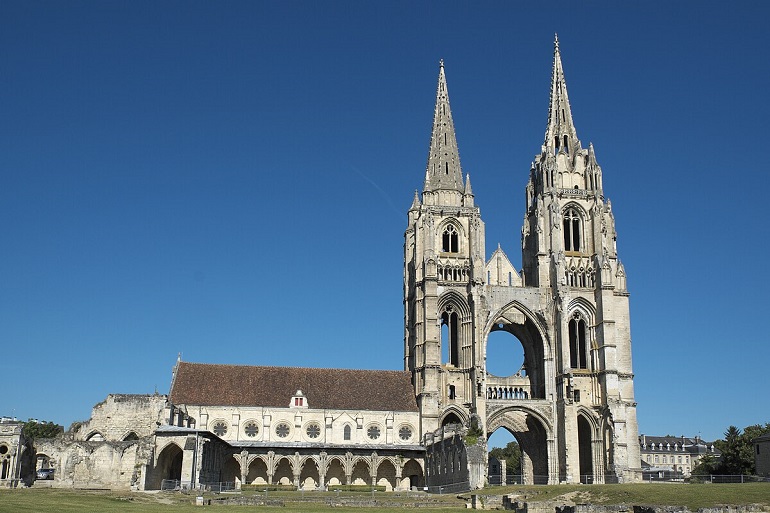
- The ruined Abbey of Saint-Jean-des-Vignes, dismantled after the French Revolution, still dominates the skyline with its dramatic twin towers.
- The Abbey of Saint-Médard, founded in the sixth century, once hosted royal ceremonies and retains an evocative crypt.
- In 1414, a shocking massacre in Soissons during the Hundred Years’ War reverberated across Europe and was later invoked by Henry V before Agincourt.
- Joan of Arc helped liberate Soissons on 23 July 1429 during her campaign to restore French control.
- Between 1728 and 1729, the Congress of Soissons brought European powers to the town to settle disputes that fed into the Anglo-Spanish War.
- During the First World War, Soissons sat just behind Allied lines, endured heavy bombardment, and changed hands in 1918 before final recapture.
- The Passerelle des Anglais commemorates a bridge rebuilt by British engineers in the First World War and now spans the Aisne as a pedestrian crossing.
- Soissons was an early bishopric from about the third century, hosting several historic church councils in the early medieval period.
- Today, Soissons blends a tranquil riverside setting on the Aisne with a rich layering of Gallo-Roman, Merovingian, medieval, and modern heritage.
History
The town probably started as the capital of the Suessiones, a Celtic tribe of Belgian Gaul. It was known to the Romans as "Noviodunum", meaning "new hillfort". It was renamed "Augusta Suessionum" under Emperor Augustus.
From 457 to 486, under Aegidius and his son Syagrius, the town was the capital of the Domain of Soissons, an independent province of the Western Roman Empire, until it fell to the Frankish king Clovis I in the Battle of Soissons (486).
After Clovis' death, his four sons split the Merovingian kingdom between each others, and Soissons became the capital of Clotaire I. Through diplomacy, warmongering, and murder of his relatives, Clotaire managed to become the king of all the territories conquered by father by 555, but the kingdom is divided again at his death (in 561) by his three sons. The Frankish kingdom was eventually reunified in 613 under Clotaire II, and apart for a brief period between 639 and 673 (Neustria-Austrasia division), it remained unified until the split of Charlemagne's Empire in 843.
In 751, Pepin the Short is anoited King of the Franks in Soissons by (Saint) Boniface, Archbishop of Mainz.
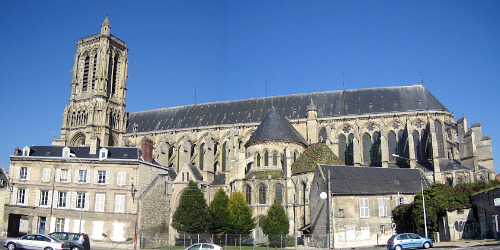
Cathédrale Saint-Gervais-et-Saint-Protais, Soissons.
In 978, the King of France Lothair (941-986) provoked a war with his cousin, Emperor Otto II the Red. Lothair invaded the Duchy of Lotharingia, devastated as much as he could, then returned to Paris. Otto then came with an army of 60,000, went on a rampage in Reims, Laon and Soissons, and marched toward Paris. Satisfied with his revenge, he started retreating home. This is when Lothair, allied with Hugh Capet, followed the imperial army until Soissons, where they set camp before crossing the River Aisne. Most of the troops crossed the river before nightfall, leaving only the loot, the servants and a few hundred soldiers behind. At dawn, the cavalry of Lothair fell on them, and most were forced to jump into the river in flood and perished, drowned. Otto then asked Lothair to choose a proper battlefield, but they didn't really fight, and the French chased the Germans all the way back to the Ardennes.
The County of Soissons was created in 969, with Guy as first count. The county passed through various noble families, including, since the 15th century, the Bar, the Luxembourg, the Bourbon, and the Savoy. The last Count of Soissons, Eugène-Jean-François de Savoie-Carignan, who died heirless at the age of 20 in 1734.
Soissons experienced an economical and artistic golden age in the 12th and 13th centuries. After that, the town went into a steady decline. Around 1800, it was merely a big village of 7,000 inhabitants.
| The Vase of Soissons |
|---|
|
The Vase of Soissons was a semi-legendary sacred vase that was held in a church in Soissons during the end of the Western Roman Empire. According to the writings of Gregory of Tours (c. 538-594), who wrote a century after the vase was presumably destroyed, the vase was of extraordinary beauty and value. The army of Clovis, who had not yet converted to Christianity, was wont to plunder churches. This is how the vase of Soissons, along with other holy ornaments, came to be seized by soldiers in the pillage that followed the Battle of Soissons. The local bishop (in latter versions of the story identified as Saint Remigius, the bishop of Reims) then sent an emissary to Clovis, begging that if the church might not recover anything else, at least this holy vessel might be restored. Clovis agreed, for reasons which remain unknown, as he would not convert to Christianity until 10 years later, at the request of his wife. Clovis reviewed his troops gathered around the booty at his camp in Soissons. He then asked his brave warriors to give him the vase in addition his rightful part of the booty. The soldiers replied that everything there was his, and that they were subjected to his authority. One soldier of bad character, however, disagreed and shattered the vase with his battle-axe and said "You will get what fate will really give you". Clovis at first didn't react to this event - although his pride may have been hurt by this act of disobedience. At the end of the year, Clovis reviewing his troops again recognised the barefaced warrior who broke the vase. Reproaching his neglected outfit , he took the man's weapons and threw them on the grounds. The soldier cheekily bent down to pick them up, and Clovis, not bearing this new act of defiance, took his own axe and smashed his skull saying "That is for the vase of Soissons !". The soldier's body was left to rot in the open, to serve as an example for others. |

Main Attractions
The historic heritage of Soissons is chiefly religious, with four medieval abbeys, and a Gothic cathedral. The only major non-religious sight is the gorgeous town hall.
The Cathedral Saint-Gervais & Saint-Protais marks the centre of the city. Erected from 1175 in classical Gothic style, it took two centuries to complete.
The town's most compelling sight is undoubtedly the ruins of the Abbey of Saint-Jean des Vignes. Its spires are in fact taller and more impressive than those of the cathedral. The abbey was founded in 1076 on a hilltop. The construction of the facade started in the 12th century and lasted until the 16th century! Fortunately, it hasn't been destroyed like the body of the church.
Saint Léger Abbey was founded 1139, and rebuilt from 1200. It now houses the municipal museum.
The so-called Square Saint-Pierre is the only remaining part of one of the largest female monastery in northern France : the Abbey of Our Lady. Founded between 659 and 666, it comprised three churches: Saint-Pierre-au-parvis, Sainte-Geneviève, and Notre-Dame ("Our Lady"). It was destroyed during the French Revolution, and only parts of Saint-Pierre are left nowadays.
Our Lady is not the only casualty of the French Revolution. Only the crypt of Saint Medard Abbey has survived the furies of the revolutionaries. It was the oldest abbey in the region, founded by Clotaire I, some 1,500 years ago.
Abbey of Saint-Jean-des-Vignes
Dominating the skyline from its vantage point on St John's Hill, the Abbey of Saint-Jean-des-Vignes is Soissons’ most celebrated landmark, renowned for its extraordinary west front and soaring twin spires, which reach over seventy-five metres in height. Founded in 1076 by Hugues Le Blanc, the abbey grew rapidly in importance, housing a flourishing community of Augustinian canons. The thirteenth century saw the original Romanesque structure transformed into a formidable Gothic complex under the direction of ambitious abbots supported by royal and local patronage. In its heyday, the abbey was a powerful landholder, drawing prestige and influence from both church and crown. After suffering during the Hundred Years’ War and religious conflicts, it was finally suppressed during the French Revolution, resulting in the loss of most of the church nave. Nevertheless, the monumental façade, cloisters, Gothic cellars, and majestic refectory remain a testament to centuries of faith, creativity, and turbulent history, making a visit here a journey back in time and a landmark of northern French Gothic architecture.
Soissons Cathedral (Cathédrale Saint-Gervais-et-Saint-Protais)
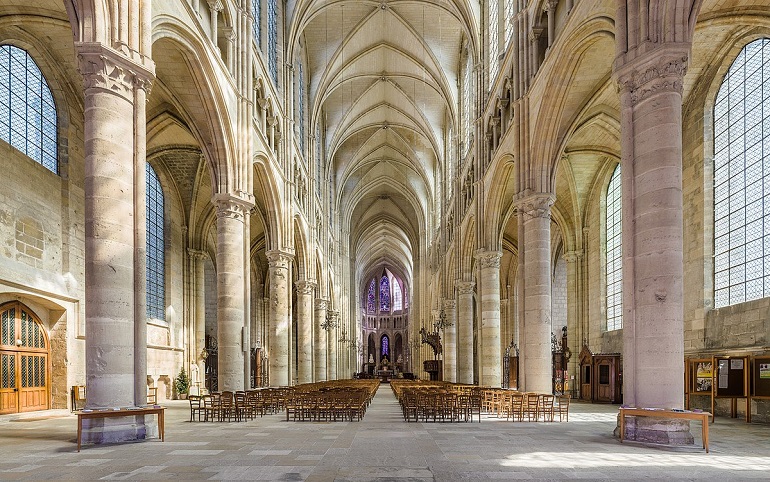
A magnificent example of early French Gothic design, the Soissons Cathedral features a strikingly asymmetrical façade with only one completed tower, lending it an instantly recognisable silhouette. Construction began in the twelfth century, incorporating remnants of an older, fourth-century basilica on the same site. The cathedral is renowned for its soaring rib-vaulted ceilings, luminous rose and lancet windows, and beautiful choir, all richly adorned with sculptures and decorative capitals. Particularly notable is the inclusion of Rubens’ masterpiece, 'The Adoration of the Shepherds', which gives the cathedral a stature amongst France’s sacred art treasures. The structure was heavily scarred during World War I but has since been skilfully restored, and it continues to serve as the city’s principal place of worship and a living link to the past.
St. Peter's Church (Église Saint-Pierre)
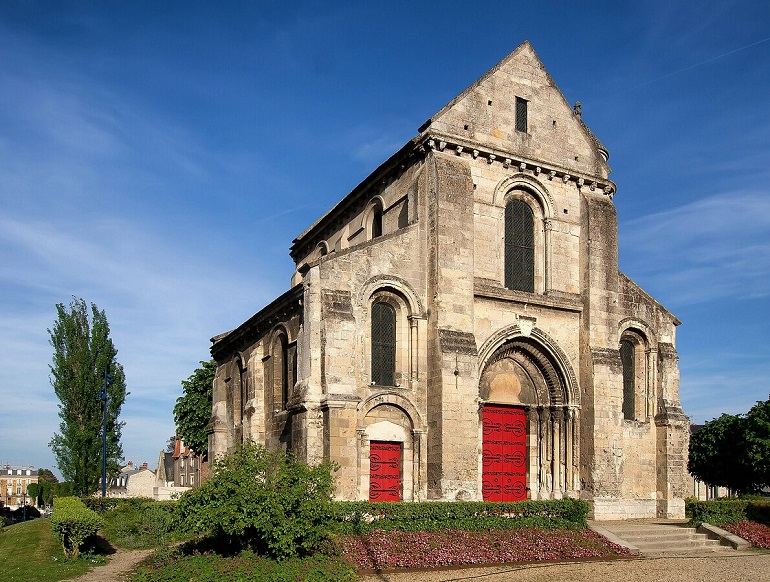
Nestled near the abbey, St. Peter's Church is one of Soissons' oldest surviving religious buildings, showcasing architectural transitions between the Romanesque and Gothic periods. Inside, visitors will find an understated yet dignified space with stone arches, a harmonious nave, and traces of Romanesque ornamentation, complemented by later Gothic modifications. The church’s quiet, contemplative atmosphere invites visitors to pause, reflecting on the continuity of religious tradition that endures in the heart of the city.
Hôtel de Ville (Town Hall)
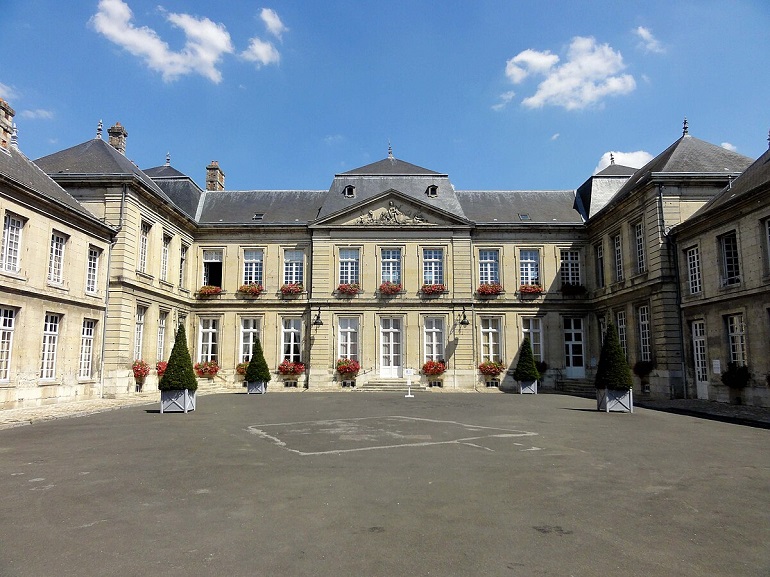
Giving distinction to Soissons’ main square, the classical Hôtel de Ville was constructed in the eighteenth century as a symbol of civic pride and administrative order. Its grand columns, pediment, and stately clock tower exemplify the elegance of the period while reflecting the town’s ongoing role as a regional centre. Today it continues to function as the seat of local government and a key venue for important ceremonies and cultural gatherings, providing a distinguished landmark amid the city’s urban landscape.
Ancien hôtel de la Coupole
Tucked along the rue des Chaperons Rouges, the ancien hôtel de la Coupole is a characterful early 20th-century building whose name recalls its distinctive domed silhouette and interwar elegance. Typical of provincial French urban architecture from this period, it blends restrained classical lines with decorative touches that hint at Art Deco sensibilities, giving the façade a refined civic presence. Once a notable address for local society, its historic fabric contributes to the streetscape’s continuity, linking Soissons’ medieval core with later layers of urban development. Although no longer a hotel in the traditional sense, the building remains a point of interest for architecture lovers tracing the town’s evolution beyond its famed Gothic monuments.

Remnants of Roman Walls and Amphitheatre
Soissons’ Roman heritage is visible through the scattered remnants of the city’s ancient fortifications and the vestiges of a once-imposing amphitheatre. Visitors walking the town’s streets may encounter sections of crumbling stone walls or follow local trails leading to the sites of these historic structures, reflecting the town’s long-standing importance as a strategic and administrative centre since Gallo-Roman times. While much now lies beneath the modern city, these ruins offer glimpses into the daily life and enduring power of Roman Soissons.
Top Museums
Musée d’Art et d’Histoire Saint-Léger
Set within the majestic former abbey of Saint-Léger, this museum is a journey into the layered narrative of Soissons. The abbey itself, founded in the Middle Ages, dominates with its impressive Gothic architecture, cloister, and crypt, transporting visitors to the heart of medieval monastic life. Entering its galleries, the story unfolds chronologically.
- Archaeology: The museum’s lower level is devoted to archaeological discoveries, tracing the presence of humanity in the Aisne Valley from Neolithic settlements through the Gallo-Roman era. Marvel at fragments of pottery, tools, weapons, jewellery, and objects discovered in necropolises such as Bucy-le-Long, including celebrated ‘tombes à char’ (chariot graves), which illuminate funeral rites of the Iron Age aristocracy.
- Gallo-Roman to Medieval: The exhibits also chronicle the birth of Soissons as a city and its pivotal role in early French history. Key moments, such as the victory of Clovis over Syagrius in 486, are illustrated with artefacts, reconstructed models, and interpretative panels that bring these ancient stories to life.
- Art and Decorative Objects: Ascending to the next level, visitors are greeted by an array of fine art and decorative pieces spanning the seventeenth to nineteenth centuries. The galleries showcase paintings by French, Flemish, and Italian masters—Largillière, Boudin, Daumier, and Courbet among them—as well as rare religious artefacts, intricately decorated furniture, and porcelain. These works not only reflect the artistic trends of their eras, but also reveal the tastes and daily lives of Soissons’ inhabitants.
- Sculptures and Relics: The museum preserves important medieval and early modern sculptures, including a notable sixteenth-century reliquary plan and the imposing stone head of King Clotaire. In the adjoining church, visitors may examine original stonework rescued from demolished monuments—capitals, tympanums, and fragments of the celebrated l’abbaye Saint-Yved de Braine—offering a tangible link to the religious and architectural world of pre-Revolutionary France.
- Temporary Exhibitions: The topmost galleries are reserved for regularly changing temporary exhibitions, which might focus on aspects of local history, highlight particular artists, or explore broader cultural themes. This dynamic approach ensures that the museum is as relevant to contemporary audiences as it is rooted in tradition.
The abbey complex also houses a peaceful cloister—an oasis for reflection—and a crypt that echoes with centuries of devotion, amplifying the sense of historical continuity. Guided tours, workshops for children, and scholarly events make the Saint-Léger Museum a true centre of cultural life for Soissons.
Arsenal – Musée d’Art Contemporain
Housed in the striking nineteenth-century Arsenal of the former Abbey of Saint-Jean-des-Vignes, the Musée d’Art Contemporain brings a distinctively modern note to Soissons’ heritage. Since its establishment in 1995, it has asserted itself as one of the preeminent regional spaces for contemporary art.
- Architecture and Atmosphere: The Arsenal’s imposing volumes, timbered ceilings, and stone walls create a dramatic backdrop for contemporary artistic expression. The interplay of historic structure and modern installation produces a unique, ever-evolving dialogue between past and present.
- The Permanent Collection: The Arsenal holds one of the most significant public collections of contemporary art in the Hauts-de-France region, with over four hundred works on inventory. The collection encompasses a wide variety of artistic approaches, with painting, sculpture, drawing, mixed media, and photography all represented. The evolving display ensures a fresh experience with every visit: some works remain on permanent view while others rotate to make room for new acquisitions or thematic rehangs. Highlights have included site-specific installations, mobiles that cast shifting shadows on the ancient walls, and major works by renowned artists such as Joan Mitchell, William Kentridge, and David Tremlett.
- Exhibition Programme and Curation: The museum is known for its ambitious and frequently refreshed calendar. The curation, led by a responsive and innovative team, involves thematic pathways—“the material at work”, “inspired material”, and “material and form”—which guide visitors through the diverse world of contemporary practice. These routes highlight the interplay of tradition and innovation in modern art, encouraging new perspectives and aesthetic exploration.
- Collaboration and Innovation: The Arsenal actively collaborates with prestigious partners such as FRAC Picardie, facilitating impactful loans and fostering artistic experimentation. Workshops, artist residencies, and participatory events further cement its reputation as a hub for creative energy in Soissons.
- Visitor Experience: The gallery experience is designed to be immersive and ever-changing. The “accrochage”—the careful arrangement of artworks in space—is informed by both curatorial intent and the historic character of the building. This fluidity means returning visitors can always expect something surprising; the Arsenal is less an exhibition hall than a living, breathing laboratory for art.
Local Cuisine
Soissons’ culinary scene celebrates the fertile fields of Picardy, with menus often showcasing the creamy, buttery flavours that define northern French cooking. The star ingredient is the plump haricot de Soissons, a centuries-old white bean that appears in hearty stews, velvety purées and even delicate spreads served on toasted baguette. Diners can also sample ficelle picarde, a thin crêpe rolled around ham and mushrooms before being gratinated with cream, and the rustic tarte au Maroilles, whose pungent regional cheese lends a savoury depth beneath its golden crust. Many restaurants round off meals with crisp local apple cider or honey-kissed desserts that reflect the surrounding orchards, creating a table that feels both unabashedly rural and quietly refined.
Getting There
By train Soissons sits on the regional TER line between Paris-Gare du Nord and Laon, so frequent direct services from Paris whisk you to the town in around 1h10; coming from further afield, high-speed TGV or Eurostar trains into Paris Nord make for a swift same-station change onto the TER for the final leg.
By coach or bus FlixBus and regional Hauts-de-France services link Soissons with Paris (Bercy and CDG), Reims and nearby towns such as Château-Thierry, stopping at the Gare routière on Boulevard Gambetta, a short walk from the centre.
By car Drivers can reach Soissons via the fast A4 motorway from Paris or Reims, leaving at junction 20 to join the N31 for the final 25 km, while scenic approaches from Laon or Compiègne follow the D1 and D6 through quiet Picardy countryside.
| Travel destinations in Picardy | ||||||||||||||
|---|---|---|---|---|---|---|---|---|---|---|---|---|---|---|
|
|
|
|
| ||||||||||
|
|
|
|
| ||||||||||


