France Guide  |
|---|
|
| | Top French Cities |
|---|
|
| | French Regions |
|---|
|
| | Photos |
|---|
|
| | Europe Guide |
|---|
|
| | Travel Tools |
|---|
|
|
|
|
 Beynac and the Dordogne river, Aquitaine. Beynac and the Dordogne river, Aquitaine.
Introduction

Aquitaine is the third largest region in mainland France (41,308 km², the same size as Switzerland). It is a vast and varied territory that can be divided in three parts: the Gironde (Bordeaux region), the Dordogne, and Gascony (Landes, Basque Country and Pyrenees). Gironde is the wine country, whose localities will be instantly recognisable for wine lovers: Médoc, Graves, Saint-Émilion, Pomerol, Entre-deux-mers, Sauternes...
In 2015 Aquitaine fused with Limousin and Poitou-Charentes to form the Nouvelle Aquitaine region.
The gastronomy of Aquitaine is dominated by such praised specialities as foie-gras, confit de canard (duck confit), truffles and cep mushrooms. The Basque country and Pyrennees have a completely different cuisine of their own though, much more fish oriented.
Famous people from Aquitaine include (chronologically): the politician and philosopher Michel de Montaigne, King Henri IV of France, the political thinker Montesquieu, Charles XIV John of Sweden (né Jean Bernadotte), the composer Maurice Ravel, the Nobel Prize author François Mauriac, the politician Alain Juppé, and the singer Francis Cabrel.
History
Named after the Roman province of Aquitania, Aquitaine originally expanded to all the area south and west of the Loire. This huge region became a Visigothic Kingdom in the 5th century, then was conquered by the Franks between 507 and 531. The southwest corner, near the Basque Country, became known as Gascony (a name itself related to Vascon, another term for Basque), and corresponds more closely to the boundaries of the modern region of Aquitaine.
The confusion between the terms Gascony and Aquitaine is further stressed by the existence of the ancient Aquitanian language, which was spoken in medieval Gascony, not in medieval Aquitaine. Ancient Aquitanian is thought to have been related to Proto-Basque, and therefore not part of the Indo-European linguistic family. Population genetics confirmed a similarity between Gascons and Basques that fades progressively towards Bordeaux.
Aquitaine became a powerful duchy in the Middle Ages. In 1154, it came under English rule through the marriage of Eleanor of Aquitaine to Henry II of England, and remained English until the early 15th century. It is during this period that Bordeaux wine was first imported in great quantity to England, where it became known as 'claret' (a corruption of the French clairet).
Cuisine
Aquitaine’s cuisine is renowned for its rich diversity, drawing from land, sea, and centuries-old traditions to offer a true taste of southwestern France. Signature dishes such as duck confit and foie gras are staples of the region, often prepared using age-old preservation techniques that date back to royal banquets and rural kitchens. The celebrated piment d’Espelette, a mildly spicy red pepper, features prominently in Basque recipes like piperade, and the region’s Bayonne ham is celebrated with an annual festival lasting nearly 600 years.
Fresh seafood is a highlight along Aquitaine’s lengthy Atlantic coast. Oysters from Arcachon, tuna, sardines, and squid are regularly served in local restaurants, often grilled or prepared with savoury herbs and sauces inspired by both French and Spanish traditions. The fertile countryside yields celebrated cheeses made from ewe’s and goat’s milk, seasonal produce like black truffles and wild mushrooms from Périgord, and high-quality meats including Pauillac lamb and Limousin beef. Market culture is an essential part of eating in Aquitaine, where ingredients such as walnuts, strawberries, and porcini mushrooms are sourced with care and pride.
Bordeaux, Aquitaine’s historic capital, is synonymous with world-class wine, boasting some of France’s oldest vines and most prestigious châteaux. Local wines, from robust reds to sweet whites, are an integral part of every meal and are complemented by distinct delicacies such as cannelés bordelais — rum and vanilla-infused cakes with a caramelised crust. Traditional dishes “à la bordelaise” feature rich sauces made with wine, garlic, and shallots, pairing perfectly with entrecôte steak, lamprey, and pot-roasted vegetables. Regional celebrations honour these culinary treasures throughout the year, making Aquitaine a true paradise for food lovers.
Attractions
Départements are listed from North to South.
Département de la Dordogne
|
Beynac-et-Cazenac |
|---|

 Beynac-et-Cazenac: Perched high above the Dordogne, this medieval honey-stone village climbs to a 12th-century castle once held by Richard the Lionheart. Cobbled lanes lead down to the river, where gabarre cruises share sweeping valley vistas. |
| La Roque-Gageac |
|---|

La Roque-Gageac clings to golden limestone cliffs above the Dordogne, its honey-stone cottages, troglodyte fort and Romanesque church glowing in soft light. Canoes and traditional gabarres drift by exotic gardens nurtured by a mild microclimate, making this riverside gem irresistibly photogenic. |
| Périgueux |
|---|
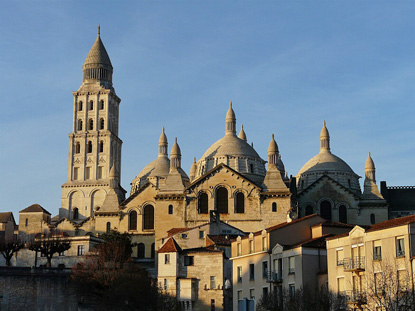
Périgueux, capital of the Périgord, boasts 2000 years of history from Roman Vesunna to its UNESCO-listed Cathédrale Saint-Front on the Santiago pilgrimage route. Explore medieval streets lined with Renaissance houses and discover Roman ruins at the striking Vesunna Museum. |
|
Sarlat-la-Canéda |
|---|
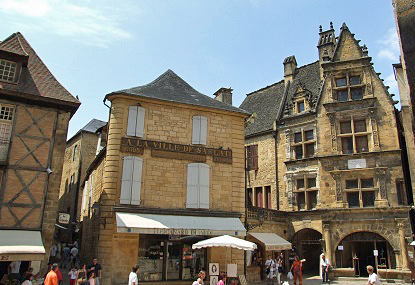
Atmospheric medieval hub of the Périgord Noir, Sarlat dazzles with honey-coloured lanes, This 'Town of Art and History' attracts millions with its cobbled streets, France’s densest cluster of listed monuments, and lively markets overflowing with truffles, foie gras and other regional treats. |
|
Caves of the Vézère Valley ※ |
|---|

 UNESCO World Heritage site in Dordogne featuring 25 decorated prehistoric caves with masterful Palaeolithic art, including the world-famous Lascaux Cave paintings of hunting scenes and vivid animal figures. |
| Eymet |
|---|
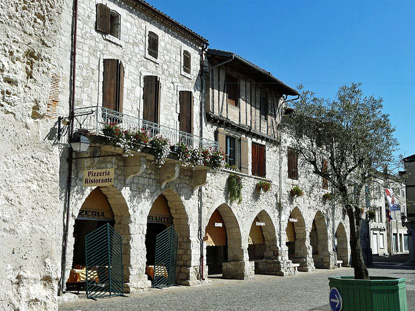
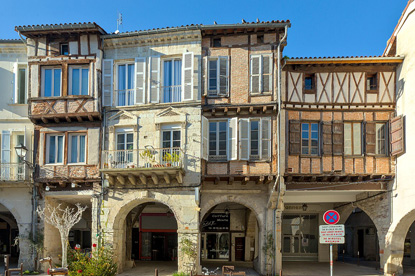
Eymet is a charming bastide town in Dordogne, set on the River Dropt with arcaded square, medieval lanes and a 13th-century château backdrop, lively Thursday markets and summer night fêtes, plus a friendly Anglo-French vibe that makes a warm, easy base for exploring vineyards. |
| Marqueyssac Gardens |
|---|
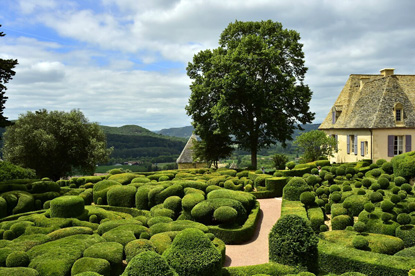
Perched above the Dordogne, Marqueyssac’s romantic, 19th-century gardens weave 6 km of shaded paths through 150,000 hand-pruned boxwoods, rockeries and belvederes. Candlelit summer evenings and sweeping views of Beynac, Castelnaud and La Roque-Gageac complete the enchantment. |
| Saint-Amand-de-Coly |
|---|
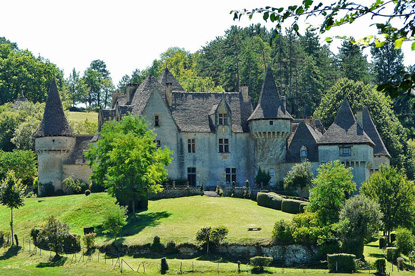
Saint-Amand-de-Coly is a charming village famed for its stunning 12th-century fortified Romanesque church. Surrounded by traditional Périgord architecture with golden stone houses and slate roofs, it offers peaceful countryside charm and rich medieval history. |
|
Brantôme |
|---|

 Encircled by the River Dronne, Brantôme—often called the Venice of Périgord—sits on a tranquil island. Its 8ᵗʰ-century Benedictine abbey, troglodytic caves and medieval stone bridges add historic charm. |
| Domme |
|---|
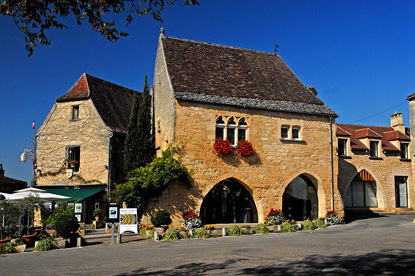
Perched high above the Dordogne Valley, Domme is a fortified medieval bastide village famed for its golden stone houses, panoramic views, and hidden caves. Its narrow lanes, rich history, and tranquil atmosphere make it one of Aquitaine’s most charming hilltop retreats. |
| Monpazier |
|---|
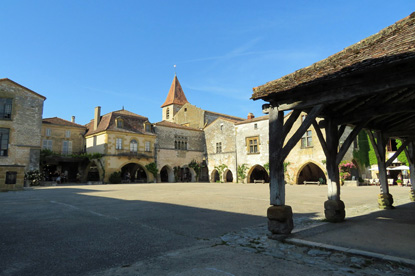
Monpazier is France's finest preserved medieval bastide town, founded in 1284 by Edward I. This enchanting 'Most Beautiful Village' features stunning stone arcades around Place des Cornières, Thursday farmers' market, and over 30 listed historic monuments. |
| Saint-Jean-de-Côle |
|---|
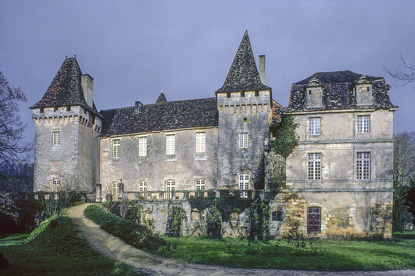
Saint-Jean-de-Côle is a picturesque medieval village renowned for its charming cobbled streets, half-timbered houses, and the 12th-century Église Saint-Jean-Baptiste. Its 15th-century Château de la Marthonie and scenic river bridge add to the enchanting, timeless atmosphere. A perfect stop for history and nature lovers. |
| Saint-Léon-sur-Vézère |
|---|
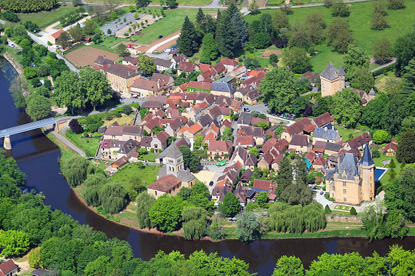
Saint-Léon-sur-Vézère is a picturesque village famed for its charming medieval streets, 12th-century Romanesque church, and historic manor houses. Nestled on a bend of the Vézère River, it boasts stunning architecture and tranquil riverside views, earning it the title of one of France’s Most Beautiful Villages. |
Castles of Périgord
| Biron Castle |
|---|
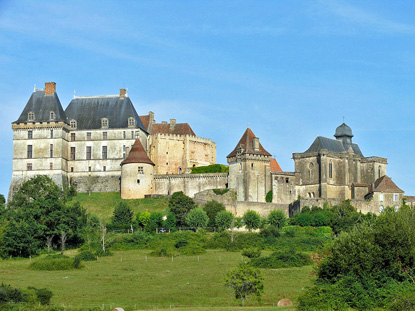
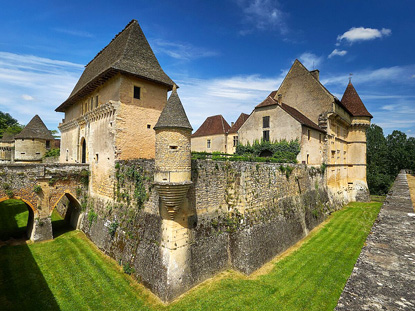
Commanding a hilltop in the Pays des Bastides, this imposing 12th-century fortress is the largest castle in Nouvelle-Aquitaine, blending medieval and Renaissance architecture. A historic monument offering panoramic views over Périgord, it houses 14 buildings with guided tours and art exhibitions. |
|
Hautefort Castle |
|---|

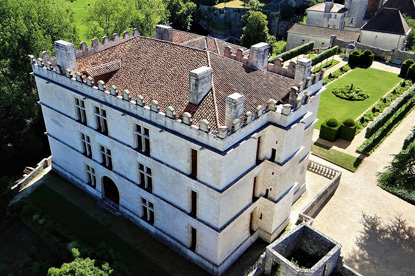
A magnificent 17th-century classical château in the Dordogne, uniquely styled after Loire Valley architecture. Originally a medieval fortress, it features stunning formal French gardens with intricate boxwood parterres across 3 hectares of manicured grounds. |
| Commarque Castle |
|---|
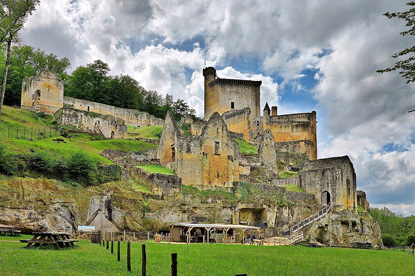
Commarque, in the wooded Beune Valley near Sarlat, is a dramatic medieval ruin layered over prehistoric caves and troglodyte dwellings, with a towering donjon and evocative village remains that tell Aquitaine’s long story of knights, wars and quiet rural resilience. |
| Milandes Castle |
|---|
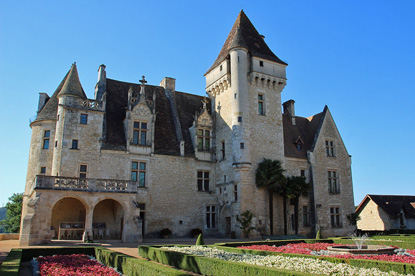
Built in 1489 by François de Caumont, this charming Renaissance château overlooks the Dordogne Valley with Gothic turrets, gargoyles and mullioned windows. Famous as Joséphine Baker's beloved home, it features formal gardens and spectacular bird displays. |
| Puymartin Castle |
|---|

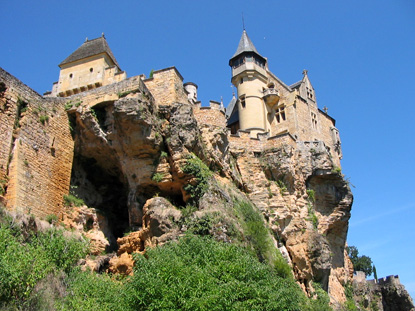
Puymartin Castle in Aquitaine’s Périgord Noir, near Sarlat, is a honey-stone stronghold marrying medieval ramparts with 19th-century neo-Gothic flair. Climb fairy-tale towers, see panelled rooms and Aubusson tapestries, and hear the legend of the White Lady.. |
| Monbazillac Castle |
|---|
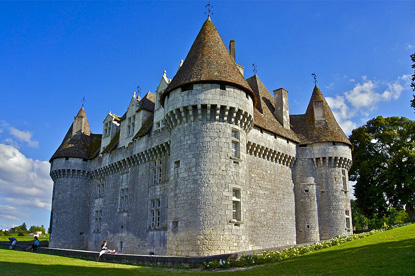
This enchanting 16th-century château combines medieval fortifications with Renaissance architecture. Located near Bergerac overlooking the Dordogne Valley, this Historic Monument is world-renowned for its exceptional sweet wines and 'noble rot' process. Guided tours include wine tastings. |
| Castelnaud-la-Chapelle Castle |
|---|
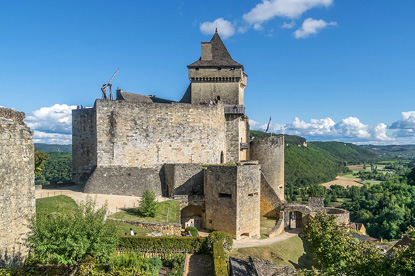
Medieval fortress overlooking the Dordogne, this 13th-century castle houses an impressive Museum of Medieval Warfare. Once an English stronghold facing rival French Château de Beynac, it offers spectacular valley views and reconstructed siege engines. |
Département de la Gironde
|
Bordeaux ※ |
|---|

 Bordeaux, UNESCO-listed wine capital, captivates with elegant 18th-century architecture along the Garonne. Explore world-renowned vineyards, savour exceptional cuisine, and discover museums in this sophisticated city blending historic charm with modern energy. |
| Saint-Emilion ※ |
|---|
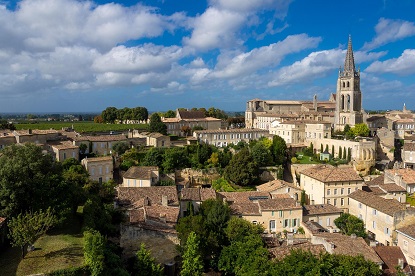
Enchanting village atop limestone cliffs renowned for world-class red wines and UNESCO World Heritage vineyards. Boasts honey-coloured stone buildings, underground monolithic church, ancient catacombs, and cobbled streets lined with wine shops. |
|
Cazeneuve Castle |
|---|

Historic royal château in Préchac, former residence of Henri IV and Queen Margot. This 11th-century castle overlooking the Ciron gorges features period-furnished royal apartments, medieval cellars, and beautiful parkland. |
| Roquetaillade Castle |
|---|

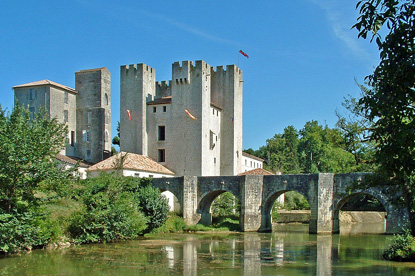
The twin castle of Roquetaillade is composed a 12th-century "old castle" and a 14th-century "new castle". It is one of the few medieval castles in France that still belongs to the family who built it. |
| Arcachon |
|---|
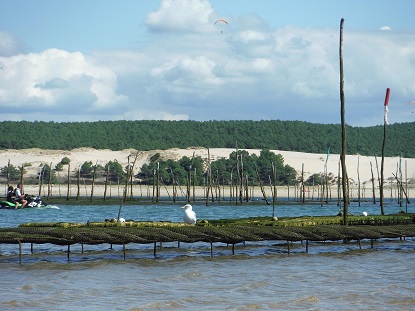
Arcachon is a chic Atlantic resort famed for oyster beds, sweeping sandy beaches and Belle Époque villas beneath fragrant pines, a short hop from Bordeaux. Its sheltered bay, boat trips to Île aux Oiseaux, and nearby Dune du Pilat make a serene escape with classic seaside charm. |
| The Great Dune of Pyla |
|---|
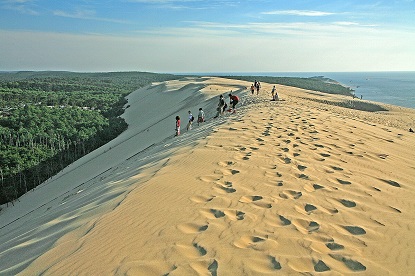
 Europe's tallest sand dune rising 106 metres above the Atlantic, offering breathtaking panoramic views over ocean and forest. Located near Arcachon in Aquitaine, this shifting 60-million-cubic-metre natural phenomenon attracts over two million visitors annually. |
| Blaye (※) |
|---|
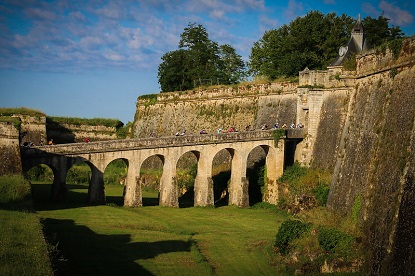
 Historic fortified town on the Gironde estuary, renowned for its magnificent UNESCO World Heritage Vauban citadel overlooking Europe's largest estuary. Medieval cobblestone streets house charming artisan shops and wine cellars showcasing the celebrated Côtes de Blaye wines. |
Département de Lot-et-Garonne
| Penne-d'Agenais |
|---|
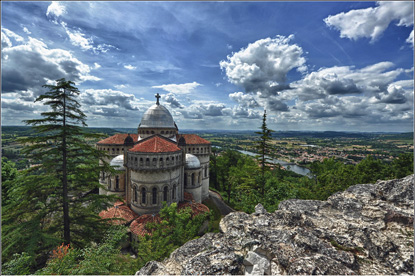
Enchanting medieval hilltop town above the Lot River with cobbled streets, half-timbered houses, and golden-domed Notre-Dame de Peyragude basilica. A medieval stronghold with gateways and ramparts, it offers tranquil squares, river walks, and timeless village ambience. |
| Nérac |
|---|
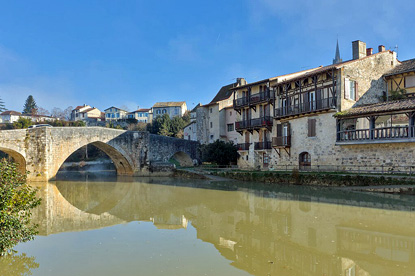
Historic mediaeval and Renaissance town in the Baïse valley, dubbed the 'pearl of Albret'. Once capital of the Albret region, Nérac boasts Henri IV's château, Gothic bridges, and charming riverside architecture built upon Gallo-Roman foundations. |
| Villeréal |
|---|
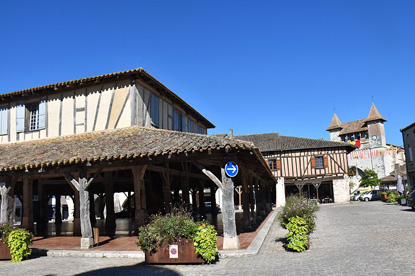
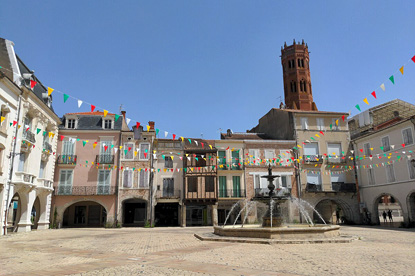
Villeréal is a classic bastide in Lot-et-Garonne, famed for its 14th-century timber market hall, arcaded square and fortified Notre-Dame church. Lively Saturday markets, summer night fêtes and nearby castles and villages make it a charming base amid rolling Dropt-valley countryside. |
Département des Landes
| Mont-de-Marsan |
|---|
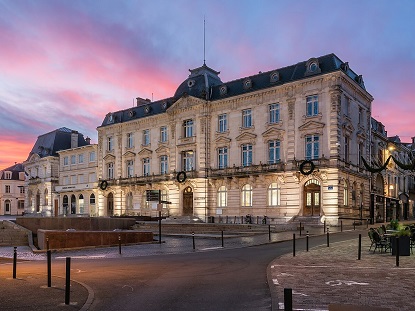
Mont-de-Marsan, capital of the Landes, blends medieval heritage with riverfront charm where the Midou and Douze meet to form the Midouze. Stroll past the Lacataye donjon and the Despiau-Wlérick sculpture museum, then unwind in leafy parks before sampling Gascon flavours in friendly cafés. |
| Dax |
|---|
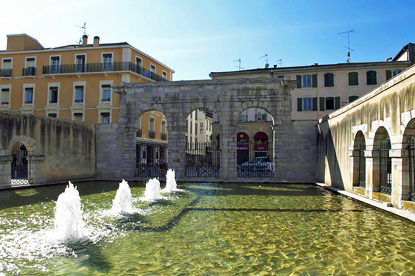
Historic spa town famed for thermal waters since Roman times, Dax blends Belle Époque elegance with Gallo-Roman remains, lively ferias and a convivial market scene by the Adour. Expect soothing mud treatments, a handsome cathedral, and easy access to Landes forests and beaches. |
| Marquèze |
|---|
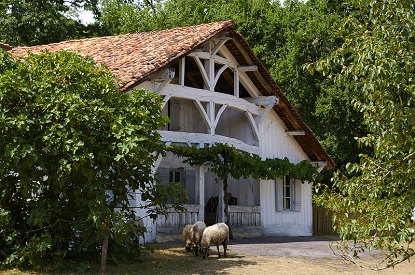
A captivating ecomuseum showcasing 19th-century Gascon life through authentic half-timbered buildings and costumed craftspeople. Accessible via historic train from Sabres through pine forest, this living village offers immersive demonstrations of traditional Landes culture and heritage. |
| Mimizan (※) |
|---|
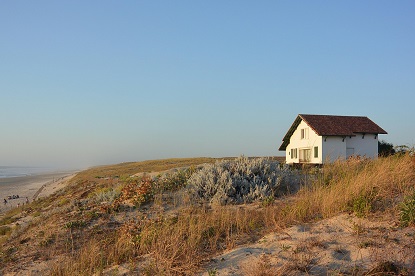
Atlantic seaside resort in the Landes with 10km of sandy beaches and extensive pine forests. Features a UNESCO-listed Romanesque bell tower from its pilgrimage past, plus Lake Aureilhan. Popular for surfing, cycling, and outdoor pursuits in an elegant yet relaxed atmosphere. |
| Capbreton |
|---|
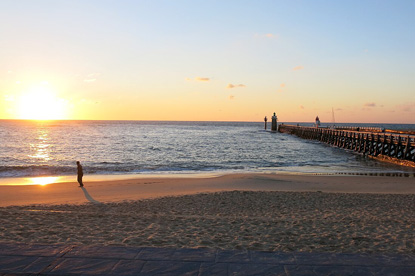
Popular Atlantic seaside resort in Landes with long sandy beaches, thriving fishing port famous for fresh seafood, and picturesque marina. Historic 1858 jetty and medieval town centre with half-timbered buildings add cultural charm. |
| Hossegor |
|---|
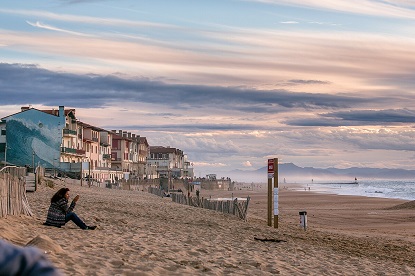
Elegant seaside resort on Aquitaine's Silver Coast, world-renowned for exceptional surfing and pristine beaches. This sophisticated destination combines Atlantic waves with peaceful pine forests and a saltwater lake, featuring fine dining, golf, and relaxed surfing culture. |
Département des Pyrénées-Atlantiques
|
Bayonne |
|---|

Historic Basque city straddling the Adour and Nive, Bayonne charms with colourful half-timbered facades, Gothic cathedral, world-famous ham and chocolate, and summer fêtes that flood its medieval streets with music and conviviality. |
| Pau |
|---|

Pau, a refined Béarnais city in Aquitaine, gazes across the Pyrenees from its elegant Boulevard des Pyrénées, with palm-lined promenades, Belle-Époque villas and the Château de Pau, birthplace of Henri IV. A cultured gateway to mountains, vineyards and Atlantic breezes. |
| Saint-Jean-de-Luz |
|---|
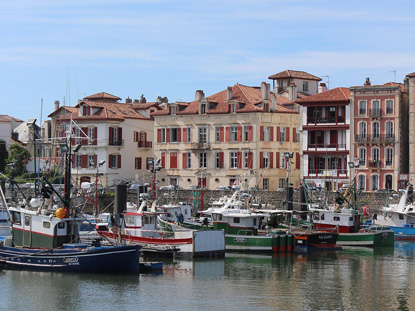
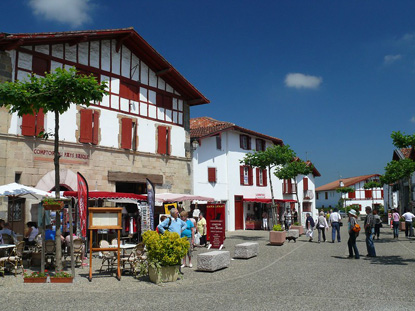
Charming Basque coastal town near Spain, renowned for its sheltered sandy bay, traditional half-timbered houses, and historic fishing port. Site of Louis XIV's 1660 royal wedding, offering excellent seafood and calm waters perfect for swimming. |
|





 : Local interest
 : Moderately interesting
 : Outstanding place
 : Must-see in the country
 : Top cities in Europe