France Guide  |
|---|
|
| | Top French Cities |
|---|
|
| | French Regions |
|---|
|
| | Photos |
|---|
|
| | Europe Guide |
|---|
|
| | Travel Tools |
|---|
|
|
|
|
Centre-Val de Loire Travel Guide
 Chenonceau Castle, Indre-et-Loire. Chenonceau Castle, Indre-et-Loire.
Introduction

The Centre-Val de Loire is an administrative region formed from the historical provinces of Orléanais, Touraine, Berry and parts of Anjou, in the central section of the Loire Valley. The Orléanais is the historical core of the royal domain with Paris, and the three other provinces were the first territorial expansions of Crown in the late Middle Ages. Away from the troubles of Parisian life, the French Kings built most of their castles in the Loire Valley in the 15th and 16th centuries.
The local gastronomy is delicate and refined, matching freshwater fish (notably pike) with the exceptional local white wines (Chinon, Bourgueil, Pouilly-Fumé, Sancerre, Vouvray) and making a generous use of butter. Local specialities include Rillettes de Tours, Andouillette de Jargeau, Noisettes de Porc aux Pruneaux, and for dessert Tarte Tatin or Pithiviers. Try also the region's goat cheese: Sainte-Maure de Touraine, Valençay, and Crottin de Chavignol.
Most of France's perfumes and cosmetics are produced in the so-called Cosmetic Valley, located mostly in the départements of Eure-et-Loir (Chartres) and Loiret (Orléans).
Many locals still use the names of the old provinces, instead of talking about the confusingly named Centre Region. The Orléanais used to cover the Loiret, and parts of the Loir-et-Cher, Eure-et-Loir and Yonne (in present-day Bourgogne). The Touraine was divided between the départements of Indre-et-Loire, the southwest of Loir-et-Cher and the northwest of Indre. The Berry corresponds to the départements of Cher, Indre, and parts of Vienne.
Famous people from the Centre include (chronologically): the humanist and writer François Rabelais, the philosopher René Descartes, the writer Honoré de Balzac, the author Alain-Fournier, and the actor Gérard Depardieu.
History
The Centre region of France, known officially as Centre-Val de Loire since 2015, encompasses a vast swath of the Loire Valley that has served as the stage for pivotal moments in French and European history. This region emerged from three historic provinces—Berry, Orléanais, and Touraine—each contributing distinct cultural identities that remain deeply embedded in local traditions despite modern administrative reorganisation. The area's strategic position along the Loire River, France's longest waterway, established it as a crucial communication and commercial corridor from Gallo-Roman times through the 19th century, fostering economic development and the growth of important towns like Orléans, Tours, Blois, and Amboise.
The region's earliest inhabitants, the powerful Cenomanni people during the Iron Age, were succeeded by the Carnutes, who along with the Druids vigorously resisted Julius Caesar's Roman conquest in 52 BCE before ultimately suffering defeat. Under Emperor Augustus, peace and stability transformed the landscape, encouraging major towns such as Orléans and Tours to adopt Roman urban planning with forums, baths, theatres, and other public buildings. Christianity took root during the early Christian era through figures like Saint-Gatien, the first Bishop of Tours, and reached complete acceptance by the 4th century under the influence of Saint-Martin, regarded as the greatest of all Gallic bishops. The medieval period saw the rise of powerful Loire barons in the 11th and 12th centuries, who constructed imposing châteaux across the valley, though only Orléans remained firmly under the French crown until Philippe-Auguste seized John of England's French territories in 1202, returning the entire Loire region to French control.
The Centre region achieved its greatest historical prominence during the French Renaissance of the 15th and 16th centuries, when it became the preferred seat of royal power and witnessed unprecedented cultural flowering. This period saw the transformation of medieval fortresses into sumptuous pleasure palaces, beginning notably with François I's renovation of Château de Chambord in 1519 following his victory at the Battle of Marignan in 1515. The Loire Valley served as a major cultural nexus facilitating exchanges between Italian Mediterranean influences, France, and Flanders, contributing significantly to the development of garden art and landscape appreciation. Renowned châteaux such as Chambord, Chenonceau, Amboise, Blois, and Azay-le-Rideau epitomised Renaissance ideals and became symbols of royal magnificence, whilst the region also boasted important Romanesque churches including Saint-Benoît-sur-Loire and the Gothic churches of Blois. However, this brilliant period ended in tragedy when religious tensions erupted: the Catholic Church's harsh repression of the Reformation from 1540 onwards sparked Protestant Huguenot uprisings in 1560, plunging the region into the devastating French Wars of Religion.
Cuisine
The Centre, often dubbed the breadbasket of France, excels in cereal cultivation that underpins a host of wheat-based specialities such as rustic fouaces and flaky Pithiviers pastry. Dairy lovers flock to its quintet of PDO goat cheeses—Crottin de Chavignol, Sainte-Maure de Touraine, Selles-sur-Cher, Valençay and Pouligny-Saint-Pierre—alongside ash-coated cow’s milk classics like Olivet cendré and Feuille de Dreux. Local tables commonly begin with a board of these cheeses paired with crusty baguette and a crisp glass of Sancerre.
Charcuterie is a regional forte: Rillettes de Tours and caramelised pork rillons are so prized that a brotherhood organises an annual tasting competition to crown the best producers. Travellers will also encounter saffron-scented fouaces stuffed with creamy goats’ cheese. Hearty pâté berrichon baked with hard-boiled eggs, rich saupiquet nivernais, and the old berrichon stew chicken en barbouille round out the savoury repertoire. Traditional recipes make liberal use of local wines: Vouvray often perfumes tripe sausages andouillette, while red Chinon lends depth to a coq-au-vin prepared with the heritage Géline de Touraine chicken.
Sweet-toothed visitors can indulge in upside-down tarte Tatin, almond-glazed pralines de Montargis, chewy nougats de Tours, dried Sologne pears and fragrant prune bonbons. The region’s rolling vineyard belt yields more than two dozen AOC wines, from floral Vouvray and honeyed Montlouis to structured Bourgueil, Menetou-Salon and world-famous Sancerre, providing effortless pairings from apéritif to dessert. For a digestif, locals may pour gentian-based liqueur or sip a glass of St-Pourçain, underscoring a culinary culture that balances rustic produce with refined technique.
Attractions
Départements are listed from North to South.
Département d'Eure-et-Loir
|
Château de Maintenon |
|---|
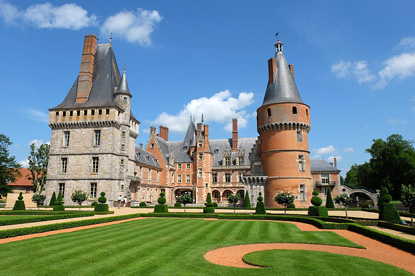
 Elegant château in Eure-et-Loir, transformed by Madame de Maintenon, Louis XIV's secret wife. Medieval origins blend with Renaissance architecture, Le Nôtre gardens, and Vauban's impressive aqueduct. Eight centuries of royal romance and history await. |
| Château d'Anet |
|---|
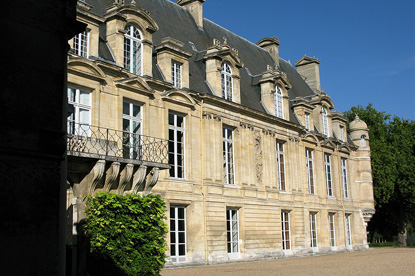
 Exquisite Renaissance château built 1547-52 by Philibert de l'Orme for Diane de Poitiers, Henri II's cherished mistress. Though extensively demolished post-Revolution, this architectural gem near Dreux retains its splendid gateway, chapel and wing showcasing exceptional period craftsmanship. |
| Château de Châteaudun |
|---|

 Medieval fortress transformed into elegant Renaissance château by Jean de Dunois, Joan of Arc's famous companion. Built 12th-16th centuries, showcasing remarkable architectural transition from Gothic to Renaissance. Houses sacred Sainte-Chapelle. Overlooks Loir valley. |
| Château de Saint-Jean |
|---|

Impressive medieval fortress dominating Nogent-le-Rotrou, featuring one of France's oldest rectangular keeps built in the 1040s. The 35-metre-high castle houses an ethnographic museum and offers spectacular views over the Huisne valley from its commanding plateau position. |
Département du Loiret
|
Orléans ※ |
|---|
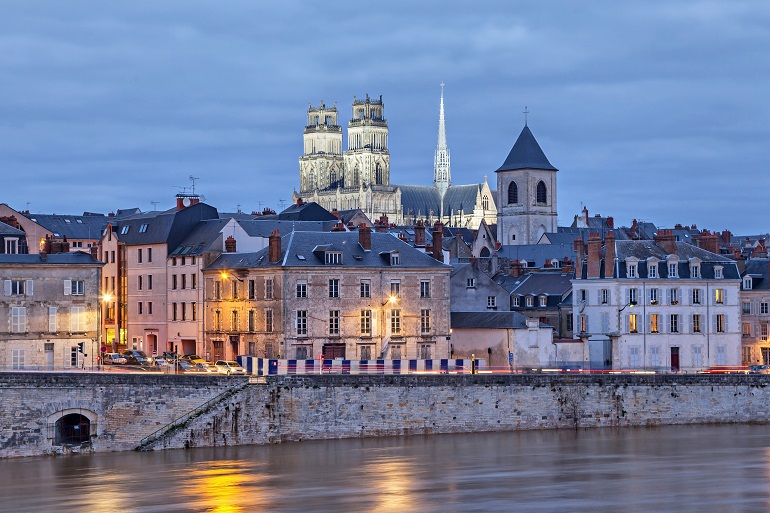
 Historic Loire Valley city, 75 miles from Paris, forever associated with Joan of Arc. Features stunning Gothic cathedral, charming medieval half-timbered houses, world-class museums, and serves as the ideal gateway to the region's celebrated châteaux and vineyards. |
| Château de Gien |
|---|
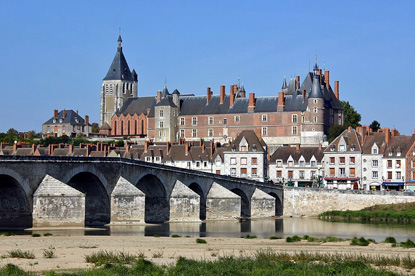
Striking Renaissance château built by Anne de Beaujeu in the 15th century, featuring distinctive red and black brickwork with panoramic Loire views. Houses one of Europe's finest hunting museums and marks the entrance to the renowned Valley of Kings. |
| Château de La Ferté-Saint-Aubain |
|---|

This delightful 16th-century Loire Valley château offers interactive family experiences in a lived-in castle setting. Explore 15 furnished rooms, enjoy giant board games across the 40-hectare park, and savour famous honey madeleines whilst discovering centuries of history. |
| Château de Saint-Brisson-sur-Loire |
|---|
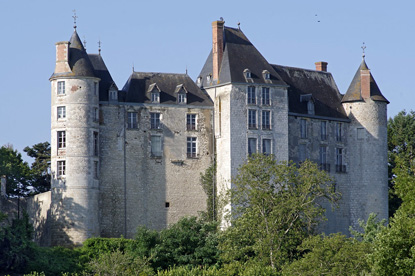
The most upstream château on the Loire, this medieval fortress became a Renaissance residence under the Séguier family. Dating from 1061, the Historic Monument features 25+ furnished rooms across four floors, plus escape games and medieval siege demonstrations. |
|
Château de Sully-sur-Loire ※ |
|---|

Sully-sur-Loire is a 14th-century medieval castle converted into a residential château between 1602 and 1607 by Maximilien de Béthune (1559-1641), Duke of Sully, known as the Grand Sully. |
| Saint-Benoît-sur-Loire Abbey |
|---|
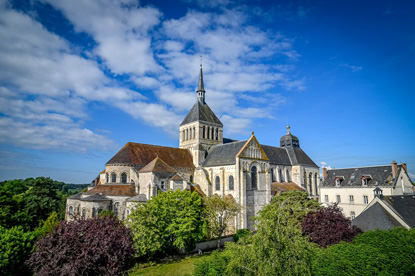
 Founded around 630, this celebrated Benedictine abbey in the Loire Valley houses the relics of St Benedict of Nursia. Its magnificent Romanesque basilica features an 11th-century porch tower, and 40 monks still call it home, making it one of France's finest monastic sites. |
| Château de La Bussière |
|---|
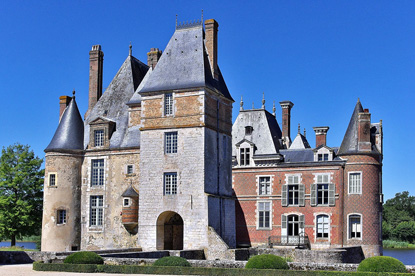
Medieval fortress transformed into elegant 17th-century brick château, dubbed the 'fisherman's castle' for its exceptional collection of angling artifacts. Features beautifully furnished rooms, classified remarkable gardens, and lakeside setting with stone bridge access. |
| Château de Meung-sur-Loire |
|---|

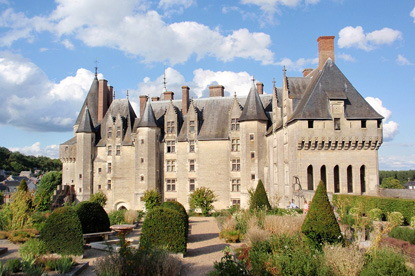
Medieval château built from the 12th century as residence for Orléans bishops. Known as the 'castle with two faces' for its contrasting medieval and classical façades. Features dungeons, furnished rooms, and parklands. Joan of Arc liberated it in 1429 during the Hundred Years' War. |
| Château de Chamerolles |
|---|
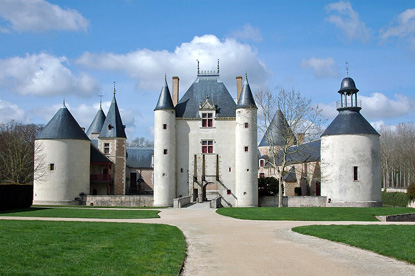
Elegant Renaissance château near Orléans housing France's leading perfume museum. Built by Lancelot du Lac (1500-1530), this brick masterpiece boasts beautiful period gardens, a historic Protestant chapel, and fascinating exhibitions on fragrance history. |
Other attractions
Beaugency Castle
Bellegarde Castle
Malesherbes Castle
Trousse-Barrière Castle
Département de Loir-et-Cher
|
Château de Chambord ※ |
|---|

 The Loire Valley's largest château, commissioned by François I in 1519 as a royal hunting lodge. This Renaissance masterpiece features distinctive architecture possibly influenced by Leonardo da Vinci, including the famous double-helix staircase. A symbol of royal grandeur with 440 rooms and elaborate roofline. |
|
Blois ※ |
|---|

Enchanting royal city on the Loire River, home to the magnificent Château Royal where great kings like Francis I and Henry IV once resided. Medieval streets, Renaissance architecture, and half-timbered houses create old-world charm. Perfect base for exploring Loire Valley châteaux. |
|
Château de Cheverny ※ |
|---|

Elegant 17th-century château built in classical Louis XIII style by the Hurault family, who still reside there today. Famous as the inspiration for Tintin's Marlinspike Hall, it features sumptuous period interiors, historic hunting kennels, and a distinctive white Bourré stone façade. |
|
Château de Beauregard ※ |
|---|

Located a few kilometres south of Blois, the Renaissance Château de Beauregard encloses an exceptional portrait gallery depicting 327 European monarchs, ministers, clergymen, marshals, diplomats and other notables who lived between the reign of Philip VI (r. 1328) and the death of Louis XIII (1643). |
| Château de Gué-Péan |
|---|
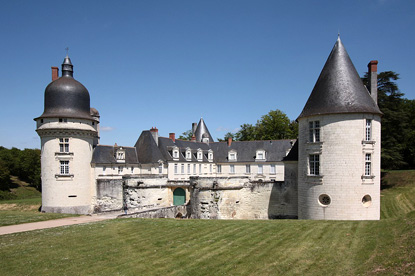
Renaissance château from the 16th century, still inhabited by its owners. Features distinctive corner towers with domes, including one housing a chapel. Located near Chenonceau and Beauval, offers guided tours of furnished salons and remarkable imperial tower. |
| Château de Talcy |
|---|
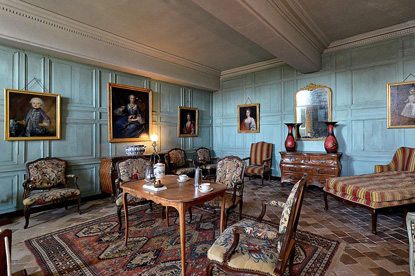
A 16th-century Renaissance château built by Florentine banker Bernard Salviati, famously immortalised as the romantic muse of poet Pierre de Ronsard. This austere Loire Valley gem retains medieval defensive features and preserved 18th-century interiors amidst picturesque rural gardens. |
| Château de Villesavin |
|---|

Renaissance château built 1527-37 by Jean le Breton, François I's secretary who oversaw nearby Chambord's construction. Features elegant horseshoe-shaped architecture, rare 1,500-hole dovecote, Carrara marble fountain, and fascinating carriage museum. |
Other attractions
Troussay Castle
Département d'Indre-et-Loire
|
Château de Chenonceau ※ |
|---|

Built over a bridge spanning the Cher River, Chenonceau Castle is like no other in France, and probably like no other in the world. This exquisite Renaissance château is the most visited heritage site in France still in private hands. |
|
Amboise ※ |
|---|
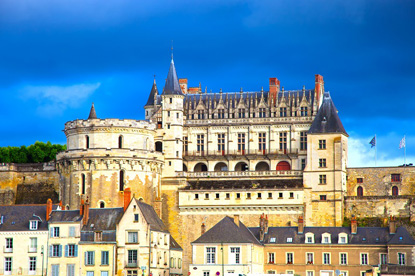
The small market town of Amboise (pop. 12,000) grew in the Frankish period as one of the seats of the Counts of Anjou, then of the powerful House of Amboise. The town is famous for its castle, a royal residence that played a pioneering role in the development of French Renaissance architecture. |
| Chinon |
|---|

Enchanting medieval town on the River Vienne in the Loire Valley, dominated by its royal fortress where Joan of Arc met Charles VII. Cobbled streets wind between half-timbered houses and tufa stone buildings. Renowned for excellent wines and classified as a Town of Art and History. |
| Loches |
|---|
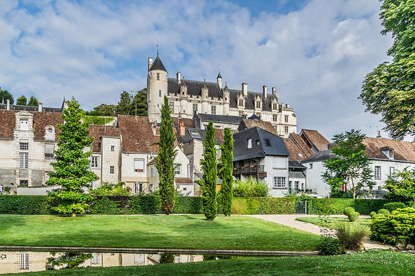
Medieval royal city in the Loire Valley featuring an imposing 1000-year-old château where Joan of Arc persuaded Charles VII to claim his crown. The walled citadel boasts ancient ramparts, cobbled streets, and the tomb of the king's mistress Agnès Sorel. |
|
Château d'Ussé ※ |
|---|

Loire Valley's fairy-tale Château d'Ussé, inspiration for Sleeping Beauty, blends medieval fortress origins with Renaissance elegance. This privately-owned castle features magnificent architecture, ornate interiors, and Le Nôtre gardens overlooking the Indre Valley. |
|
Château de Villandry ※ |
|---|
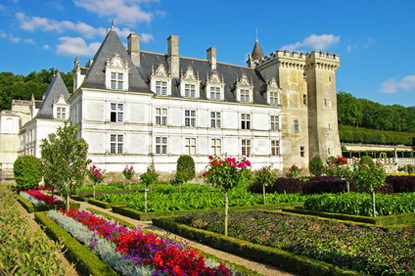
The last great Renaissance château built in the Loire Valley (1536), Villandry near Tours is world-renowned for its spectacular six-hectare terraced gardens. This UNESCO site combines elegant architecture with meticulously maintained ornamental, water, and kitchen gardens. |
| Montpoupon Castle |
|---|
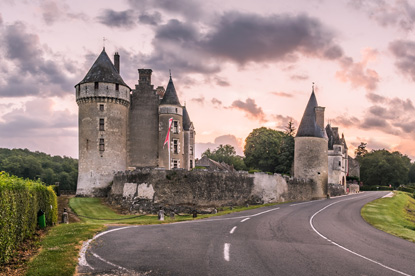
Renaissance château rebuilt after medieval destruction, privately owned by the same family since 1857. Offers intimate glimpse of aristocratic life through fully furnished rooms and France's unique hunting museum in Loire Valley. |
| Le Grand-Pressigny Castle |
|---|
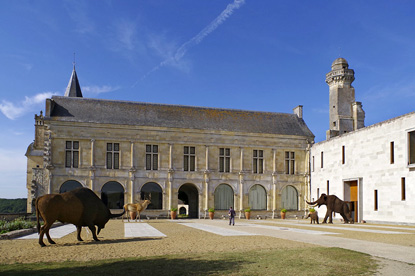
Medieval château housing the Prehistory Museum, built on a rocky spur in the 12th century with impressive keep and ramparts. Strategic stronghold during the Hundred Years War, later restored in Renaissance style. Famous for prehistoric flint tools that made this region archaeologically significant. |
Other attractions
 Cinq-Mars-la-Pile Castle (ruins)
Nitray Castle
Plessis-lez-Tours Castle
Département du Cher
Département de l'Indre
|
Château de Valençay ※ |
|---|

Splendid Renaissance château in Berry, built from 1540 by the d'Estampes family. Renowned as diplomat Talleyrand's residence from 1803, where Spanish princes were held captive. Features elegant domed towers, Empire furniture, and magnificent 53-hectare park with varied gardens. |
| Château de Bouges |
|---|
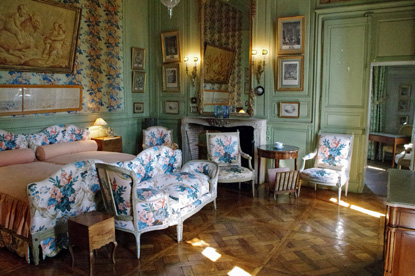
This elegant 18th-century château, modelled on Versailles' Petit Trianon, sits amid 80 hectares of magnificent gardens in the Loire Valley. Built by an ironmaster between 1759-1773, it houses exceptional period furnishings and equestrian collections. Open to the public. |
| Château d'Argy |
|---|
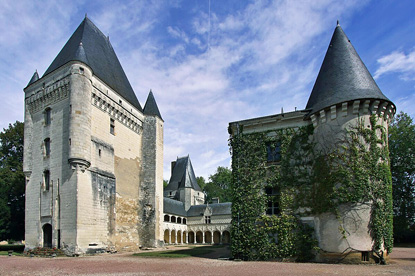
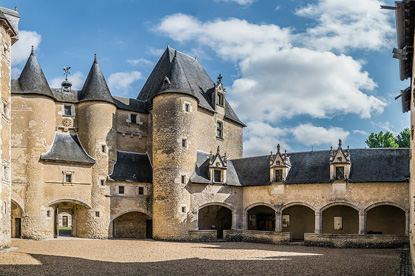
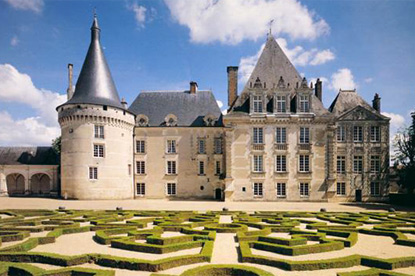
Captivating 15th-16th century château in rural Indre, perfectly illustrating France's architectural transition from medieval fortress to Renaissance palace. Features imposing round towers, elegant Italian-inspired galleries, and stunning 40-hectare parklands. |
|








 Brenne Regional Natural Park
 : Local interest
 : Moderately interesting
 : Outstanding place
 : Must-see in the country
 : Top cities in Europe