


| Contents |
|---|

Introduction
Antibes (pop. 75,000) is a historic Mediterranean port town situated on the French Riviera between Cannes and Nice. The town is renowned for its well-preserved 16th-century star-shaped fortifications designed by Vauban, its picturesque old town with narrow cobblestone streets, and the world's largest collection of Picasso works housed in the Château Grimaldi, now the Musée Picasso. The economy centres on tourism, luxury yacht manufacturing, and the cultivation of flowers for the perfume industry, whilst the Port Vauban serves as one of Europe's largest marinas for superyachts. Antibes combines ancient Roman origins with modern resort amenities, featuring sandy beaches, a bustling daily market, and proximity to the glamorous attractions of the Côte d'Azur whilst maintaining its authentic Provençal character.
Interesting Facts about Antibes
- Once a Greek trading post called Antipolis, Antibes dates back over 2,500 years and still wears its ancient past in its ramparts and street plan.
- Picasso lived and worked in the Château Grimaldi in 1946, and the site became the first museum dedicated to his art.
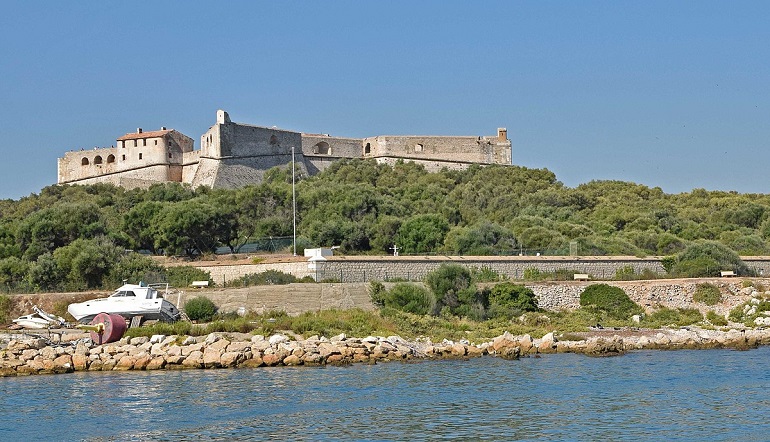
- Fort Carré, later reinforced by Vauban, guards the harbour with a distinctive star-shaped bastion that once watched the Riviera’s shifting borders.
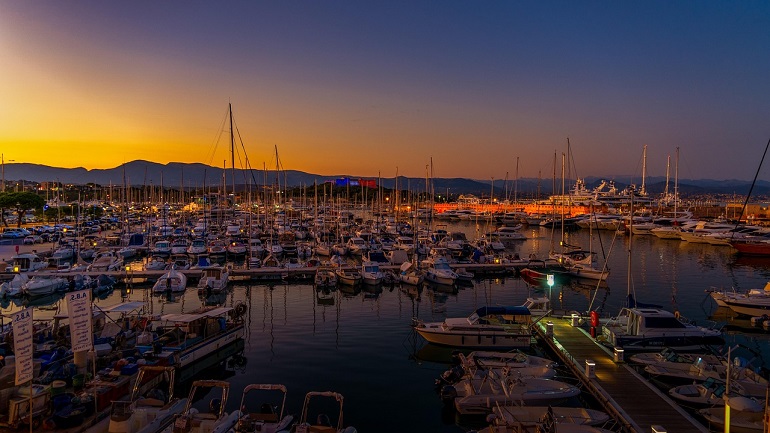
- Port Vauban is among the Mediterranean’s largest marinas, with a “Billionaires’ Quay” that hosts some of the world’s most extravagant superyachts.
- The Old Town’s Marché Provençal overflows with local produce and flowers, perfuming the lanes with a classic Côte d’Azur ambience.
- The Cap d’Antibes headland mixes pine-scented coastal paths with Belle Époque villas, including the elegant Villa Eilenroc.
- Antibes’ cathedral has been rebuilt more than once after raids and wars, its calm Baroque façade belying a turbulent history.
- Juan-les-Pins, part of Antibes, pairs sandy beaches with a storied jazz festival that has drawn legends since the mid-twentieth century.
- A quirky “Free Commune of Safranier” preserves village traditions in a tiny enclave of the Old Town with cobbled lanes and bougainvillea.
- The town sits neatly between Nice and Cannes, offering Riviera glamour with a lived-in, small-port character.
History
Antibes boasts a remarkable history stretching back over 2,500 years, beginning as a humble trading post established by indigenous Ligurian tribes who utilised the natural inlet of Saint-Roch as a sheltered port. In the 5th century BCE, Greek colonists from Massalia (Marseille) founded the settlement of Antipolis, meaning "opposite the city" or possibly "opposite the point of Nice" across the Baie des Anges. This strategic location served as a crucial trading post between the larger Greek settlements of Massalia and Nikaia (Nice), and the fortified town quickly flourished as an important commercial hub for Mediterranean trade. The Romans conquered Antipolis around 154 BCE when Marseille called for Roman protection against threatening local tribes, and by 43 BCE, the settlement was formally annexed into the Roman Empire. Under Roman rule, the city experienced considerable growth and prosperity, aided by its position on the Via Aurelia, one of the main routes connecting Gaul with Rome. The Romans constructed numerous monuments including a theatre, amphitheatre, agora, thermal baths, aqueducts, and triumphal arches, transforming Antipolis into an important emporium handling wine, oil, ceramics, fish, and salt.
The collapse of the Roman Empire in 476 CE ushered in centuries of instability as successive waves of barbarian invaders—including Vandals, Visigoths, Burgundians, Ostrogoths, and Franks—devastated the region. The town, now called Antiboul, became a bishopric in 442 CE when Saint Hermentaire established himself as the first bishop. However, persistent raids by Saracen pirates made life increasingly dangerous, culminating in the burning of Antibes Cathedral in 1124. By 1243, Pope Innocent IV transferred the episcopal see to Grasse for safety reasons, and the Prince-Bishops remained there for the next five centuries despite attempts to lure them back. During the medieval period, control of Antibes passed through various noble hands, including the Lords of Grasse and later the Grimaldi family, who built the Château Grimaldi as their residence in 1383. The fragmentation of power among multiple heirs after the Grimaldi brothers' deaths (Marc in 1398 and Luc in 1409) diminished local authority, with the Count of Provence assuming greater significance.
Antibes' strategic importance dramatically increased in 1481 when Provence was annexed to France following the death of Count Charles III, making the town France's southeastern frontier stronghold facing the hostile County of Nice and Savoyard territories. This exposed position placed Antibes on the front line during the Italian Wars between France and Emperor Charles V, resulting in a devastating sack by Andrea Doria's imperial fleet in 1536. King Henry II responded by ordering the construction of Fort Carré in 1550, later reinforced by the renowned military engineer Vauban under Louis XIV, who completely redesigned the town's fortifications. The town endured its worst siege in 1746-47 during the War of Austrian Succession, when Austro-Savoyard forces under Maximilian Ulysses Browne bombarded the settlement for 57 days, destroying 350 houses and the cathedral once again before French reinforcements forced them to retreat. Following this siege, Louis XV ordered the cathedral's reconstruction, creating the building that survives today. In 1815, Antibes famously closed its gates to Napoleon during his return from Elba, earning recognition from King Louis XVIII who restored the town's title of "Bonne Ville" and granted new coat of arms featuring the fleur-de-lis.
Main Attractions
Old Town Ramparts & Safranier Quarter
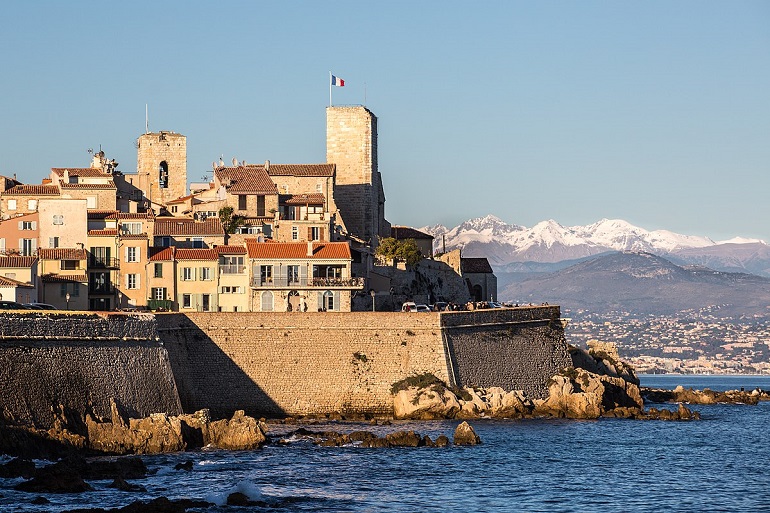
Climb the 16th-century ramparts that once ring-fenced Antibes to follow a coastal walkway of weather-worn cannon bays. Slip through the Porte de l’Orme into tiny Safranier, a self-governing enclave where ivy-draped cottages, an ancient communal well and a pocket square reserved for local fêtes conjure a village within the city.
Place Nationale & Evening Ambience
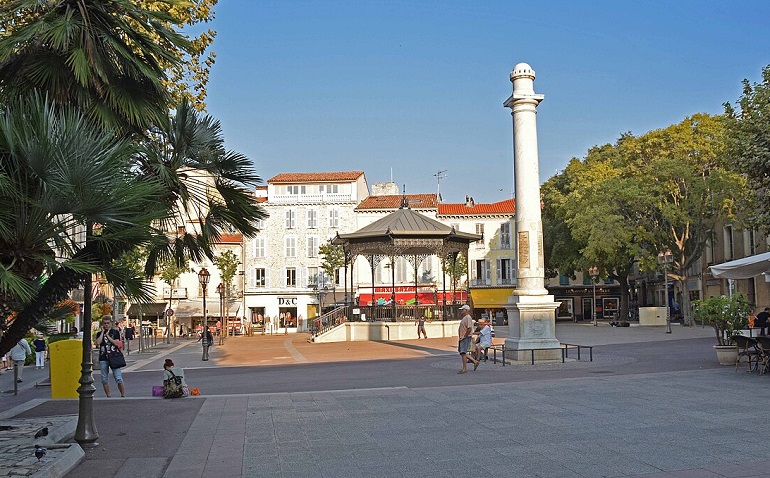
As twilight drapes the old town, Place Nationale hums with clinking glasses and accordion melodies. Children spin beneath plane trees while diners savour bouillabaisse on terracotta-tiled terraces. It is the perfect stage to sample local rosé and reflect on Antibes’ seamless blend of ancient ramparts, artistic flair and Riviera joie de vivre.
Port Vauban & “Billionaire’s Quay”
Europe’s largest yachting harbour is a spectacle of floating palaces whose polished helipads and basketball courts glint in the Riviera sun. Wander along the International Quay – nicknamed Quai des Milliardaires – to admire these leviathans while local fishermen mend nets beside them, a vivid reminder of Antibes’ seafaring roots. Dawn and dusk are especially atmospheric as crew lights shimmer across the water and the Alps turn pink behind the ramparts.
Le Nomade
Perched on the restored bastion of Saint-Jaume, Jaume Plensa’s 8-metre-tall sculpture of a crouching figure gazes seawards, its lattice of alphabet characters forming a modern sentinel above the old town walls. Step inside the hollow artwork to watch sky and masts framed by swirling letters, then circle the ramparts for sweeping views over Port Vauban and the Cap d’Antibes.
Provençal Market (Marché Cours Masséna)
Each morning (except Monday) the covered market floods with the scent of thyme, ripe tomatoes and lavender honey. Chefs jostle with locals for goat’s cheese and heritage olives while vendors slice socca straight from the wood-fired pan. Arrive early for the liveliest banter, then linger at a café table under striped awnings to watch baskets brim with Riviera bounty.
Fort Carré
Commanding a rocky spur across the marina, this star-shaped fortress built for Henri II in the 1550s once guarded the French border and briefly held Napoleon. Its four bastions rise amid a 4-hectare nature reserve rich in Mediterranean flora and kestrels. A guided circuit reveals cannon terraces, soldiers’ barracks and panoramic 360-degree vistas that justify the uphill walk.
Sentier du Littoral, Cap d’Antibes
Beginning near Plage de la Garoupe lighthouse, this 5km coastal path skirts limestone cliffs, hidden coves and pine-scented headlands where cicadas drown the sea’s hush. Swim from flat rocks, spot Provençal mansions peeking through umbrella pines, and finish with a lemonade at the wooden beach huts of Juan-les-Pins while yachts glide past.
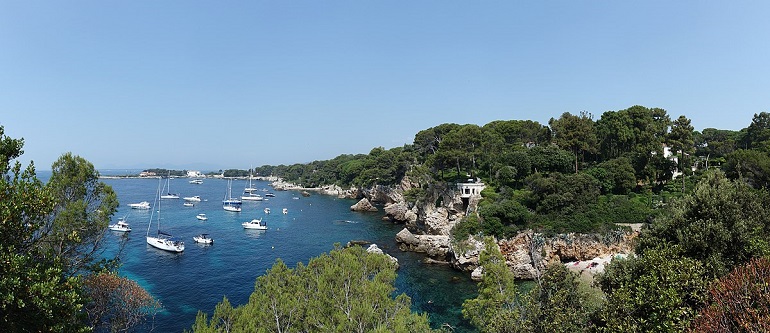
Phare & Chapelle de la Garoupe
Follow the old Roman track through forested slopes to reach one of the Mediterranean’s most powerful lighthouses, its beam visible 60km at sea. Adjacent stands the white-washed sailors’ chapel hung with model ships and ex-voto plaques. The belvedere outside grants a sweeping arc from Nice’s Baie des Anges to the Esterel hills – unforgettable at sunset when gulls wheel through rose-gold skies.
Jardin Botanique de la Villa Thuret
Created in 1857 as an acclimatisation garden, this 5-acre oasis shelters more than 1,600 species from five continents. Wander gravel alleys scented with eucalyptus, silvery banksias and rare cycads; botanists often label specimens with anecdotes about Victorian plant-hunting exploits. Benches beneath towering Araucaria offer tranquil refuge from the Riviera bustle.
Plage de la Salis & Promenade Amiral-de-Grasse
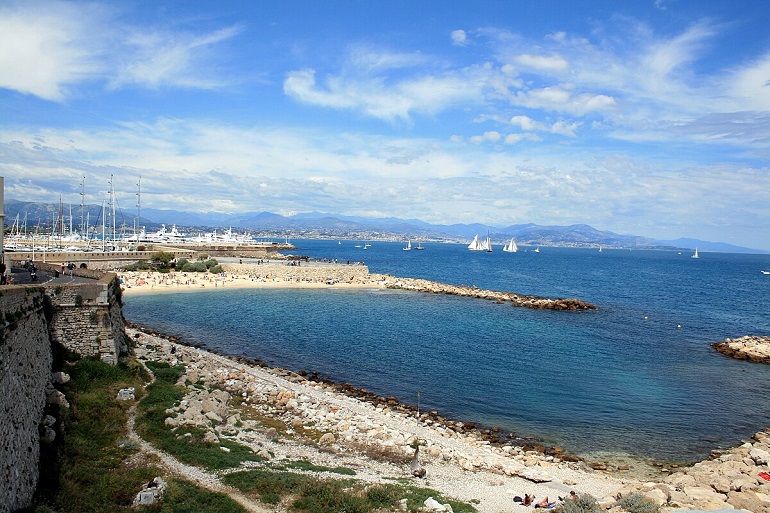
Antibes’ beloved town beach lays a soft curve of pale sand below the ramparts, its shallow, calm waters ideal for families and paddle-boarders alike. An evening stroll along the promenade reveals fishermen casting lines while locals play pétanque under tamarisk trees, and the old town silhouette blushes in the fading light.
Villa Eilenroc & Coastal Gardens
Set on the western tip of Cap d’Antibes, this Belle-Époque mansion opens select afternoons to showcase parquet salons and rose gardens fragrant with 3,000 varieties. A clifftop path threads through fragrant maquis scrub to the secluded Plage des Ondes, offering postcard views back towards Cannes and the Lérins Islands.

Quartier de la Gravette & Plage de la Gravette
Hidden inside the harbour mouth, this sandy cove offers calm turquoise water protected by breakwaters and a photogenic view of the ochre old town walls. Early risers join hardy locals for a dawn plunge before the beach fills with sun-seekers; afterwards, cafés beneath the arches serve ice-cold citron pressé just steps away.
Top Museums
Art and Sculpture Museums
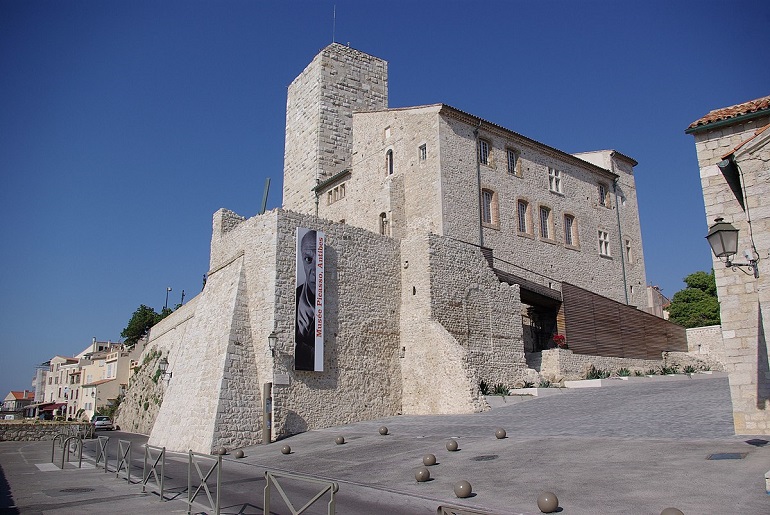
Picasso Museum
Housed within the formidable Château Grimaldi, which majestically overlooks the sea, the Picasso Museum is an essential stop for any art lover. The building itself has a layered history, having served as a Greek acropolis, a Roman castrum, and a medieval bishop's residence before the Grimaldi family took ownership in 1385. In 1946, the museum's curator invited Pablo Picasso to use a part of the castle as his studio. The artist worked there for two months, a period of intense creativity that resulted in a remarkable body of work. Upon his departure, he left 23 paintings and 44 drawings in the town's care, forming the core of what would become the first museum dedicated to him.
Visitors can now explore galleries filled with these iconic pieces, including the celebrated La Joie de Vivre, Satyre, Faune et centaure au trident, and Le Gobeur d'oursins. The collection also features a significant number of Picasso's ceramics, which he produced in the nearby town of Vallauris. Beyond Picasso's own creations, the museum’s sun-drenched terrace features a permanent collection of striking sculptures by Germaine Richier, alongside works by Joan Miró and Bernard Pagès, offering panoramic views of the Mediterranean Sea. The museum's collection has grown over the years to include significant works by other modern masters such as Nicolas de Staël, Hans Hartung, and Anna-Eva Bergman, making it a comprehensive treasure trove of 20th-century art.
Peynet and Cartoon Museum (Musée Peynet et du Dessin Humoristique)
Tucked away in the old town, the Peynet and Cartoon Museum is a delightful and surprisingly thought-provoking space dedicated to the art of illustration and satire. The museum celebrates the work of Raymond Peynet, an artist who lived in Antibes and became world-famous for his enchanting characters, "The Lovers" (Les Amoureux). These whimsical figures, a poet and his sweetheart, appear on everything from prints and posters to dolls and porcelain, and their universal message of love even led to a sculpture being placed at the Hiroshima memorial as a symbol of peace.
Beyond Peynet's charming universe, the museum also serves as a vibrant centre for cartoon art, featuring works from over thirty other artists, including historical figures like Daumier and contemporary satirists such as Plantu and Sempé. The temporary exhibitions are a highlight, often providing sharp, witty commentary on modern society and politics, proving that cartooning is a powerful and relevant art form.
Hartung-Bergman Foundation
Located in an olive grove on the hills of Antibes, this foundation is the former home and studio of abstract artists Hans Hartung and Anna-Eva Bergman. The site itself is a remarkable piece of architecture designed by the artists, where minimalist structures are in perfect harmony with nature. It offers a deep insight into the couple's life and work through exhibitions of their powerful abstract paintings.
History and Heritage Museums
Museum of Archaeology (Musée d'Archéologie)
For a deep dive into the ancient origins of Antibes, then known as Antipolis, the Museum of Archaeology is unparalleled. It is located within the 17th-century Saint-André Bastion, a formidable military stronghold built by the famous engineer Vauban. The museum's collections, gathered from both terrestrial and underwater excavations, trace the history of the city from its earliest days.
The exhibition follows a chronological path, beginning with relics from the Ligurian, Etruscan, and Greek settlers. Visitors can marvel at ancient ceramics, amphorae, and coins that speak of a bustling port city. One of the most significant artefacts is the Terpon stone, which bears one of the oldest Greek inscriptions found in the region, dating back to around 450 BCE. The Roman period is also well-represented, with mosaics, funerary steles, and objects from daily life, such as oil lamps and tools. A particularly fascinating exhibit showcases massive ancient wooden anchors, which predate the use of iron. The museum not only provides a comprehensive overview of the town's past but also offers stunning views from its terrace.
Postcard Museum (Musée de la Carte Postale)
A truly original and nostalgic attraction, the Postcard Museum offers a fascinating journey through the history of this humble form of communication. It houses an impressive collection of thousands of postcards, showcasing their evolution from the late 19th century to the present day. The displays are thematically organised, exploring subjects such as traditional French costumes, historical events, and early tourism on the Côte d'Azur.
Visitors will discover the sheer variety of postcards produced over the years, including advertising cards for products like champagne, intricate puzzle postcards, and even early "sound cards". One of the most intriguing sections features stereocards and the devices used to view them, which created a 3D effect, acting as a precursor to modern 3D technology. This small but captivating museum provides a unique window into the social history and visual culture of the past 150 years.
School Museum (Musée de l'École)
Step back in time at the School Museum, a charming space that meticulously recreates a French classroom from the Third Republic era (late 19th to mid-20th century). This community-run museum is a treasure trove of nostalgia, featuring wooden desks with inkwells, blackboards, old maps, and educational posters.
The collection includes authentic school materials such as quill pens, violet ink, sewing notebooks, and wooden satchels. The museum also holds an archive of pupils' work and numerous old class photographs, allowing local residents to find familiar faces from their past. It is a visit that sparks intergenerational conversations, offering younger visitors a glimpse into the disciplined and very different world of their grandparents' school days.
Absinthe Museum
For those with a taste for the bohemian, the Absinthe Museum delves into the history of the "Green Fairy." It explores the rituals and culture surrounding this once-notorious spirit, which was a favourite of many artists and writers who frequented the Côte d'Azur.
Villas and Gardens
Villa Eilenroc
This magnificent neoclassical villa, situated at the tip of Cap d'Antibes, symbolises the glamour of the Belle Époque on the Riviera. While the villa itself is often used for receptions, its stunning gardens, including an expansive rose garden with 1,000 plants, are open to the public. The 11-hectare park also contains an eco-museum displaying old farming tools and offers breathtaking views of the coastline.
Local Cuisine
The cuisine of Antibes reflects the sunny flavours of Provence and the Mediterranean, with an emphasis on fresh seafood, aromatic herbs, and seasonal produce. Among the local specialities, visitors should not miss bouillabaisse, a fragrant fish stew traditionally served with garlicky rouille, and pissaladière, a savoury tart topped with caramelised onions, anchovies, and olives. The town’s markets overflow with olives, tapenade, and socca, a crisp chickpea pancake best enjoyed hot from street vendors. Dining in Antibes offers a delightful blend of vibrant flavours and rustic recipes that perfectly capture the spirit of the Côte d’Azur.
Getting There
Getting to Antibes is remarkably straightforward, making it an easily accessible destination along the French Riviera. The closest airport is Nice Côte d'Azur, situated just 20 kilometres away, from which visitors can take the express bus service that reaches Antibes in approximately 30 minutes. For those travelling from other Riviera destinations, the train is by far the most convenient option, with Antibes sitting directly on the main Marseille-Ventimiglia railway line that serves frequent TER regional and TGV services. Regular trains connect Antibes to Nice in about 20 minutes, Cannes in under 10 minutes, and Monaco in under an hour, with services running approximately every 15 minutes throughout the day. Alternatively, visitors can reach Antibes by car via the coastal road (RD 6098), the inland route (RD 6007), or the motorway system with exits at junction 41 for the airport approach or junction 44 for direct access to Antibes. The town's central railway station is conveniently located just a short walk from both the old town and Port Vauban, making onward exploration effortless upon arrival.