France Guide  |
|---|
|
| | Top French Cities |
|---|
|
| | French Regions |
|---|
|
| | Photos |
|---|
|
| | Europe Guide |
|---|
|
| | Travel Tools |
|---|
|
|
|
|
Must-see destinations in France
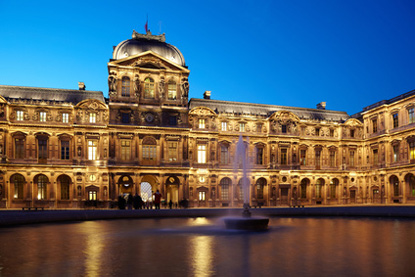 Louvre, Paris. Louvre, Paris.
Must-see destinations in France
Eupedia is committed to delivering impartial and objective ratings for destinations and attractions featured in its travel guides, employing a set of well-defined criteria. Our evaluation process is comprehensive, comparing sights not only within specific regions or countries but also across European nations. This approach ensures consistency in ratings across all locations, maintaining a uniform standard of assessment.
The rating system is designed to identify and highlight truly exceptional destinations, regardless of their geographical location. As a result, the distribution of highly-rated attractions may not be uniform across regions. Some areas may lack top-tier attractions, while others may boast numerous must-see locations.
Eupedia prioritizes objectivity in its assessments, eschewing a "politically correct" approach that would artificially balance the number of highly-rated attractions across regions. This commitment to unbiased evaluation allows travelers to make informed decisions based on the genuine appeal and significance of each destination, rather than on a predetermined quota system.
By maintaining this rigorous and impartial rating methodology, Eupedia aims to provide travelers with reliable and valuable information to enhance their European travel experiences.
Northern France
|
Dinan |
|---|

 Dinan captivates visitors with its remarkably preserved medieval charm, boasting over 130 half-timbered houses dating from the 15th to 18th centuries. The town's impressive 13th-century ramparts stretch nearly 3 kilometres, featuring 10 of the original 14 guard towers and offering breathtaking views of the Rance Valley. History enthusiasts will appreciate the 14th-century Château de Dinan, the imposing 15th-century Clock Tower (Tour de l'Horloge), and the magnificent Saint-Sauveur Basilica with its Romanesque elements. Wandering through the cobbled streets of the Centre Historique, particularly the legendary steep Rue du Jerzual that has connected the harbour to the upper town for ten centuries, visitors can explore artisan workshops, art galleries and craft shops that showcase the town's thriving artistic scene. The picturesque port, once a major economic centre trading with England and Flanders, now serves as a charming marina and perfect spot for a leisurely stroll at the foot of this enchanting medieval town. |
|
Saint-Malo |
|---|

 Saint-Malo enchants visitors with its stunning walled city, the Intra-Muros, which was painstakingly rebuilt stone by stone after being 80% destroyed during the 1944 bombings. The impressive 2km-long granite ramparts offer breathtaking panoramic views of the bay and coastline, whilst the cobbled streets within reveal a rich maritime heritage through grand privateer houses and wealthy shipowners' residences. History enthusiasts will appreciate the 17th-century Fort National designed by Vauban with no blind spots to defend against English invasions, the majestic Saint-Vincent Cathedral blending Gothic and Romanesque architecture, and the Château de la Duchesse Anne dating back to 1424, now home to a fascinating history museum. The city's magnificent beaches, particularly the 3km-long Plage du Sillon, provide perfect spots for swimming, watersports, or simply admiring the glorious coastline. At low tide, adventurous visitors can walk to nearby islands including Grand Bé, where the famous French writer Chateaubriand is buried, and Petit Bé with its 1667 fort, completing the experience of this captivating corsair city where medieval charm harmoniously blends with coastal splendour. |
| Rennes |
|---|

Rennes is the capital of Brittany and its largest city. Its architectural heritage spans the medieval, Renaissance, Neoclassical and Baroque styles, while its remarkably preserved old town is lined with half-timbered houses dating back to the 15th century. Major landmarks include the Parliament of Brittany, one of France's most significant 17th-century buildings and the neoclassical Rennes Cathedral. Beyond its historical treasures, the city pulses with youthful energy thanks to its large student population, creating a dynamic arts scene, bustling markets, and lively nightlife. The Saturday morning market at Place des Lices, one of France's largest, provides an authentic taste of Breton culture and cuisine, whilst the Parc du Thabor offers peaceful gardens and orangeries for those seeking respite from urban exploration. |
|
Vannes |
|---|
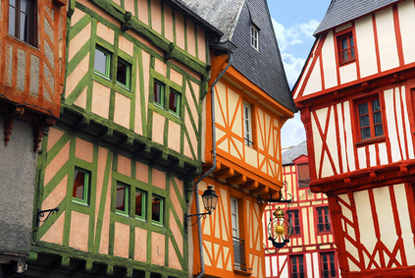
Vannes invites travellers with its remarkably preserved medieval core, where cobbled lanes wind between colourful half-timbered houses and stout ramparts that still girdle the town. The Cathédrale Saint-Pierre reveals layers of Romanesque and Gothic craftsmanship, while the Jardin des Remparts and its moat-lined parterres provide peaceful vantage points over fortified towers. A lively harbour, once busy with salt and wine cargoes, now hosts open-air markets and waterside cafés, and boat trips venture into the sheltered, island-speckled gulf just beyond. The weekly produce market on the historic Place des Lices, scene of long-ago ducal tournaments, adds local flavour and bustle, ensuring that Vannes weaves tangible heritage with easygoing maritime pleasures. |
|
Mont Saint-Michel ※ |
|---|

Mont-Saint-Michel stands as a testament to over a millennium of French history, with its origins dating back to 708 when Bishop Aubert established an oratory after experiencing visions of the Archangel Michael. Originally called Mont-Tombe, this rocky islet transformed into a significant pilgrimage destination, attracting faithful from across medieval Europe, including numerous French and English monarchs. The magnificent Benedictine abbey, begun in 1023, showcases an architectural marvel of both Romanesque and flamboyant Gothic styles, while its strategic island position enabled it to resist sieges during the Hundred Years' War, becoming a symbol of French victory by 1434. Beyond its religious significance, Mont-Saint-Michel served multiple purposes throughout history—functioning as a major cultural centre producing important manuscripts during the Middle Ages, later becoming a prison under Napoleon until 1863, and eventually being restored and classified as a historic monument in 1874. The island's unique aesthetic and historical importance earned it UNESCO World Heritage status in 1979, making it the third most visited site in France with approximately 3.5 million visitors annually. |
| Château du Champ de Bataille |
|---|
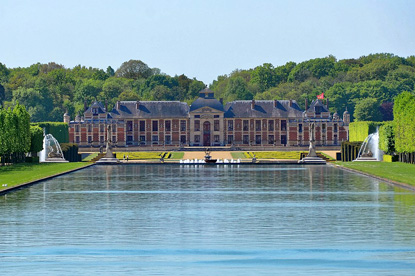
Château du Champ de Bataille presents a singular vision, blending 17th-century aristocratic ambition with contemporary restoration. Originally built between 1653 and 1665 by an exiled noble seeking to replicate the splendour of the royal court, the estate was later acquired in 1992 by decorator Jacques Garcia. He transformed the property, filling the rooms with his personal collection of exceptional furniture and art to create the atmosphere of a sophisticated, inhabited house. Following a storm, Garcia also redesigned the grounds, creating one of Europe's largest private garden projects—a modern interpretation of a classical French garden inspired by Greco-Roman antiquity, featuring grand perspectives and water features. |
|
Rouen |
|---|

Rouen is the historic capital city of Normandy. Once one of the largest and most prosperous cities of medieval Europe, it is famous for its magnificent Gothic cathedral that inspired Claude Monet's famous series of paintings. The city's cobblestone streets wind past half-timbered houses and lead to the historic market square where Joan of Arc was executed in 1431, now marked by a striking modern church built in her honour. The old quarter showcases some of Europe's finest medieval architecture, including the impressive Gros Horloge astronomical clock spanning a Renaissance arch across the main street. Art enthusiasts will appreciate the excellent Musée des Beaux-Arts, housing works by Impressionist masters, while the atmospheric streets that once inspired writers like Gustave Flaubert provide endless opportunities for exploration. The city successfully balances its rich heritage with contemporary French culture, offering excellent restaurants, charming cafés, and vibrant markets that make it an ideal base for experiencing authentic Norman life. |
|
Reims ※ |
|---|

Reims offers visitors a rich tapestry of historical significance and architectural splendour, with its magnificent Notre-Dame Cathedral standing as the city's crowning jewel. This UNESCO World Heritage site, larger than Notre-Dame de Paris, features 2,303 statues, including the famous Smiling Angel that survived World War I, and served as the coronation site for 33 French kings over a millennium. The city boasts three UNESCO-listed treasures, including the Palais du Tau, where kings stayed during coronations, and the Saint-Remi Basilica, an impressive mix of Romanesque and Gothic styles. Beyond these monumental structures, Reims captivates with its Roman heritage, exemplified by the impressive 2nd-century Porte de Mars and the ancient cryptoporticus discovered in 1920. The charming Place du Forum and lively Place d'Erlon offer delightful spaces to relax and soak in the atmosphere, while the city's champagne heritage provides a perfect complement to its historical riches. |
|
Colmar |
|---|

Colmar showcases over eight centuries of Germanic and French architecture, with a remarkably preserved old town that's almost completely pedestrianised. The historical centre features a wealth of half-timbered houses, including the Renaissance Pfister House (1537) with its beautiful corner oriel and wooden gallery, and the distinctive House of Heads adorned with 111 grotesque masks. Religious landmarks include the grand Saint-Martin Church, the largest in Haut-Rhin, and the Dominican Church housing Martin Schongauer's masterpiece "Madonna of the Rose Bush." Visitors can explore the charming Little Venice quarter where the tranquil Lauch River flows through picturesque narrow streets, offering boat rides for a different perspective. The Koïfhus (Old Customs House), dating from 1480, stands as the oldest public building in the city and once played a central role in Colmar's economic life. Beyond architecture, Colmar boasts several museums, including the Unterlinden Museum with its famed Isenheim Altarpiece, and numerous fountains and monuments created by Frédéric Auguste Bartholdi, the sculptor of the Statue of Liberty. |
|
Eguisheim |
|---|

Eguisheim is notable for its uniquely circular medieval layout centred around the Château Saint-Léon, reflecting its origins as a fortified village dating back to around 720 CE. The village is historically significant as the birthplace of Pope Leo IX, and its streets are lined with colourful half-timbered houses and flower-adorned façades that create a distinctive atmosphere. Its long-standing tradition in viticulture, with vineyards dating back to Roman times, adds to its character, making it a centre for some of the best Alsace wines. The presence of several historic sites such as the Saint Léon chapel, medieval fountains, and remnants of defensive walls enriches the experience for visitors interested in both history and local culture. The village also hosts numerous storks nesting on rooftops, which is a charming feature of the area. Overall, Eguisheim offers an authentic glimpse into medieval village life combined with cultural and viticultural heritage. |
|
Strasbourg ※ |
|---|

Strasbourg's architectural splendour showcases a unique blend of French and Germanic influences, with its iconic Gothic Cathedral standing as the oldest in the world, featuring a magnificent astronomical clock that springs to life daily at 12:30 pm. The UNESCO-listed Grande Île forms the historic heart of the city, home to over 130 half-timbered houses and charming districts like La Petite France, where tanners, millers and fishermen once plied their trades along the River Ill's four channels. Visitors can explore the medieval Ponts Couverts (covered bridges) and the ingenious 17th-century Barrage Vauban dam, climb the cathedral's platform for panoramic city views, or wander through a maze of picturesque medieval streets and squares such as Place Kléber and Place Gutenberg. The city's rich cultural heritage extends beyond its medieval core to the German-built Neustadt district, while museums like the Alsatian Museum, housed in three interconnected 16th and 17th-century mansions, offer fascinating insights into the region's past through reconstructed workshops and homes. |
|
Nancy ※ |
|---|
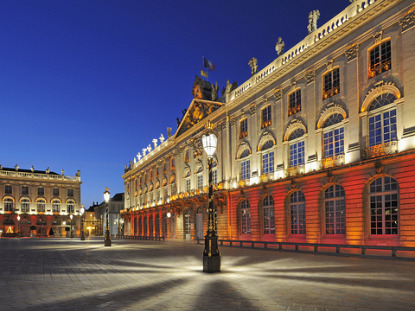
Historical seat of the Duchy of Lorraine, Nancy is a gem of 18th-century urban planning. The magnificent Place Stanislas, a UNESCO World Heritage site, represents one of Europe's finest examples of classical architecture and city design. The city's rich heritage stems from its role as the capital of the Duchy of Lorraine, evident in its ornate baroque buildings, gilded ironwork by Jean Lamour, and the seamless integration of three historic squares connected by elegant arcades. Visitors can explore the remarkable Art Nouveau movement that flourished here at the turn of the 20th century, with the École de Nancy leaving behind stunning examples of decorative arts, glasswork, and furniture design. The city's museums house exceptional collections ranging from fine arts to the famous Daum crystal works, whilst its well-preserved old town offers charming medieval streets lined with Renaissance mansions and the imposing Ducal Palace that chronicles centuries of regional history. |
|
Besançon ※ |
|---|

Besançon's remarkable citadel, engineered by Vauban in the 17th century, stands as one of France's most impressive fortified structures and a UNESCO World Heritage site that showcases the genius of military architecture. The city's strategic position along a dramatic horseshoe bend of the River Doubs created a natural fortress that has been continuously inhabited since Roman times, with Emperor Marcus Aurelius himself born here in 121 CE. Beyond its military heritage, Besançon claims the title of France's watchmaking capital, where legendary brands like Lip crafted timepieces for over a century, and this horological tradition lives on through the National Time Museum housed within the citadel walls. The old town below reveals centuries of architectural evolution, from Roman ruins and medieval streets to elegant 18th-century mansions, whilst the city's cultural credentials shine through world-class museums, including collections spanning fine arts, natural history, and the fascinating story of French timekeeping. T |
Parisian Region & Picardy
|
Château de Chantilly |
|---|

Château de Chantilly showcases a remarkable blend of architectural styles spanning from the 14th to 19th centuries. The estate features both the Grand Château, rebuilt between 1875-1882 in French Renaissance Revival style, and the Petit Château, constructed around 1560 in proto-Baroque style. The château houses one of France's most extensive libraries and an impressive art collection including works by Delacroix, Corot, Poussin, and Ingres. Visitors can explore the magnificent gardens designed by André Le Nôtre, featuring the Grand Parterre, a canal, and various water features that demonstrate his mastery in landscape architecture. The 18th-century additions include the majestic Great Stables (Grandes Écuries), which now contain the Museum of Living Horses where equestrian dressage shows take place daily. The estate also features a rustic Hamlet that anticipated Marie-Antoinette's more famous version at Versailles. Set within nearly 20,000 acres of one of France's largest forests, this moated castle with its beautifully maintained interiors and spectacular grounds represents a splendid example of French cultural and architectural heritage. |
|
Château de Compiègne |
|---|

The Château de Compiègne stands as one of France's most significant royal residences, built for Louis XV and later restored by Napoleon. This neoclassical masterpiece, constructed between 1751 and 1788 by architects Ange-Jacques Gabriel and Le Dreux de La Châtre, features an unusual triangular plan ingeniously designed to overcome the constraints of its site. The château boasts impressive architectural elements including the magnificent 53-metre Galerie des Colonnes, grand reception spaces with high ceilings and tall windows, and elegantly balanced volumes throughout. Its historical significance spans centuries, from Charles V who built the original castle in 1380, through Louis XV and XVI who created the current palace, to Napoleon I who conducted extensive renovations between 1808-1810, creating some of the most complete First Empire apartments in France. The château gained particular prominence during the Second Empire when Napoleon III hosted the famous "séries" – lavish autumn gatherings where nobility, diplomats, writers, artists and scientists enjoyed hunting excursions, games, concerts and theatrical performances in the imperial family's company. Today, visitors can admire both the château's remarkable architecture and its rich collection of period furnishings that showcase the evolving tastes of French royalty and imperial courts. |
|
Pierrefonds Castle |
|---|

Château de Pierrefonds offers visitors a unique blend of medieval grandeur and 19th-century romantic revival architecture. Originally built in 1397 as an impregnable fortress by Louis d'Orléans, the castle was later dismantled in 1617 by order of Louis XIII. Its fascinating history took a turn when Napoleon III commissioned the renowned architect Eugène Viollet-le-Duc to restore it in 1857, transforming the ruins into a spectacular reimagining of a medieval castle. Today, the château boasts impressive features such as round towers, high curtain walls, and a mix of authentic medieval elements and Renaissance-style interiors. As a popular filming location for movies and television series, including 'Merlin', the castle's picturesque setting and architectural splendour make it a captivating destination for history enthusiasts and casual tourists alike. |
|
Paris |
|---|

 Paris offers a treasure trove of historical landmarks, from the iconic Eiffel Tower, originally built for the 1889 Paris World Fair, to the magnificent Arc de Triomphe commemorating Napoléon's victory at Austerlitz. The city's rich heritage includes the Panthéon, a neoclassical masterpiece housing France's most illustrious citizens, and the medieval Sainte-Chapelle with its breathtaking stained glass windows. Visitors can explore the Hôtel de Ville, which has served as the seat of Paris City Council since 1357 and witnessed pivotal moments in French history, including the Liberation of Paris in 1944. The ancient Pont Neuf, the oldest standing bridge across the Seine River, has been a UNESCO World Heritage site since 1991. Beyond these architectural marvels, Paris continues to thrive as a cultural epicentre, hosting seasonal events at historical venues and offering spectacular panoramic views from monuments like the Arc de Triomphe, where 284 steps lead to sweeping vistas of the city's elegant avenues and shimmering lights. |
|
Château de Vaux-le-Vicomte |
|---|

The Château de Vaux-le-Vicomte stands as a masterpiece of French Baroque architecture and landscaping, built between 1656 and 1661 for Nicolas Fouquet, Louis XIV's Superintendent of Finances. This magnificent estate, located just 55 kilometres southeast of Paris, represents the first collaboration between three brilliant artists: architect Louis Le Vau, painter Charles Le Brun, and landscape architect André Le Nôtre, whose combined genius created a harmonious unity that would define the Louis XIV style. The château's perfect symmetry, revolutionary "château entre cour et jardin" design, and Le Nôtre's breathtaking formal gardens with sophisticated optical illusions established new standards for French architecture and landscaping. Tragically, Fouquet's masterpiece led to his downfall when, after hosting a lavish celebration for the king in August 1661, Louis XIV became jealous of the splendour and had Fouquet arrested three weeks later on charges of embezzlement. Today, this perfectly preserved château remains in private hands, owned by the Vogüé family for five generations since its purchase by Alfred Sommier in 1875, offering visitors an authentic glimpse into the grandeur that inspired even the Palace of Versailles. |
|
Château de Versailles ※ |
|---|

The Château de Versailles stands as a magnificent testament to French royal power, evolving from Louis XIII's humble hunting lodge in 1623 to Louis XIV's grand palace that became the centre of French political and social life from 1682. This UNESCO World Heritage Site (designated in 1979) boasts spectacular French Baroque architecture, lavish interiors including the iconic Hall of Mirrors, and meticulously designed gardens by André Le Nôtre that influenced countless royal residences across Europe. The palace witnessed pivotal historical moments: the beginning of the French Revolution with the Jeu de Paume Oath in 1789, the proclamation of the German Empire in 1871, and the signing of the Treaty of Versailles in 1919 that ended World War I. After the royal family's forced departure in October 1789, Versailles transformed into a public museum in 1837 under Louis-Philippe, preserving its splendour through ongoing restoration projects that ensure this architectural masterpiece continues to captivate visitors with its unparalleled grandeur and historical significance. |
|
Château de Fontainebleau ※ |
|---|

Château de Fontainebleau enchants visitors with its extraordinary legacy as the "true home of kings" that has witnessed over eight centuries of French history. This UNESCO World Heritage site evolved from a 12th-century hunting lodge into one of Europe's most magnificent palaces, continuously inhabited by French royalty for over 700 years. The château showcases a remarkable architectural journey through medieval, Renaissance, and classical styles, with each monarch adding their personal touch. Art enthusiasts will marvel at the François I Gallery, adorned with elaborate frescoes and stucco work by Italian masters Rosso Fiorentino and Primaticcio, which established the influential first School of Fontainebleau and helped launch the French Renaissance. The palace complex, with its five irregular courtyards, sumptuous royal apartments, chapels, and English landscape gardens, stands as a testament to France's artistic and cultural heritage, having hosted momentous historical events from diplomatic encounters that reshaped European politics to Napoleon's dramatic abdication in 1814. |
|
Provins ※ |
|---|

Provins enchants visitors as a remarkably preserved medieval town that offers an authentic journey back to the Middle Ages. This UNESCO World Heritage Site boasts impressive 13th-century ramparts stretching nearly 2 kilometres with 22 uniquely shaped towers, demonstrating the town's historical wealth and craftsmanship. History enthusiasts will marvel at the iconic Caesar's Tower, the Tithe Barn, Underground Galleries, and the Saint-Quiriace collegiate church. The town flourished during the 11th to 14th centuries as a major trading centre hosting international fairs, and today this heritage lives on through medieval shows like "The Eagles of the Ramparts" and "The Legend of the Knights." Wandering through the charming upper and lower towns reveals timber-framed buildings, medieval stone walls, and the delightful Place du Châtel with its 13th and 15th-century mansions. Provins also celebrates its connection to roses with the Rosa gallica (rose of Provins), parent to most European rose cultivars, making it a perfect destination for those seeking both historical immersion and natural beauty. |
Loire Valley
| Château de Brissac |
|---|
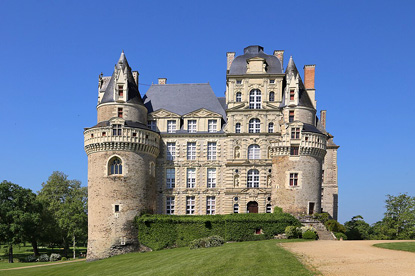
Often cited as the tallest château, rising seven storeys, it combines medieval towers with a distinctive 17th-century façade created during a major rebuild after the Wars of Religion. Still a lived-in ducal residence with centuries of continuity, it presents richly furnished salons, a private opera theatre and an ornate chapel. Visitors can wander landscaped parkland and lakes, explore historic cellars with estate wines, and hear the enduring tale of the ‘Green Lady’ ghost. The mix of imposing architecture, close-knit family heritage and practical visitor experiences—from interiors to gardens and tastings—makes it an appealing choice for those interested in grand domestic architecture and layered history. |
| Château du Lude |
|---|
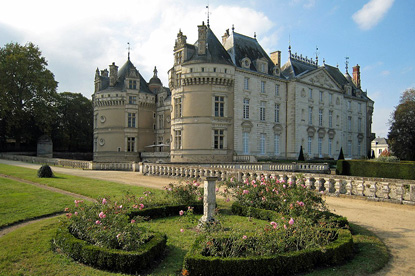
Château du Lude offers a rare opportunity to see four centuries of French architectural history embodied in a single structure, which evolved from a medieval fortress into an elegant residence. It is one of the last great historic castles in France to remain a private home, having been continuously inhabited by the same family for over 260 years. This gives the property a unique, lived-in quality, further evidenced by details such as the medieval kitchens that are still used for special events. The château is complemented by extensive gardens, which include French and English-style landscaping, a rose garden, and a botanical walk, reflecting the estate's own evolution through the centuries. |
|
Nantes |
|---|

Nantes captivates visitors with its remarkable blend of historical grandeur and innovative spirit. The city boasts the impressive Château des ducs de Bretagne, a 15th-century fortress built by François II and Anne of Brittany, which now houses the fascinating Nantes History Museum with over 1,150 artefacts. The stunning Cathédrale Saint-Pierre et Saint-Paul, a masterpiece of Gothic architecture constructed over 400 years, rivals Notre-Dame-de-Paris in size and features magnificent stained glass windows. Beyond historical landmarks, Nantes offers unique attractions like Les Machines de l'Île, where extraordinary mechanical creatures inspired by Jules Verne and Leonardo da Vinci come to life, including the 12-metre tall Grand Elephant that carries passengers. The city's elegant neoclassical architecture is evident in the Chamber of Accounts, Graslin Theatre, and the charming Passage Pommeraye shopping arcade. Nature enthusiasts will appreciate the renowned Jardin des Plantes with its 10,000 international plant species, waterfalls and ponds, while art lovers can explore the Musée d'Arts de Nantes. The vibrant city weaves its maritime heritage and rich cultural past with contemporary flair, creating a captivating destination where six centuries of history meet modern innovation. |
|
Château de Chambord ※ |
|---|

Chambord Castle, a masterpiece of French Renaissance architecture, was initiated in 1519 by King François I following his victory at the Battle of Marignan. This extravagant château, featuring 426 rooms, 282 fireplaces, and 77 staircases, was designed not as a permanent residence but as a hunting lodge and symbol of royal power. The castle's design is partly attributed to Leonardo da Vinci, whose influence is evident in the famous double-helix staircase. Despite commissioning this architectural marvel, François I spent only 72 days at Chambord during his 32-year reign. The château continued to evolve under subsequent rulers, with Louis XIV making significant contributions to its completion. Recognised as a UNESCO World Heritage Site in 1981, Chambord stands in the heart of Europe's largest enclosed forest park, showcasing magnificent features including the central keep (completed in 1535), royal apartments in the East Wing, and the Chapel in the West Wing. Today, the château and its surrounding 5,440 hectares have belonged to the French state since 1930, preserving this symbol of French Renaissance grandeur for future generations to admire. |
|
Château de Chenonceau |
|---|

Chenonceau Castle enchants visitors with its unique Renaissance architecture dramatically spanning the River Cher. This architectural marvel began in 1513 when Thomas Bohier purchased the property and razed the existing medieval structures, constructing the elegant château we see today between 1515-1522. The castle's fascinating history is dominated by influential women, from Katherine Briçonnet who oversaw its initial construction to Diane de Poitiers who added the distinctive arched bridge over the river, and Catherine de Medici who further expanded it after forcefully taking it from Diane following King Henri II's death. During both World Wars, the château served noble purposes—as a military hospital during WWI under Gaston Menier's direction, and during WWII, its unique position with one side in occupied France and the other in the free zone made it a crucial escape route for those fleeing Nazi persecution. With its exquisite gardens, rich historical significance, and status as the second most visited château in France after Versailles, Chenonceau offers visitors an unparalleled glimpse into French Renaissance splendour and the remarkable women who shaped its destiny. |
|
Château de Maintenon |
|---|
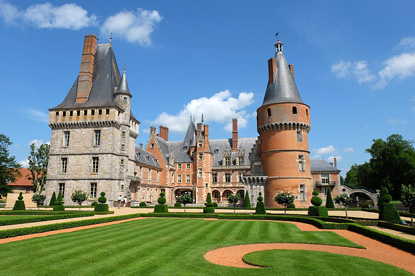
The Château de Maintenon reveals eight centuries of evolution, uniting a medieval keep with Renaissance brick-and-stone wings and refined salons linked to Madame de Maintenon, the secret wife of Louis XIV. André Le Nôtre’s formal parterres align with the striking, unfinished aqueduct raised for the Versailles fountains, an unusual dialogue between garden design and grand engineering. Period-furnished rooms, portraits and tapestries trace courtly circles and the Noailles lineage, while moat, towers and chapel add architectural variety within a compact, tranquil estate. Seasonal plantings and cultural events offer appeal to enthusiasts of royal history and gardens alike. |
Central France
|
Dijon |
|---|

Dijon, the heart of Burgundy, offers a wealth of historical treasures, including the magnificent Palace of the Dukes of Burgundy, which now houses the Fine Arts Museum with its impressive collections from Antiquity to contemporary art. The city's skyline is dominated by the Philippe le Bon Tower, providing panoramic views stretching as far as Mont Blanc on clear days. Visitors can explore the Gothic Cathédrale Saint-Bénigne, the Church of Our Lady with its stunning architecture, and follow the famous Owl's Trail through the historic centre. The vibrant Place de la Liberation, with its hemicycle shape and bustling atmosphere, exemplifies the city's charm, while the picturesque timber-framed houses around Place François-Rude showcase the old-world character. The city's rich cultural heritage extends to its markets, particularly the Central Indoor Market Hall where visitors can sample Burgundy's renowned culinary delights. With its well-preserved monuments, beautiful gardens like Square Darcy, and numerous museums documenting the region's past, Dijon presents an authentic glimpse into French history and culture. |
|
Volcanoes of Auvergne Nature Park |
|---|

 The Auvergne Volcanoes Regional Nature Park, the largest regional nature park in mainland France with 395,000 hectares, showcases an extraordinary volcanic landscape comprising four volcanic massifs: the UNESCO-listed Chaîne des Puys with its 80 volcanoes, the Monts Dore featuring Puy de Sancy (the highest point in the Massif Central at 1,886m), the Cézallier, and the Monts du Cantal, alongside the granite Artense plateau. Visitors can explore this geological wonderland through numerous hiking trails that wind through remarkable landscapes, four national nature reserves, and diverse ecosystems ranging from peat bogs and meadows to moors and woods. The park offers exceptional panoramic views from summits like Puy de Dôme and Puy de Sancy, alongside natural treasures including the Tuilière and Sanadoire rocks, Lake Guéry (Auvergne's highest lake), the Chaudefour Valley, and various other lakes. Beyond its geological significance, the park provides educational opportunities at Vulcania (the European volcanology park) and the Park House at Montlosier Castle, where visitors can gain deeper understanding of this unique volcanic environment through interactive exhibitions and guided experiences. |
|
Bordeaux ※ |
|---|

Bordeaux captivates visitors with its stunning architectural heritage, from the iconic Place de la Bourse with its world's largest reflecting pool, Miroir d'eau, to the majestic 15th-century Grosse Cloche bell tower that stands as one of the city's most prominent symbols. History enthusiasts will marvel at the Gothic Saint-André Cathedral, the Renaissance-style Porte Cailhau built in honour of King Louis XIV, and the Monument aux Girondins commemorating victims of the French Revolution. The city's elegant 18th-century neoclassical buildings frame charming squares like Place du Parlement, while the 4.5 km riverfront promenade along the Garonne offers breathtaking views of the historic 18th-century Pont de Pierre with its 17 distinctive arches. Art lovers will be enthralled by the Bassins des Lumières, the world's largest digital arts centre housed in a repurposed WWII submarine base, and wine connoisseurs can explore La Cité du Vin, an interactive museum celebrating Bordeaux's renowned viticulture. The vibrant city centre, with its more than 3,000 decorative mascarons (little faces) adorning buildings, invites visitors to wander through centuries of history while enjoying the region's celebrated cuisine and world-famous wines. |
|
Lyon ※ |
|---|

Lyon, a UNESCO World Heritage site, showcases 2,000 years of continuous urban development with remarkably preserved architecture from every era. The city's historic centre spans 500 hectares, encompassing the ancient Roman theatres of Lugdunum on Fourvière Hill, the Renaissance district of Vieux-Lyon with its 130+ half-timbered houses and secret passageways called traboules, and the classical buildings of the Presqu'île. Visitors can explore the stunning Basilica of Notre-Dame de Fourvière with its exquisite mosaics and gilding, wander through Saint-Jean Baptiste Cathedral dating back to the 12th century, and discover the unique canut dwellings on the slopes of Croix-Rousse that document an essential chapter in 19th-century working-class history. Place Bellecour, one of Europe's largest pedestrian squares featuring a statue of Louis XIV, serves as the heart of this architecturally harmonious city where each historical period has left its distinctive mark. |
|
Annecy |
|---|

Annecy's Old Town showcases exceptional medieval architecture with its network of picturesque canals earning it the nickname "Venice of the Alps." The iconic 12th-century Palais de l'Île, once a prison and courthouse, stands majestically on a natural rocky island in the Thiou River, offering the most photographed view in the area. Visitors can explore over a millennium of history while wandering cobblestone streets lined with colourful buildings featuring distinctive Savoyard architecture, ornate wooden balconies, and charming arcades dating from the 16th and 17th centuries. The town boasts impressive landmarks including the Château d'Annecy perched on a hill with panoramic views, the neoclassical Hôtel de Ville currently undergoing restoration until 2027, and several historic churches such as the Cathedral of Saint Peter in Chains and the Basilica of the Visitation. Beyond the architectural splendour, the Thiou River offers landscaped banks for pleasant walks, while the nearby Pont des Amours (Bridge of Love) leads to Le Pâquier, a green park facing the stunning Lake Annecy with its Alpine backdrop. |
|
Ardèche Gorges |
|---|

The Ardèche Gorges, known as the "European Grand Canyon," stretch for 32 kilometres from Vallon-Pont-d'Arc to Saint-Martin-d'Ardèche, featuring spectacular limestone cliffs reaching up to 300 metres high. The crown jewel of this natural reserve is the magnificent Pont d'Arc, a 54-metre high natural stone arch carved by the river—a perfect spot for swimming and sunbathing on its pebbly beach. Adventure seekers will relish the multitude of outdoor activities available year-round thanks to the Mediterranean climate with 300 days of sunshine: canoeing through the transparent waters, rock climbing the pocketed cliffs, canyoning down the river, hiking the 35-kilometre marked trail, or mountain biking through the myriad tracks. Beyond the dramatic landscapes, the 1,575-hectare nature reserve established in 1980 harbours remarkable biodiversity with over a thousand animal species including vultures, eagles, and otters, alongside diverse plant life spanning oak forests and scrubland. The area also boasts significant prehistoric heritage, including the UNESCO-listed Chauvet Cave, considered "Man's first great masterpiece," whilst the scenic tourist road with eleven belvederes offers breathtaking panoramic views for those preferring to admire this natural wonder from above.. |
Southern France
|
Carcassonne ※ |
|---|
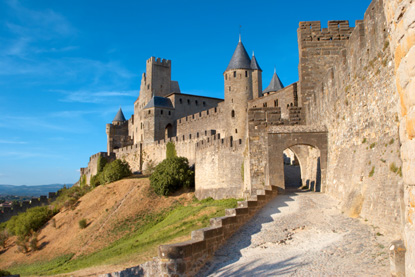
Carcassonne dazzles with its extraordinary medieval grandeur, boasting Europe's largest fortified city and UNESCO World Heritage status. The imposing double-walled fortress stretches over 3 kilometres with 52 towers, offering spectacular panoramic views of the surrounding landscapes. History buffs will be enthralled by the 2,000-year-old site's rich past, from Roman beginnings to Visigoth rule, Cathar stronghold, and eventual French royal domain. The magnificent Château Comtal, the stunning Basilica of Saint-Nazaire with its remarkable stained-glass windows considered the most beautiful in southern France, and the monumental Porte Narbonnaise gate showcase the city's architectural splendour. Beyond the medieval citadel, visitors can explore the charming Bastide Saint-Louis (Lower City) connected by the 14th-century Old Bridge, enjoy the lively Place Carnot with its pink marble fountain, or venture to nearby Cathar castles like Lastours with their breathtaking views. As France's second most visited destination, Carcassonne perfectly blends unique architecture, fascinating museums and Mediterranean culture. |
|
Nîmes |
|---|

Nîmes stands out as a remarkable destination due to its exceptionally preserved Roman heritage, earning it the nickname "French Rome." Visitors can explore impressive ancient monuments such as the Arena of Nîmes, one of the world's best-preserved Roman amphitheatres still hosting events today, and the Maison Carrée, a UNESCO-listed Roman temple renowned for its architectural integrity. The Jardins de la Fontaine, built around ancient Roman thermal baths and featuring the enigmatic Temple of Diana ruins, provide a scenic setting for relaxation and historical exploration. Travellers can also ascend the Tour Magne, a Roman tower offering panoramic views over the city and surrounding landscapes. Additionally, modern architectural landmarks like Norman Foster's Carré d'Art museum blend harmoniously with historical sites, highlighting Nîmes' unique fusion of ancient and contemporary culture. |
|
Rocamadour ※ |
|---|

 Rocamadour rises dramatically from a cliff face in the Alzou Canyon, with houses, churches and monastic buildings cascading down the 120-metre limestone rock. This medieval pilgrimage site boasts seven chapels, including the UNESCO-listed Saint-Sauveur Basilica and Saint-Amadour crypt, and has been one of the four most important Christian pilgrimage destinations since the 12th century. Visitors can climb the Great Staircase of 216 steps (traditionally ascended by pilgrims on their knees) to reach the religious sanctuary, where the renowned Black Madonna statue carved from walnut wood has drawn worshippers seeking miracles for centuries. Beyond its religious significance, Rocamadour offers a charming car-free main street lined with gold stone houses, quirky boutiques and restaurants, four beautiful arched stone gates, and nearby attractions including La Forêt des Singes where 150 Barbary macaques roam freely. The town is also known for its eponymous AOC-certified goat cheese, locally called 'Cabécou', produced in the surrounding Quercy Limestone plateaus. |
|
Toulouse |
|---|

Toulouse's rich heritage spans over two millennia, with the pink brick architecture earning it the nickname "La Ville Rose." The UNESCO-listed Basilica of Saint-Sernin stands as one of Europe's largest preserved Romanesque churches, featuring an octagonal bell tower and housing significant relics. The 12th-century Couvent des Jacobins, once considered the most beautiful Dominican church in Christian Europe, showcases Gothic architecture with its remarkable 28-metre stone palm tree and serene cloister. The Renaissance-style Capitole de Toulouse, dating back to the 12th century, serves as both city hall and cultural venue with its 135-metre Neoclassical façade and the impressive Hall of Illustrious displaying 19th-century art celebrating the city's history. Visitors can explore the 16th-century Hôtel d'Assézat, the most beautiful of Toulouse's 200 private mansions, built by a successful pastel merchant, while the 400-year-old Pont Neuf spans the Garonne River with its distinctive basket-handle arches, representing a blend of Roman and Renaissance engineering that has withstood centuries of floods. |
|
Avignon ※ |
|---|

Avignon's historic centre, a UNESCO World Heritage Site since 1995, showcases an extraordinary medieval legacy dominated by the imposing Palais des Papes, the world's most important Gothic palace. The city's remarkable 14th-century ramparts, among the finest examples of medieval fortification, still encircle the old town with 39 massive towers and several original gateways. The iconic Pont Saint-Bénézet (Pont d'Avignon), immortalised in the famous French song, stands as a romantic half-ruined landmark with only four of its original 22 arches remaining, alongside the 13th-century Chapel of Saint Nicolas. Art enthusiasts will appreciate the Musée du Petit Palais with its exceptional collection of Renaissance paintings, while the Basilique Saint-Pierre features monumental wooden doors sculpted in 1551 and a gilded choir. The cobblestoned Rue des Teinturiers, once the centre of Avignon's silk industry, offers a picturesque walk past beautiful stone houses and four water wheel mills, while the Rocher des Doms gardens provide panoramic views of the surrounding countryside from atop a high rock. The vibrant Les Halles market showcases the rich culinary traditions of Provence, making Avignon a perfect blend of architectural grandeur, artistic heritage and cultural vibrancy. |
|
Calanques National Park |
|---|

The Calanques National Park showcases a dramatic Mediterranean landscape where white limestone cliffs plunge into crystal-clear turquoise waters, stretching over 20 km from Marseille to Cassis with 26 distinct calanques. Established in 2012, this protected area encompasses 8,300 hectares of land and 43,500 hectares of sea, featuring spectacular coves like Sormiou, Port-Miou, Port Pin, En-Vau, and Sugiton. The park harbours exceptional biodiversity with 140 protected terrestrial species and 60 marine species, including Bonelli's eagles, peregrine falcons, and rare Mediterranean monk seals. Underwater, the Posidonia oceanica creates vibrant marine gardens teeming with octopuses, anemones, and various fish species. Visitors can explore the park's beauty through numerous activities—hiking along challenging trails that wind through pine-scented paths and deep canyons, swimming at secluded beaches, kayaking through the narrow inlets, or diving to discover the rich underwater ecosystem that flourishes in this carefully regulated natural haven. |
|
Nice |
|---|

Nice offers a captivating blend of Mediterranean charm, architectural splendour, and vibrant cultural heritage. Its Old Town, Vieux Nice, showcases colourful baroque buildings, lively markets, and winding lanes filled with traditional eateries serving authentic Niçoise cuisine. Historical landmarks such as the Palais Lascaris, an opulent 17th-century mansion housing an impressive musical instrument collection, and the stunning Sainte-Réparate Cathedral further enrich the city's appeal. Visitors can also explore Castle Hill, where ruins of a 16th-century fortress overlook panoramic views of the coastline and cityscape, or stroll along the iconic Promenade des Anglais, lined with elegant Belle Époque architecture and offering picturesque vistas of the Mediterranean Sea. |
|
Verdon Gorge |
|---|

The Verdon Gorge stands as Europe's largest canyon, with impressive limestone walls reaching heights of 300 to 700 metres and stretching approximately 25 kilometres through the French Alps. This natural wonder, carved over two million years by the turquoise-green Verdon River, features diverse sections including the Grand Canyon area from Point Sublime to Lake Sainte-Croix, the Pre-Gorges, the Gorges de Baudinard, and the Low Gorges. Visitors can explore the canyon via the panoramic Route des Crêtes with its 14 belvederes offering spectacular views, or venture into the gorge itself along iconic trails like the 14-kilometre Blanc-Martel path. The area serves as an exceptional playground for outdoor enthusiasts, providing opportunities for rock climbing, kayaking, rafting, hiking, paragliding, and white-water swimming amidst the dramatic landscape. Nature lovers will appreciate the rich biodiversity, including griffon vultures, peregrine falcons and golden eagles soaring above this protected environment within the Natural Regional Park of the Verdon, established in 1997. |
|


