


| Contents |
|---|
Introduction
Bayeux (pop. 13,000) blends medieval grace with poignant wartime memory, its cobbled lanes, half-timbered houses and soaring cathedral sitting beside the world-famous Bayeux Tapestry and thoughtful WWII museums. Set along the River Aure, it’s a compact, walkable base for the D-Day beaches, with leafy promenades, lively markets and convivial bistros pouring cider and Calvados alongside rich Norman cuisine. Take time to browse artisan shops, pause in quiet squares, and step into museums that thread a millennium of stories together. Whether you’re drawn by Gothic spires, tapestry detail or hedgerow-lined excursions, Bayeux offers a welcoming, well-preserved town that keeps history close without feeling frozen in it.
Interesting Facts about Bayeux
- Bayeux was the first French town liberated by Allied forces in June 1944, sparing its medieval core from major wartime destruction.
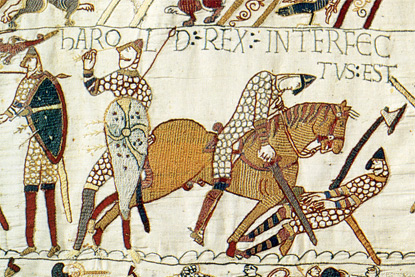
- The Bayeux Tapestry is an 11th-century embroidery nearly 70 metres long depicting the Norman Conquest and the Battle of Hastings.
- Bishop Odo, half-brother of William the Conqueror, likely commissioned the Bayeux Tapestry for display in the cathedral consecrated in 1077.
- Halley’s Comet appears in the Bayeux Tapestry as a portent seen in 1066 before the Battle of Hastings.
- Bayeux’s Gothic cathedral rises over an 11th-century crypt and anchors a centre of cobbled lanes and half-timbered houses.
- The Bayeux War Cemetery is the largest Commonwealth cemetery in France from the Second World War.
- The town’s name traces back to the Bajocasses, a Celtic tribe, and later the Roman city of Augustodurum.
- Despite being called a tapestry, the famed piece is technically wool embroidery on linen, stitched in England soon after 1066.
- Charles de Gaulle delivered an early landmark speech in Bayeux in June 1944 after liberation.
- Bayeux has long served as a gateway to Normandy’s D-Day beaches, including nearby Arromanches and Omaha Beach.
History
Roman Origins and Early Medieval Period
Bayeux's remarkable history spans over two millennia, beginning as the Gallo-Roman settlement of Augustodurum in the 1st century BC. Named after Emperor Augustus, it served as the capital of the Baiocasses people's territory, with evidence of earlier Celtic Druid worship sites along the Aure and Drome rivers on Mount Phaunus. The Romans shaped the city's foundation for four centuries, constructing paved roads, aqueducts, administrative buildings, temples, and public baths—remnants of which were discovered beneath the Church of St. Lawrence and in rue Laitière. By the end of the 3rd century, protective walls surrounded the expanding settlement, whose layout remained visible until their removal in the 18th century. The city suffered devastating Saxon invasions in 276 and again in the late 4th century, with the invaders establishing an autonomous territory that lasted several centuries. Following further Viking raids in the late 9th century that largely destroyed the settlement, Bayeux was rebuilt in the early 10th century under Bothon's reign, eventually becoming part of Viking chief Rollon's domain in 924.
Norman Golden Age and Cathedral Construction
The 11th century marked Bayeux's golden age under Norman rule, when it became the second most important city in Normandy after Rouen. Bishop Odo of Bayeux, William the Conqueror's half-brother, spearheaded the construction of the magnificent Notre-Dame Cathedral, consecrated on 14 July 1077 in the presence of William and Queen Matilda. This architectural masterpiece, built on the site of ancient Roman sanctuaries, exemplified Norman-Romanesque design with its surviving crypt, western towers, and nave's first level from this period. The cathedral famously housed the legendary Bayeux Tapestry for centuries—the 70-metre embroidered masterpiece commissioned by Bishop Odo to commemorate the Norman Conquest of England. During this prosperous era, five new villages sprouted beyond the medieval walls, reflecting the city's dramatic growth under ducal Normandy. The tapestry itself, completed shortly after 1066, depicts 58 scenes chronicling the events from 1064 through the Battle of Hastings, serving as both historical record and Norman propaganda legitimising William's conquest.
Medieval Decline and Modern Preservation
Bayeux's prominence began declining when William established Caen as his capital, followed by centuries of warfare that repeatedly devastated the city. Henry I burned Bayeux as an example to the duchy, and during the Hundred Years' War, it endured constant pillaging until Henry V captured it in 1417, finally returning to French control in 1450 after the Battle of Formigny. The post-war recovery brought renewed prosperity, with wealthy families constructing approximately 60 stone mansions throughout the city, replacing earlier wooden structures. The 17th century saw expansion of religious institutions and the establishment of Bayeux's first lace-making factories, while the 18th century brought major urban transformation with the dismantling of medieval walls and castle by order of Louis XVI in 1773. During World War II, Bayeux achieved historic significance as the first European city liberated by Allied forces on 7 June 1944, when British troops of the 50th Northumbrian Division entered the town virtually intact thanks to local Resistance efforts that prevented planned bombing. Today, this UNESCO World Heritage city preserves its medieval heart with remarkable architectural treasures, including the Norman cathedral, half-timbered houses, and elegant townhouses, while the famous tapestry draws visitors from worldwide to witness this extraordinary chronicle of medieval conquest.
Main Attractions
Bayeux Cathedral (Cathédrale Notre-Dame)
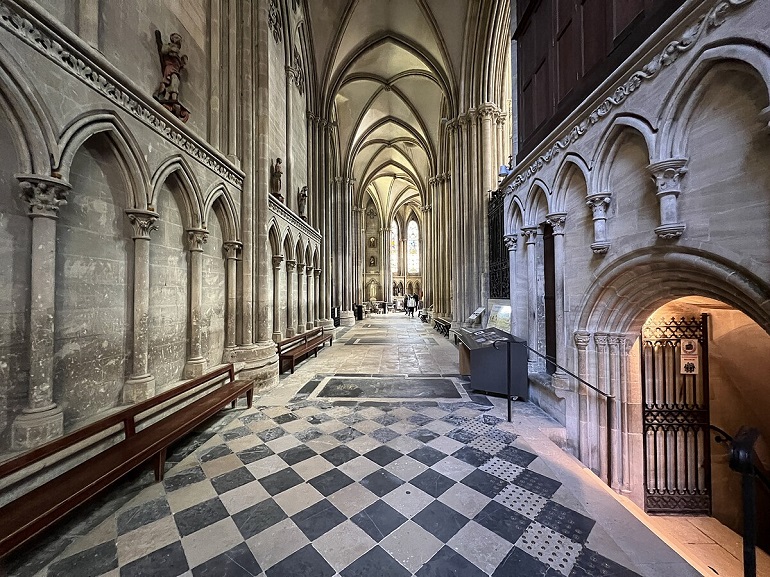
Bayeux Cathedral stands as a crowning achievement of medieval architecture, combining elements of Norman Romanesque and soaring French Gothic styles. Consecrated in 1077 in the presence of William the Conqueror, its site is closely linked to the famous Bayeux Tapestry, which was designed to adorn its nave and narrates the Norman conquest of England. The cathedral’s façade is stunning, with two tall, spired towers and a copper-capped dome rising above the old town. A walk around reveals intricate stone carvings, elaborate portals, and detailed tympanums—many from the 13th century—and, on entering, visitors are greeted by vaulted ceilings, ornate chapels, and splendid stained glass. The atmospheric crypt, the oldest surviving part, is an evocative space that hints at Bayeux’s early medieval past. Entry is free, with guided tours available for more in-depth discovery of its relics and hidden details.
The Historic Centre and Old Town Circuit
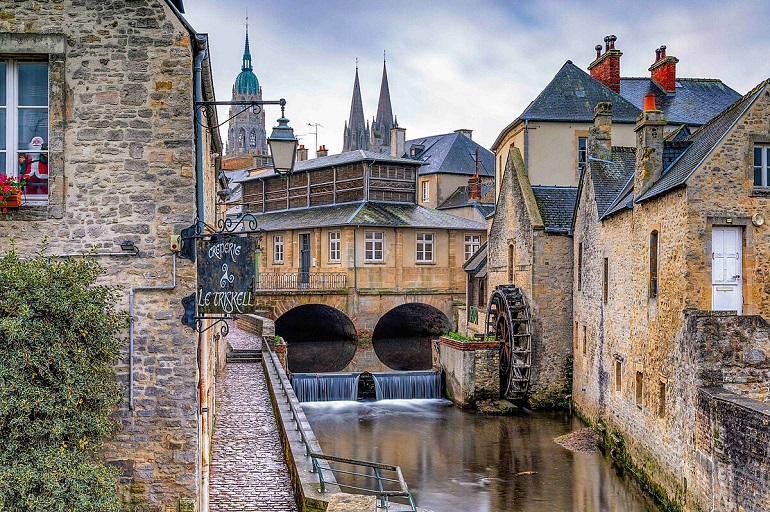
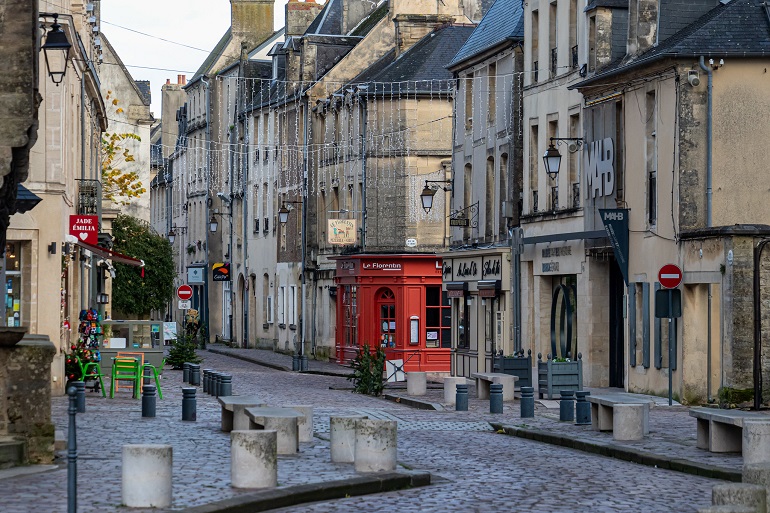
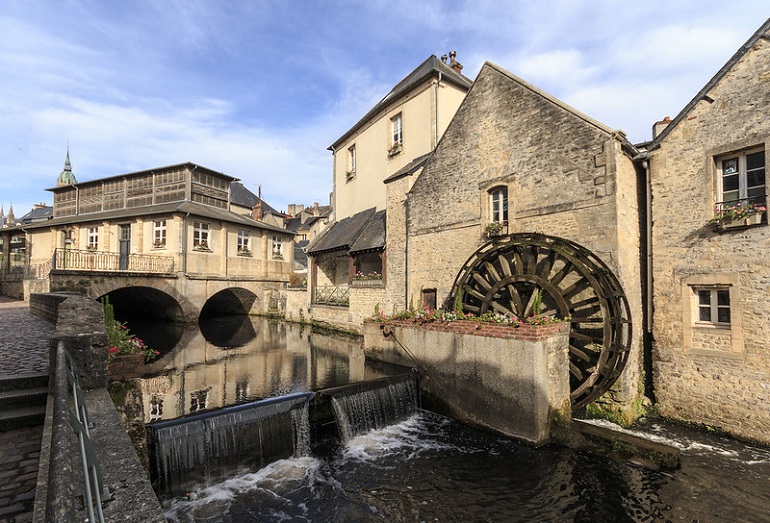
Bayeux’s town centre is one of the very few in Normandy to survive the Second World War intact, meaning its medieval layout, timber-framed houses, and cobbled lanes are all wonderfully preserved. A self-guided walking circuit (Le Circuit du Vieux Bayeux) leads visitors past picturesque houses, small squares, charming courtyards, and the gentle Aure river, whose bridges and old water mill add character and charm. Street plaques showcase highlights, while boutiques and pavement cafés offer opportunities for refreshment. Exploring early in the morning or around sunset allows for an especially tranquil experience and beautiful light for photography.
Town Hall of Bayeux
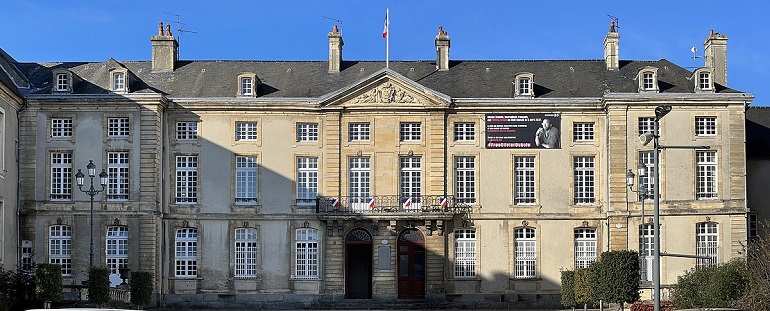
The Town Hall of Bayeux occupies part of the former episcopal palace complex beside the cathedral, blending civic life with layers of ecclesiastical and Renaissance heritage. Within its wings lies an octagonal early 16th-century chapel associated with Bishop Louis de Canossa, whose painted decoration was restored in the 19th century and later adapted for municipal deliberations. The ensemble reveals successive phases of Bayeux’s history—from episcopal residence to courthouse and prison annex—before the 18th-century wing became the seat of local government, where elegant staircases, ceremonial rooms, and period façades frame a dignified setting for public affairs.
River Aure and Riverside Walks
The Aure flows gently through Bayeux and is flanked by landscaped paths that transform the riverside into a scenic natural corridor in the heart of the town. Once home to tanners and dyers, its banks now lead to tranquil green spaces and offer lovely perspectives of medieval architecture, hidden gardens, and charming bridges. Benches, playgrounds, and picnic areas make this footpath, which stretches for nearly 4km, a favourite for those seeking a relaxing walk or a family-friendly outing along the water’s edge.
The Botanical Garden (Jardin Public de Bayeux)
Founded in 1859 and designed by Eugène Bühler, the Bayeux Botanical Garden is a showcase of 19th-century landscaping with winding pathways, lush lawns, and over 400 mature trees. The garden’s centrepiece is a monumental weeping beech, classified as one of France’s remarkable trees, and information boards introduce visitors to a variety of botanical specimens. The park is a beloved oasis for locals and visitors alike, perfect for picnics, a leisurely stroll, or simply enjoying nature away from the bustle of the historic centre.
Liberty Tree (Arbre de la Liberté)
On Place de la Liberté stands Bayeux’s Liberty Tree, planted in 1797 to commemorate the values of the French Revolution. Over more than two centuries, it has become an enduring emblem of freedom and resilience, frequently serving as the focal point for public gatherings. The tree is a notable feature especially in the evening, when dramatic lighting effects highlight its vast branches during various town festivals and summer light shows.
Market and Local Life
Bayeux’s weekly markets epitomise the spirit of Normandy, offering everything from cheeses and seafood to flowers, antiques, and crafts. The convivial setting invites exploration, where independent boutiques and bustling patisseries spill onto the streets, especially on Saturday mornings. It is in these markets and local shops that visitors can truly experience the rhythms and flavours of Bayeux's everyday life.
Top Museums
Major Museums
The Bayeux Tapestry Museum
The crown jewel of Bayeux's museum collection is undoubtedly the Bayeux Tapestry Museum, though visitors should note that it is currently closed for renovation until October 2027. This UNESCO World Heritage masterpiece represents one of the finest examples of medieval art in existence.
The tapestry itself is a marvel of 11th-century craftsmanship, measuring nearly 70 metres in length and 50 centimetres in height. This extraordinary embroidered cloth chronicles the Norman Conquest of England in 1066, depicting the events leading up to and including the Battle of Hastings through 58 intricate scenes. Each scene contains Latin inscriptions and presents the story from the Norman perspective, likely commissioned by Bishop Odo of Bayeux, William the Conqueror's half-brother.
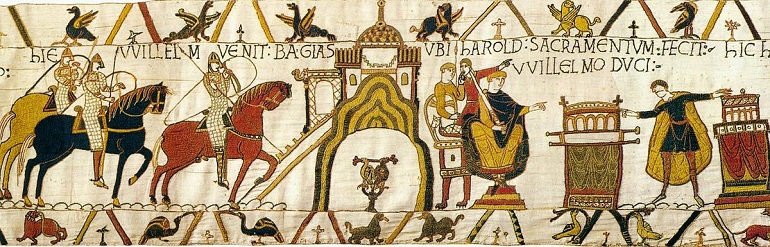
The museum's thoughtful presentation includes comprehensive audioguides available in 16 languages, allowing visitors to fully appreciate the historical context and artistic techniques employed in this remarkable work. The tapestry's narrative unfolds like a medieval comic strip, revealing not only military campaigns but also details of daily life, architecture, and customs of the period. When the museum reopens in 2027, it will feature enhanced facilities to mark the millennium of William the Conqueror's birth.
MAHB - Museum of Art and History Baron Gérard
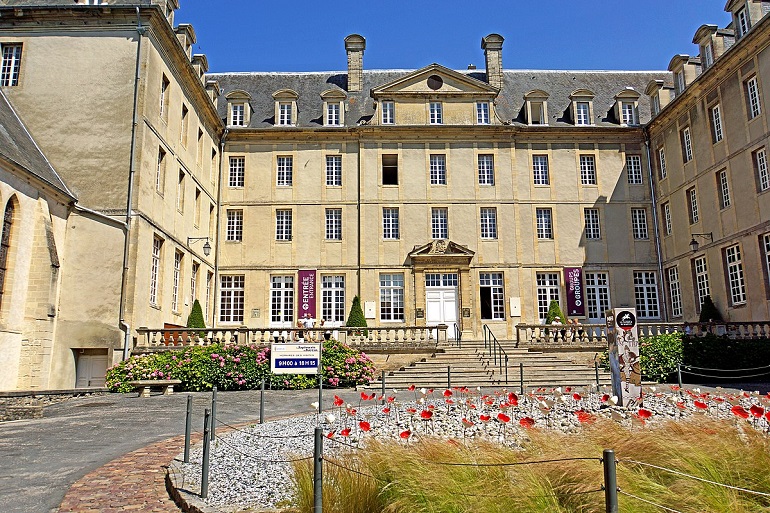
Housed within the magnificent former episcopal palace adjacent to Bayeux Cathedral, the MAHB presents an exceptional journey through European artistic achievement from prehistory to the 20th century. This certified "Musée de France" occupies one of Normandy's most significant historic buildings, dating from the 11th to 16th centuries.
The museum's impressive collections encompass 600 works of art, including paintings by renowned masters such as Caillebotte, Van Dongen, Boucher, David, Gros, and Boudin. The archaeological and ethnographic sections feature 800 pieces that illuminate the region's ancient past, whilst the decorative arts collections showcase over 2,500 pieces of Bayeux porcelain and exquisite lace examples.
The museum's fourteen themed sections create a comprehensive narrative of European cultural development. Visitors can explore prehistoric artefacts, Roman archaeological finds, medieval religious art, and magnificent examples of 18th and 19th-century portraiture. The building itself serves as an integral part of the experience, with original architectural features including medieval stonework and beautifully preserved period rooms that provide authentic settings for the collections.

Memorial Museum of the Battle of Normandy
Situated near the historic centre of Bayeux, this substantial war museum presents the most comprehensive account of the 100-day Battle of Normandy from D-Day to the complete liberation of the region. The museum's chronological approach guides visitors through the military operations day by day, from 6 June to 29 August 1944.
The museum's 2,300 square metres of exhibition space house an extensive collection of military equipment, weapons, uniforms, and personal effects from both Allied and Axis forces. Detailed dioramas recreate key moments of the campaign, whilst numerous maps and photographs illustrate the strategic progression of Operation Overlord. The museum's collection includes rare military vehicles displayed outdoors, including a German Jagdpanther tank destroyer and a Canadian Grizzly tank.
A highlight of the museum experience is the 25-minute documentary film that provides vivid recreations of the Battle of Hastings and other crucial engagements. The museum excels in explaining the complex logistics and strategy behind the largest amphibious invasion in history, involving 156,115 Allied troops, nearly 7,000 ships, and over 2,000 aircraft. Interactive displays and period artefacts help visitors understand both the military aspects and civilian experiences during the liberation of Normandy.

Specialised Museums and Collections
Conservatoire de la Dentelle
The Lace Conservatory occupies a charming 15th-century timber-framed building in Bayeux's cathedral quarter, preserving the city's 300-year tradition of exquisite lace-making. This unique institution serves simultaneously as a museum, workshop, school, and active production centre.
Bayeux became a major centre of lace production during the 18th century, employing over 1,000 skilled artisans by 1784. The conservatory maintains this heritage through live demonstrations of traditional bobbin lace and needle lace techniques, allowing visitors to observe master craftspeople at work. The institution continues to collaborate with prestigious fashion houses including Hermès, Dior, and Lacroix, ensuring that these ancient techniques remain relevant in contemporary haute couture.
Visitors can explore historical examples of Bayeux lace, renowned for its exceptional fineness and distinctive patterns that once adorned garments across Europe. The conservatory offers workshops and courses for those interested in learning these intricate skills, from introductory sessions to advanced masterclasses. The attached boutique features handcrafted lace pieces created on-site, representing authentic continuation of centuries-old traditions.
William the Conqueror Museum
Though less prominent than the other institutions, this museum provides focused insight into the life and legacy of William the Conqueror, whose story is inextricably linked with Bayeux. The museum explores William's transformation from Duke of Normandy to King of England, examining the political and social circumstances that led to the Norman Conquest.
The exhibition contextualises William's reign within the broader framework of medieval European politics, illustrating how his victory at Hastings reshaped English society and established Norman influence across Western Europe. Through carefully selected artefacts, documents, and interpretive displays, the museum presents William as one of the most significant monarchs of the Middle Ages.
Complementary Collections
The MAHB also houses significant collections of Bayeux lace within its decorative arts galleries, displayed in an authentic 18th-century wood-panelled drawing room that once formed part of the bishops' apartments. These collections complement the working conservatory by showcasing historical examples in a formal museum setting.
Local Cuisine
Bayeux dishes up the flavours of Normandy in generous portions: start by spreading Isigny butter on a warm baguette and sampling oozy Camembert, before moving on to pan-seared coquilles Saint-Jacques landed in nearby ports or the famed Bayeux sausage served with creamy cider sauce. For heartier appetites, smoky andouille de Vire pairs perfectly with local potatoes, while dessert brings cinnamon-laced rice pudding teurgoule or a flaky apple tart, each ideally matched with crisp farmhouse cider or a tot of apple-brandy Calvados.
Getting There
By train Regular intercity services run from Paris Saint-Lazare to Bayeux, with direct journeys taking just over two hours; once at the station it is a short walk into the historic centre.
By coach Regional buses link Bayeux with Caen and other Normandy towns, offering a convenient alternative for those exploring the area without a car; services terminate near the town centre, close to major sights.
By car Driving via the A13 and A84 motorways is straightforward, and Bayeux is well signposted; ample parking on the town’s outskirts allows visitors to leave the vehicle and stroll through the compact medieval streets.