


| Contents |
|---|

Introduction
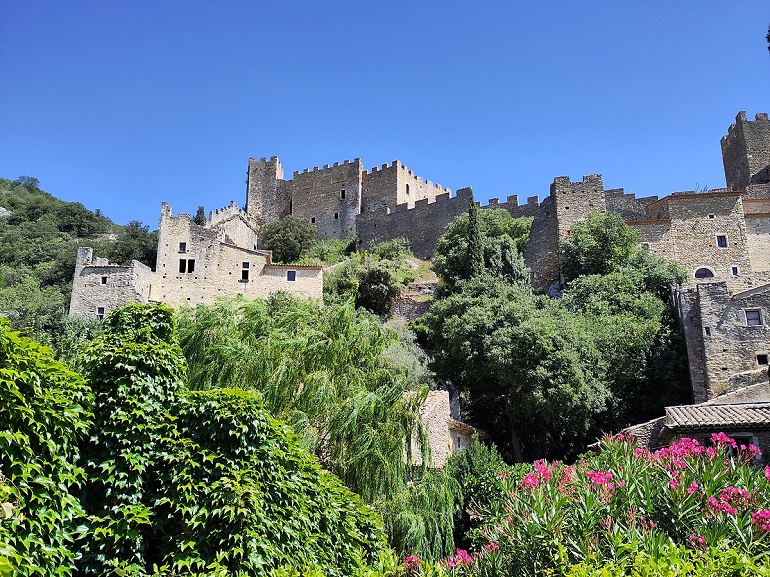
Officially classified as a Village of Character since 1998, Saint-Montan (pop. 2,000) was completely abandoned by 1969 before undergoing total restoration through the dedicated efforts of the Association of Friends of Saint-Montan and thousands of international volunteers over four decades. The village centres around its feudal castle, built between the 11th and 14th centuries on a rocky outcrop, which forms the heart of the restored medieval settlement that now spans approximately two hectares within ancient ramparts. Today, Saint-Montan functions as a living community where artists and craftspeople inhabit the carefully restored stone houses along cobblestone streets, maintaining the authentic 13th-century character whilst offering guided tours and cultural activities throughout the year. The village's position at the junction of the Ardèche, Drôme, Vaucluse, and Gard departments provides access to numerous regional attractions including the Gorges of the Ardèche and various Provençal sites.
Interesting Facts about Saint-Montan
- Saint-Montan is a dramatically restored medieval hill village in southern Ardèche whose stone lanes and ramparts were rebuilt from near-ruin by thousands of volunteers over several decades.
- The village takes its name from the hermit Montanus, who, according to legend, lived in a nearby cave and inspired early devotion in the area.
- Its feudal castle crowns a rocky spur and grew from a 12th–13th-century keep into a fortified settlement protected by walls and gateways.
- Once abandoned in the twentieth century, Saint-Montan was revived through a remarkable community project that brought back its 13th-century appearance.
- The castral village expanded down the slopes to the streams by the fifteenth century, forming a compact, walled ensemble of about two hectares.
- The setting lies at the junction of Ardèche with Drôme along the Rhône corridor, giving the village both riverine and upland character.
- Romanesque chapels and cobbled alleys thread between pale, sun-warmed stone houses, making Saint-Montan a favourite for heritage-minded travellers.
- The site bears traces from the Neolithic through the Gallo-Roman period, but its defining story is medieval fortification and modern restoration.
- Local lore recalls the passage of Admiral Coligny during the Wars of Religion, after which the castle suffered damage and gradual neglect.
- Today’s thriving artists’ workshops and guided visits show how a once-derelict “museum village” became a living community with deep historical roots.
History
Ancient Origins and Medieval Foundation
Saint-Montan's history stretches back to prehistoric times, with archaeological evidence revealing continuous human occupation spanning the Neolithic, Bronze Age, Iron Age, and Gallo-Roman periods. According to local legend, the village's spiritual origins trace to the 5th century when a pious hermit named Montanus lived for thirty years in the cave of "Val Chaud," leading a life of solitude, prayer, and penance. His reputation for holiness attracted visitors, including Saint-Rémi and John, Bishop of Viviers, who persuaded him to relocate to a more accessible location where the San-Samonta chapel now stands. The feudal castle, constructed on the rocky spur known as the rock of Agache, became the starting point for the current village. The earliest written mention of the "De Saint-Montan" family dates to 1110, and they are believed to be the original builders of the castle. The primitive central building served as a military dungeon in the 13th century, with the structure expanding towards the ridge during the same period to include residential quarters.
Medieval Expansion and Religious Conflicts
During the medieval period, Saint-Montan flourished as a castral village, with the settlement gradually expanding down the rocky slopes dominated by the castle. By the 13th century, it had become a co-lordship shared between several lords. The village reached its maximum extent in the 15th century, encompassing the banks of two streams and covering approximately two hectares, all enclosed within substantial ramparts that largely survive today. Three main gates provided access through the fortifications, with their final modifications dating to the 16th century. However, the Wars of Religion in the 16th century brought devastating destruction to Saint-Montan, particularly during Admiral Coligny's passage with his Protestant army of approximately 3,000 men and 400 horses. This period marked the beginning of the village's decline, as the castle and its annexes, divided among various lords, experienced progressive abandonment following the religious conflicts.
Abandonment and Remarkable Restoration
The village remained inhabited until the 1880s, but houses were gradually abandoned as the population dwindled. By 1969, Saint-Montan had become completely deserted, reduced to nothing more than ruins overgrown with brambles, thorns, bushes, ivy, and trees. The village's extraordinary renaissance began in 1970 when Abbot Pierre Arnaud founded the Association des Amis de Saint-Montan. This dedicated organisation, supported by thousands of volunteers from around the world, embarked on an ambitious four-decade restoration project using traditional materials and historical techniques. The medieval village has been meticulously reconstructed to recreate its 13th-century appearance, earning recognition as a Village of Character in 1998. Today, Saint-Montan stands as a living testament to successful heritage preservation, inhabited year-round by artists and craftspeople who have settled in the restored houses, making it a vibrant community rather than merely a museum village.
Main Attractions
Saint-Montan’s most celebrated attractions are woven into the fabric of its medieval village, highlighted by a mesmerising castle, heritage chapels, and natural wonders.
The Medieval Village
Saint-Montan’s medieval centre stands as one of the country’s most impressive restoration achievements, thanks to dedicated volunteers who have revived ruins into living history. The heart of the village is a labyrinth of steep cobbled alleys and vaulted passageways, bordered by authentic stone houses with ochre hues and flowering balconies. Exploring these streets unveils secret courtyards, artisan studios, and stunning views that recall the village’s strategic, fortified past. The charm is heightened by its lively atmosphere, with artists and craftspeople breathing new life into centuries-old buildings and vibrant market days filling squares with local produce and crafts.
Château de Saint-Montan
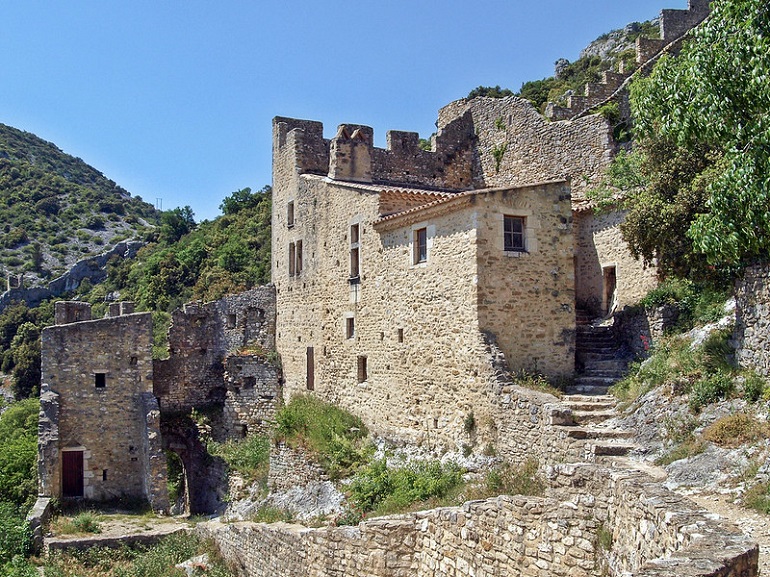
Commanding the skyline, the Château de Saint-Montan encompasses ancient ramparts, towers, and dungeons meticulously restored to their medieval splendour. Its origins go back to the 12th century, gradually extended and adapted for defensive purposes and later residential life. Visitors ascend winding lanes to reach the castle’s entrance, passing charming shops and terraces. Inside, well-preserved rooms and historical displays trace the castle’s evolution from feudal fortress to co-lordship, and reveal stories of its decline following the Wars of Religion. The views from the battlements are extraordinary, with sweeping vistas over the Rhône Valley and Ardèche hills. The castle also hosts cultural events, medieval reenactments, and special guided tours that delve into its remarkable architectural history.
Chapelle San Samonta
The Chapelle San Samonta marks an ancient site of religious significance, connected to the village’s legendary founding by the hermit Montanus in the 5th century. This Romanesque chapel, set above the village, provides a tranquil stop on hillside walks. The structure’s simplicity and quiet charm evoke early Christian devotion, while the elevated setting allows for contemplative moments and panoramic views of Saint-Montan’s golden stone and surrounding greenery.
Heritage Walls and Gates
Encircling Saint-Montan are monumental walls, largely intact, and accessed through three historic gateways dating back to their last major redesign in the 16th century. These ramparts illuminate the defensive ingenuity of medieval architects and today offer visitors the chance to walk in the footsteps of villagers who watched over their homes from these strongholds. The perimeter of the village—reaching two hectares at its greatest extent—was crucial in protecting residents and points to the organisation and complexity of feudal life.
Hermit’s Cave in the Sainte-Beaume Gorges
Nature lovers can venture into the Sainte-Beaume gorges to discover the legendary cave of Montanus, where the hermit is believed to have spent decades in solitude and contemplation. This mystical site, set within dramatic limestone cliffs and peaceful woodland, is steeped in local lore. Walking or hiking through the gorge offers a unique encounter with both Saint-Montan’s natural beauty and its spiritual beginnings.
Village Gardens and Artisan Studios
Scattered within and around the village are intimate gardens, such as the Garden of the Curé, which showcase traditional Ardèche horticulture with native herbs and blooms. Artisan workshops housed in restored dwellings invite exploration of local crafts, ceramics, and art, celebrating the region’s creative spirit and ensuring the village remains not just a monument, but a living, lively community.
Walking Trails and Scenic Viewpoints
The village is beautifully positioned at the convergence of vineyards, wooded hills, and limestone outcrops, offering well-marked walking trails with vistas of the Rhône and the peaceful Nègue valley. These routes allow for an immersive experience in the landscape, passing by lavender fields, ancient dry-stone walls, and panoramic viewpoints overlooking the village and beyond.
Top Museums
Core Museums and Exhibitions
Museum Exhibition of Saint-Montan
The dedicated exhibition space in the heart of Saint-Montan serves as both museum and community archive, offering visitors a chance to step inside the fascinating chronicle of the village's rebirth. The exhibition is curated with an array of displays that meticulously document the astonishing transformation from a derelict, bramble-choked ruin in 1970 to today’s thriving medieval settlement.
- A centrepiece of the exhibition is a detailed scale model of the entire village, capturing each fortified wall, winding alley, and historic residence in miniature.
- Extensive photographic panels chronicle the stages of ruin, abandonment, and painstaking manual reconstruction by over 10,000 volunteers from around the world over a span of more than 46 years—a feat that holds a place in the Guinness World Records for volunteer restoration work.
- The archives and interpretative documents in the museum do not simply recount architectural facts but highlight personal stories, building techniques, and international collaborations that powered the revival.
- Brochures, sketches, and oral testimonials supplement the visual experience, drawing visitors into the emotional and logistical reality of restoring a mediaeval community stone by stone.
The Seignorial House of the Urgell Counties
Now restored as a key interpretative site, this former noble residence evokes the world of the medieval local elite, illustrating aristocratic domestic life and power structures. Thoughtful staging using period-appropriate furniture and décor helps conjure the day-to-day existence of Saint-Montan’s medieval lords.
- Group tours are guided by local experts who provide vivid narration about the histories, alliances, and rivalries that shaped the Urgell counties and Saint-Montan’s ruling families.
- This museum complements the broader narrative of feudal power in the region and the pivotal role these families played in maintaining the castle and defending the village from conflict.
- The building itself, with its thick-walled rooms and atmospheric interiors, is as much an artefact as its contents—offering physical context to the evolving architecture and social customs through the centuries.
The Living Castle and Village
Château de Saint-Montan: A Living Museum
The colossal Château de Saint-Montan sits at the strategic heart of the village and serves as a striking example of a mediaeval stronghold repurposed for cultural discovery.
- Dating from the 12th century with expansions in later centuries, the castle includes not only a formidable keep but also enclosed courtyards, ramparts, and lookout points with commanding views over the Rhône Valley and surrounding countryside.
- Central to its identity as a living museum are on-site interpretative panels and guided tours, which explain the original defensive, residential, and administrative roles the castle fulfilled.
- The castle’s dramatic history is laid bare: from its early days as a feudal fortress and subsequent co-lordship arrangement, through devastation during the Wars of Religion (including occupation by Admiral Coligny and his Protestant army), to near-abandonment in the late 19th century.
- Restoration work launched in the 1970s by the “Association des Amis de Saint-Montan” continues, with ongoing archaeological research revealing more about castle life and mediaeval military architecture.
The Village as a Museum
Beyond formal museums, the entire settlement is conceived as an open-air museum and monument historique.
- Every winding street and stone façade has been reconstructed as faithfully as possible, with authenticity guided by old plans and local memory—providing visitors with an unbroken vista of medieval townscape.
- Modern residents live alongside craftspeople and artists, who occupy workshops and studios in previously abandoned buildings, creating a dynamic interplay between heritage and creativity.
- Wayfinding plaques and interpretive markers are scattered throughout the village, enabling self-guided exploration and discovery at every turn.
Special Collections and Events
Restoration Archives and Themed Displays
A vital element of the visitor experience is the comprehensive archive documenting the restoration movement itself—a museum within a museum.
- The thematic displays meticulously record the entire process: historic photographs, construction sketches, volunteer rosters, and oral history interviews are all designed to immerse the visitor in the backstage effort which resurrected Saint-Montan.
- Genuine tools and equipment used by the original volunteers are displayed, alongside descriptions of traditional building methods (such as dry-stone walling, lime mortaring, and medieval carpentry).
- Seasonal and temporary exhibitions often highlight specific facets of the village’s revitalisation, such as “Crafts of the Ancients” (spotlighting traditional trades revived during restoration), and “Artists in Residence” (showcasing how Saint-Montan’s cultural renaissance has attracted contemporary creators).
Other Cultural Highlights
- Occasional temporary exhibitions and cultural events (such as art festivals and historical reenactments) use the museum and castle as venues, filling the already atmospheric spaces with music, performance, and displays of local and international artistry.
- Associations like “Découvrir Saint-Montan” offer additional curated content—such as walking tours and specialist talks—that deepen one’s understanding of the site as a living, evolving project.
Local Cuisine
Saint-Montan’s dining scene stays firmly rooted in Ardèche terroir, where rustic flavours mingle with Provençal nuance. Village restaurants often begin with peppery local olive oil drizzled over crusty country bread, then present charcuterie platters starring caillettes—herb-laced pork and chard dumplings baked until bronzed. Goat farmers in the surrounding hills supply tangy rounds of picodon, best savoured barely warmed so the creamy centre oozes. Autumn brings an abundance of chestnuts, transformed into velvety soup or indulgent marrons glacés, while dessert lovers can finish with lavender-honey ice cream. Everything pairs effortlessly with a glass of Côtes du Rhône Saint-Montan red or its chilled, apricot-tinged white, bottled just metres from the cobbled lanes you’ll wander back along after dinner.
Getting There
By train The most straightforward rail route is to take a TGV or Intercités service to Montélimar, just 22 km north of Saint-Montan; from the station, local buses and taxis cover the short onward leg.
By coach or bus Regional buses link Montélimar and nearby hubs such as Pont-Saint-Esprit with Saint-Montan, offering a practical option if you are already travelling by public transport; services are limited at weekends, so check timetables in advance.
By car Saint-Montan sits near the N86 and A7 motorway: leave the A7 at the Montélimar-Sud junction, follow signs for Viviers, then switch to the D86 and D262 for the final rural stretch, with parking available on the village outskirts.