Introduction

Champagne-Ardenne is one of France's 27 administrative regions, created roughly around the boundaries of the old County of Champagne. Famous worldwide for its sparkling wine, the Champagne is predominantly a rural and agricultural region. Though relatively large (almost as big as Belgium), it only has 1.3 million inhabitants and is the second most sparsely populated continental French region after Limousin. Its GDP per capita is nevertheless the third highest in northern France after the Île-de-France and Alsace.
Reims, the relatively small regional capital, is the only must-see destination in Champagne. It is in this Gallo-Roman city that one of France's first bishoprics was established, and in its cathedral that the Kings of France were crowned, from Clovis to Louis XVI. Apart from its Gothic splendour, Reims is also the best place to sample the precious local liquid gold: champagne wine.
Troyes is one of France's best-preserved historical town, possessing a quaint assortment of 16th-century timber-framed houses.
The border towns of Sedan and Givet originally belonged to the Southern Netherlands (modern Belgium), but were later annexed to France (in 1641 and 1680, respectively). They are both dominated by mighty citadels.
Famous people from Champagne-Ardenne include (chronologically): Louis XIV's finance minister Jean-Baptiste Colbert, philosopher and encyclopedist Denis Diderot, revolutionary politician Georges Jacques Danton, poet Arthur Rimbaud, the creator of Astérix comic books Albert Uderzo, and the journalist and writer Patrick Poivre d'Arvor.
History
The Champagne countryside had a relatively uneventful history, bar two key battles that remain deeply imprinted in the national French psyche today. On 20 September 1792, the French Revolutionary forces won their first victory at the Battle of Valmy, defeating the Austro-Prussian troops sent to Paris to protect the monarchy. The victory provided a euphory in France that emboldened the newly-assembled National Convention to formally declare the end of monarchy and the establishment of the First French Republic.
The Second French Empire collapsed in the aftermath of the Battle of Sedan, on 1 September 1870, which resulted in the capture of Emperor Napoleon III and large numbers of his troops by the Prussians. It also effectively ended the Franco-Prussian War and led to the Proclamation of the German Empire a few months later at the Palace of Versailles.
Cuisine
Champagne-Ardenne’s cuisine is firmly rooted in its cool northern climate and fertile soils. Potatoes, cabbage, asparagus, rhubarb, shallots, wild mushrooms and sugar beets are major crops throughout the region. The Aube département is France’s second-largest cabbage producer, and the harvest is often transformed into sauerkraut. Choucroute de Brienne stews this sauerkraut in Champagne and chicken stock before adding boiled potatoes, sausages, ham and bacon; the dish is celebrated every September at the Fête de la Choucroute in Brienne-la-Château. Winter brings potée champenoise, also called “La Joute”, a hearty casserole of carrots, turnips, cabbage and potatoes enriched with smoked Ardennes ham, sausages and chicken. Overall, the cooking exemplifies the region’s cuisine du terroir and devotion to the French art de la table.
Meat specialities are a highlight for visitors. Andouillette de Troyes, recorded since the Middle Ages, is a coarse sausage made from pork intestines and stomach seasoned with onions and herbs and gently poached for five hours. Jambon de Reims is flavoured with nutmeg, shallots and parsley, cooked in stock, then served in cubes or as a terrine. The drier jambon sec des Ardennes is cured with salt, juniper berries and sugar for a more robust taste. Pieds de porc à la Sainte-Menehould, pig trotters simmered in an aromatic broth, bread-crumbed and browned, star at the annual Foire aux Pieds de Cochon. Boudin blanc de Rethel, a 17th-century white sausage of pork, eggs and milk, now appears with truffle or morel fillings. Humble dishes such as cacasse à cul nu—potatoes fricasséed in bacon-rubbed roux—reveal the region’s frugal traditions.
Local cheeses, condiments and sweets round off the gastronomic picture. Langres offers a pungent, washed-rind bite, while Chaource delivers a creamy, mould-ripened indulgence, both traditionally paired with a glass of bubbly. Brie from southern Champagne provides a milder option at the cheese board. Forests in Haute-Marne yield black truffles prized from September to March. Diners season dishes with Reims mustard, still produced by Maison Charbonneaux-Brabant, and Champagne-based vinegars. Sweet lovers seek out pain d’épices and the rose-tinted Biscuit de Reims. Chocolates shaped like corks, known as bouchons de Champagne, further celebrate the region’s emblematic drink. Marc de Champagne perfumes pâté champenoise—rabbit and pork baked in puff pastry—while local beekeepers supply fragrant honey for desserts.
Attractions
Départements are listed from North to South.
Département des Ardennes
Département de la Marne
| Reims ※ |
|---|

 Reims, the Champagne capital, blends Gothic grandeur and Art Deco charm. Explore Notre-Dame Cathedral, site of royal coronations, then descend into chalk cellars for tastings at storied houses. Elegant boulevards, Roman remnants and vibrant dining make a refined city escape. |
| Châlons-en-Champagne |
|---|
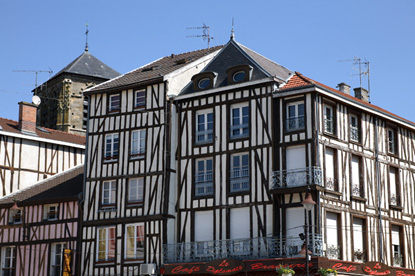
 Châlons-en-Champagne, affectionately known as 'Sparkling Venice', enchants visitors with its picturesque network of canals and the UNESCO World Heritage Notre-Dame-en-Vaux church. This historic champagne capital boasts stunning Gothic architecture and charming boat trips. |
Other attractions

Saint-Amand-sur-Fion
Épernay
Département de l'Aube
| Les Riceys |
|---|
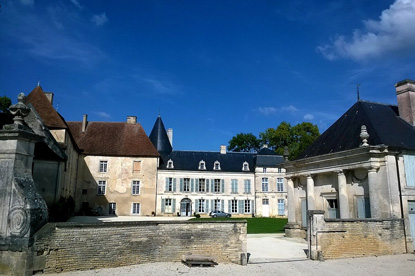
Three historic villages united as one, Les Riceys boasts the unique distinction of producing three AOC wines including the legendary Rosé des Riceys once favoured by Louis XIV. The largest wine village in Champagne features exceptional heritage with numerous listed monuments. |
Other attractions
 Atelier renoir
 in Essoyes
Clairvaux Abbey
Royal Champagne Glasswork & Crystal Museum in Bayel
Département de la Haute-Marne


 Historic Ardennes town dominated by Europe's largest fortified medieval castle, built in 1424. Former independent principality and major textile centre famous for its black cloth, Sedan offers imposing fortress walls, fascinating military history and charming old streets near the Belgian border.


 Medieval Troyes, historic capital of Champagne, enchants visitors with its beautifully preserved half-timbered houses, cobbled streets, and magnificent Gothic churches. The charming old town, famously shaped like a champagne cork, boasts wine cellars and authentic local character.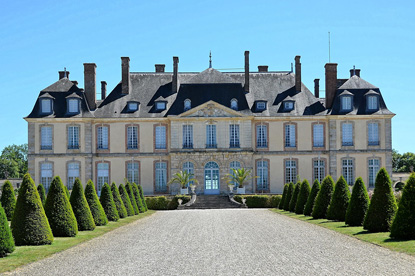

 : Local interest
 : Moderately interesting
 : Outstanding place
 : Must-see in the country
 : Top cities in Europe