Introduction

The tranquil rural region of Poitou-Charentes marks the gradual transition between northern and southern France. Its traditional dialects, Poitevin and Saintongeais belong to the northern Oïl language family, but its warm climate, sunflower fields, and relaxed atmosphere (the siesta is not uncommon here). The region is renowned for its Cognac brandy, Pineau des Charentes, Charentais melon, and Marennes-Oléron oysters, and white sand beaches.
In 2015 Poitou-Charentes fused with Limousin and Aquitaine to form the Nouvelle Aquitaine region.
The northern half of the region is the Poitou, making up a big chunk of the historical province of Poitou (minus the Vendée). The south is composed of the three small traditional provinces of Saintonge, Angoumois and Aunis, in the valley of the slow-flowing Charente.
Famous people from Poitou-Charentes include (chronologically): King Francis I of France, Louis XIV's second wife Madame de Maintenon, the poet and playwright Alfred de Vigny, the political economist Jean Monnet (one of the EU's founding fathers), and President François Mitterrand.
History
The Poitou-Charentes region possesses a remarkable history spanning over two millennia, shaped by successive conquests, religious conflicts, and commercial innovation. Originally inhabited by the Pictavi (or Pictones), a Gallic tribe whose name gave rise to Poitou, the region was conquered by Julius Caesar's Roman legions in 56 BCE and incorporated into the province of Aquitania. Following the collapse of Roman rule, the Visigoths seized control in 418 CE, but their dominion proved brief as the Frankish king Clovis I conquered the territory in 507. The most pivotal moment in the region's early medieval history occurred in 732, when Charles Martel's Christian forces defeated invading Muslim armies at the Battle of Poitiers, effectively halting the Islamic expansion into western Europe and securing the future of Christianity in France. During this period, Poitiers emerged as both a fortified stronghold and religious centre, with the construction of the magnificent Saint-Pierre Cathedral beginning in the 11th century. The region's golden age flourished from the 10th to 12th centuries, when the counts of Poitou simultaneously held the title of dukes of Aquitaine, establishing Poitiers as a major centre of Romanesque art and architecture.
The medieval period witnessed dramatic political upheavals that would define the region's character for centuries. In 1137, Eleanor of Aquitaine's marriage to Louis VII brought Poitou-Charentes under French crown control, but her subsequent divorce and marriage to Henry Plantagenêt (later Henry II of England) in 1152 transferred the territory to English rule. Eleanor established a brilliant court at Poitiers, becoming a renowned patroness of the arts and troubadour culture before later retiring to the Île d'Oléron. English control persisted for nearly three centuries, punctuated by significant military engagements including the Battle of Poitiers in 1356, where French forces under King Jean le Bon suffered a devastating defeat and the king himself was captured. The region finally returned to French sovereignty in 1416 during the later phases of the Hundred Years' War. Meanwhile, the coastal areas developed distinct maritime identities, with La Rochelle emerging as a crucial Huguenot stronghold during the 16th and early 17th centuries, culminating in the famous siege of 1627-1628 when Cardinal Richelieu's forces constructed an elaborate seawall to blockade the Protestant city. The architectural legacy of this period remains visible today in the region's exceptional Romanesque churches, including Notre-Dame-la-Grande in Poitiers with its intricately carved façade depicting biblical scenes and the Abbey Church of Saint-Savin-sur-Gartempe, renowned for its medieval frescoes.
The early modern period transformed Poitou-Charentes into a centre of international commerce and industrial innovation, particularly through the development of the cognac industry. The region's viticultural traditions, established since Roman times, evolved dramatically in the 15th century when Dutch merchants introduced distillation techniques to preserve Charentais wines during long sea voyages. By the 17th century, local distillers had perfected double distillation methods, creating the refined eau-de-vie that would become world-famous cognac. The establishment of the first major cognac houses, including Martell in 1715 and Rémy Martin in 1724, marked the beginning of an industry that would define the economic identity of the Charente departments. The French Revolution brought administrative reorganisation, with the historic provinces divided into the modern departments of Charente, Charente-Maritime, Deux-Sèvres, and Vienne in 1790. The Revolutionary period proved particularly turbulent for Charente-Maritime, where anti-clerical campaigns transformed churches into "temples of Reason" and refractory priests faced deportation to French Guiana, many perishing from typhus aboard prison ships anchored off Île Madame. The 18th century also witnessed significant economic development as the region's strategic position along Atlantic trade routes and the navigable Charente River, dubbed "the walking path" by Romans, facilitated international commerce in salt, wine, and the emerging cognac trade.
Cuisine
Poitou-Charentes boasts a rich culinary tradition, celebrated for its abundance of local produce and seafood, influenced by both lush inland pastures and the Atlantic coastline. The region is world-famous for cognac, a sophisticated brandy crafted from Ugni Blanc grapes and meticulously aged in oak barrels, as well as Pineau des Charentes, a sweet fortified wine often enjoyed as an aperitif. Fresh seafood, including mussels, oysters, and clams, is a staple, with Mouclade—a dish of mussels cooked in cream and white wine—being especially renowned in local restaurants. Local butter, particularly the esteemed Charentes-Poitou butter, is prized for its creamy texture and subtle flavour, produced using traditional methods with milk from pasture-raised cows.
The region is equally celebrated for its cheeses, most notably Chabichou du Poitou, a soft goat's cheese granted AOC status, and Mothais-sur-Feuille, a goat's cheese traditionally matured on a chestnut leaf. Dessert lovers will find the distinctive Tourteau Fromagé, a cheesecake made from goat's curd with a characteristic blackened crust, originating from Deux-Sèvres. The local Farci Poitevin is a rustic terrine made from bacon and assorted green vegetables such as spinach, sorrel, and cabbage, traditionally cooked in aromatic stock and enjoyed hot or cold. Meat specialities include Limousin beef, Diamandin lamb, and Capon de Barbezieux, all reared under strict conditions for exceptional flavour and tenderness.
Traditional dishes and hearty comfort foods abound, with charcuterie, pâtés, and terrines commonly featured in village markets and cafés, especially around Vienne. Charente snails, cooked "en cagouille" with parsley butter, are a delicacy, and mojettes (white beans) are slowly cooked with herbs or served alongside meats in the classic Saintongeaise style. The region also excels in pastry and confections, with local farms producing a wide array of tomme and fresh cheeses. Whether in a rustic country inn or a bustling market, the cuisine of Poitou-Charentes offers visitors an authentic and memorable taste of provincial French gastronomy.
Attractions
Département de la Vienne
| Futuroscope |
|---|
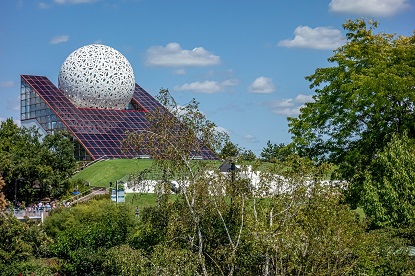
 Futuroscope, a futuristic theme park just north of Poitiers, blends dazzling multimedia with 3D/4D cinemas, innovative rides such as Objective Mars, and spectacular night shows, offering a uniquely French mix of family-friendly thrills and imagination. |
Département des Deux-Sèvres
| Château d'Oiron |
|---|
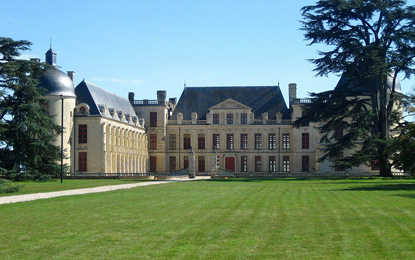
 Renaissance château in Oiron created by the Gouffier family. Noted for grand galleries, frescoes, gardens and fine Renaissance detail, it now houses a celebrated contemporary art collection in a historic setting linked to Perrault’s Puss in Boots. |
| Thouars |
|---|
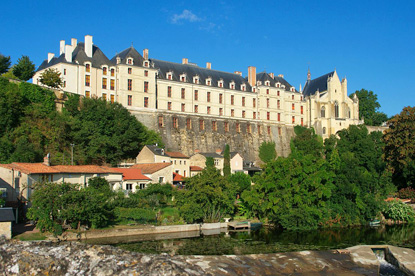
Perched above the River Thouet in Nouvelle-Aquitaine, Thouars mixes medieval ramparts, Romanesque churches and the stately Trémoille château with museums and gentle riverside views, offering a tranquil, history-rich base amid the valley’s picturesque scenery. |
Other attractions

Niort
Département de la Charente-Maritime
|
La Rochelle |
|---|

La Rochelle was historically France's main port of trade with and emigration towards the New World. Today, an elegant Atlantic port, it charms with its medieval harbour towers, arcaded old streets and lively quays. Savour fresh seafood, cycle the seafront, visit the famed aquarium, and cross the bridge to Île de Ré. Historic, breezy and relaxed year-round. |
| Rochefort |
|---|
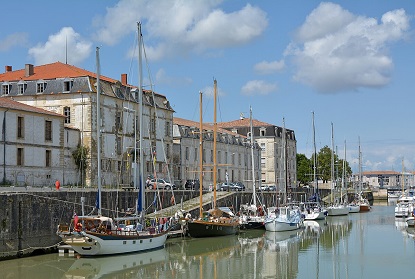
 Rochefort, a 17th-century naval town on the Charente, blends maritime heritage and gentle riverside charm. Explore the Corderie Royale, the Hermione frigate and the rare Transporter Bridge, with Île d’Aix and Fort Boyard just a boat ride away. Perfect for slow travel. |
| Saintes |
|---|

Saintes, the historical capital of Saintonge, blends Roman relics and riverside charm. Wander from the Arch of Germanicus and the amphitheatre to the Romanesque Abbaye aux Dames, then linger in lively markets and café-lined squares in this graceful Charente-Maritime town. |
Other attractions
Ars-en-Ré
Aulnay
Hiers-Brouage
La Flotte
Mornac-sur-Seudre
Royan
Talmont-sur-Gironde
Département de la Charente
| Angoulême |
|---|
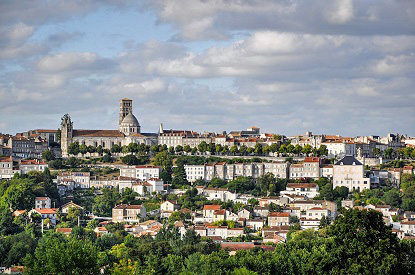
Perched above the Charente, Angoulême blends medieval ramparts, a fine Romanesque cathedral and sunlit cafés with vivid comic-book murals. Renowned for its January festival, this creative hilltop city charms with market halls, viewpoints and lively, winding lanes. |
| Cognac |
|---|

Cognac, set on the Charente, charms with cobbled lanes, Romanesque Saint-Léger church and elegant mansions. Tour storied Cognac houses and damp cellars, savour tastings, and wander riverside quays and nearby vineyards that roll across Grande Champagne country. |
|
La Rochefoucauld Castle |
|---|

Poised above the Tardoire, La Rochefoucauld Castle blends a medieval keep with elegant Renaissance galleries and a famed spiral staircase attributed to Leonardo. Still home to the ducal family, its towers and courtyards evoke a thousand years of noble power. |


 : Local interest
 : Moderately interesting
 : Outstanding place
 : Must-see in the country
 : Top cities in Europe