


| Contents |
|---|

Introduction
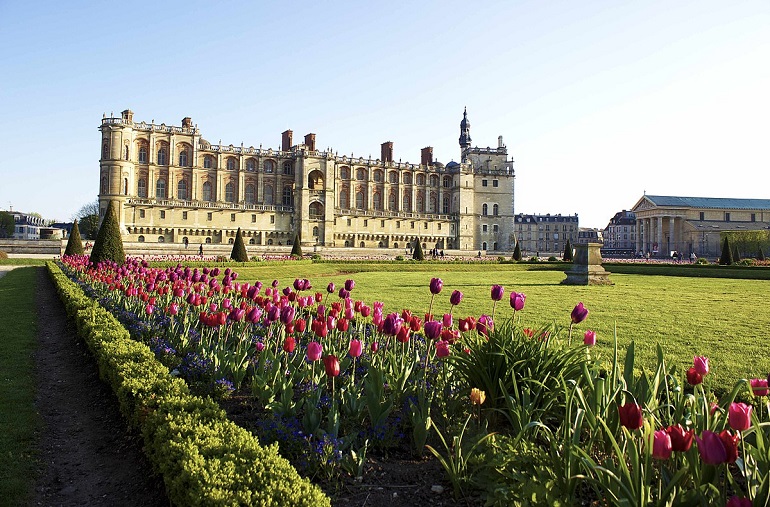
The Château de Saint-Germain-en-Laye is a former royal palace located in the commune of Saint-Germain-en-Laye, approximately 19 kilometres west of Paris in the Yvelines department. Originally established as a fortified hunting lodge by King Louis VI in 1124, the château served as a primary royal residence for French monarchs from Louis VI through Louis XIV, who was born here in 1638. The current structure largely dates to the Renaissance reconstruction commissioned by François I in 1539, which incorporated the surviving medieval Sainte-Chapelle built by Louis IX around 1238. After Louis XIV relocated the court to Versailles, the château eventually fell into disuse until Napoleon III transformed it into France's National Archaeological Museum, which it remains today, housing one of Europe's largest collections of archaeological artefacts spanning from the Palaeolithic period to the Middle Ages. The château sits within a 40-hectare national domain featuring formal gardens designed by André Le Nôtre and the famous Grande Terrasse, which offers panoramic views towards Paris and La Défense.
Interesting Facts about Château de Saint-Germain-en-Laye
- The château began as a royal residence under Louis VI around 1122–1124 and evolved from a medieval fortress into a Renaissance palace.
- Its exquisite 13th‑century Sainte‑Chapelle, built under Louis IX, prefigured the design of Paris’s Sainte‑Chapelle and once housed a relic of the Crown of Thorns.
- Edward the Black Prince burned the medieval castle in 1346 during the Hundred Years’ War, after which Charles V rebuilt it on the old foundations.
- King François I extensively remodelled the château from 1539 with architect Pierre Chambiges, pioneering a striking blend of pale stone and red brick façades in France.
- Louis XIV was born at Saint‑Germain‑en‑Laye in 1638 and briefly made it the seat of government before moving his court to Versailles.
- The château’s keep once guarded the royal treasury, archives, and rare books that helped seed France’s future national library collection.
- Today the building houses the National Archaeology Museum, home to one of the world’s most important collections of prehistoric art and artefacts.
- André Le Nôtre designed the grand terrace and gardens, offering sweeping views over the Seine valley towards Paris.
- The château’s plan forms a pentagon, reflecting layers of construction atop earlier medieval foundations.
- An unusual flat roof, rarely open to the public, features balustrades and ornate chimneys with panoramic views over the town, forest, and La Défense.
History
The Château de Saint-Germain-en-Laye stands as one of France's most historically significant royal residences, with origins dating back to the 12th century. The first castle, known as the Grand Châtelet, was constructed around 1122-1124 by Louis VI on the site of a 10th-century monastery founded by Robert the Pious. This initial fortified hunting lodge in the forests of Saint-Germain and Marly was expanded by Louis IX (Saint Louis) in the 1230s, who commissioned the construction of the Gothic Sainte-Chapelle around 1238. This remarkable chapel, designed by Pierre de Montreuil, served as the prototype for the more famous Sainte-Chapelle in Paris and was intended to house relics of the Crown of Thorns and the True Cross. The medieval castle met a violent end in 1346 when Edward the Black Prince burnt it down during the Hundred Years' War, leaving only the Gothic chapel standing.
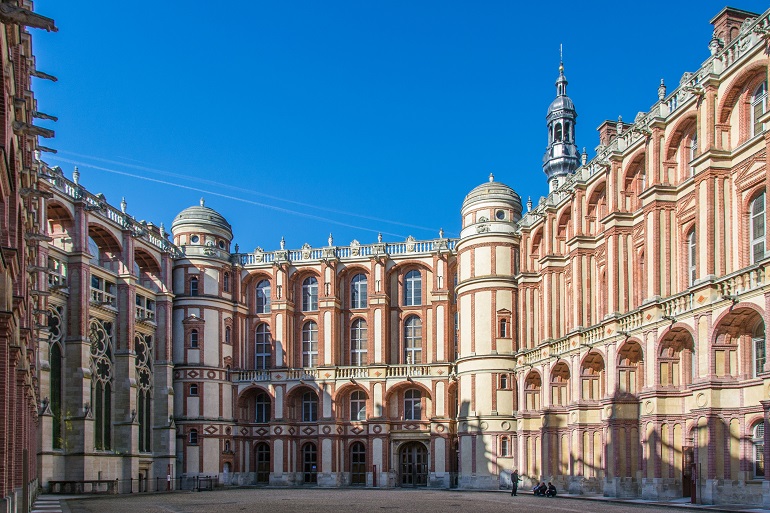
The Renaissance transformation of Saint-Germain-en-Laye began under Charles V, who rebuilt the château in the 1360s on the old foundations, but the most significant reconstruction occurred under Francis I in 1539. Working with architect Pierre Chambiges, Francis I created a new Renaissance palace that incorporated the surviving medieval chapel and introduced innovative building techniques to France, including the use of combined stone and brick to provide polychrome façades. The resulting structure, with its distinctive pentagon shape derived from the irregular medieval foundations, represented a unique mixture of Gothic and Renaissance elements. Henry II later commissioned Philibert de l'Orme to construct the Château-Neuf in 1553, a separate building perched on the edge of the high ground with magnificent views over the Seine Valley. By 1559, the expanded castle complex covered 8,000 square metres and included 55 apartments, a banquet hall, seven chapels, and even a prison in the vaulted cellars.
The château reached its zenith as a royal residence during the 17th century, serving as the birthplace of Louis XIV in 1638 and remaining his primary residence until his move to Versailles in 1682. Francis I had been particularly fond of the fortress, spending over 1,000 days there during his reign—double the time he spent at Fontainebleau. The Sun King employed André Le Nôtre to design the magnificent gardens and terraces, including the parterre beneath the royal apartments and the famous Allée des Loges. After Louis XIV's departure, the château served as a residence for the exiled James II of England from the 1680s until his death in 1701. Following years of neglect, during which the Château-Neuf was demolished in 1777 and the old château became a military penitentiary, Napoleon III saved the building from destruction by commissioning its restoration in 1855 and transforming it into France's National Museum of Archaeology in 1862.
Description
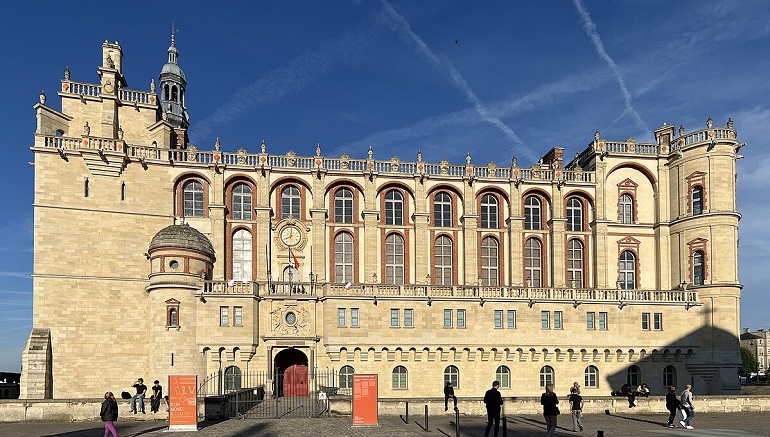
The Château de Saint-Germain-en-Laye rises above the Seine valley with a striking blend of stone, brick, and finely worked ornamentation, its long façades and rhythmic windows giving an immediate sense of elegance and scale. Broad terraces and formal greenery frame the building, opening out to far-reaching views that lend the whole ensemble a calm, spacious grandeur.
Architectural character
From the outside, clean Renaissance lines are softened by round corner towers, balustraded balconies, and a procession of mullioned windows that catch the light at different times of day. Slim pilasters, sculpted surrounds, and discreet rooftop chimneys bring vertical interest, while the chapel's soaring tracery and pointed arches add a delicate Gothic counterpoint. The overall effect is poised and harmonious: noble without heaviness, refined without fragility.
Interior atmosphere
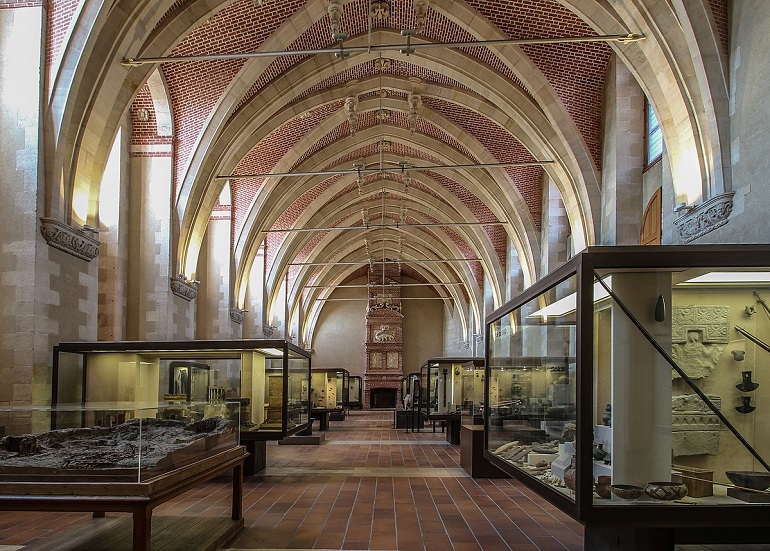
Inside, tall galleries and vaulted corridors create an immediate sense of volume, with pale stone, oak doors, and cool floors setting a serene tone. Staircases curve with wrought-iron balusters and stone treads, leading to sequences of rooms where daylight spills across display cases and settles on carved capitals and cornices. The palette is measured—honeyed stone, muted plaster, warm timber—so that textures and details do the talking.
Museum overview
Much of the château houses the Musée d'Archéologie Nationale, arranged as a clear journey through the earliest human cultures to late antiquity. Galleries are spacious and uncluttered, with climate-controlled cases, generous sightlines, and a steady rhythm of timelines, maps, and object groupings that make complex periods easy to follow. Labelling is crisp and informative, supported by diagrams, reconstructions, and occasional audiovisual points to contextualise techniques, materials, and ritual use.
Museum highlights by era
- Prehistory: finely carved bone and antler pieces, flint blades, engraved plaquettes, and compact figurines that show remarkable sensitivity to form in miniature.
- Neolithic: polished stone axes, elegant ceramics with incised decoration, and models illustrating early dwellings, farming implements, and burial practices.
- Bronze and Iron Age: hoards of tools and weapons, patterned scabbards, mirrors, and richly worked jewellery such as twisted torcs and fibulae in bronze and gold.
- Celtic and Gaulish arts: ornate metalwork, coinage, ceremonial objects, and stylised animal motifs that balance abstraction with technical finesse.
- Gallo-Roman life: mosaics, domestic bronzes, glassware, inscribed tablets, votive reliefs, and architectural fragments that bring townhouses, sanctuaries, and baths into focus.
- Late antiquity and early medieval: belt fittings, cloisonné pieces, carved stone, and sarcophagi that bridge classical craftsmanship and emerging medieval aesthetics.
Interpretation and displays
The museum's interpretation favours clarity and pace: short thematic panels, object clusters that tell a story at a glance, and comparison displays that show how forms evolve across regions and centuries. Cutaway models and replicas illuminate construction methods, metallurgy, and decorative techniques, while large-scale maps anchor each section in a precise geography. Subtle lighting prioritises legibility without glare, and reflective surfaces are carefully managed to keep details crisp.
Signature rooms and set-pieces
Several rooms create a theatrical encounter with scale and texture—long cases of tools ordered by type, circular islands for jewellery and small sculpture, and alcoves where more fragile items rest in low light. In the larger halls, monumental stonework and sarcophagi are given generous breathing space, allowing visitors to walk around and read carvings in profile. Smaller cabinets, meanwhile, invite close study of engravings, inlays, and metal chasing.
Family-friendly features
Hands-on stations with replica tools and textures help younger visitors grasp weight, balance, and shaping techniques, while activity booklets turn observation into a gentle treasure hunt. Clear, high-contrast graphics and object silhouettes guide attention to essential features—rims, rivets, hinges, clasps—so details become memorable rather than overwhelming. Staff are visible and approachable in busy nodes, ready with concise, practical explanations.
Decorative craft and finishes
Throughout, crafted elements reward lingering: chiselled fireplace surrounds, moulded cornices, finely planed handrails, and ironwork that turns from functional support to elegant line drawing. Floors shift from smooth stone to subtly patterned tiling in transitional spaces, while door hardware and hinges add quiet sparkle where the light finds them. The building's textures—stone, wood, metal—echo the materials in the cases, creating a pleasing dialogue between container and content.
The Colonne Trajane
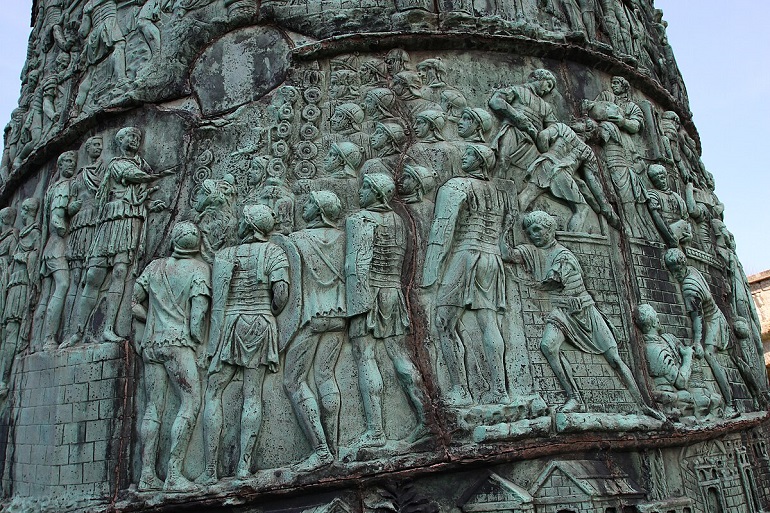
Rising from the château’s dry moat like a monumental bookmark, the column before the Musée d’Archéologie nationale is a full-scale cast of Trajan’s Column, its pale surface sharply catching light and shadow. The spiral frieze coils upwards in an unbroken narrative band, each turn revealing tightly packed scenes—marching columns, pontoon bridges, siege engines, standards lifted high, and moments of counsel between commander and troops—rendered with remarkable crispness for close viewing.
From the terrace above, the reliefs read like a continuous storyboard; at moat level, the figures swell into focus, their armour, tools, and fortifications becoming tactile studies in texture. The setting enhances the experience: high walls shelter the shaft from wind, while open sky throws raking light that changes the legibility of details throughout the day. It rewards slow looking—choose a vignette at eye level and follow it around the shaft, tracing the flow of movement, then step back to appreciate the column’s balanced proportions and the measured rhythm of its sculpted registers.
Practical viewing is straightforward: there are clear vantage points from the parapet for sweeping photographs, and closer viewpoints along the moat path for studying the modelling of shields, cloaks, and timberwork. The column acts as a bridge between the building and the collections within—an outdoor prologue that primes the eye for craft, narrative, and the dialogue between function and artistry.
Gardens, terrace, and views
Outside, precise parterres and straight, gravelled walks underscore the château's measured geometry, while clipped hedges and pools introduce a restful rhythm. The grand terrace stretches like a surveyor's line along the plateau, inviting long, unhurried strolls and framing expansive views across the Seine and distant skyline. On bright days, façades reflect softly in shallow water features, and the interplay of shadow and foliage adds gentle movement to the formal design.
Getting There
The Château de Saint-Germain-en-Laye is conveniently accessible from Paris and makes for an excellent day trip just 20 kilometres west of the capital. The most straightforward route is via the RER A line, which runs directly to Saint-Germain-en-Laye station - the terminus conveniently located directly opposite the château on Place Charles de Gaulle. The journey takes approximately 20 minutes from Charles-de-Gaulle-Étoile or 30 minutes from Châtelet-les-Halles, with trains departing every 15 minutes throughout the day. Alternative public transport options include bus 258 from La Défense or the N153 service from Gare Saint-Lazare, though these take considerably longer at around 55 minutes. For those travelling by car, the château is easily reached via the A13 motorway and various national roads including the RN 190, RN 13, and N 186. Upon arrival at the station, visitors will find themselves mere steps from the château entrance, as the railway station sits directly in front of this magnificent royal residence that now houses the National Museum of Archaeology.
Best Time to Visit
The best time to visit Château de Saint-Germain-en-Laye is from late spring through early autumn, particularly between May and September, when the weather is most conducive to exploring both the château and its magnificent grounds. Spring and summer offer ideal conditions for enjoying the château's vast 40-hectare gardens designed by André Le Nôtre, as well as the famous Grande Terrasse with its spectacular views over Paris and La Défense. The warmer months also coincide with special opportunities such as the unique château rooftop tours, which run exclusively from May to September and provide an extraordinary perspective of this former royal residence. Whilst the château and its National Archaeological Museum remain open year-round (except Tuesdays), visiting during the milder months allows you to fully appreciate the outdoor attractions, including walks through the adjacent 3,500-hectare forest and the English gardens, making your visit to this historic seat of 29 French kings and birthplace of Louis XIV a truly memorable experience.