


| Contents |
|---|
Introduction
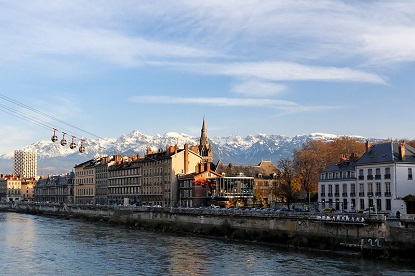
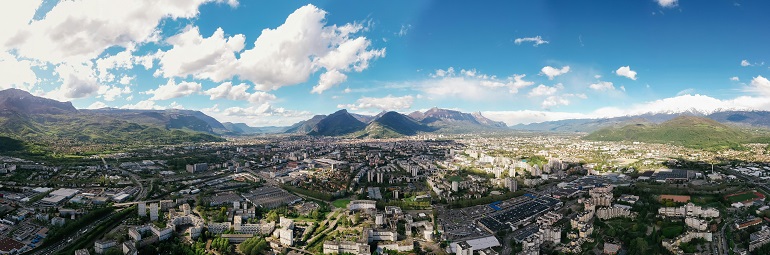
Grenoble (pop. 157,000; urban 450,000; metro 715,000) is a vibrant university city nestled in the French Alps. The city gained international recognition as host of the 1968 Winter Olympics and has since developed into a major centre for scientific research and technology, earning the nickname "Capital of the Alps." Surrounded by three mountain ranges—the Vercors, Chartreuse, and Belledonne—Grenoble offers year-round outdoor activities whilst maintaining its status as home to several prestigious universities and research institutions. The historic city centre features well-preserved medieval and Renaissance architecture, anchored by the distinctive cable car system that has transported visitors to the Bastille fortress overlooking the Isère River valley since 1934.
Interesting Facts about Grenoble
- Grenoble is often called the Capital of the Alps, nestled at the confluence of the Isère and Drac rivers beneath dramatic mountain peaks.
- The city hosted the 1968 Winter Olympics, an event that spurred major urban modernisation and transport improvements.
- Grenoble’s roots stretch back over two millennia, beginning as the Gallic settlement of Cularo before becoming the Roman Gratianopolis.
- The Bastille fortress overlooks the city and is reached by the iconic bubble-shaped cable cars known locally as “Les Bulles.”
- Grenoble played a famed role in the French Resistance and was awarded the Compagnon de la Libération for its wartime bravery.
- The city is a major European science hub, home to institutions like the European Synchrotron Radiation Facility and a thriving tech ecosystem.
- The “Day of the Tiles” in 1788, when locals resisted royal authority by hurling roof tiles, is often cited as a spark preceding the French Revolution.
- Grenoble is renowned for its exceptionally pure alpine drinking water, filtered naturally through nearby mountain aquifers.
- The surrounding Dauphiné is celebrated for its AOC Grenoble walnuts, a regional speciality prized across France.
- Literary great Stendhal (Henri Beyle), born in Grenoble, immortalised the city’s spirit in his writings.
- Grenoble is frequently cited among France’s flattest cities, helping explain its strong cycling culture and extensive bike paths.
- The Tour Perret in Parc Paul Mistral, built for the 1925 International Exhibition of Hydropower and Tourism, is a pioneering early reinforced-concrete tower.
- Grenoble boasts a lively old town, from medieval lanes and Renaissance façades to hidden courtyards and Baroque churches.
- Innovative urban mobility has long been a hallmark here, with early adoption of tram revival and car-sharing schemes.
- With a large student population and international research community, Grenoble has an unusually cosmopolitan feel for a mid-sized Alpine city.
History
Nestled in the southeastern French Alps, Grenoble boasts a rich history spanning over two millennia. Originally established as Cularo by the Celtic Allobroges tribe around the 3rd century BCE, the settlement later became a Roman outpost under Emperor Augustus. The city was renamed Gratianopolis in 379 CE to honour Emperor Gratian, from which its modern name derives. During the medieval period, Grenoble emerged as the capital of the Dauphiné region, a strategic alpine territory that served as a crucial buffer between France and the Holy Roman Empire. The city's prominence grew significantly when it became the seat of the Dauphins of Viennois, who later sold their lands to the French crown in 1349, establishing the tradition that the heir to the French throne would hold the title of Dauphin.
The Renaissance and early modern periods marked Grenoble's transformation into an important judicial and administrative centre. The city became home to the Parlement of Dauphiné in 1453, one of France's most influential regional courts, which played a pivotal role in local governance and attracted learned magistrates and lawyers from across the realm. Grenoble's strategic position along major Alpine trade routes fostered economic prosperity, with the city becoming renowned for its leather goods, particularly gloves, which were exported throughout Europe. The 17th and 18th centuries saw significant urban development, including the construction of numerous baroque churches and elegant hôtels particuliers that still grace the city centre today. The city's intellectual reputation flourished during the Enlightenment, attracting philosophers and scientists who contributed to its growing reputation as a centre of learning.
Grenoble's modern identity was forged through industrialisation and scientific innovation. The city became a pioneer in hydroelectric power during the late 19th century, earning the nickname "Capital of the White Coal" for its groundbreaking use of Alpine water resources to generate electricity. This technological advancement attracted major industries and established Grenoble as France's premier centre for electrical engineering and alpine technology. The 20th century brought further transformation when the city successfully bid to host the 1968 Winter Olympics, an event that catalysed massive infrastructure development and international recognition. The post-war period saw Grenoble evolve into a major research hub, with the establishment of numerous scientific institutes, including the European Synchrotron Radiation Facility and the Institute Laue-Langevin, cementing its reputation as one of Europe's most important centres for scientific research and innovation.
Main Attractions
The Bastille and Téléphérique
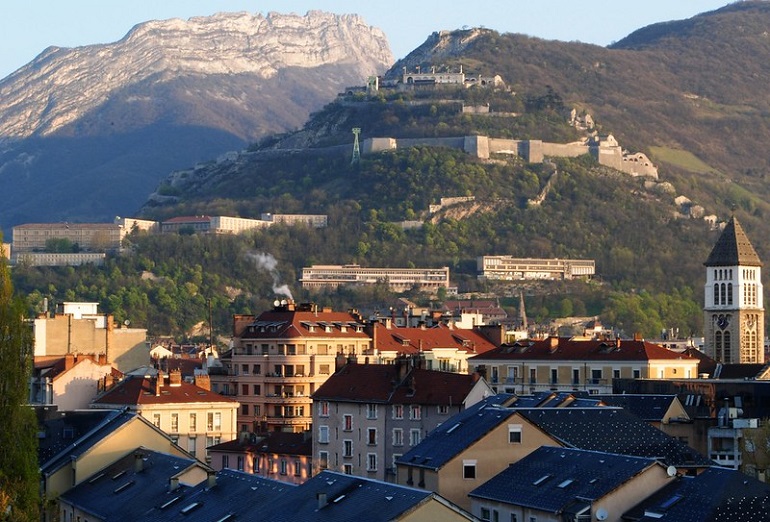
Dominating the eastern skyline of Grenoble, the Bastille is a series of 19th-century fortifications perched on the Chartreuse hills. Accessible via the iconic “Les Bulles” cable cars—transparent bubbles that glide gracefully up the steep slopes—the Bastille offers panoramic views over the city, the Isère valley and the surrounding Alpine peaks. Once atop, visitors can explore the well-preserved battlements, wander along walking trails that crisscross the rocky outcrops and pause at viewpoints to watch climbers tackle the famous rock faces. As evening falls, the illuminated city below creates a sparkling tapestry, making the Bastille a must-visit both day and night.
Old Town and Place Grenette
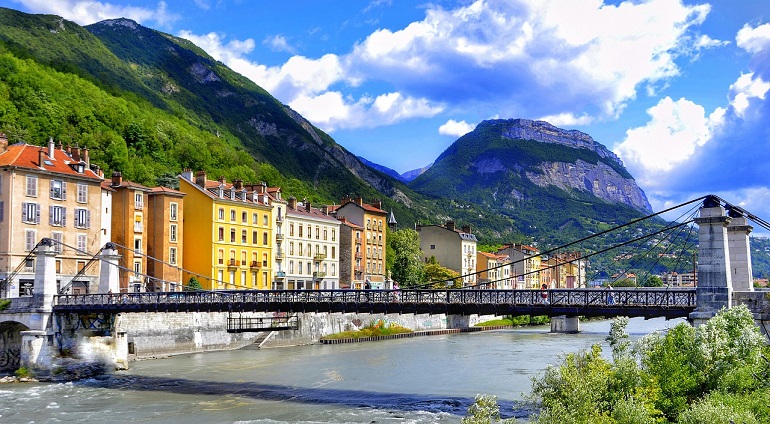
Nestled between the riverbanks of the Isère, Grenoble’s Old Town unfolds like a living postcard of medieval and 19th-century architecture. Cobbled streets lead past pastel-hued townhouses, wrought-iron balconies and ornate doorways, revealing hidden squares and bustling cafés. At its heart lies Place Grenette, once the grand marketplace and now a vibrant plaza framed by cafés and brasseries. Here, locals gather under the shade of plane trees to enjoy a café crème or an apéritif, while street performers and artisans enliven the scene. Meandering through the narrow lanes, one encounters lively boutiques and behind every corner, a hint of history waiting to be discovered.
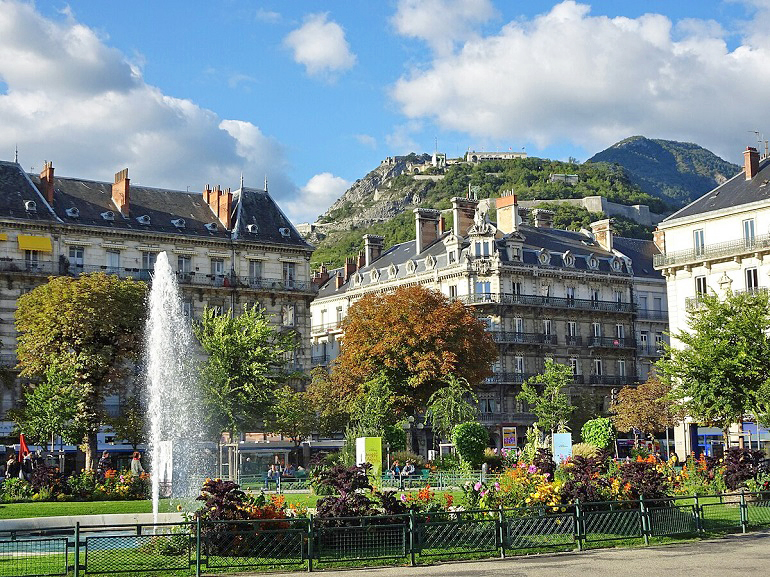
Saint-André Cathedral
Standing proudly in the heart of Old Town, Saint-André Cathedral is an exquisite example of Gothic architecture with origins dating back to the 13th century. Its soaring nave is illuminated by a series of stained-glass windows depicting biblical scenes, casting coloured patterns upon the ancient stone floor. The slender spire and intricately carved façade draw the eye skywards, while inside, the tranquil ambience invites contemplation. Seasonal concerts of classical and choral music are often held within its acoustically rich interior, offering an aural journey that complements the visual splendour of this historic sanctuary.
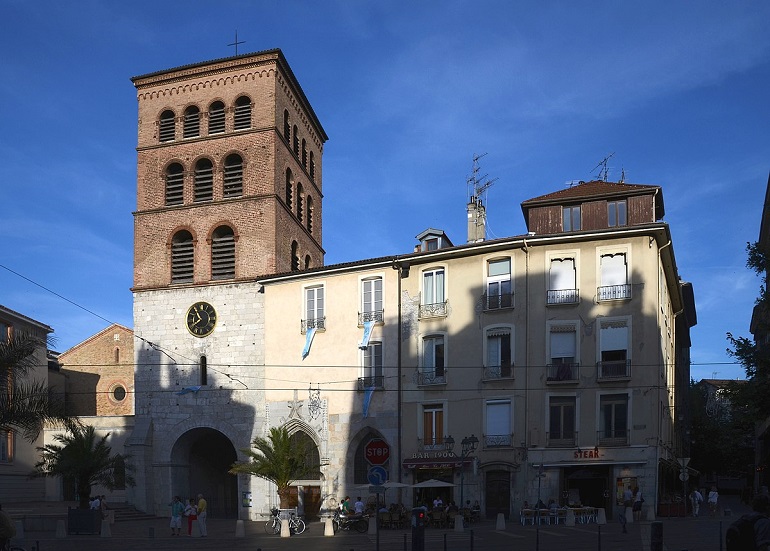
Jardin de Ville and Jardin des Dauphins
Stretching along the banks of the Isère, the Jardin de Ville is Grenoble’s principal municipal garden, offering an oasis of calm amid urban bustle. Manicured lawns, winding pathways and vibrant flowerbeds create an idyllic setting for leisurely strolls or a picnic beneath canopy trees. Adjacent lies the lesser-known Jardin des Dauphins, named after the stone dolphin embellishments adorning its central fountain. Here, shaded benches invite repose beside verdant hedges and sculpted topiaries. Both gardens showcase seasonal horticultural displays and are a favoured spot for early-morning joggers and families seeking respite by the riverside.
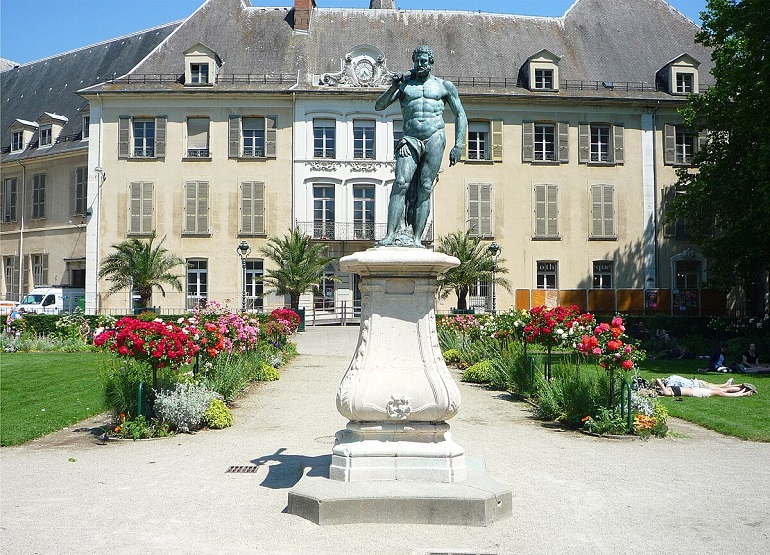
Parc Paul Mistral
At the western edge of the city centre, Parc Paul Mistral is Grenoble’s largest public park and a verdant playground for sports enthusiasts and walkers alike. Wide avenues of lime trees lead to rolling lawns, where locals play pétanque or unwind on park benches. The park’s focal point is the towering Tour Perret, a slender Art Deco landmark offering panoramic views from its summit. Surrounding the tower, modern sculptures and a picturesque pond add artistic flair to the green expanse. Throughout the year, the park hosts open-air concerts and community events, making it a vibrant hub of social life.
Promenade des Quais and Île Verte
Running along the southern bank of the Isère, the Promenade des Quais is a revitalised riverside walkway lined with contemporary sculptures and benches overlooking the water. Cyclists and walkers alike savour the flat, tree-lined route stretching towards the Parc Paul Mistral, while cafés beneath colourful canopies spill onto the pavement during the summer months. Midway along, a small footbridge leads to Île Verte, a lush island park featuring wildflower meadows, willow groves and a secluded viewpoint that frames the city against the peaks beyond. The island’s tranquil atmosphere offers a charming contrast to the bustle of central Grenoble.
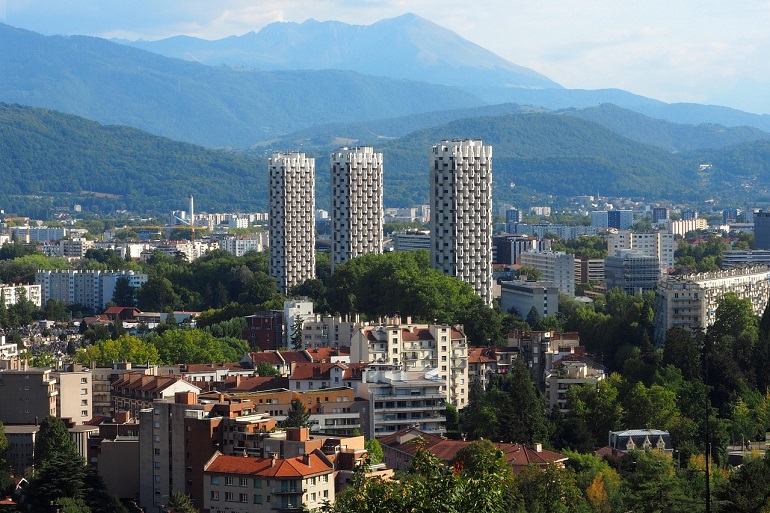
Street Art Trail
Grenoble has embraced urban creativity in recent years, commissioning murals and installations that transform backstreets into open-air galleries. The Street Art Trail guides visitors through districts such as the Saint-Laurent quarter and the university campus, where vibrant frescoes cover façades, stairwells and even traffic barriers. Works range from large-scale abstract compositions to whimsical character pieces, with interpretive plaques explaining the artists’ inspirations. Self-guided or accompanied by a local graffiti expert, this colourful circuit reveals a modern cultural dimension to the historic city.
Place de Verdun and the Fête des Tuiles Memorial
Place de Verdun, one of Grenoble’s largest squares, is dominated by a fountain crowned with figures symbolising liberty and revolt. Each June, the square commemorates the famous 1788 “Fête des Tuiles,” when townsfolk hurled roof-tiles at royal troops—a precursor to the French Revolution. A modern memorial plaque and engraved paving stones mark the historic events beneath the shade of plane trees. Surrounding neoclassical buildings house lively cafés and bookshops, making Place de Verdun both a site of reflection and a gathering place for locals over an espresso or chilled apéritif.
Parc de l’Île d’Amour and the Drac Promenade
North of the city centre, where the Drac river meanders around a sylvan peninsula, Parc de l’Île d’Amour is a verdant retreat of chestnut avenues and wildflower clearings. The Drac Promenade, a wide pedestrian path carved along the riverbank, offers spectacular vistas of the Chartreuse mountains mirrored in the water. Early mornings find joggers and fishermen along its length, while sunset sees couples strolling hand-in-hand. Benches and picnic tables are dotted beneath willows, making the island park a favourite for quiet escapes and bird-watching close to the beating heart of Grenoble.
Top Museums
Art & History Museums
Musée de Grenoble
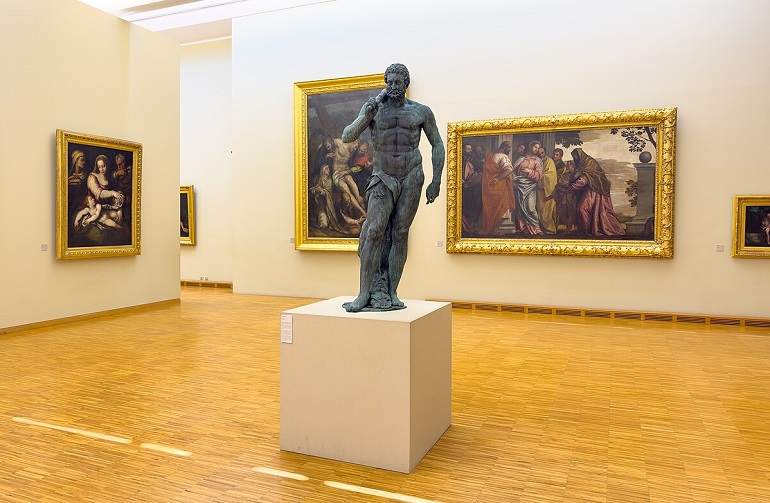
The Musée de Grenoble stands as one of Europe's most prestigious art museums, housing an exceptional collection of over 900 works spanning from antiquity to contemporary art. Its striking modern architecture, completed in 1994 and situated along the banks of the Isère, features light-filled spaces designed to create perfect harmony between art and illumination. The building itself has become an emblematic structure of the city, integrating seamlessly into the landscape with clear lines, vast spaces open to the exterior, and luminous exhibition halls.
Ancient Art Collections (13th-18th Century)
The museum's ancient art section takes visitors on a remarkable journey through the great artistic transformations from the 13th to the 18th centuries. The collection begins with Italian Renaissance masterpieces, including the wooden marvel "Sainte-Lucie" by Torriti, a true Renaissance jewel. The 17th century is magnificently represented through the major artistic movements of Caravaggism, Baroque, and Classicism.
Particularly impressive is the monumental religious painting by Rubens—the largest format in the entire museum—which captivates visitors with its grand scale, rich colours, and intricate details. Other significant masters include Georges de La Tour, Philippe de Champaigne, La Hyre, and Zurbarán, whose works give the ancient art collection its rich splendour. The collection encompasses great masterpieces of Flemish, Dutch, Italian, and Spanish classical painting.
19th Century Collections
The 19th-century section presents an impressive array of works spanning from Neo-classicism to Impressionism. Distinguished artists such as Delacroix, Pradier, Fantin-Latour, Monet, and Gauguin illuminate this transitional period in art history. This section captures the evolution of artistic expression as it moved away from classical constraints towards more experimental approaches.
Modern Art Collections (20th Century)
The museum houses one of Europe's richest collections of 20th-century art. This section focuses on avant-garde movements including Neo-Impressionism, Fauvism, Cubism, and Futurism. The collection features key works by legendary artists such as Matisse, Picasso, Chagall, Derain, Delaunay, and Léger. These pioneering artists shattered conventions by exploring subjects, objects, and scientific concepts with unprecedented freedom in colour and form.
The crown jewel of this collection is Henri Matisse's "Intérieur aux aubergines" (Interior with Aubergines), a fascinating work that blurs the boundaries between still life and landscape, incorporating collage-like elements that continue to intrigue art historians.
Contemporary Art Collections (Post-1945)
The contemporary section represents all major trends in art since 1945. Notable contemporary artists include Pierre Soulages, Jean Dubuffet, Andy Warhol, Victor Vasarely, Bruce Nauman, Boltanski, and Schütte, among many others who have contributed to the museum's international reputation.
Graphic Arts and Drawings
The museum boasts an extensive collection of 5,500 drawings, including sheets of exceptional quality. This remarkable assemblage features Venetian Renaissance pieces, Dutch masterworks, and French works spanning from Watteau to Delacroix. The graphic arts collection provides intimate insights into the creative processes of master artists across centuries.
Egyptian Antiquities and Archaeology
The museum houses a significant collection of Egyptian antiquities, studied and documented by Champollion during his stays in Grenoble. Two dedicated rooms display Egyptian antiquities alongside Greek and Roman archaeological pieces. The collection includes remarkable artefacts such as a sixth-century Egyptian mummy, providing visitors with glimpses into ancient civilisations.
Architecture and Spaces
The museum's contemporary building offers 4,000 square metres of exhibition space, including 1,000 square metres reserved for temporary exhibitions. The structure includes an auditorium, library, documentation centre for researchers, and a bookshop. A sculpture park allows 20th-century masterpieces to stand alongside medieval remains in an outdoor setting. The Tour de l'Isle, a medieval vestige connected to the museum by a glazed walkway, has been converted into a graphic arts cabinet.
Regional & Historical Museums
Musée Dauphinois
Nestled within the atmospheric walls of a 17th-century convent, the Musée Dauphinois serves as the keeper of Dauphiné's regional memory and Alpine heritage. The museum occupies the former Convent of Sainte-Marie-d'en-Haut, perched on the slopes of the Bastille with commanding views over Grenoble and the surrounding valleys.
The museum's permanent exhibitions illuminate the rich tapestry of Alpine life, from prehistoric settlements to modern mountain culture. Visitors encounter displays chronicling the evolution of rural communities, seasonal agricultural cycles, and the profound relationship between mountain dwellers and their harsh yet beautiful environment. Traditional crafts, religious practices, and folk customs are brought to life through carefully curated artefacts, period rooms, and multimedia presentations.
The museum's architecture itself tells a story, with its peaceful cloisters, vaulted chambers, and terraced gardens providing contemplative spaces between exhibitions. The building's restoration has preserved its monastic character whilst creating modern exhibition spaces that complement the historical setting. Temporary exhibitions frequently explore themes of migration, identity, and cultural exchange in the Alps, making connections between past and present.
Musée Archéologique Saint-Laurent
The Musée Archéologique Saint-Laurent offers one of France's most extraordinary archaeological experiences, built directly over and within a vast necropolis that spans nearly two millennia. Located in the former church of Saint-Laurent, the museum presents a unique underground journey through Grenoble's buried history.
Visitors descend into a carefully preserved archaeological site where walkways glide over ancient burial vaults, Roman foundations, and Merovingian crypts. The museum's innovative design allows exploration of successive layers of civilisation, from the 3rd to the 19th centuries, all preserved in situ. Multimedia installations and subtle lighting reveal the evolution of burial practices, religious beliefs, and urban development.
The museum's most remarkable feature is its integration of archaeological remains with contemporary museum design. Glass floors and suspended pathways provide access to tombs, sarcophagi, and architectural fragments whilst preserving their original context. Interactive displays explain the significance of grave goods, the spread of Christianity, and the changing face of medieval Grenoble.
The site includes the remarkable crypt of Saint-Oyand, with its elaborate stone sculptures and frescoes, alongside Roman mosaics and early Christian inscriptions. This museum demonstrates how modern archaeological techniques can transform historical sites into immersive educational experiences.
Musée de la Résistance et de la Déportation de l’Isère
Housed in a former student residence that served as a symbol of collaboration during World War II, this museum has been transformed into a powerful memorial to resistance and remembrance. The location's history adds profound meaning to its current role as a centre for historical reflection and education.
The museum's exhibitions trace the complex history of the Isère department during the occupation, from early resistance networks to the development of major maquis operations in the surrounding mountains. Personal testimonies, photographs, documents, and artefacts create an emotionally resonant narrative of courage, sacrifice, and survival.
Recent renovations have created state-of-the-art exhibition spaces that employ multimedia technology to bring historical accounts to life. Interactive maps show the development of resistance networks, whilst audio testimonies from survivors provide first-hand accounts of clandestine operations, deportation experiences, and liberation.
The museum serves not only as a historical repository but as an active centre for education about human rights, tolerance, and civic responsibility. Its temporary exhibitions often explore contemporary issues of genocide, persecution, and the ongoing struggle for human dignity worldwide.
Musée de l'Ancien Évêché
The Museum of the Former Bishopric occupies a magnificent episcopal palace that has been the seat of religious and temporal power in Grenoble for over a thousand years. The building itself, with its blend of medieval, Renaissance, and classical architecture, tells the story of the city's evolution through its stones.
The museum's permanent collection traces Isère's history from prehistoric times through the modern era, with particular emphasis on the medieval and early modern periods. Visitors explore richly decorated chambers filled with religious art, historical documents, archaeological finds, and ethnographic objects that illuminate daily life in past centuries.
The palace's most spectacular feature is its grand staircase, adorned with period frescoes and leading to reception rooms that once hosted bishops, nobles, and visiting dignitaries. The museum's displays include illuminated manuscripts, liturgical objects, portraits of ecclesiastical dignitaries, and maps showing the territorial evolution of the diocese.
Archaeological discoveries from recent excavations are integrated into the permanent displays, revealing the palace's foundations and earlier structures. The museum also houses important collections of decorative arts, including furniture, tapestries, and ceramics that reflect the refined tastes of Grenoble's religious and secular elite.
Musée de la Révolution Française
Located in the nearby Château de Vizille, though technically outside Grenoble proper, this museum deserves mention as part of the broader cultural landscape accessible to visitors. The museum occupies a château that played a crucial role in the events leading to the French Revolution, when the Assembly of Vizille met in 1788.
The museum's comprehensive collections trace the causes, progress, and consequences of the French Revolution through paintings, sculptures, decorative arts, documents, and personal effects. The château's grand rooms provide an appropriate setting for displays that include works by Jacques-Louis David and other leading artists of the revolutionary period.
The museum explores themes of political transformation, social upheaval, and cultural change that accompanied France's transition from monarchy to republic. Interactive exhibits and multimedia presentations help visitors understand the complex political and social forces that shaped this pivotal period in European history.
Science & Nature Museums
Muséum de Grenoble (Natural History Museum)
Founded in 1851, the Muséum de Grenoble has grown from a modest cabinet of curiosities into a comprehensive natural history institution housed in a beautiful 19th-century building. The museum's classical galleries retain much of their period charm, with wooden display cases and ornate fixtures creating an atmosphere of Victorian scientific inquiry.
The museum's zoological collections showcase the remarkable biodiversity of the Alps and surrounding regions. Extensive displays of stuffed mammals and birds illustrate the adaptation of wildlife to mountain environments, from valley floors to high alpine zones. The ornithological collection is particularly comprehensive, featuring species from across Europe and beyond.
The geological collections reveal the dramatic history of the Alps' formation, with impressive displays of minerals, fossils, and rock formations. Interactive exhibits explain the processes of mountain building, glaciation, and erosion that have shaped the local landscape. The museum's palaeontological specimens include fossils from various geological periods found in the region.
Botanical displays showcase the unique flora of alpine environments, with preserved specimens and detailed illustrations revealing the remarkable adaptations plants have developed to survive in harsh mountain conditions. Educational programs focus on environmental conservation and the delicate balance of alpine ecosystems.
Contemporary Art Centres
Centre National d'Art Contemporain de Grenoble (Le Magasin)
Though primarily an exhibition centre rather than a traditional museum, Le Magasin represents an essential component of Grenoble's contemporary art scene. Housed in a converted industrial building, this centre for contemporary art presents cutting-edge exhibitions featuring emerging and established international artists.
The centre's industrial architecture provides flexible spaces for large-scale installations, video art, and experimental works that challenge traditional museum formats. Its program emphasises interdisciplinary approaches, often incorporating performance, technology, and social engagement in innovative ways.
Le Magasin serves as a laboratory for contemporary artistic practices, supporting residencies, commissioning new works, and fostering dialogue between artists, critics, and the public. Its exhibitions often explore current social and political issues through the lens of contemporary art.
Local Cuisine
Among its most celebrated delicacies are Gratin Dauphinois, a sumptuous potato dish baked with cream and garlic; walnut tart, paying homage to the region’s abundant nut groves; and raclette and fondue, both featuring local cheeses melted to perfection and served with bread and charcuterie. Diners will also encounter chartreuse, a vibrant herbal liqueur crafted by Carthusian monks, and robust sausages such as diots, often paired with lentils or potatoes. The city’s markets overflow with fresh walnuts, mountain honey, and rustic breads, inviting visitors to sample the authentic taste of the Dauphiné.
Getting There
The most convenient approach for most travellers is by high-speed train, with direct TGV services from Paris taking approximately three hours, whilst hourly regional trains connect Grenoble to Lyon in just over an hour. For international visitors, Lyon-Saint Exupéry Airport serves as the primary gateway, located roughly an hour from Grenoble with regular shuttle services, though the smaller Grenoble Alpes Isère Airport offers a closer alternative just 30 minutes from the city centre. Motorists can easily reach Grenoble via the excellent motorway network, including the A48 from Lyon and Paris, A41 from Geneva via Chambéry, A49 from Valence and Marseille, or A51 from Aix-en-Provence. For budget-conscious travellers, direct coach services operate from major cities including Brussels, Geneva, and Lyon, though journey times are considerably longer. Once in Grenoble, the city's comprehensive tram and bus network, including the convenient park-and-ride facilities, makes getting around both the city centre and surrounding Alpine region remarkably easy.