


| Contents |
|---|
Introduction
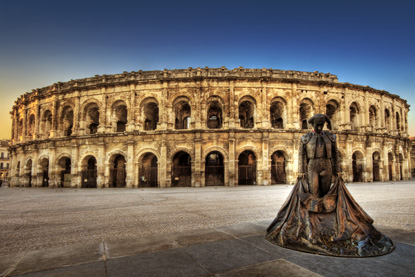
Nîmes (pop. 150,000) was one of the most important cities in Roman Gaul and possess a rich heritage of ancient Roman monuments. The exceptionally well preserved Roman amphitheatre, sitting 25,000, is still used for spectacles. The Maison Carrée is the only complete Roman temple outside Italy. Often referred to as the "French Rome," Nîmes has evolved into a vibrant city blending historical landmarks with modern Provençal culture. Visitors can explore its charming Old Town with cobblestone streets, the picturesque Jardins de la Fontaine, and nearby attractions like the Pont du Gard aqueduct. Its strategic location also makes it an ideal base for exploring the Cévennes National Park to the north and the Camargue wetlands to the south.
Interesting Facts about Nîmes
- Nîmes is often called "French Rome" due to its well-preserved Roman monuments, including the best-preserved Roman amphitheatre in France.
- The fabric denim gets its name from "de Nîmes", meaning "from Nîmes", as the city was historically known for its textiles.
- The Maison Carrée, a small Roman temple in Nîmes, is one of the best-preserved Roman temples anywhere in the world.
- Nîmes hosts one of the main French bullfighting events, Feria de Nîmes, twice each year, attracting hundreds of thousands of visitors.
- The Jardins de la Fontaine, built in the 18th century, incorporates Roman thermae ruins and is one of the first public gardens in Europe.
- The Tour Magne, a ruined Roman tower atop Mont Cavalier, offers panoramic views of Nîmes and on clear days, even glimpses of the Mediterranean Sea.
- The population of Nîmes in Roman times (50 CE) was estimated at 50,000-60,000, a number it only reached again in the mid-19th century.
- The asteroid 51 Nemausa was named after Nîmes, where it was discovered in 1858.
- Nîmes is home to the Musée de la Romanité, a modern museum dedicated entirely to Roman civilisation.
- The city's coat of arms features a crocodile chained to a palm tree, symbolising Rome's conquest of Egypt.
History
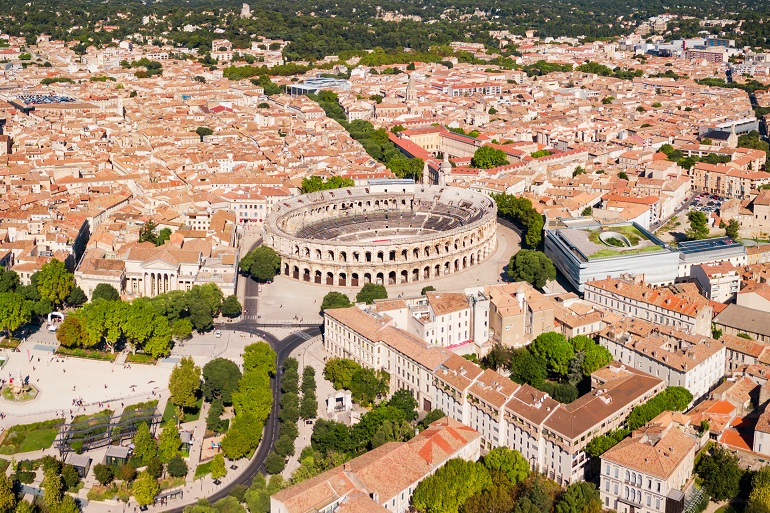
Nîmes, often referred to as the most Roman city outside Italy, boasts a rich history that spans thousands of years. The area was first inhabited by semi-nomadic cultivators during the Neolithic period, around 4000 to 3500 BCE. As the Bronze Age progressed, the site developed into villages constructed from huts and branches. The city's strategic location made it an important centre for the Volcae Arecomici, a Celtic tribe, before it was absorbed into the Roman Empire in 121 BCE. The Romans renamed the city Colonia Nemausus, and it flourished under their rule, becoming a major urban centre along the Via Domitia, which connected Italy to Spain.
During the Roman era, Nîmes underwent significant architectural development. The city was adorned with impressive structures such as the Maison Carrée, a remarkably preserved Roman temple, and the Arena of Nîmes, one of the best-preserved amphitheatres in the world. The Tour Magne, a Roman watchtower, still stands today, offering panoramic views of the city. Nîmes also featured a sophisticated water supply system, part of which included the famous Pont du Gard aqueduct. After the fall of the Roman Empire, Nîmes faced numerous challenges, including invasions by the Vandals and Visigoths in the 5th century. It later became a significant Protestant stronghold during the French Wars of Religion, leading to periods of religious conflict.
Today, Nîmes is a vibrant city that integrates its ancient heritage with modern culture. Visitors can explore the Jardins de la Fontaine, a beautiful park built on the site of an old Roman sanctuary, featuring the Temple of Diana. The Musée de la Romanité, opened in 2018, offers an immersive experience into the city's Roman past with its innovative exhibitions and stunning architecture. Nîmes hosts various festivals throughout the year, such as the Feria de Nîmes, which attracts visitors from all over the world. With its rich history, picturesque landscapes, and lively atmosphere, Nîmes is an essential destination for anyone interested in exploring the Roman legacy in France.
Main Attractions
Les Arènes de Nîmes (The Arena of Nîmes)
Les Arènes de Nîmes is a remarkably well-preserved Roman amphitheatre located in the heart of the city. Dating back to the 1st or 2nd century CE, it was originally used for gladiatorial games and public events. Today, it hosts various events such as concerts and bullfights, accommodating over 16,000 spectators. The arena's design showcases impressive Roman engineering, featuring two layers of arches and a retractable awning system. Visitors can explore the arena's ancient architecture and learn about its rich history through guided tours. The arena's central location makes it a must-visit attraction for anyone interested in Roman history and architecture.
Maison Carrée

The Maison Carrée in Nîmes is one of the world's best-preserved Roman temples, standing as a magnificent testament to ancient Roman architecture. Built between 10 BCE and the early 1st century CE during Emperor Augustus's reign, this Corinthian-style temple was originally dedicated to his adopted sons, Caius and Lucius Caesar. Standing 17 metres tall with 30 elegant columns (including 20 engaged columns), it once dominated the Roman forum at the heart of ancient Nemausus. After serving various purposes throughout history, including as a private residence and church, it was transformed into Nîmes' first museum in 1824. The temple's exquisite architectural details, including its acanthus leaf frieze inhabited by birds, showcase the finest examples of imperial cult symbolism. In September 2023, this architectural masterpiece was deservedly inscribed on UNESCO's World Heritage List, cementing its status as an outstanding example of Roman provincial architecture that has remarkably survived almost intact for over two millennia.
Jardins de la Fontaine (Fountain Gardens)
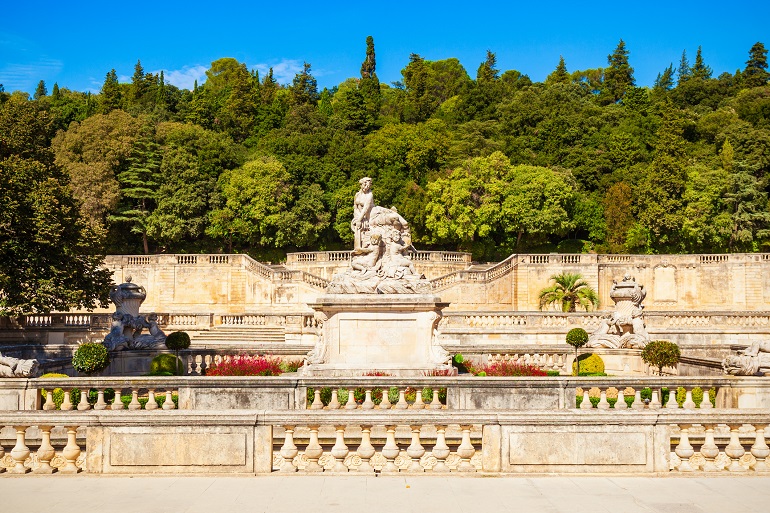
The Jardins de la Fontaine is one of the first public gardens in Europe, created in the 18th century on a site rich in Roman history. Spanning 15 hectares, it combines French formal gardens with Mediterranean landscape elements. The gardens were designed by Jacques Philippe Mareschal at the request of King Louis XV to highlight the natural spring and ancient Roman ruins discovered during its construction. The gardens feature several Roman monuments, including the Temple of Diana and the Tour Magne. Visitors can enjoy the serene atmosphere, explore the various garden styles, and appreciate the historical significance of the site. The gardens are accessible year-round and offer a peaceful retreat from the city's bustling streets.
Temple of Diana
Located within the Jardins de la Fontaine, the Temple of Diana is an enigmatic Roman structure whose original purpose remains unclear. Recent studies suggest it may have served as a library rather than a temple. The building's preservation is attributed to its medieval transformation into a monastery. Its vaulted ceilings and grand archways exemplify Roman craftsmanship, while ancient niches hint at its original splendor. The temple is free to visit and offers a fascinating glimpse into Roman architecture and history. Its setting within the gardens provides a picturesque backdrop for exploration and contemplation.
Tour Magne (Magne Tower)
The Tour Magne is the tallest Roman tower in France, standing 32 meters high atop Mont Cavalier within the Jardins de la Fontaine. This ancient watchtower offers panoramic views of Nîmes and its surroundings, including glimpses of the Mediterranean Sea and Mont Ventoux on clear days. A modern multimedia table at the summit helps visitors identify key landmarks. The tower's strategic position allows visitors to trace the path of the ancient Via Domitia. Early morning visits are recommended for the best photo opportunities, as the rising sun casts a golden glow over the city's terracotta rooftops.

Porte d'Auguste
The Porte d'Auguste is one of the two surviving Roman gates in Nîmes, built between 16-15 BCE during Emperor Augustus's reign. This monumental entrance features four distinct passages: two larger arches for vehicles and two smaller ones for pedestrians. It is a significant historical landmark showcasing Roman engineering and urban planning. The gate is part of the original Roman wall circuit, which once stretched over 6 kilometers. Today, sections of the wall are visible throughout the city centre, offering insights into Nîmes' ancient defensive systems.
Esplanade Charles-de-Gaulle
The Esplanade Charles-de-Gaulle is a central square in Nîmes, featuring a large fountain and green spaces. It serves as a gathering point for locals and visitors alike, offering a picturesque setting near key landmarks such as Les Arènes. The esplanade is ideal for relaxation and provides a tranquil atmosphere amidst the city's historic backdrop. Its proximity to other attractions makes it a convenient spot to pause and enjoy the surroundings.
Castellum Aquae
The Castellum Aquae is a rare remnant of a Roman water distribution system located in Nîmes. This structure played a crucial role in distributing water from the Pont du Gard to various parts of the city during Roman times. It is an interesting historical site that highlights the engineering prowess of the Romans in managing water resources. Visitors can explore this ancient infrastructure to gain insights into Nîmes' Roman past.
Nîmes Cathedral
Nîmes Cathedral, also known as the Cathedral of Notre-Dame-et-Saint-Castor, is a Roman Catholic church located in the heart of the city. Its architecture reflects a mix of Romanesque and Gothic styles, with significant historical and cultural importance. The cathedral is a notable landmark and a place of worship, offering a glimpse into Nîmes' religious heritage. Visitors can admire its architectural beauty and explore its historical significance within the city's religious landscape.
Top Museums
Roman History
Musée de la Romanité
This modern museum, located opposite the Roman Arena, is a gateway to understanding Nîmes and its surroundings. With over 5,000 exceptional artefacts spanning 25 centuries of history, it offers a comprehensive look at the Roman influence on the region. The museum features interactive exhibits, including multimedia devices that provide an immersive experience of Roman Nîmes. Highlights include monumental architecture, recreations of Roman living quarters, statues, mosaics, and everyday objects from ancient times. Visitors can explore the museum's vast collection, which includes a stunning array of Roman sculptures and architectural elements, offering insights into the daily lives of ancient Romans.
One of the museum's most striking features is its ability to connect visitors with the city's Roman past through innovative technology and engaging displays. The museum also hosts temporary exhibitions that delve deeper into specific aspects of Roman culture and history, making it a must-visit for anyone interested in ancient civilisations.
Fine Arts
Musée des Beaux-Arts
Housed in a building dating from the early 20th century, the Fine Arts Museum showcases a remarkable collection of over 3,800 works. The museum's collection spans from the 14th to the 20th century, featuring Italian, Northern European, and French schools of art. Visitors can admire masterpieces by renowned artists such as Rubens, Bassano, and Boucher. A highlight is the 15th-century Foulc tondo, a terracotta Madonna by Andrea della Robbia. The museum also includes a collection of 19th-century French art, with works by artists like Delacroix and Courbet.
The Musée des Beaux-Arts is not only a treasure trove of art but also a testament to Nîmes' rich cultural heritage. Its diverse collection provides a comprehensive overview of European art history, making it an essential stop for art enthusiasts visiting the city.
Contemporary Art
Carré d'Art - Musée d'Art Contemporain
This striking glass and steel building, designed by Norman Foster, stands as a modern counterpart to the ancient Maison Carrée. The museum houses a significant collection of contemporary art and hosts temporary exhibitions featuring works by both established and emerging artists. The building itself is a work of art, reflecting the innovative spirit of contemporary art. The museum's collection includes works by artists such as Daniel Buren, Claude Viallat, and Bertrand Lavier, among others.
Carré d'Art is a hub for cultural activities, offering a dynamic space where visitors can engage with the latest trends in contemporary art. Its exhibitions often explore themes relevant to modern society, providing a platform for artists to express their visions and for visitors to reflect on the world around them.
Local History
Musée du Vieux Nîmes
Located in the former episcopal palace, this museum offers a glimpse into the daily life of Nîmes from the Middle Ages onwards. It houses over 15,000 objects, including furniture, ceramics, textiles, and iconographic collections. The museum pays special attention to the city's textile heritage, particularly the famous 'serge de Nîmes' or denim. Visitors can explore the evolution of Nîmes' textile industry, which played a significant role in the city's economic and cultural development.
The Musée du Vieux Nîmes also provides insights into the social and cultural changes that have shaped the city over the centuries. Its collections include artifacts from various periods, offering a rich tapestry of Nîmes' history and traditions.
Natural History
Muséum d'Histoire Naturelle et de Préhistoire
Inaugurated in 1895, this museum ranks sixth nationally for the richness of its collections. It covers various fields of natural sciences and some areas of human sciences. The museum boasts nearly 700,000 items, including fascinating collections in geology, prehistory, ethnology, and zoology. Visitors can explore exhibits on local wildlife, fossils, and prehistoric artefacts, which provide a comprehensive understanding of the region's natural history.
One of the museum's highlights is its collection of prehistoric artefacts, which includes tools and other relics from early human settlements in the area. The museum also features a gallery dedicated to the natural history of the Camargue region, offering insights into its unique ecosystems and wildlife.
Cultural Traditions
Musée des Cultures Taurines
Unique in France, this museum is entirely dedicated to bull-related culture. It explores various forms of bullfighting, including Spanish, Camargue, and Landes styles. The museum houses rich collections of historical, ethnographic, and artistic significance, featuring works by renowned artists such as Goya, Picasso, and Viallat. Visitors can delve into the history and symbolism of bullfighting, understanding its cultural and artistic impact.
The Musée des Cultures Taurines also highlights the cultural significance of bull-related traditions in the region, particularly the Camargue bull, which is an integral part of local identity and folklore. The museum offers a nuanced exploration of these traditions, providing visitors with a deeper appreciation of their cultural context.
Local Cuisine
Nîmes boasts a vibrant culinary scene deeply rooted in local traditions and Mediterranean influences. At the heart of its gastronomic identity is the creamy purée known as brandade de Nîmes, made from salt cod poached in milk and emulsified with olive oil, often enhanced with black truffle shavings. Meat lovers can savour the hearty gardiane de taureau, a traditional stew of bull meat slow-cooked with red wine, or the distinctive aigriade, featuring beef or bull slices layered with onions, anchovies, gherkins, and capers. Another savoury favourite is the petit pâté nîmois, a delicate pastry filled with veal and pork. For something sweet, visitors should sample the crisp almond and hazelnut biscuit known as croquant Villaret or indulge in the fragrant orange blossom-flavoured fougasse saint-gilloise.
Shopping
Nîmes has a pedestrian-friendly city centre with a variety of shopping options, including independent boutiques, antique shops, and markets. Key shopping streets such as Rue de l'Aspic and Rue de la Madeleine feature clothing stores, leather goods, artisanal food shops, and souvenirs. The historic Les Halles market offers local produce, cheeses, olives, and regional specialities daily. Modern shopping centres like La Coupole des Halles and Nîmes Etoile provide a mix of fashion brands, restaurants, and leisure facilities. Additionally, the city is historically associated with denim production, exemplified by Ateliers de Nîmes selling locally crafted jeans.
Nature in and around Nîmes
Nîmes and its surroundings offer several notable natural attractions. Within the city, the Jardins de la Fontaine provide formal gardens featuring canals, statues, and wooded areas, built around an ancient Roman spring. Adjacent to these gardens stands the Tour Magne, a Roman tower offering panoramic views of the Alpilles, Mount Ventoux, and the Vistre floodplain. To the north lies the Cévennes National Park, known for its hiking trails and rock climbing opportunities. Additionally, nearby natural spaces like Bois des Espeisses and Clos Gaillard offer opportunities for outdoor exploration and wildlife observation.
Getting There & Around
Nîmes offers excellent transport options for visitors. The city is well-connected by train, with services from major European cities, though you may need to change trains if travelling from Great Britain, the Netherlands or Germany. For budget-conscious travellers, FlixBus connects Nîmes to 89 destinations with fares starting from as little as €4.98. Within the city, the TANGO bus network provides reliable and affordable public transport. A shuttle service runs between Nîmes bus station and the airport, costing €6.80 per journey, with schedules aligned to flight arrivals and departures. For those flying in, Nîmes Airport is approximately 12km from the city centre, about an 18-minute journey away. The city centre is compact enough to explore on foot, but if you prefer, taxis can be hailed on the street, at the train station, or on Place Aristide Briand and Boulevard de la Libération. Cycling is also an eco-friendly option for getting around the heart of the city, with bike rentals available.
Best Time to Visit
The best time to visit Nîmes largely depends on your preferences. For pleasant weather, spring, from mid-April to mid-June, is ideal, offering mild temperatures and fewer crowds. Alternatively, September is also a good option, though it can be slightly rainy. If you prefer warmer weather and sunshine, June and August are excellent choices, with long days and plenty of sunshine, though it can be quite hot. For those who enjoy festivals and a lively atmosphere, summer is the peak season. In contrast, if you prefer cooler temperatures and lower prices, consider visiting during the shoulder season in April or September. Overall, Nîmes is a year-round destination, with each season offering unique experiences.