France Guide  |
|---|
|
| | Top French Cities |
|---|
|
| | French Regions |
|---|
|
| | Photos |
|---|
|
| | Europe Guide |
|---|
|
| | Travel Tools |
|---|
|
|
|
|
Midi-Pyrénées Travel Guide
 Rocamadour at dusk, Midi-Pyrénées. Rocamadour at dusk, Midi-Pyrénées.
Introduction

The Midi-Pyrénées is the largest region in Metropolitan France, covering 45,348 km² (17,509 sq mi) - more than countries like Denmark, Switzerland or the Netherlands. It is also one of France's most sparsely populated area, with barely 2.8 million residents, among whom 1.2 million live in the Greater Toulouse area. This leaves only 1.6 million people spread over a territory the size of the Netherlands (which has over 16 million inhabitants). In 2015 it fused with the Languedoc-Roussillon to form the Occitanie region.
The modern administrative region is an amalgamation of widely divergent historical provinces and pays. One quarter of the Midi-Pyrénées was taken from Gascony (the southwest), another quarter from Languedoc (around Toulouse), a fifth of it used to be Rouergue (present-day Aveyron), 15% comes from historical Quercy (modern Lot), and the rest from small Pyrenean provinces (Foix, Couserans, Nébouzan, Quatre-Vallées, and Bigorre).
In the north, the Lot has green rolling hills and lovely ochre stone villages, while the Aveyron is mountainous and forested, and dotted with rustic towns built on rocky terrain. The sun-baked plains of Lower Languedoc in the middle are sprinkled with bastides (fortified medieval towns) with an emblematic pinkish appearance. The south is occupied by the foothills of the majestic snow-capped Pyrenees, a rural and austere region that will attract hikers and nature lovers.
People in the Midi-Pyrénées have a reputation for liking to take things slow, eat well and enjoy life. Culinary specialities include foie gras, cassoulet, confit de canard, and roquefort cheese. Although it is not a wine-growing region, Cahors does produce its own robust, tannic red wine, while the Armagnac region (in the Gers) is famous worldwide for its brandy.
Famous people from the Midi-Pyrénées include (chronologically): the musketeer d'Artagnan, painter Jean-Auguste-Dominique Ingres, the egyptologist Jean-François Champollion, the poet and novelist Théophile Gautier, the statesman Léon Gambetta, WWI Marshal Ferdinand Foch, socialist leader Jean Jaurès, painter Henri de Toulouse-Lautrec, and President Vincent Auriol.
History
The Midi-Pyrénées region boasts a remarkably rich history spanning over two millennia, beginning with its incorporation into the Roman Empire in the 2nd century BCE. The Romans established their first province outside the Italian peninsula here, creating Gallia Narbonensis with Narbonne as its capital, though the territory extended westward to encompass Toulouse. During the Gallo-Roman period, the region flourished as a crucial corridor between Italy and Iberia, with cities like Tolosa (Toulouse) developing into significant urban centres. The area was Christianised in the 3rd century through Saint Sernin, a Greek missionary who was martyrised in Toulouse in 250 CE, dragged through the streets by a bull destined for pagan sacrifice - his route is now commemorated by monuments including the Capitole, Notre-Dame du Taur, and the Basilique Saint-Sernin.
Following the decline of Roman power, the region experienced the fascinating period of Visigothic rule from the 5th century, when Toulouse became the capital of the Visigothic Kingdom that stretched from southwestern Gaul into Spain. Contrary to popular perception, the Visigoths were sophisticated rulers who maintained Roman legal traditions through the Breviary of Alaric, preserving a high degree of civilisation and allowing the emergence of a prosperous urban bourgeoisie. After the Frankish victory at the Battle of Vouillé in 507, the Visigoths retreated beyond the Pyrenees, though they retained control of Septimanie (roughly modern-day Languedoc-Roussillon). Under Carolingian rule, the County of Toulouse expanded dramatically, extending its influence as far as the Rhône river, whilst the 11th century witnessed remarkable urban growth including the founding of Montpellier and the flourishing of Occitan literature through the troubadour tradition.
The region's most tumultuous chapter unfolded during the 13th century with the devastating Albigensian Crusade (1209-1229), launched by Pope Innocent III to eradicate the Cathar religious movement that had gained substantial support among the local nobility. This brutal campaign, which began with the massacre of 15,000-20,000 inhabitants of Béziers in a single day, fundamentally transformed the political landscape of southern France. The crusade served dual purposes: eliminating what the Catholic Church deemed heretical beliefs whilst simultaneously allowing the French crown to assert control over the previously independent territories of Languedoc. By 1271, Toulouse had been brought under direct French rule, marking the end of the region's political independence and the beginning of its integration into the expanding French kingdom. The aftermath saw the construction of the imposing Sainte-Cécile cathedral in Albi as a symbol of Catholic dominance, whilst the distinct regional culture of Languedoc was significantly diminished.
Cuisine
The cuisine of Midi-Pyrénées draws on its Gascon roots and the proximity of Spain, resulting in a hearty, rustic style that combines French know-how with Iberian flair. Poultry—especially duck and goose—dominates menus and underpins the region’s world-famous foie gras, produced here for centuries. Such abundance has fostered a constellation of 26 Michelin-starred restaurants, among them Michel Bras’s three-star dining room in Laguiole and Michel Sarran’s two-star townhouse in Toulouse.
Toulouse proclaims its identity with cassoulet, a slow-cooked marriage of white beans, confit goose and local sausage. In Aveyron, travellers tuck into aligot, a velvety purée of mashed potatoes and young Laguiole cheese that stretches into silky ribbons. Garbure, a Pyrenean cabbage soup enriched with potatoes and sometimes duck, warms hikers returning from the mountains. Basque-tinged piperade—a sauté of tomatoes, peppers and onions—illustrates the borderland’s culinary cross-currents. Duck appears again in melting confit de canard and in magret de canard, invented in 1959 by chef André Daguin in Auch. Cheese lovers can tour limestone cellars ripening Roquefort, France’s oldest AOC product dating to 1925, then sample creamy Rocamadour, nutty Tomme des Pyrénées and tangy Cabécou. For high-end ingredients, epicures hunt Quercy black truffles, saffron fields and winter Marchés au Gras devoted to foie gras.
Spit-roasted gâteau à la broche and flaky croustade aux pommes satisfy those with a sweet tooth. Fruit lovers relish the golden Chasselas grapes of Moissac, prized for their delicate skin. Local aperitifs such as Hypocras, Pousse-Rapière and Floc de Gascogne precede robust reds from Cahors, Gaillac, Fronton and Madiran, or honeyed whites like Pacherenc du Vic-Bilh and lively rosés from Marcillac. A meal often ends with a glass of mellow Armagnac, the oldest of France’s eaux-de-vie, distilled in Gascony since the Middle Ages.
Attractions
Départements are listed from North to South.
Département du Lot
|
Loubressac |
|---|

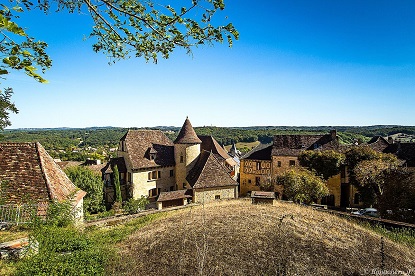
 Perched on a rocky promontory, this Most Beautiful Village of France offers breathtaking panoramic views across three river valleys. Medieval ochre stone houses line cobbled streets adorned with award-winning floral displays. |
| Martel |
|---|
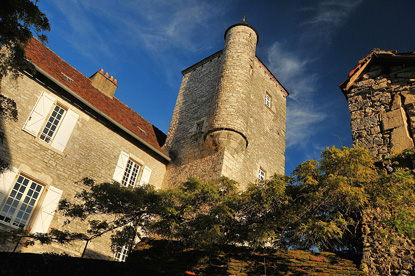
Medieval market town in the Lot, famously known as the 'City of Seven Towers' for its distinctive skyline. Features atmospheric cobblestone streets, half-timbered houses, and the impressive Palais de la Raymondie. Historic steam train and bustling markets complete the charm. |
| Puy-l'Évêque |
|---|
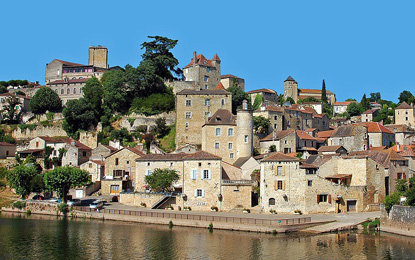
A picturesque medieval village perched on a rocky promontory above the Lot River in the heart of Cahors wine country. Golden stone houses line narrow cobbled streets that lead from the 13th-century bishops' tower down to the riverside quays and port. |
| Figeac |
|---|
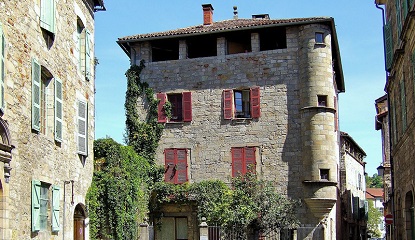
 A beautifully preserved medieval town, Figeac enchants with half-timbered merchant houses, cobbled streets, and Gothic architecture. Birthplace of Egyptologist Champollion, it features the world's largest Rosetta Stone replica and a fascinating museum of world scripts. |
| Padirac Cave |
|---|
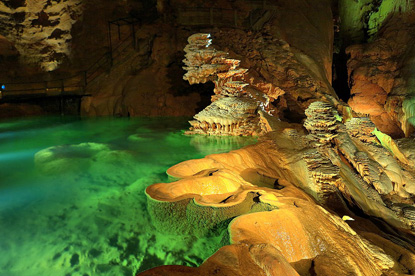
 France's most spectacular underground marvel. Descend 103 metres into this dramatic chasm to explore subterranean galleries by boat along an underground river. Marvel at towering stalactites and stalagmites, including the impressive Grande Pendeloque, in chambers carved over millennia. |
Other attractions
 Gramat
Pech-Merle Cave
Département de l'Aveyron
|
Conques ※ |
|---|

Medieval gem nestled in Aveyron's hills, renowned for its UNESCO-listed abbey church with magnificent Romanesque tympanum and Pierre Soulages stained glass. A key pilgrimage stop on the Santiago route. |
| La Couvertoirade |
|---|
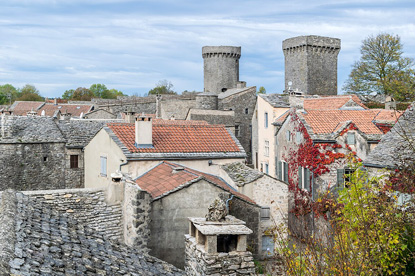
A perfectly preserved medieval fortress village on the Causse du Larzac plateau, built by Knights Templar in the 12th century. This enchanting 'Plus Beaux Village' features imposing ramparts, cobbled streets, and the only Templar castle in France. |
| Millau Viaduct |
|---|
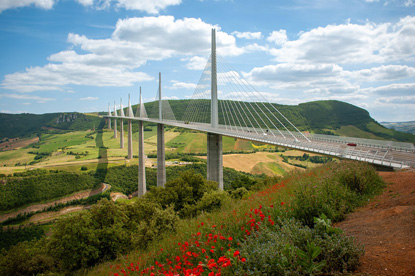
 The world's tallest bridge at 343 metres, this spectacular viaduct spans the Tarn valley near Millau. Completed in 2004 and designed by Norman Foster, the elegant structure is taller than the Eiffel Tower and ranks as one of the greatest modern engineering feats |
| Rodez |
|---|
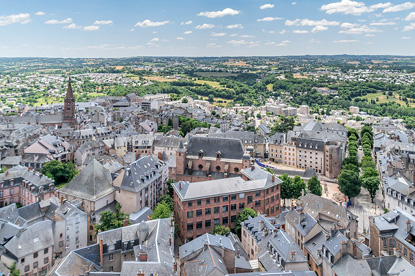
Capital of the Aveyron, Rodez is a medieval city famed for its imposing, fortress-like cathedral of pink sandstone. Its historic centre contains winding streets and the renowned Musée Soulages, honouring the abstract painter Pierre Soulages, who was born in the city. |
| Villefranche-de-Rouergue |
|---|
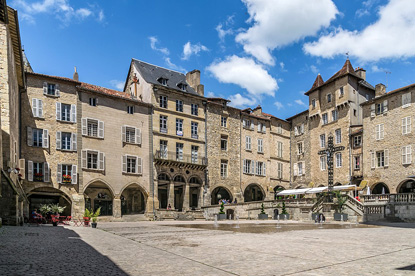
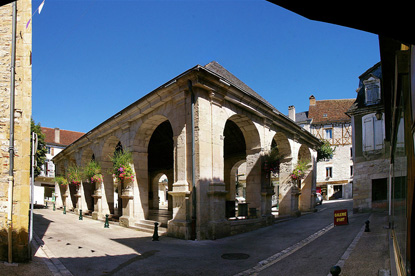
A perfectly preserved medieval bastide in Aveyron, founded in 1252. Features one of France's most impressive central squares with covered arcades, the magnificent Collégiale Notre-Dame church, and charming narrow streets lined with medieval stone houses. |
| Sévérac-le-Château |
|---|
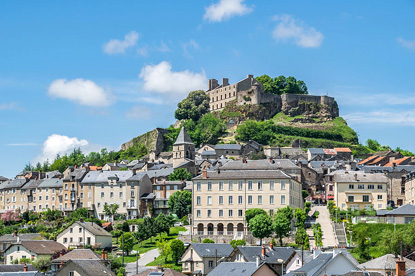
Crowning a hill above the Aveyron valley, Sévérac-le-Château is a historic site with one of the region's largest medieval towns, featuring extensive historic quarters with narrow cobbled streets and old stone houses. The hilltop château offers spectacular panoramic views across the surrounding countryside. |
| Najac Castle |
|---|
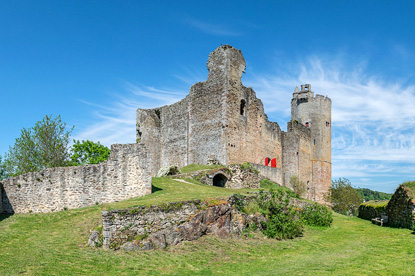
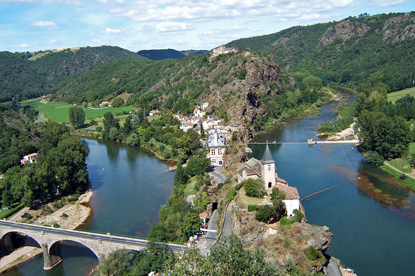
This imposing 13th-century royal fortress, built by Alphonse de Poitiers in 1253, commands the Aveyron Valley from its strategic hilltop position 200 metres above the river. Famous for world-record 6.8-metre arrow slits and exceptional medieval defences. |
| Roquefort-sur-Soulzon |
|---|

Small Aveyron village renowned as the sole producer of authentic Roquefort cheese. Perched beneath limestone cliffs, visitors can explore ancient caves where the famous blue cheese is aged, enjoy tastings at multiple producers, and discover the unique terroir that creates this world-famous delicacy. |
Other attractions
Bournazel Castle
Pagax Castle (ruins)
Département de Tarn-et-Garonne
|
Montauban |
|---|

Enchanting brick city in southern France, founded in 1144. Renowned for Place Nationale's stunning pink-brick arcades, the world-class Ingres Museum, and fascinating history from medieval times to Protestant wars. |
| Moissac (※) |
|---|
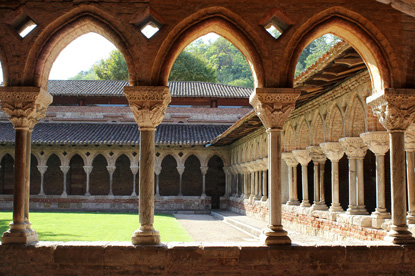
A key stop on the Way of St. James, Moissac is famed for its UNESCO-listed Saint-Pierre Abbey, a jewel of Romanesque art. Visitors come to admire its magnificent cloister, considered one of the world's most beautiful, and the masterfully sculpted 12th-century tympanum. |
Département du Tarn
| Gaillac |
|---|
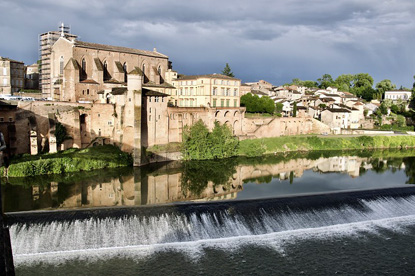
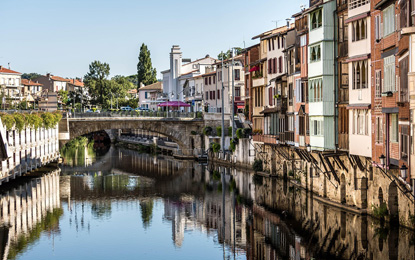
Historic riverside town in the Tarn, renowned for its ancient vineyards and 10th-century Benedictine Abbey of Saint-Michel. Medieval streets lined with red-brick architecture lead to vibrant markets, whilst the surrounding countryside produces celebrated Gaillac wines. |
Other attractions
Cagnac-les-Mines
Carmaux
Castelnau-de-Lévis Castle (ruins)
Graulhet
Lavaur
Lisle-sur-Tarn
Puycelsi
Département du Gers
| Condom |
|---|
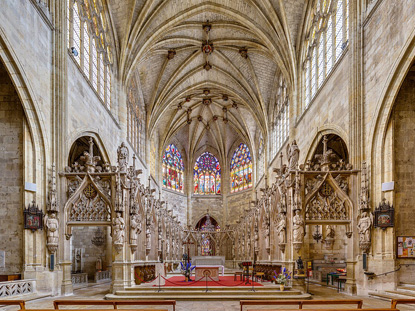
Historic episcopal city in Gers renowned for its magnificent Gothic cathedral of Saint-Pierre and world-famous Armagnac production. Medieval streets wind through the charming centre, whilst the river Baïse offers peaceful walks. Gateway to Gascony's fortified villages and bastides. |
Other attractions
Flaran Abbey
Fourcès
La Romieu
Lectoure
Montréal-du-Gers
Séviac Roman Villa
Département de la Haute-Garonne
|
Toulouse |
|---|

 Dubbed 'La Ville Rose' for its pink brick architecture, Toulouse is France's dynamic fourth-largest city. This spirited student hub on the Garonne combines UNESCO heritage, exceptional cuisine, and aerospace innovation with southern charm. |
| Bagnères-de-Luchon |
|---|
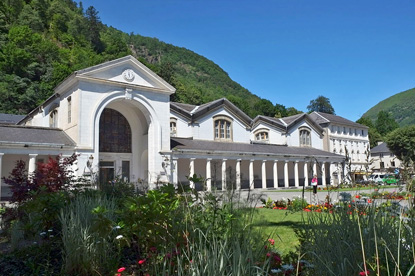
The 'Queen of the Pyrenees', this elegant spa town is famed for its thermal waters and Belle Époque villas. Set deep in the mountains, it offers a year-round hub for outdoor pursuits, including hiking, tackling famous cycling climbs, and skiing at the Superbagnères resort. |
| Saint-Bertrand-de-Comminges (※) |
|---|
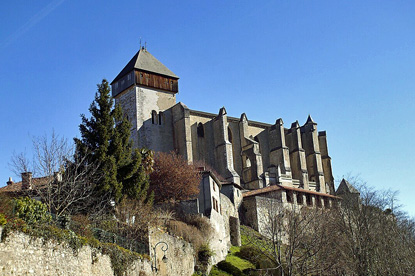
This enchanting hilltop village in the Pyrenean foothills ranks among France's most beautiful, crowned by its magnificent UNESCO World Heritage cathedral. Medieval ramparts encircle cobbled streets, whilst ancient Roman ruins from Lugdunum-Convenae lie scattered below. |
Département des Hautes-Pyrénées
| Pyrénées National Park ※ |
|---|
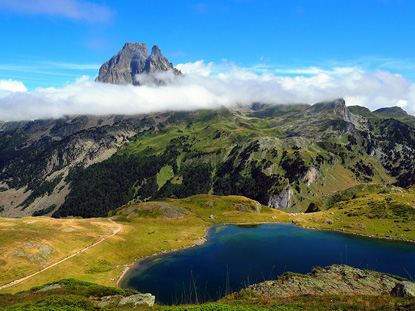
 The Pyrénées National Park is a French national park established in 1967, covering 45,700 hectares along the border between France and Spain across the departments of Hautes-Pyrénées and Pyrénées-Atlantiques. Stretching 100 kilometres from east to west and 10 kilometres north to south, the park encompasses diverse mountain terrain ranging from 1,067 to 3,298 metres in altitude, with its highest point at Pique Longue of Vignemale. The park protects significant biodiversity, including 64 mammal species, over 200 bird species, and 124 plant species, of which 80 are endemic to the Pyrenees, alongside threatened wildlife such as the lammergeier, Pyrenean chamois, and a small population of brown bears. Its landscape features 300 lakes, limestone formations carved by ancient glaciation including notable cirques like Gavarnie, and 350 kilometres of marked walking trails that attract over 1.5 million visitors annually. The eastern section of the park forms part of the Pyrénées – Mont Perdu UNESCO World Heritage Site, recognised for its outstanding natural and cultural value spanning both sides of the Franco-Spanish border. |
| Cirque de Gavarnie ※ |
|---|
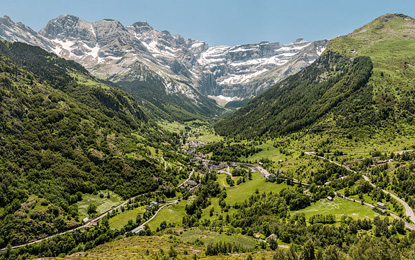
 A spectacular UNESCO World Heritage glacial cirque in the French Pyrénées, featuring towering 1,500m limestone cliffs and Europe's tallest waterfall cascading 422m. This natural amphitheatre, surrounded by 3,000m peaks, offers breathtaking views and hiking trails. |
Other attractions
Bagnères-de-Bigorre
Barèges
Cauterets
Tarbes
Département de l'Ariège
|
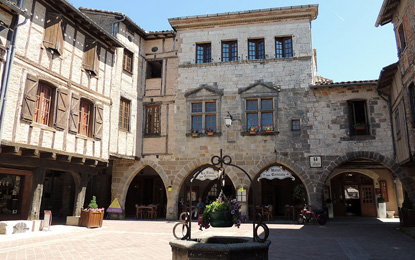
Mirepoix |
|---|

HMedieval bastide town in Ariège renowned for its enchanting central square lined with half-timbered houses and wooden galleries. Features the carved Maison des Consuls, Gothic cathedral, and famous Monday market. A stop-over between Carcassonne and Foix. |
| Ax-les-Thermes |
|---|
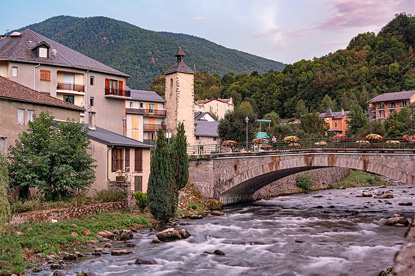
A charming Pyrenees spa town famed for its healing thermal waters, known since antiquity. A year-round hub, it offers access to the Ax 3 Domaines ski resort in winter and is a popular base for hikers and outdoor enthusiasts exploring the scenic Ariège mountains in summer. |
Other attractions
Le Mas-d'Azil
Prat-Bonrepaux Castle
|


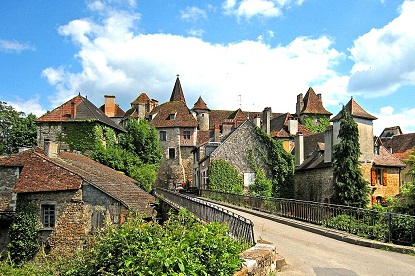
 A spectacular medieval village dramatically perched on a limestone cliff 150 metres above the Alzou gorge. This UNESCO World Heritage pilgrimage site houses the famous Black Madonna and cascades down three dramatic levels from castle to canyon floor.






 : Local interest
 : Moderately interesting
 : Outstanding place
 : Must-see in the country
 : Top cities in Europe