


| Contents |
|---|
Introduction
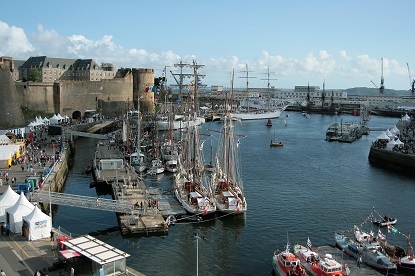
Brest (pop. 140,000; metro 215,000) is a major naval port city located in the Finistère department of Brittany in northwestern France, strategically positioned at the tip of the Breton peninsula along the Atlantic coast. With approximately 150,000 inhabitants, the city serves as one of Europe's principal maritime capitals and houses one of France's most naturally beautiful harbours. The city was largely rebuilt after World War II following extensive bombing in 1944, resulting in a distinctive blend of modern urban planning and preserved historical landmarks. Brest's identity remains deeply rooted in its maritime heritage, centred around the historic Château de Brest fortress which has stood for over 1,700 years and now houses the National Maritime Museum. The city's major attractions include Océanopolis, one of Europe's largest aquariums featuring polar, tropical, and temperate marine ecosystems, and the historic Recouvrance neighbourhood connected by a massive vertical-lift bridge. Notable landmarks such as Tour Tanguy and the International Maritime Festival, held every four years, further emphasise Brest's enduring connection to the sea.
Interesting Facts about Brest
- Brest sits at the far western edge of continental France, guarding the magnificent Rade de Brest, a vast natural harbour linked to the Atlantic by the narrow Goulet.
- Long a strategic maritime stronghold, Brest is France’s second‑largest military port after Toulon and has shaped naval history for centuries.
- The city grew around its formidable medieval château, which has watched over the Penfeld River and roadstead for roughly seventeen centuries.
- Cardinal Richelieu transformed Brest into a major naval base in 1631, later fortified by the famed military engineer Vauban.
- Almost entirely devastated in 1944, Brest’s centre was rebuilt in a striking mid‑20th‑century style that contrasts with its ancient castle and Tanguy Tower.
- Océanopolis, Brest’s celebrated ocean discovery centre, is one of France’s most distinctive marine science attractions, highlighting polar, temperate and tropical worlds.
- The Pont de Recouvrance, a towering vertical‑lift bridge over the Penfeld, is one of the city’s most emblematic modern landmarks.
- Brest hosts a spectacular international maritime festival every four years, filling the bay with tall ships, historic vessels and a carnival of seafaring culture.
- The city is a major hub for oceanographic research, home to leading institutions such as Ifremer and the French Naval Hydrographic and Oceanographic Service.
- Île Longue in the roadstead houses France’s base for nuclear‑powered ballistic missile submarines, underscoring Brest’s ongoing strategic role.
- The University of Western Brittany and several grandes écoles give Brest a strong academic profile, especially in marine and engineering disciplines.
- Brest has repeatedly featured in cycling lore, from hosting Tour de France grands départs to serving as the turning point of the epic Paris–Brest–Paris ride.
- The elegant Cours Dajot promenade, created along former ramparts in the 18th century, offers fine views over the commercial port and roadstead.
- The Tanguy Tower museum’s dioramas poignantly reconstruct pre‑war Brest, capturing a lost cityscape erased by wartime destruction.
- Breton culture is ever‑present in Brest, from crêperies and cider to the city’s bilingual identity expressed in both French and Breton.
History
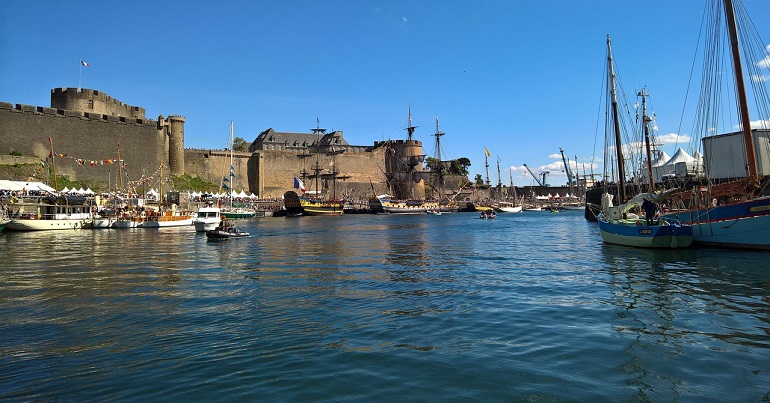
Brest's origins stretch back to antiquity, with the first fortifications established during Roman times in the 3rd century as a small coastal defence fort. The town's name likely derives from the Celtic word "brigs," meaning hill. However, little is definitively known about Brest before 1240, when Harvey V, Lord of Léon, ceded the settlement to John I, Duke of Brittany. The strategic importance of this coastal fortress became evident when the English occupied Brest from 1342 to 1397, using it as a crucial link in their communications with Gascony. Such was the significance of controlling Brest that a medieval saying proclaimed, "He is not the Duke of Brittany who is not the Lord of Brest." The town definitively became part of the French crown in 1491 through the marriage of Francis I of France to Claude, daughter of Anne of Brittany, and by 1534, Brest and the rest of Brittany were fully incorporated into France as the Province of Brittany.
The transformation of Brest into a major naval power began in earnest during the 17th century under Cardinal Richelieu, who recognised the advantages of the town's magnificent natural harbour and constructed wooden wharves in 1631. This marked the beginning of Brest's enduring relationship with the French Navy. Jean-Baptiste Colbert, finance minister under Louis XIV, later rebuilt these wharves in masonry and significantly improved the harbour facilities. Between 1680 and 1688, the renowned military engineer Vauban constructed comprehensive fortifications that would define the town's defensive capabilities for centuries. The naval importance of Brest was demonstrated in 1694 when an Anglo-Dutch squadron under Lord Berkeley was soundly defeated in its attack on the port. The town's maritime significance was further cemented with the founding of the Académie de Marine in 1752, and in 1830, Brest became the permanent seat of the French Naval Academy.
The 20th century brought both triumph and devastation to Brest. During the First World War, the port served as a crucial disembarkation point for thousands of American troops heading to the Western Front, and the United States Navy established a seaplane base there in February 1918. However, the Second World War proved catastrophic for the city when the Germans established a major U-boat submarine base and repair facilities for their surface fleet. Despite being within range of RAF bombers, Brest became home to significant German warships including the Scharnhorst, Gneisenau, and Prinz Eugen during much of 1941. The strategic importance of these installations led to the near-total destruction of Brest during the 1944 Battle for Brest, with only a handful of buildings surviving the Allied bombardment. The post-war reconstruction created a largely modern city built from utilitarian granite and concrete, whilst West Germany paid substantial reparations to the displaced civilians. In 1972, Brest's naval significance was renewed when France established its nuclear submarine deterrent base at Île Longue in the Brest roadstead, which continues to house the country's nuclear-armed ballistic missile submarines.
Main Attractions
Château de Brest
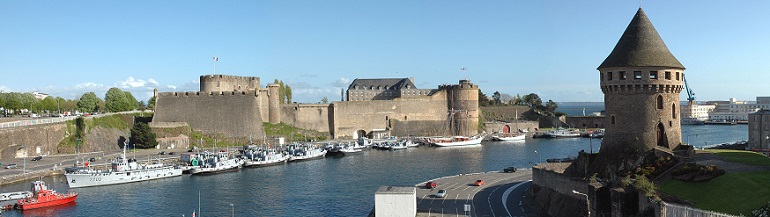
Dominating the city's harbour, the Château de Brest is a formidable fortress with a history stretching back to the Roman era. This ancient castle stands as a powerful symbol of Brest's enduring maritime and military significance. Visitors can walk along the castle's substantial ramparts, which offer breathtaking panoramic views across the bustling harbour and the Penfeld river. While it houses the National Navy Museum, the castle itself is an attraction, inviting exploration of its grounds and providing a tangible connection to centuries of naval history.
Pont de Recouvrance
An iconic symbol of post-war Brest, the Pont de Recouvrance is an impressive vertical-lift bridge that spans the Penfeld river, connecting the city centre with the historic Recouvrance quarter. Inaugurated in 1954, it was one of the largest lift bridges in Europe at the time and remains a remarkable feat of engineering. The bridge is a vital part of the city's infrastructure and offers splendid views of the naval base and the Château de Brest. Pedestrians, cars, and the city’s tramway all cross here, making it a central and dynamic feature of the urban landscape.

Les Ateliers des Capucins
Once the heart of the city's naval shipbuilding industry, Les Ateliers des Capucins has been spectacularly reborn as a vibrant cultural and social hub. This vast industrial space, located on the right bank of the Penfeld river, retains its powerful architectural character while housing a modern media library, shops, restaurants, and a cinema. A key feature is the urban cable car that offers a scenic journey across the river, providing panoramic views of the city and its harbour. The Ateliers serve as a public square and a lively centre for events, embodying Brest's forward-thinking approach to urban redevelopment.
Cours Dajot
Offering one of the finest views of the harbour, the Cours Dajot is a magnificent tree-lined promenade built in the 18th century. This elevated walkway provides a perfect vantage point for watching the constant activity of the port, from naval vessels to sailing boats. On a clear day, the views extend as far as the Crozon Peninsula, making it a favourite spot for both locals and visitors to enjoy a scenic walk and soak in the city's maritime atmosphere.
Océanopolis
As one of Europe's premier ocean discovery centres, Océanopolis invites visitors on an immersive journey through the world's marine ecosystems. The centre is divided into three distinct pavilions representing polar, tropical, and temperate environments. Each pavilion faithfully recreates the specific conditions of these zones, hosting a diverse range of marine life, from sharks and penguins to vibrant coral reefs. With its focus on scientific mediation and education, Océanopolis offers a compelling and informative experience that highlights the beauty and fragility of our oceans, making it a must-see attraction for all ages.

National Botanical Conservatory Garden (Jardin du Conservatoire Botanique National)
A haven of peace and a vital centre for conservation, the National Botanical Conservatory Garden is dedicated to the preservation of endangered plant species. Spanning a large area in the Stang-Alar valley, the gardens offer beautiful walks through landscapes that feature plants from around the world, including significant collections from Brittany, North America, and Asia. Its tropical greenhouses shelter a remarkable variety of rare and threatened flora. The conservatory is not just a place for a pleasant stroll but also an important scientific institution, playing a global role in protecting biodiversity.

Jardin des Explorateurs
The Jardin des Explorateurs is a charming botanical garden that pays homage to the great seafaring explorers who set sail from Brest on scientific expeditions. Situated with a commanding view over the military port and the harbour entrance, this garden showcases plant species brought back from these voyages across the globe. The layout takes visitors on a botanical world tour, with plants from South America, Australia, and Asia thriving in Brest's mild climate. A metal walkway provides elevated perspectives over the garden and the naval shipyard, connecting the visitor to the city's legacy of exploration.
US Naval Monument
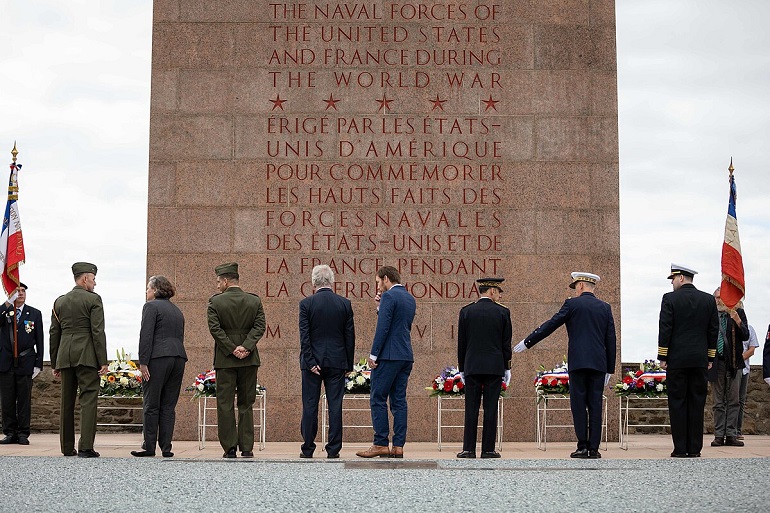
Perched atop the Cours Dajot, the US Naval Monument is a tall, elegant tower commemorating the service of the American Navy in French waters during the First World War. Its prominent position offers one of the finest panoramic views over the Brest harbour and its bustling activity. The monument is a solemn reminder of the historic Franco-American alliance and the crucial role Brest played as a port of debarkation for American troops. The surrounding promenade is a popular spot for locals and visitors to walk and enjoy the expansive seascape.
Top Museums
Fine Art and Culture
Musée des Beaux-Arts de Brest (Fine Arts Museum of Brest)
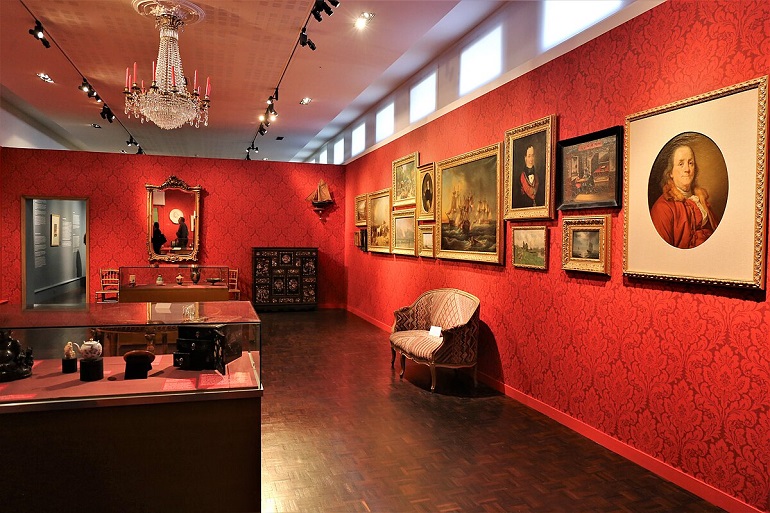
Housed in a post-war reconstruction building in the city centre, the Brest Museum of Fine Arts opened in 1968 as part of the city’s cultural renaissance after the devastation of World War II. The museum’s collection spans more than 10,000 objects, with a strong focus on fine arts such as paintings, sculptures, and graphic arts, many connected to Brest's maritime history.
Visitors encounter themed galleries that traverse centuries of European art. Highlights include works by French and Italian old masters, Canaletto’s evocative Piazzetta San Marco, and paintings by Édouard Manet and Pierre Bonnard. The museum also celebrates local artists and the Nabis movement, with pieces by Paul Sérusier and Georges Lacombe. For fans of modernism, the abstract works of Yves Tanguy offer a striking contrast, while Anna Quinquaud’s African sculptures reflect Brest’s broader artistic connections. Temporary exhibitions, workshops for families, and themed tours regularly refresh the museum’s offering.
A unique feature is the artothèque—a contemporary art-lending library unique in Finistère. With over 900 prints and photographs available for loan, it allows visitors to engage with art in their daily lives, complementing the main collections that range from the Renaissance to the 20th century.
Maritime Heritage
Musée National de la Marine
Dominating the Penfeld river’s entrance within the medieval Château de Brest, the Musée National de la Marine in Brest is one of a network of sites dedicated to France’s naval history. The Château itself—one of the city’s rare historic survivals—boasts foundations dating back to the Roman period, with later fortifications by Vauban and subsequent military use until the 20th century.
The museum’s collection traces Brest’s evolution as a strategic naval base, highlighting the construction and maintenance of the French fleet, the lives of dockyard workers, and the city’s pivotal role in global maritime adventure. Among the exhibits are meticulously crafted ship models, historical navigational instruments, naval uniforms, weaponry, paintings, and sculptures. One gallery is dedicated to the life of convicts in the Brest arsenal, while another explores the iconic ships of the French Navy. The museum also pays tribute to the age of nuclear submarines and the technological advances that have shaped modern navies.
Outdoor spaces, including ramparts and ship prows, offer panoramic views of the busy harbour and the Rade de Brest. The museum also serves as a poignant reminder of “Old Brest”—the pre-World War II city largely lost to bombing—through historic maps, engravings, and architectural fragments.

History and Architecture
Tour Tanguy
Standing guard on a rocky bluff overlooking the Penfeld river in Brest, Tour Tanguy is the city’s medieval watchtower and a rare survivor of the pre-war urban fabric. Built in the 14th century and once known as the Bastille de Quilbignon, the tower overlooks the Château de Brest and offers a unique perspective on the city’s maritime geography.
Today, Tour Tanguy’s interior is a museum dedicated to the history of Brest before destruction in World War II. The three storeys are filled with dioramas created by local artist Jim-E. Sévellec, whose work reconstructs scenes from the city’s golden age as a naval and commercial hub. Among the animated displays are recreations of medieval Brest, the city welcoming Emperor Napoleon III, and the bustling docks before the bombing raids. The tower also holds a collection of historical documents and artefacts, from old photographs and maps to maritime equipment.
Military Heritage
Fort Montbarey
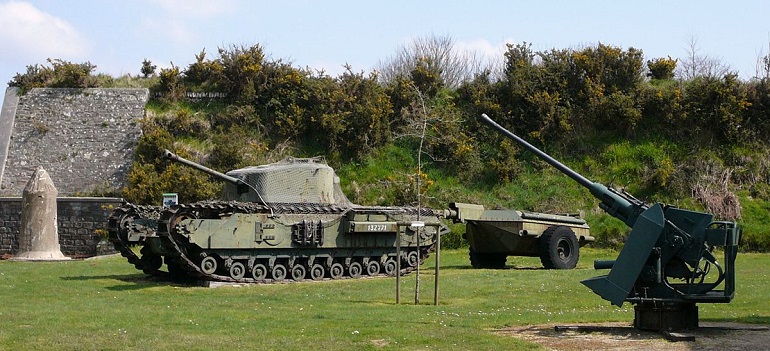
To the west of the city centre, the imposing Fort Montbarey was completed in 1784 to defend Brest’s landward approaches. Designed for up to 600 soldiers, this classic Vauban-style fort played a significant role in the city’s defences until the Second World War, when it was seized by German forces and became a focal point of the 1944 Battle for Brest.
Since 1984, Fort Montbarey has served as a memorial museum to the people of Finistère during the Second World War, with a particular focus on the French Resistance. The fort’s vaulted galleries and ramparts now house a memorial wall dedicated to local victims, along with themed rooms displaying vehicles, weapons, uniforms, equipment, and documents from the period. Among the most moving exhibits are a British Churchill Crocodile tank, a “wagon of death” used in deportations, and archival material documenting the Resistance and the civilian experience. The fort’s grounds offer sweeping views over the surrounding countryside, adding to its evocative atmosphere.
Local Cuisine
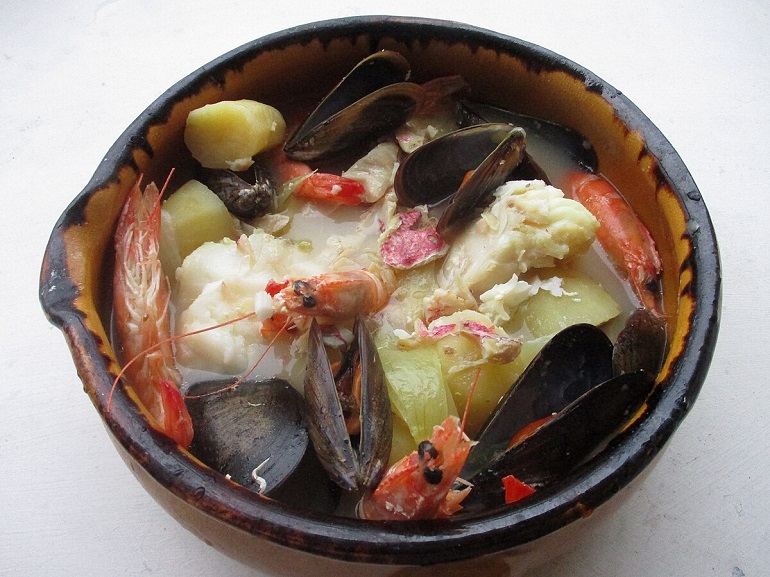
Brest’s local cuisine is shaped by its proud maritime heritage and the bounty of Brittany’s rugged coastline. Visitors can savour crêpes de blé noir, hearty buckwheat pancakes typically filled with ham, cheese, or eggs, and sample a steaming bowl of cotriade, the region’s traditional fish stew brimming with fresh seafood. The bustling markets are filled with the scent of kouign-amann, a decadent, caramelised butter cake that delights the sweet-toothed, while tidal breezes carry the aroma of just-shucked Belon oysters, prized for their unique, briny flavour. The city’s restaurants and crêperies invite guests to discover these time-honoured dishes alongside glasses of local Breton cider, offering a true taste of Brittany’s gastronomic traditions.
Getting There
By train The fastest way to reach the far-west port city is the high-speed TGV from Paris Montparnasse, sweeping through Rennes and on across Brittany to arrive at Brest’s centrally located station in around four hours, with regional TER services connecting from Nantes, Quimper and other Breton towns.
By coach Long-distance coach operators such as BlaBlaCar Bus and FlixBus link Brest with Paris, Nantes and Rennes, offering an alternative for those who prefer overnight journeys or wish to travel directly from airport terminals, while regional buses weave along the coastline to smaller resorts en route.
By car Motorists can follow the A11 west from Paris, join the N12 at Rennes and continue across rolling Breton countryside towards the city; once in Finistère, well-signed dual carriageways guide drivers to the harbourfront, and having a car is useful for exploring the wild peninsulas and sandy coves scattered beyond the urban centre.