


| Contents |
|---|

Introduction
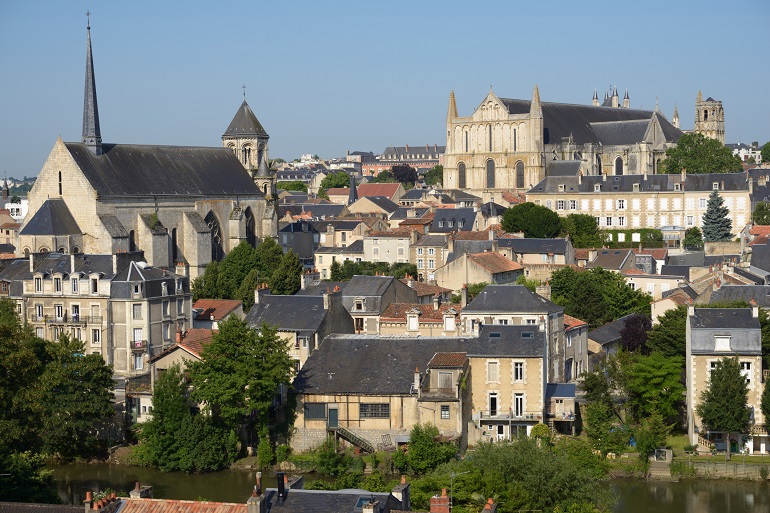
Situated at the confluence of the Clain and Boivre rivers, Poitiers (pop. 90,000) has been a significant center since ancient times, known for its role in French history and its architectural heritage. The city is home to numerous historical landmarks, including the impressive Saint-Pierre Cathedral, the Romanesque church of Notre-Dame-la-Grande, and the 4th-century Saint-Jean baptistery. Poitiers also boasts a vibrant cultural scene, with a large student population contributing to its lively atmosphere. Visitors can explore the Palace of the Counts of Poitou, now housing the Law Courts, and the Musée Sainte-Croix, which offers insights into the region's history and art.
Interesting Facts about Poitiers
- Poitiers is home to one of the oldest universities in France, founded in 1431, which has hosted world-renowned figures.
- The Battle of Tours, a pivotal moment in European history, was fought near Poitiers in 732, halting Muslim expansion into Western Europe.
- Eleanor of Aquitaine frequently resided in Poitiers and married Henry II of England there in 1152.
- Poitiers is known as the "town of 100 bell towers" due to its numerous historic churches, including the Romanesque masterpiece Eglise Notre-Dame-la-Grande.
- A smaller version of the Statue of Liberty stands in Poitiers, commemorating General Jean-Baptiste Breton.
- Half of Poitiers' population is under 30 years old, thanks to its vibrant student community.
- The Musée Sainte-Croix in Poitiers houses archaeological treasures and sculptures by Camille Claudel.
- Futuroscope, a multimedia theme park near Poitiers, is France's second most visited after Disneyland Paris.
- Poitiers has a rich culinary tradition, including "farci poitevin," a vegetable pâté wrapped in cabbage leaves.
- The town features legends such as Gargantua's footprints and the mysterious "Grand'Goul" monster.
History
Poitiers traces its origins to the Gallic tribe of the Pictones, who first settled the area. Known asLimonum during Roman times, Poitiers was a significant administrative and commercial hub, strategically located along a major Roman road linking Lyon to Saintes. The city flourished under Roman influence, boasting public baths and an amphitheatre, remnants of which can still be seen today. By the 4th century, Poitiers had become an important Christian centre under Bishop St. Hilary and was home to the Baptistery of St. John, one of the oldest Christian buildings in France.
The Middle Ages marked a period of great significance for Poitiers. In 732, Charles Martel's victory near the city at the Battle of Tours halted Muslim expansion into Europe, a pivotal moment in Western history. During this time, Poitiers served as the capital of the County of Poitou and benefited from the patronage of Eleanor of Aquitaine, who fortified and embellished the city. Her marriage to Henry II of England brought Poitiers under English rule briefly during the 12th century. Later, during the Hundred Years' War, the Battle of Poitiers in 1356 saw a decisive English victory before the French reclaimed the city in the late 14th century.
In subsequent centuries, Poitiers continued to play a vital role in French history. The University of Poitiers was founded in 1431, cementing its status as a centre of learning. The city also witnessed key events during the Wars of Religion in the 16th century, including a failed siege by Protestant forces in 1569. Despite these turbulent times, Poitiers retained much of its medieval charm and architectural heritage, such as its Romanesque churches like Notre-Dame-la-Grande, which remains a testament to its rich historical legacy.
Main Attractions
Old Town
Notre-Dame-la-Grande Church
The Notre-Dame-la-Grande Church stands as a testament to Romanesque architecture in the heart of Poitiers. Its west façade is particularly noteworthy, adorned with intricate carvings that depict biblical scenes and stories. The sculptural detail is remarkably well-preserved, offering visitors a glimpse into medieval artistry. The church's exterior is characterised by its distinctive barrel-vaulted nave and octagonal bell tower, which add to its architectural significance. While the interior is currently undergoing restoration, the exterior remains an impressive sight, drawing admirers from around the world.
Saint-Pierre Cathedral
Saint-Pierre Cathedral, commissioned by Eleanor of Aquitaine in the 12th century, is a magnificent example of Gothic architecture. Its imposing façade features three portals adorned with sculpted figures, while the interior boasts soaring vaulted ceilings and slender columns typical of the Gothic style. The cathedral's rose window, a masterpiece of stained glass, bathes the nave in colourful light. Of particular interest is the Clicquot organ, an impressive instrument with over 3,000 pipes that dates back to the 18th century. The cathedral's blend of architectural styles, from Romanesque to Gothic, reflects its long history and various phases of construction.
Baptistery of Saint John (Baptistère Saint-Jean)
The Baptistery of Saint John is one of the oldest Christian monuments in Europe, with parts dating back to the 4th century. This octagonal structure has served various purposes over the centuries, from its original use as a baptistery to later functioning as a parish church. The interior walls are adorned with Romanesque frescoes depicting religious scenes, some of which have survived since the 12th century. The baptistery also houses several sculpted sarcophagi, providing insight into early Christian burial practices. Its architectural evolution, visible in the various additions and modifications made over time, offers a unique perspective on the development of Christian architecture.
Palace of the Counts of Poitou (Le Palais)
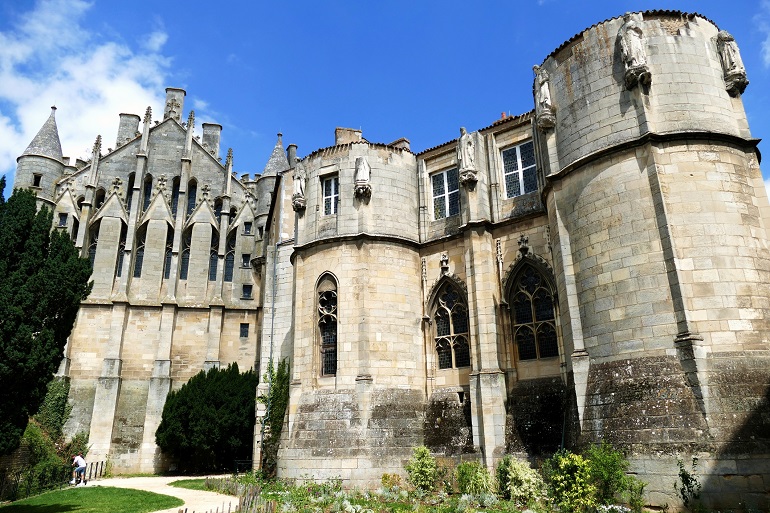
The Palace of the Counts of Poitou, now serving as the Palace of Justice, is a remarkable example of medieval civil architecture. Its most notable feature is the grand "Salle des Pas Perdus" (Hall of Lost Steps), which showcases the Angevin Gothic style. This vast hall is illuminated by large stained glass windows and features impressive monumental fireplaces. The palace's façade, with its pointed arches and ornate stonework, is a prime example of Gothic secular architecture. The building's history is closely tied to the powerful Counts of Poitou, who once ruled the region from this imposing structure.
Maubergeon Tower
The Maubergeon Tower, a remnant of the former castle of the Counts of Poitou, stands as a symbol of the city's feudal history. This medieval keep, with its thick stone walls and narrow windows, offers visitors a glimpse into the defensive architecture of the Middle Ages. The tower's strategic position provided a vantage point over the surrounding landscape, crucial for the defence of the city. Today, it serves as a striking reminder of Poitiers' importance during the medieval period and the power once wielded by the Counts of Poitou.
Medieval Streets and Half-Timbered Houses
The historic centre of Poitiers is a labyrinth of narrow, winding streets that transport visitors back to the Middle Ages. These cobblestone lanes are lined with well-preserved half-timbered houses, their wooden frames exposed and often painted in vibrant colours. The area around Rue de la Chaîne and Place du Marché Notre-Dame is particularly rich in these architectural gems. Each building tells a story of medieval craftsmanship and urban life, with overhanging upper floors and intricately carved details. Walking through these streets offers a tangible connection to the city's long and storied past.
Statue of Liberty Replica
In an unexpected nod to Franco-American relations, Poitiers boasts its own Statue of Liberty replica. This smaller version of the iconic New York statue stands in the city centre as a tribute to General Jean-Baptiste Berton, a local hero who fought for liberty and republican values. The statue serves as a unique landmark, often surprising visitors with its presence in this historic French city. Its placement reflects the universal ideals of freedom and democracy, creating an interesting juxtaposition with the surrounding medieval architecture.
Parks & Gardens
Parc de Blossac
Parc de Blossac is a verdant oasis in the heart of Poitiers, spanning 9 hectares of beautifully landscaped grounds. The park combines different garden styles, featuring a formal French garden with geometric patterns and carefully pruned hedges, alongside a more naturalistic English garden with winding paths and varied plantings. A rock garden adds texture and interest, while a large meadow provides open space for relaxation and recreation. The park's diverse environments support a rich variety of flora and fauna, making it a haven for nature enthusiasts and a peaceful retreat for city dwellers.
Jardin des Plantes de Poitiers
The Jardin des Plantes de Poitiers is a botanical garden that offers a serene escape from urban life. Designed in the style of an English landscape garden, it features curving pathways that lead visitors through a diverse collection of plant species. The garden's centrepiece is a picturesque pond, complete with a romantic grotto and waterfall. Over 100 species of trees and shrubs can be found throughout the grounds, providing a changing tapestry of colours and textures throughout the seasons. The garden's tropical greenhouses house exotic plant species, offering a glimpse of far-flung ecosystems within the heart of Poitiers.
Parc de la Roseraie
The Parc de la Roseraie is a fragrant haven dedicated to the cultivation and display of roses. This specialised garden showcases thousands of rose varieties, from classic heritage roses to modern hybrids, creating a spectacular display of colours and scents. Complementing the roses are water features, including serene ponds dotted with water lilies. The park's design incorporates both formal and informal elements, with structured rose beds giving way to more naturalistic plantings. Beyond its horticultural appeal, the Parc de la Roseraie serves as a tranquil space for contemplation and appreciation of nature's beauty.
Around Poitiers
Futuroscope Theme Park
Located just outside Poitiers, Futuroscope is a unique theme park that blends entertainment with education, focusing on multimedia, cinematographic futuroscope, and audio-visual techniques. The park is known for its distinctive architecture, with buildings shaped like geometric forms and crystals. Among its 40 attractions, "Tornado Hunters" stands out as an immersive experience that has garnered international recognition. The park's attractions utilise cutting-edge technology to create experiences that are both thrilling and thought-provoking, often exploring themes of science, technology, and the future.
Dolmen of Pierre Levée
The Dolmen of Pierre Levée is an ancient megalithic structure that predates the city's Roman history. This Neolithic monument consists of several large stones supporting a massive capstone, creating a chamber that was likely used for burial purposes. Located along the historic Roman road of Lemonum, the dolmen serves as a tangible link to the region's prehistoric past. Its presence in an urban setting is unusual for such ancient structures, making it a unique attraction that connects modern Poitiers to its distant origins.
Clain Valley Overlook
The Clain Valley Overlook offers a breathtaking panoramic view of the city and its surrounding landscape. Situated along the medieval ramparts, this vantage point allows visitors to appreciate the geographical setting that made Poitiers an important settlement throughout history. The vista encompasses the meandering Clain River, the city's varied architecture spanning centuries, and the lush countryside beyond. This viewpoint not only provides a picturesque photo opportunity but also helps visitors understand the strategic importance of Poitiers' location and its development over time.
Top Museums
Musée Sainte-Croix
The Musée Sainte-Croix is the main museum in Poitiers, located in the heart of the city. It was built in 1974 on the site of the former Abbey of the Holy Cross and is renowned for its striking modern architecture, featuring raw concrete and tinted glass. The museum houses an impressive collection of over one million pieces, spanning from prehistory to modern art. Its permanent collections include archaeological finds from prehistory to the early Middle Ages, as well as a Fine Arts department with works from the 19th and early 20th centuries. Notably, it holds the second-largest public collection of Camille Claudel's sculptures in France, with ten pieces on display.
The museum also offers a range of activities, including guided tours, lectures, and interactive sessions for children. It is a hub for cultural events, hosting musical, theatrical, and dance performances throughout the year.
Other Museums in the Region
While the Musée Sainte-Croix is the most prominent museum in Poitiers, the surrounding region of Vienne offers additional cultural attractions. These include the Musée de la Machine à Coudre in Rouillé and the Musée du Vitrail in Curzay-sur-Vonne. However, these are not located within Poitiers itself but are worth visiting for those interested in exploring the broader cultural landscape of the Vienne department.
Folk Art Museum
Located in Migné-Auxances, just a few kilometers from Poitiers, is a unique Folk Art museum. Established in 1977, it showcases an eclectic collection of historical artifacts gathered by Manuel Ribeiro, including vintage vehicles and machinery. This museum offers a fascinating glimpse into the past and is a great place for families or those looking for something different.
Overall, Poitiers and its surroundings provide a rich cultural experience, with the Musée Sainte-Croix being a must-visit destination for anyone interested in history, art, and architecture.
Local Cuisine
Among Poitiers' iconic dishes is the Farci Poitevin, a traditional vegetable and herb pâté made with spinach, cabbage, and chard, often enhanced with bacon or goat’s cheese. Cheese lovers will delight in the Chabichou du Poitou, a soft, tangy goat’s cheese with AOC status, and the Tourteau Fromagé, a unique goat’s cheese cake with a distinctive burnt crust. For those with a sweet tooth, the buttery Broyé du Poitou, a shortbread-like biscuit meant to be shared by breaking it with friends, and the almond-based Macarons de Montmorillon are must-tries. These delicacies, paired with local wines like the Vins de Haut-Poitou, offer visitors an authentic taste of the region.
Getting There & Around
Getting to and around Poitiers is straightforward, with various transport options available to suit your needs. The city is well-connected by train, including the high-speed TGV, which links Poitiers to Paris in just 75 minutes and Bordeaux in 65 minutes. For local travel, the Vitalis bus network offers extensive coverage with numerous routes serving the city and surrounding areas, making it easy to explore. Taxis are readily available at the station for quick access to the city centre, while car rental services provide flexibility for those who prefer to drive. Cycling is also a popular choice, with dedicated bike lanes and rental services available. Whether you choose public transport, a taxi, or a bike, navigating Poitiers is convenient and efficient.