


| Contents |
|---|

Introduction
The delightful village of Turenne (pop. 800), strategically sited on a limestone hill, is regularly short-listed as one of France's Most Beautiful Villages.
Turenne was the seat of an independent fiefdom until that operated as a virtual state in its own right within the Kingdom of France from 984 to 1738. The viscounts enjoyed complete autonomy to collect taxes, raise armies, mint their own coins, grant nobility titles, have their own sheriffs, and govern a territory that at its peak stretched across parts of modern-day Corrèze, Lot, and Dordogne departments and encompassed approximately 100,000 inhabitants.
The viscounty became the possession of the House of La Tour d'Auvergne in 1444, a family that also ruled as Count of Auvergne and Count of Boulogne until the senior branch went extinct in 1501. In their heyday, Henri de la Tour d'Auvergne, co-religionist and companion-at-arms of Protestant King Henry IV, became Duke of Bouillion and Prince of Sedan. His son Henry, Marshal of France, received the nickname "The Great Turenne". He was one of six marshals in history who have been made Marshal General of France. The viscounts' remarkable independence ended only in 1738 when the last of the La Tour d'Auvergne dynasty sold the county to King Louis XV to settle gambling debts, marking the conclusion of France's final feudal fiefdom.
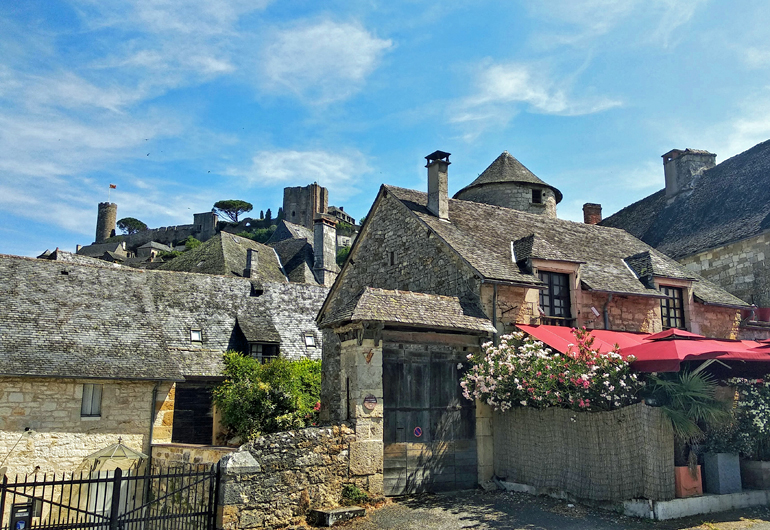
Today the medieval castle is still the dominant feature of Turenne's landscape. Although it is a private property, the castle is open to visitors. Other remnants of Turenne's illustrious past include the imposing Tour César watchtower, elegant 16th and 17th-century noblemen's houses cascading down the hillside, and narrow cobbled streets that create an atmospheric journey through nearly a millennium of French history.
Interesting Facts about Turenne
- Turenne is officially ranked among the “Plus Beaux Villages de France,” prized for its hilltop silhouette and honey-coloured stone houses.
- The village crowned a powerful viscountcy that enjoyed quasi-independence for nearly a thousand years, minting its own currency and levying its own taxes.
- Its medieval fortress was largely dismantled on the orders of Louis XV after the viscounty was sold to the crown in 1738 to clear the last viscount’s gambling debts.
- The 12th-century Tour César still towers above the settlement, offering sweeping panoramas over the Corrèze countryside.
- Turenne’s lords rose to prominence after the Crusades, accruing privileges that made the territory a state within a state.
- The viscounty passed through notable dynasties, including the Beauforts and the La Tour d’Auvergne family, which produced famous figures of European history.
- Henri de La Tour d’Auvergne, known as Turenne, became one of France’s greatest marshals and military strategists under Louis XIII and Louis XIV.
- The village’s steep, cobbled lanes are lined with mansions from the 13th to 17th centuries, reflecting its long prosperity.
- Turenne’s limestone knoll, part of the Martel Causse, lifts the village to breathtaking viewpoints stretching to distant volcanic peaks on clear days.
- Two landmark towers, including the Clock Tower, are survivals of the former defensive system that once guarded this feudal stronghold.
History
The first lords of Turenne emerged in the 9th century, specifically around 823 CE, when the feudal settlement was established on this naturally fortified hilltop following the division of Charlemagne's empire. The Comborn dynasty, originating from the valley of the Vézère, founded the viscounty around 1000 CE and ruled until the early 14th century, actively participating in the Crusades and Anglo-French wars to obtain extensive privileges from the French crown. The viscounty became a veritable feudal state after the Crusades and evolved into one of France's great fiefs by the 14th century, with its strategic position on major trade routes and the pilgrimage route to Rocamadour making it both a territorial guardian and cultural exchange centre. At its zenith in the 15th century, the territory spanned from Meymac in the north-east to Terrasson in the west and Gramat in the south, encompassing major fortified cities including Argentat, Beaulieu, Martel, Saint-Céré, and numerous walled towns like Bretenoux and Carennac.
Four successive noble families governed Turenne over eight centuries, each leaving their distinctive mark on this quasi-independent state. After the Comborns came the Comminges during the first half of the 14th century, followed by the Beaufort family for 94 years, who produced two Avignon popes—Clement VI and Gregory XI—and placed the viscounty under papal protection. From 1444 to 1738, the La Tour d'Auvergne family held dominion over Turenne, reaching the pinnacle of power when Henri de la Tour d'Auvergne became Duke of Bouillon and Prince of Sedan, serving as co-religionist and companion-at-arms to King Henry IV. His son Henri, known as "The Great Turenne," became Marshal of France and earned recognition as one of history's greatest military commanders, with his remains eventually interred at Les Invalides in Paris. During the Reformation, the viscounty converted to Protestantism when Henri de la Tour engaged with Henri of Navarre in 1575, transforming Turenne into a hotbed of religious wars and later the disorders of the Fronde.
From the Middle Ages to the 18th century, the Viscounts of Turenne enjoyed complete autonomy, functioning as true sovereigns despite paying nominal tribute to the French king. They possessed remarkable privileges including exemption from royal taxation, the right to convene Estates General, authority to raise taxes and mint their own currency, power to ennoble subjects, and freedom from housing the king's soldiers—essentially forming "a state within a state". This independence was so complete that when the French king banned tobacco cultivation, the prohibition did not apply within the viscounty, where tobacco fields actually expanded as a result. However, this centuries-old autonomy ended abruptly on 8 June 1738, when Charles Godfrey, the last Viscount of La Tour d'Auvergne, sold the entire territory to Louis XV to settle his gambling debts. The king immediately ordered the dismantling of Turenne's fortress, forced the inhabitants to pay royal taxes, and transformed the viscounty into a royal provost seat, thus ending the quasi-independence of France's last feudal stronghold. During the French Revolution, the town was temporarily renamed "Mount Franc" before its original name was restored.
Main Attractions
Château de Turenne
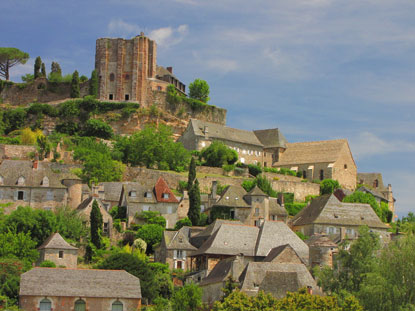
Perched high on a rocky spur 350 metres above sea level, the Château de Turenne is the village's unrivalled centrepiece, exuding medieval strength and a long, independent history. The origins of this formidable site date to at least the eighth century, with most of its surviving architecture built from a harmonious blend of red sandstone and local limestone from the 12th–14th centuries. Once the seat of the almost-sovereign Viscounts of Turenne, the castle was partially dismantled by royal decree in the 18th century, yet key features remain. The most iconic are the cylindrical César Tower, which served as a watchtower and signal post, and the mighty rectangular Trésor (Treasure) Tower. The César Tower’s spiral staircase leads to breathtaking, panoramic views over the Dordogne Valley and distant mountains, making the ascent essential for all visitors. The castle’s gardens are a highlight in themselves: the formal parterre, a blend of French- and English-style design, blooms where the great hall once stood, framing views of the village rooftops and green countryside. Inside, the atmospheric Salle des Gardes displays period furnishings and centuries-old salt chests, enhancing the evocative historical experience. Interactive touches, such as striking a replica medieval coin, provide memorable souvenirs for curious guests.
Medieval Village Streets and Noble Townhouses
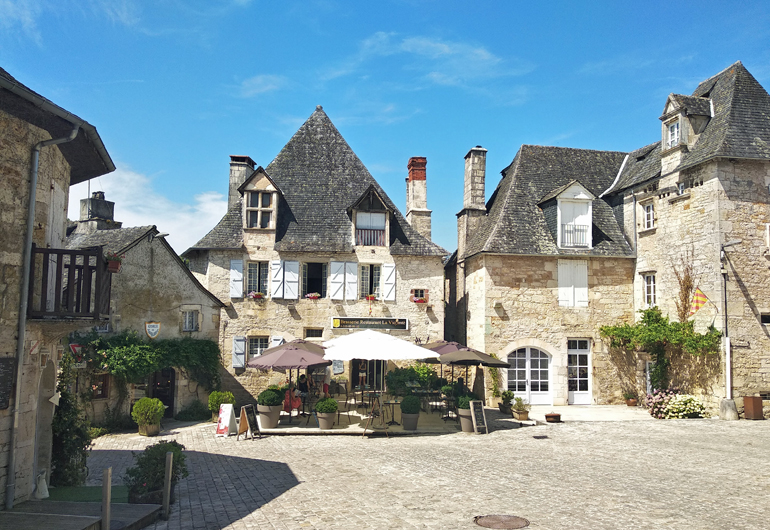
Winding down from the castle through Turenne’s steep slopes is a warren of cobbled streets, flanked by noble mansions and medieval dwellings built from the golden local limestone. This historic fabric was shaped between the fifteenth and seventeenth centuries, when prosperous nobles adorned their homes with towers, turrets, and ornate stonework. Flower-filled balconies, medieval street lamps, and decorative doors add to the exceptional sense of preserved history. Many of these villas feature distinctive slate or ‘lauze’ stone roofs, archways, and remnants of defensive architecture, such as the gate known as the Porte de Mauriolles, through which one enters the old fortified centre. Strolling through these tranquil streets not only offers the pleasure of architectural discovery but also beautiful vignettes of village life set against a verdant rural backdrop.
César Tower (Tour César)
Standing guard at one end of the château’s gardens, the cylindrical César Tower is the most iconic vestige of Turenne’s fortifications, dating from the thirteenth century. Used historically as a watchtower and signal station for the viscounts, it remains largely intact and welcomes adventurous visitors to climb its narrow spiral staircase. The payoff is a commanding, 360-degree panorama across the valleys and hills of Corrèze and Dordogne—one of the most celebrated viewpoints in the region. The climb is relatively steep and dimly lit, but the reward from the summit is unrivalled, combining vistas of Turenne’s rooftops, medieval gardens, and outlying countryside.
The Hanging and French Gardens
Where the château’s once-grand ceremonial hall and living quarters stood, the castle gardens now flourish, blending geometrical French style with more naturalistic, English touches. Designated in the French Parks and Gardens Guide, these flowerbeds and lawns burst with colour in spring and summer and provide a serene setting to appreciate both local flora and historical views. The gardens also function as a viewpoint, linking the surviving towers and offering spaces for quiet reflection, photography, or simply enjoying the peaceful atmosphere of Turenne’s heights.
Views and Hiking Paths
From the castle terraces and neighbouring outlooks, Turenne boasts some of the finest views in the Dordogne and Corrèze. Below, scenic hiking trails such as the GR 480 radiate out into the green hills and lush river valleys, offering ramblers new perspectives on the perched village and the surrounding landscape. Outside the village, the view from the area near Turenne Gare is especially photogenic, with the softly coloured stone houses and château rising above fields and woods—an image popular with photographers and nature lovers alike.
Collégiale Notre Dame et Saint-Pantaléon
Just below the château, the Collégiale Notre Dame et Saint-Pantaléon crowns one of the highest points of the village and is an important historic and spiritual landmark. Constructed in the seventeenth century, the church’s bell tower and majestic porch are visible from afar. Inside, exquisite stained-glass windows and a sumptuous hand-carved wooden altar invite reflection and highlight centuries of devotion. The collégiale remains a beloved site for locals and a tranquil stop for visitors tracing the village’s rich spiritual and communal threads.
Top Museums
Château and Heritage Sites
Château de Turenne
The defining feature of Turenne is its dramatic château, a remnant of the powerful viscountcy that ruled the region for hundreds of years. Perched on a rocky outcrop, the château dominates the village and offers panoramic views of the Dordogne Valley. Visitors can explore the ruins, including the striking Caesar Tower—an arrow-straight structure dating from the 12th century, which served as a signal tower—and the Treasure Tower, a lofty keep built in the 13th century to guard the feudal seat. The site also features the Salle des Gardes, a vaulted guardroom with historic furniture, salt chests, and monumental fireplaces, as well as the Treasure Room with its soaring ceiling and impressive sense of space.
Of particular note is the château's hanging garden, a tranquil oasis created in 1920 with formal flower beds, southern pines, and cypresses. The garden has been reimagined to focus on biodiversity and sustainable planting, and remains an excellent vantage point for admiring the scenery. Guided and costumed tours bring Turenne’s history to life, transforming the experience into an immersive journey through the Middle Ages.
Regional Museums
Les Quatre Demoiselles – Musée de la Noix
Located nearby in Saillac, Les Quatre Demoiselles is a charming museum dedicated to the walnut—one of the region’s most celebrated local products. The museum not only explores the history and cultivation of walnuts, but also offers tastings, local produce, and exhibits devoted to culinary traditions and crafts connected to walnuts. Visitors can sample artisan spreads, oils, and beverages, enjoy a meal in the bistro, and browse a well-curated selection of gifts in the shop. As a family-friendly spot, it also features interactive and sensory exhibits aimed at children and curious adults alike.
Religious and Civic Heritage
Collégiale Notre Dame et Saint Pantaléon
This imposing collegiate church stands at the edge of the village in a beautifully tranquil setting. Built in the 17th century, its interior is elegantly austere, featuring a golden altarpiece and stained glass replaced in the 18th century. Though not a museum in the strict sense, the church can be considered a monument to Turenne’s spiritual and artistic heritage, with its architecture reflecting centuries of faith and local craftsmanship.
Chapelle des Capucins (and Former Monastic Buildings)
Situated in the heart of Turenne, the Chapelle des Capucins was originally constructed in the 17th century and later served as a boys’ school and town hall. Its history is woven into the monastic and civic life of the village, and visitors can admire its stonework, cloisters, and layers of adaptation across several centuries.
Living History
Village Heritage Circuit
While Turenne lacks a formal local history museum, the village itself is a museum in miniature. The tourist office provides walking guides and maps, allowing visitors to follow a circuit past the most significant buildings: noble mansions from the 15th and 16th centuries, remnants of defensive walls and gateways, and houses adorned with coats of arms from the revolutionary era. Streets lined with slate-roofed cottages and merchant shops descend from the castle, creating a unique sense of place and living memory.
Additional Cultural Points
- The Marchadial Square was the former site of Turenne’s grain market, surrounded by homes linked to the viscounts’ staff and defensive walls.
- The upper village offers evidence of revolutionary destruction, with some coats of arms and architectural fragments still visible.
Summary Table: Museums and Sites in Turenne
| Name | Description | Notability |
|---|---|---|
| Château de Turenne | Medieval castle ruins, towers, gardens, exhibition rooms, guided tours | Dominant historic site |
| Les Quatre Demoiselles (Saillac) | Walnut museum, food tasting, exhibits, bistro, gift shop | Regional food/craft focus |
| Collégiale Notre Dame et St Pantaléon | 17th-century collegiate church, art and architecture | Artistic/spiritual heritage |
| Chapelle des Capucins | Former monastic building, layered civic history | Local monastic legacy |
| Village Heritage Circuit | Map-guided walk to noble houses, medieval walls, revolutionary relics | Architectural/memory circuit |
Local Cuisine
Turenne’s cuisine reflects the hearty traditions of the Corrèze region, celebrating rustic flavours and locally-sourced ingredients. Highlights include the celebrated foie gras, often served alongside crusty country bread and candied onions, as well as confit duck, which features tender, slow-cooked duck in the style of classic southwestern France. Another local favourite is Limousin veal, prized for its rich taste and delicate texture, while regional cheeses such as tomme appear in tasty ‘croque’ sandwiches with ham and salad. To round off a meal, sweet treats like walnut cake or the Limousin apple flognarde offer a taste of the area’s orchard bounty, making dining in Turenne a true reflection of traditional French country living.
Getting There
By train Turenne is served by a small SNCF station on the Brive-la-Gaillarde–Toulouse line, with TER regional trains stopping several times a day; most travellers therefore reach Turenne by changing at Brive-la-Gaillarde, which has frequent Intercités and TGV connections to Paris, Bordeaux and Toulouse.
By coach / bus From Brive-la-Gaillarde coach station, Corrèze regional service 224 runs to both Turenne village and Turenne-Gare, giving a straightforward link from the rail hub; if you are already in the Dordogne Valley, local buses from places such as Vayrac also feed into this route, though services are limited on Sundays and public holidays.
By car Turenne lies just east of the A20 (E9) motorway: exit at junction 52 (Brive-Sud) and follow the D38 then D8 for roughly 15 minutes through rolling countryside; the medieval upper village is pedestrian-only, so drivers should leave vehicles in the signed car parks at the foot of the hill before continuing on foot.